
How should buyers control moisture risk in fabric cases and closed cartons? Treat dryness as a documented release condition: identify every moisture source, dry the dinnerware and textile case separately, record the packing environment and time, inspect the liner and carton, then approve storage and transport controls. Do not close a wet case or use an unverified desiccant quantity as a substitute for source control.
This camping dinnerware moisture control guide is a buyer decision record, not a universal humidity specification. The correct limits and monitoring method depend on verified materials, route, season, storage duration, carton construction and destination requirements. Buyers should define acceptance criteria with their packaging, logistics and quality teams.

How Does Camping Dinnerware Moisture Control Start With Sources?
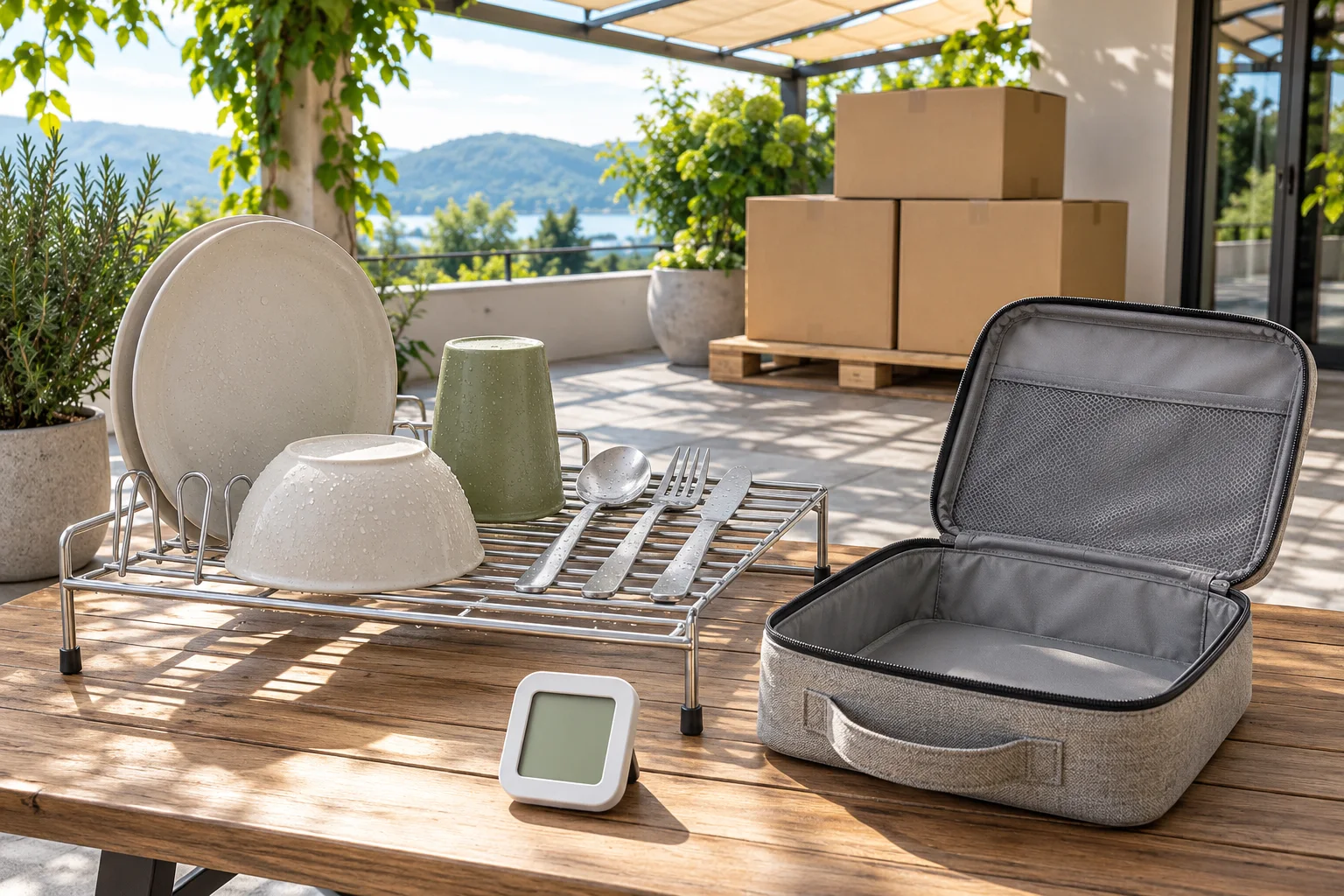
Camping dinnerware moisture control starts by tracing water through every layer. Moisture can be carried in on recently washed components, retained in seams or foam, absorbed by paper-based packaging, introduced by humid packing air, or formed when temperatures move through the dew point. A closed carton can look dry externally while a case, liner or internal pad still contains moisture.
Connect this review to the approved cleaning and drying instruction, the carry-case inspection record and the repeatable pack-out instruction. Those records should identify who dries, inspects, packs and releases each layer.
| Possible source | What the buyer should verify | Prevention evidence |
|---|---|---|
| Washed plate, bowl, cup or cutlery | No visible droplets, trapped water or unapproved residual moisture at the defined inspection points | Approved drying method, elapsed time and release check |
| Fabric case, seam, padding or divider | Case was stored dry and is not packed immediately after wet cleaning | Case-condition inspection and cleaning history |
| Carton, insert, tissue or paper sleeve | Packaging was protected from wet floors, leaks and uncontrolled storage | Incoming packaging check and storage record |
| Warm humid packing air | Temperature and humidity are recorded at a defined location and time | Calibrated logger record or buyer-approved alternative |
| Cold surface or route temperature change | Condensation scenario is reviewed against route and dwell conditions | Route profile and packaging-risk review |
| Wet pallet, container or vehicle | Loading surface, roof, doors and previous-cargo condition are acceptable | Preload inspection with dated disposition |

How Should a Camping Dinnerware Moisture Control Gate Be Written?
A useful camping dinnerware moisture control gate states the item, method, location, timing, evidence owner and response to failure. “Dry before packing” is not enough because it does not define how a seam, deep bowl base, cup interior, liner or carton pad is checked. The gate should also prohibit closing a failed unit until the approved drying and reinspection sequence is complete.
| Gate step | Decision question | Release record |
|---|---|---|
| 1. Component drying | Were all food-contact and hidden surfaces inspected after the approved drying cycle? | Lot, time, method and inspector |
| 2. Case conditioning | Is the fabric shell, seam, padding and divider acceptable under the buyer's method? | Case sample result and disposition |
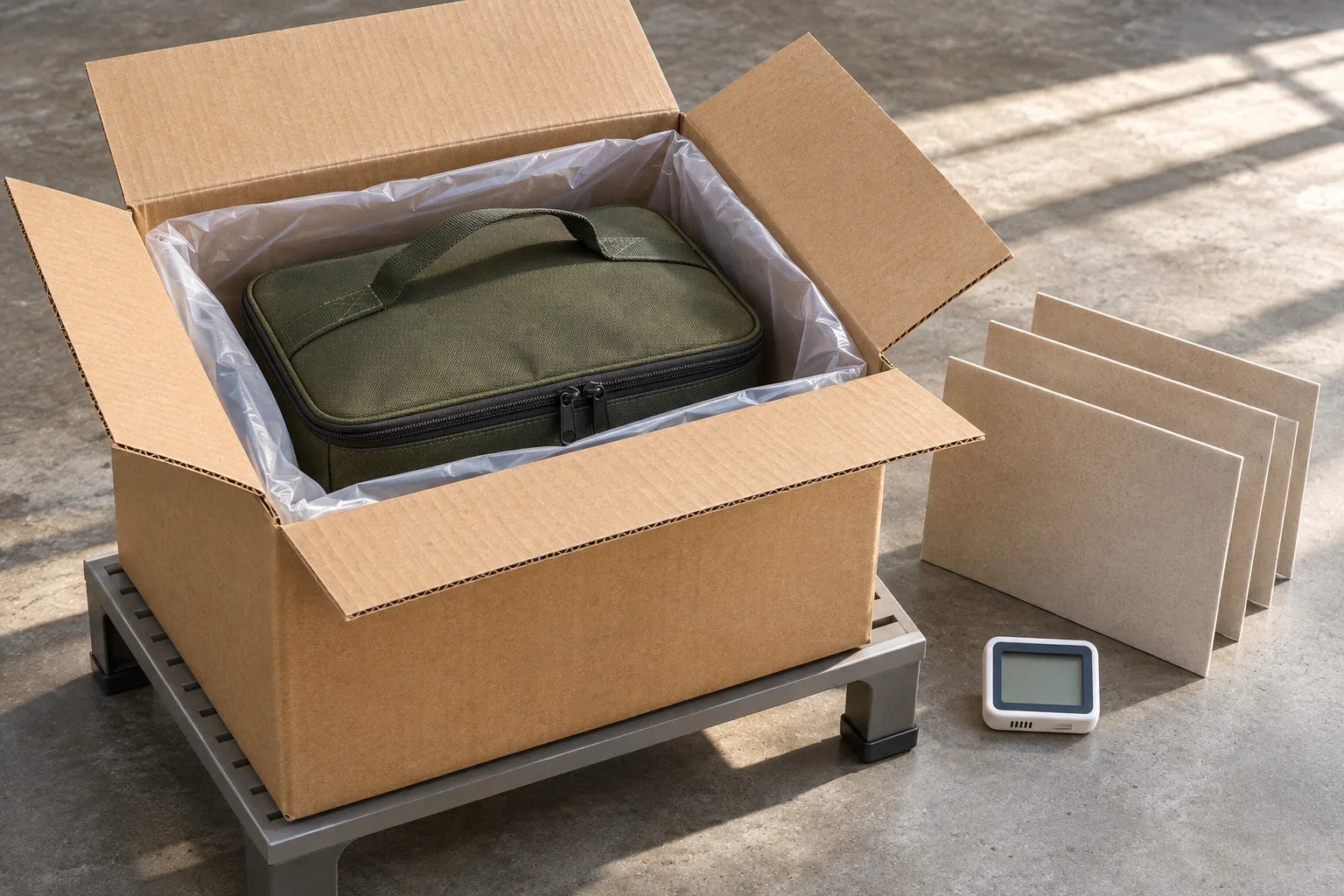
| 3. Packaging inspection | Are carton, insert, liner and pallet dry and undamaged before use? | Packaging lot and storage check |
| 4. Environment capture | Were temperature and humidity measured at the agreed packing point? | Instrument ID, time and reading |
| 5. Closure control | Was closure delayed until every failed layer passed reinspection? | Pack-out release signature |
| 6. Handoff | Did storage and loading teams receive the same moisture-control instructions? | Warehouse and carrier acknowledgment |
Evidence boundary: this page deliberately supplies no universal humidity, drying-time, desiccant, barrier-film or shelf-life value. Each value must be justified for the project materials, closed volume, climate, route and buyer acceptance plan.
Why Are Temperature and Dew Point Part of Moisture Control?
For camping dinnerware moisture control, relative humidity changes with temperature, so one room reading does not prove that every internal surface will remain above the dew point during storage or transport. The U.S. National Weather Service explains the relationship between dew point and relative humidity. The buyer should use competent packaging and logistics review for the actual route rather than copying a generic number.
The IMO/ILO/UNECE CTU Code page links guidance for packing and handling cargo transport units; its informative material discusses moisture in goods and packaging and the possibility of condensation during transport. The U.S. EPA's moisture and mold prevention guidance reinforces the broader principle of controlling moisture sources. None of these sources certifies a dinnerware shipment or sets a project-specific carton limit.
What Should Happen When a Moisture-Control Check Fails?
Camping dinnerware moisture control requires a defined failure path. Stop only the affected lot or pack-out boundary, identify the source, isolate the material and record the disposition. Do not add absorbent material to a wet pack and release it without validation. If the packaging, component or case was exposed after release, reopen the decision record and repeat the applicable inspection.
| Finding | Immediate control | Next approval |
|---|---|---|
| Droplets or damp touch point | Hold the unit open; separate affected layers | Approved redry and reinspection record |
| Wet or softened carton | Quarantine packaging; do not overpack as a concealment step | Packaging replacement and cause review |
| Unexpected logger excursion | Preserve the record and identify time, location and affected scope | Buyer-defined risk assessment and disposition |
| Odor, staining or visible growth | Isolate and stop normal handling | Qualified investigation; do not make a cosmetic-only release |
Buyer Checklist
Send
Component and case materials, cleaning process, packaging bill, storage duration, route, season, destination and prohibited claims.
Verify
Drying points, case conditioning, packaging storage, measurement location, instrument control, dew-point scenario and failure isolation.
Approve
Project limits, sampling, evidence owner, closure gate, desiccant or barrier validation if used, handoff record and disposition authority.
Frequently Asked Questions
Is a desiccant packet enough to control moisture?
No automatic conclusion is justified. Its type, quantity, packaging permeability, closed volume, route and safety controls require project validation. Source control still comes first.
Can a case be packed immediately after washing?
Only after the buyer-approved drying and inspection criteria are met. Seams, padding and dividers may dry differently from exposed fabric.
Should the carton be sealed in the packing room?
The closure point belongs in the controlled process. Record the environment and confirm that every internal layer passed before sealing.
Does this checklist prove shelf life?
No. Shelf life and storage claims require a defined product, packaging system, conditions, duration, acceptance criteria and evidence plan.
Request a Moisture-Control Review
For a useful B2B review, send the actual case construction, component cleaning and drying steps, carton bill, route and proposed release evidence. Naike Dinner can review the buyer-provided pack-out brief with the dinnerware configuration; final materials, tests, specifications, MOQ, price and lead time remain project-confirmed.
Request a Moisture Checklist ReviewSend Dry-Pack InputsRequest a Project RFQ