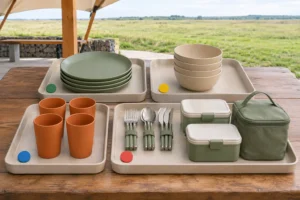
A tableware claim should reach a website only after a named claim owner confirms the wording, an evidence owner links the exact supporting file, and a release owner checks market, product and revision scope. The practical control is a tableware claim approval matrix—not an informal email chain.
Direct answer: the claim owner approves what the website says; the evidence owner confirms that the cited file supports that exact wording; regulatory or quality reviewers define market and product limits; and the web release owner publishes only the approved revision. If any owner, evidence file, scope or review date is missing, the claim remains on hold.
Why Can’t One Person Approve Every Product Claim?
Because wording, technical evidence and web release are different decisions. A marketing reviewer may understand the intended message but cannot infer resin identity from a photo. A laboratory report may contain valid results but not cover a new color, thickness, component or market. A web editor can reproduce approved text but should not widen it. Buyers reviewing environmental claims, dinnerware versus cookware claims or a camping dinnerware evidence file need to see these boundaries preserved.
Approval is a chain
Each reviewer answers a different question: Is the wording accurate? Does the evidence support it? Does it apply to this product, market and revision? Is this the released website version?
A missing link means hold
An attractive image, supplier declaration or prior test does not fill an unassigned responsibility. Record the gap and keep the statement unpublished until the required owner signs.
Use This Tableware Claim Approval Matrix
The tableware claim approval matrix below is a buyer-side working model. Replace role names with actual accountable people and link every evidence file to the exact product and revision.
| Claim type | Claim owner | Evidence owner | Required evidence file | Evidence scope to record | Expiry or review trigger | Release / hold rule |
|---|---|---|---|---|---|---|
| Material identity | Product specification owner | Quality or material-data owner | Controlled material specification and supplier declaration for the exact component | Resin/grade, additive or color, component code, supplier and revision | Material, supplier, colorant or formulation change | Release only when website wording matches the controlled material name; otherwise hold |
| Food-contact suitability | Regulatory owner for destination market | Compliance-file owner | Applicable declaration, test record or regulatory assessment | Exact article, material/color, intended food, temperature/time conditions and market | Design/material change, new market, method change or stated validity review | Release only within documented scope; do not convert a scoped result into a universal claim |
| Performance | Engineering or quality owner | Test-record owner | Approved method, sample identification, results and acceptance record | Feature tested, load/temperature/cycles, conditioning, sample revision and limits | Geometry, material, process or acceptance-criteria change | Release the measured claim only; hold unsupported words such as unbreakable or lifetime |
| Environmental | Sustainability or legal-review owner | Chain-of-custody/evidence owner | Defined calculation, content evidence, disposal pathway or qualified certification record | Claim definition, denominator, geography, collection route, component exclusions and period | Supplier/content, packaging, disposal infrastructure or guidance change | Release with qualifications beside the claim; hold vague green or eco-friendly wording |
| Dimensions / capacity | Drawing owner | Inspection-record owner | Released drawing plus measured sample or inspection record | Datum, tolerance, fill line, test method, component and revision | Tooling/drawing change or measurement-method change | Release stated nominal and tolerance basis; hold values copied from a different configuration |
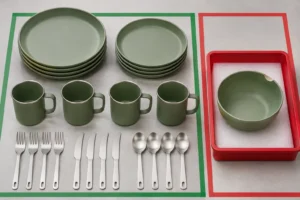
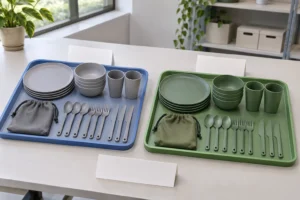
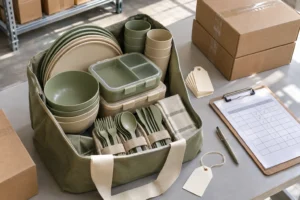
| Included configuration | Commercial BOM owner | Sample/pack-out owner | Released BOM, count sheet and approved pack-out image | Piece count, optional/standard status, pack level, color and revision | BOM, assortment, artwork or packaging change | Release only the countable approved assortment; hold mixed-revision images |

What Must the Evidence Owner Confirm?
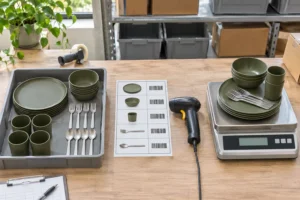
The evidence owner does not merely upload a PDF. They confirm that the file identifies the tested or declared item, exact material/color where relevant, method, conditions, result, issuing party, date and limitations. A report for one plate cannot automatically approve a bowl, cup, cutlery item or lunch box. Use the tableware test-report scope review to expose those gaps, then link the scoped file back to the tableware claim approval matrix.
Project, product code, component, material/color, sample or batch and drawing/BOM revision.
Market, intended use, test conditions, claim wording, included components and explicit exclusions.
Owner, issue date, next review, change triggers, superseded file link and release status.
When Does an Approved Claim Need Review?
Do not treat approval as permanent. Review after any material, colorant, component geometry, supplier, manufacturing process, artwork, destination market, intended-use condition or applicable evidence requirement changes. Also review when a file reaches its defined review date or when the public wording is expanded.
The FTC Advertising and Marketing Basics explains the need for truthful, non-deceptive and evidence-based claims. The FTC’s Environmental Claims: Summary of the Green Guides addresses environmental marketing qualifications. For food-contact projects, the European Commission food-contact materials framework helps define the regulatory context. These sources guide the review; they do not certify a Naike Dinner product.

How Should the Approved Claim Reach the Website?
Keep the tableware claim approval matrix as the release index so a web editor can trace every sentence to its owner, evidence and current revision.
- Freeze the wording. Store the approved sentence, required qualification and prohibited broader variants.
- Assign a release ID. Link the sentence to the product/BOM/drawing revision and evidence file.
- Check the page context. Confirm that headings, images, ALT text, tables and FAQ do not silently widen the claim.
- Publish through one owner. The web release owner records URL, date, approved revision and reviewer.
- Monitor changes. A product or evidence change automatically returns the claim to review.
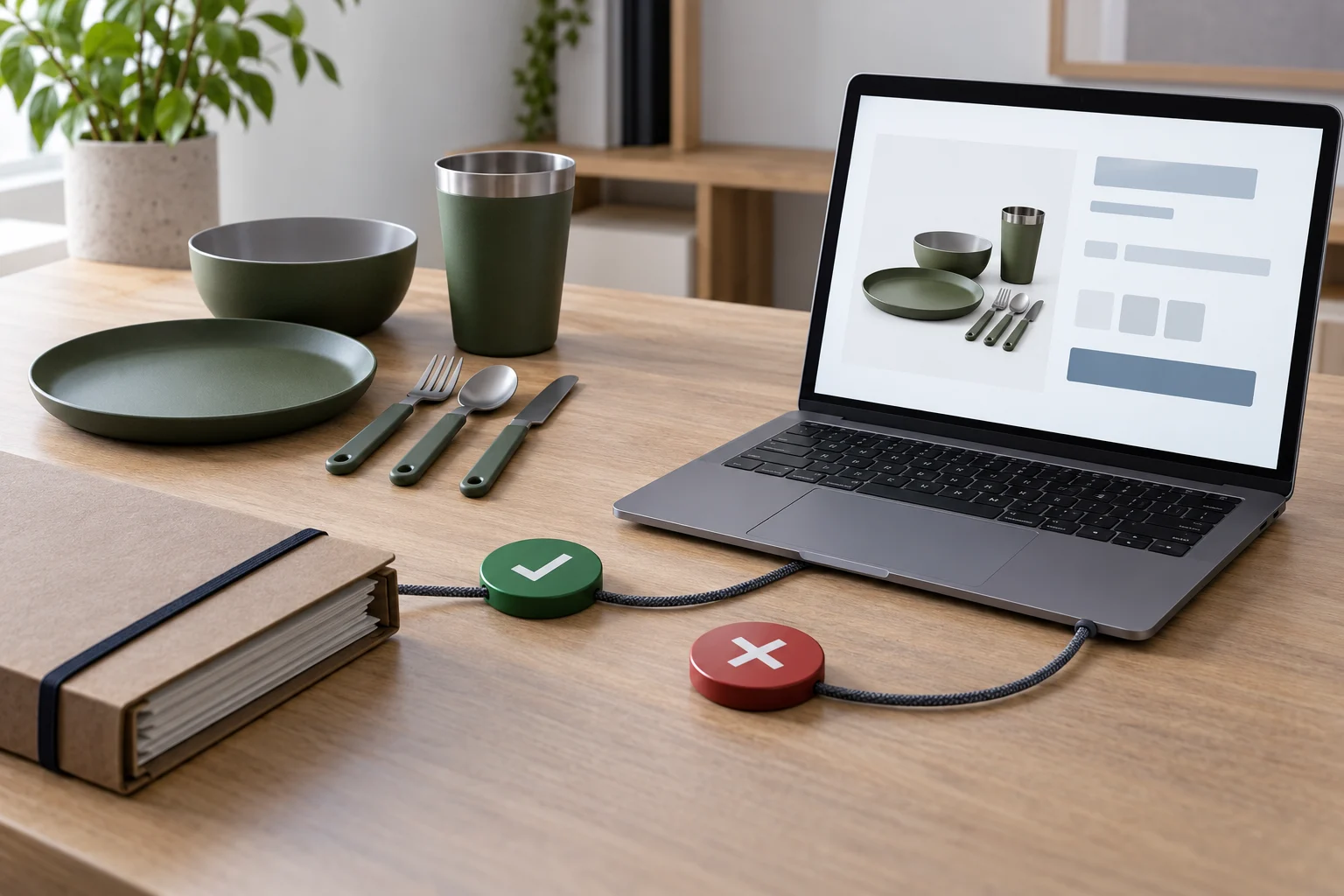
What Should a Buyer Send for a Claim-Approval Review?
The tableware claim approval matrix becomes actionable when the buyer provides the intended wording and market while the project team supplies the exact revision records behind it.
Destination markets, sales channels, intended use, proposed claim sentences and decision owners.
Component BOM, drawings, material/color records, sample IDs, tests, declarations, images and change history.
Owner matrix, supported wording, required qualifications, evidence scope, review triggers and release/hold status.
Buyer Questions About Claim Approval
Can a supplier declaration approve a compliance claim?
Only if the declaration is applicable, specific and sufficient for the destination requirement and exact article. Record what it covers and what still needs independent review or testing.
Who owns an environmental claim?
Assign one named claim owner, often sustainability, legal or compliance, plus an evidence owner. Avoid shared ownership without one accountable release decision.
Does a current test report need an expiry date?
Even when no formal expiry is printed, define a review date and change triggers. A material, design, supplier, method or market change can end applicability immediately.
Can the web team shorten approved wording?
Only through reapproval when the edit removes a qualification, changes scope or creates a stronger impression. Store the exact released sentence.
What happens when evidence is incomplete?
Mark the claim on hold, identify the missing file or owner and publish neutral verified facts only. Do not fill the gap with assumptions.
Request a Tableware Claim Approval Matrix
Send the proposed website claims, destination markets, component BOM, drawings, material records, available tests and current approval owners. Naike Dinner can return a claim-owner, evidence and expiry matrix showing what is supported, qualified or still on hold before quotation and web release.
Send the claim list · Request an evidence-scope review · Prepare a B2B project brief
Updated . Evidence scope: buyer decision support. This article creates no product capability, certification, material, MOQ, price, lead-time or performance claim.