Standard Round PlatesView Product Details
Flat or shallow-rimmed formats for general camp dining and set integration.

Wholesale | OEM | Private Label
Wholesale camping plates for outdoor brands, retailers and distributors in food-grade PP, titanium, stainless steel and wheat-straw composite, with custom size, color, logo, packaging and set configurations.
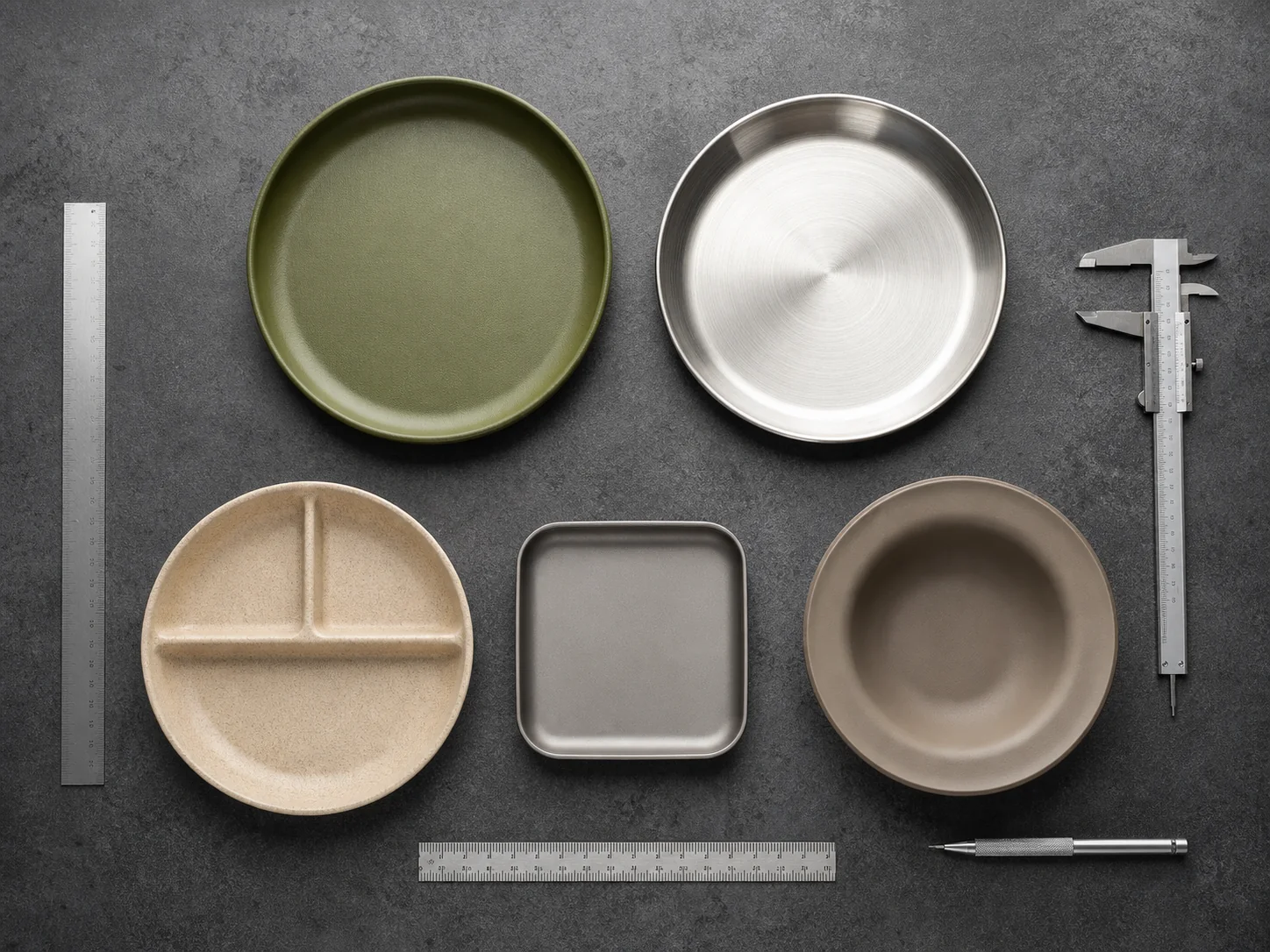
Plate geometry should follow the meal type, pack volume, material and target user instead of applying one design across every program.
Flat or shallow-rimmed formats for general camp dining and set integration.
Higher rims for pasta, stew and mixed meals, with depth and usable volume recorded.
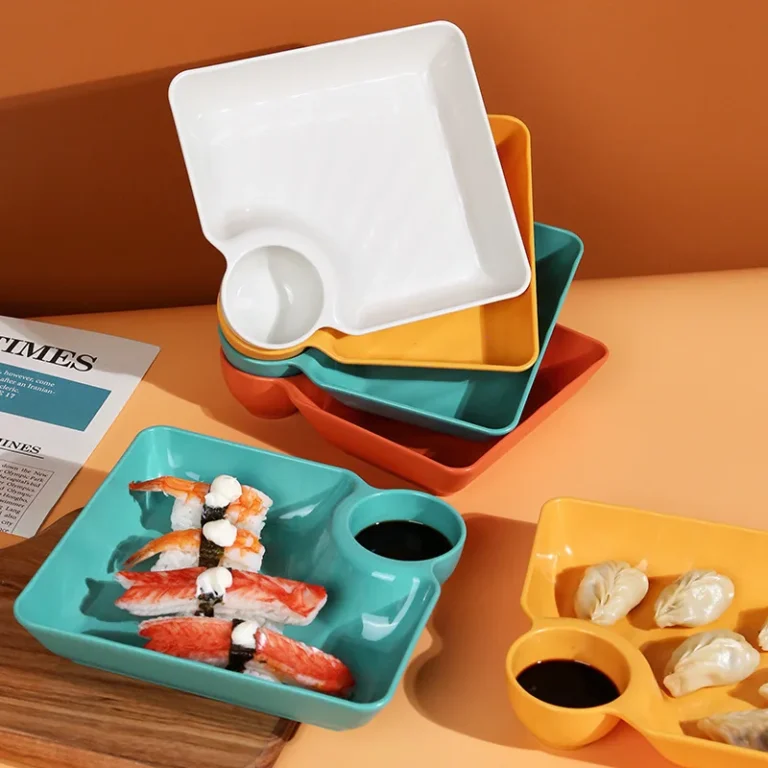
Two- or three-section layouts developed mainly in molded materials where tooling is feasible.
Titanium formats evaluated for grade, wall thickness, stiffness, edge finish and unit weight.
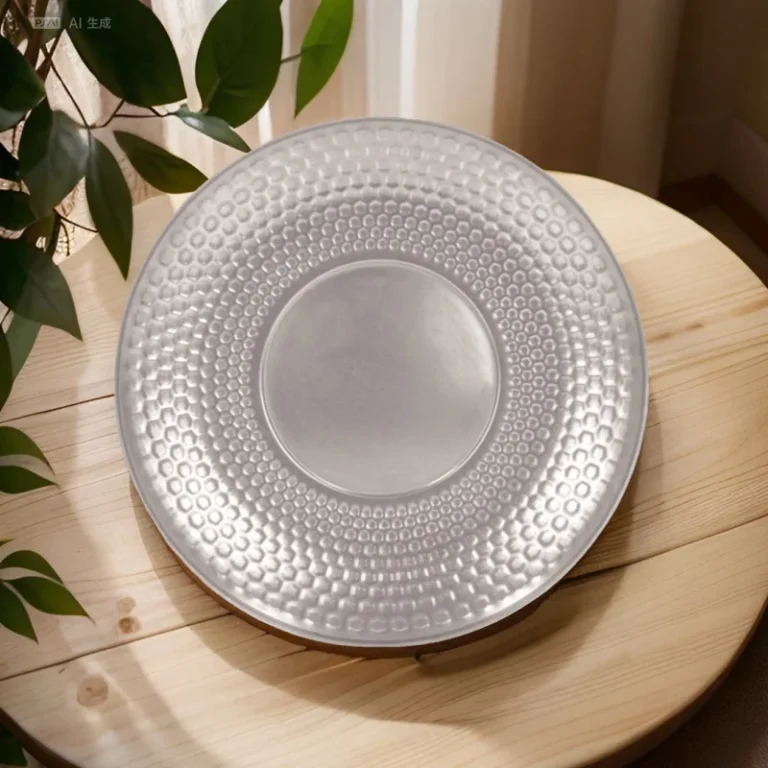
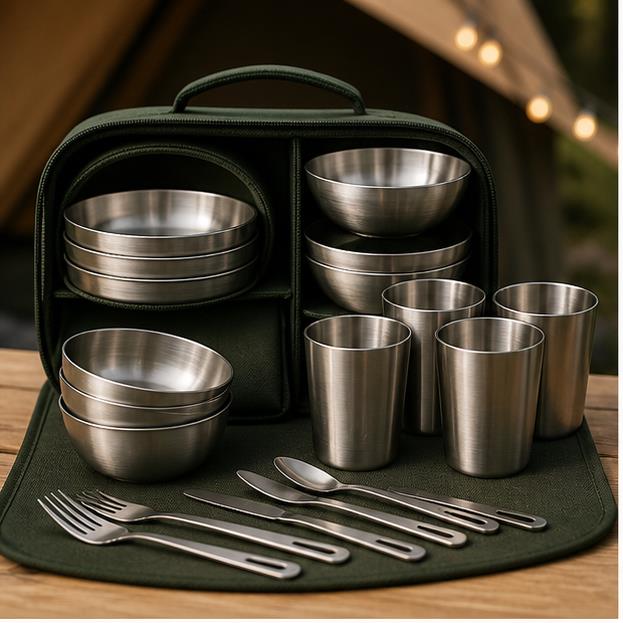
Stainless formats for RV, glamping and repeated-use projects with grade and finish specified.
Two-, four- or multi-piece packs controlled for stack height, surface protection and packaging.
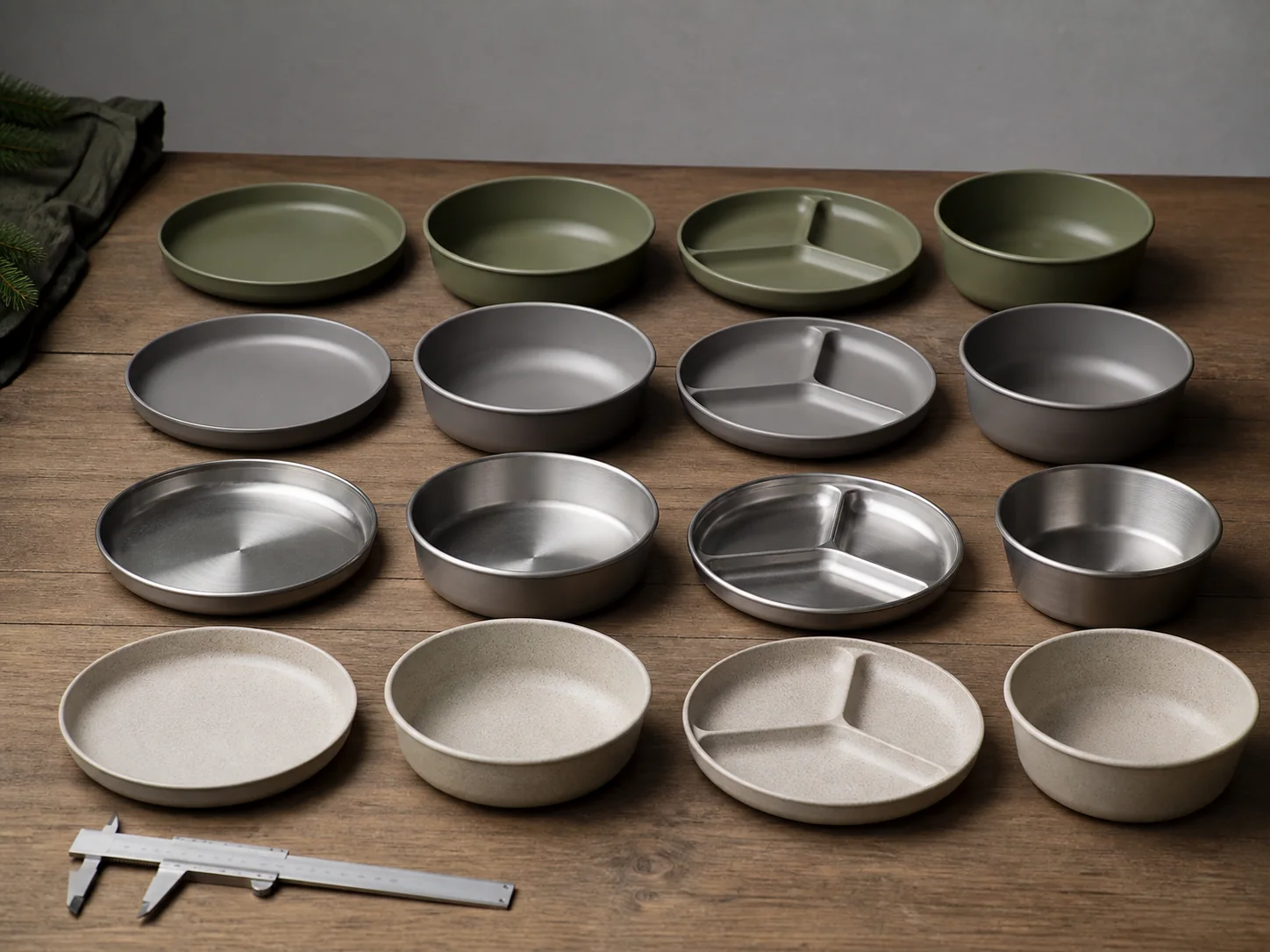
Compare materials against use case, weight, durability, target price and destination evidence rather than treating them as equivalent.
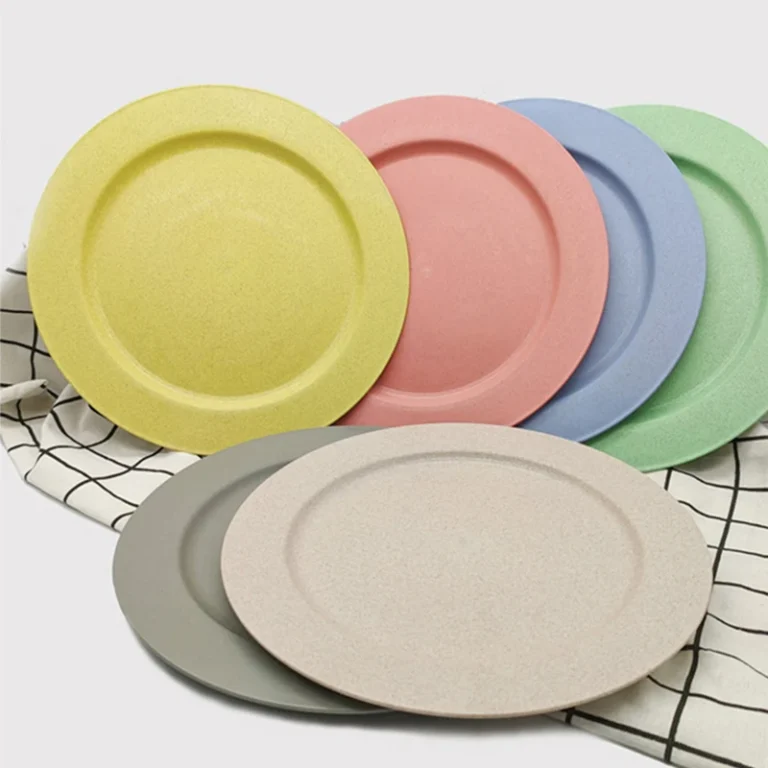
Scalable molded colors, impact-oriented designs and cost-controlled family programs.
Explore PP material detailsPremium ultralight programs defined by grade, thickness, unit weight and finish.
Explore titanium detailsDurable camp dining specified by steel grade, thickness, construction and surface treatment.
Explore stainless detailsPP-based composite programs quoted only after formulation and destination requirements are confirmed.
Review composite claim boundariesUseful quotations require measurable dimensions and product-specific tolerances rather than generic material claims.
| Specification field | Project definition |
|---|---|
| Diameter and usable area | Record outside diameter, eating surface and rim width for the actual SKU. |
| Depth and capacity | Define plate depth or usable volume where the format functions as a shallow bowl. |
| Thickness | Set by material, forming or molding route, stiffness and intended durability. |
| Unit weight | Verify the approved sample and production tolerance; especially important for ultralight products. |
| Rim and edge | Check rolled, polished or molded edges for comfort, cleaning access and sharpness. |
| Stack height | Measure multi-piece nesting height, separation clearance and pack dimensions. |
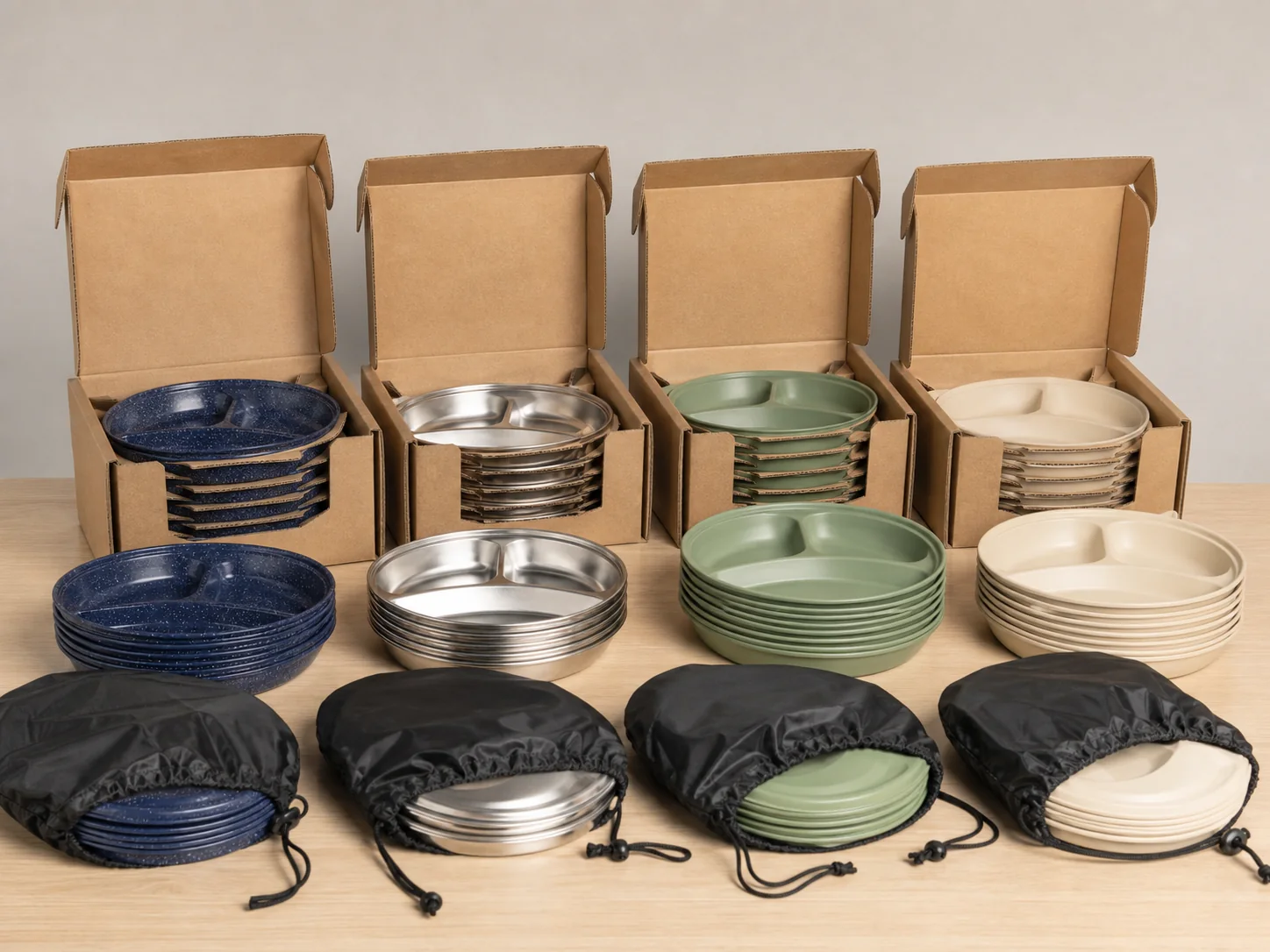
Test methods must change with the material. PP drop checks, metal workmanship, finish durability and composite heat testing are not interchangeable.
Define destination, food type, time and temperature before selecting the protocol.
Use a documented finished-product condition for PP and composite plates.
Specify height, surface, conditioning and pass criteria for molded plates.
Inspect burrs, dents, distortion, welds, coating or polishing condition where applicable.
Check nesting fit, surface contact, separators and transit marking.
Control appearance, dimensions, weight, logo, pack count and functional criteria.
The project moves from product definition to sample evidence and approved production criteria.
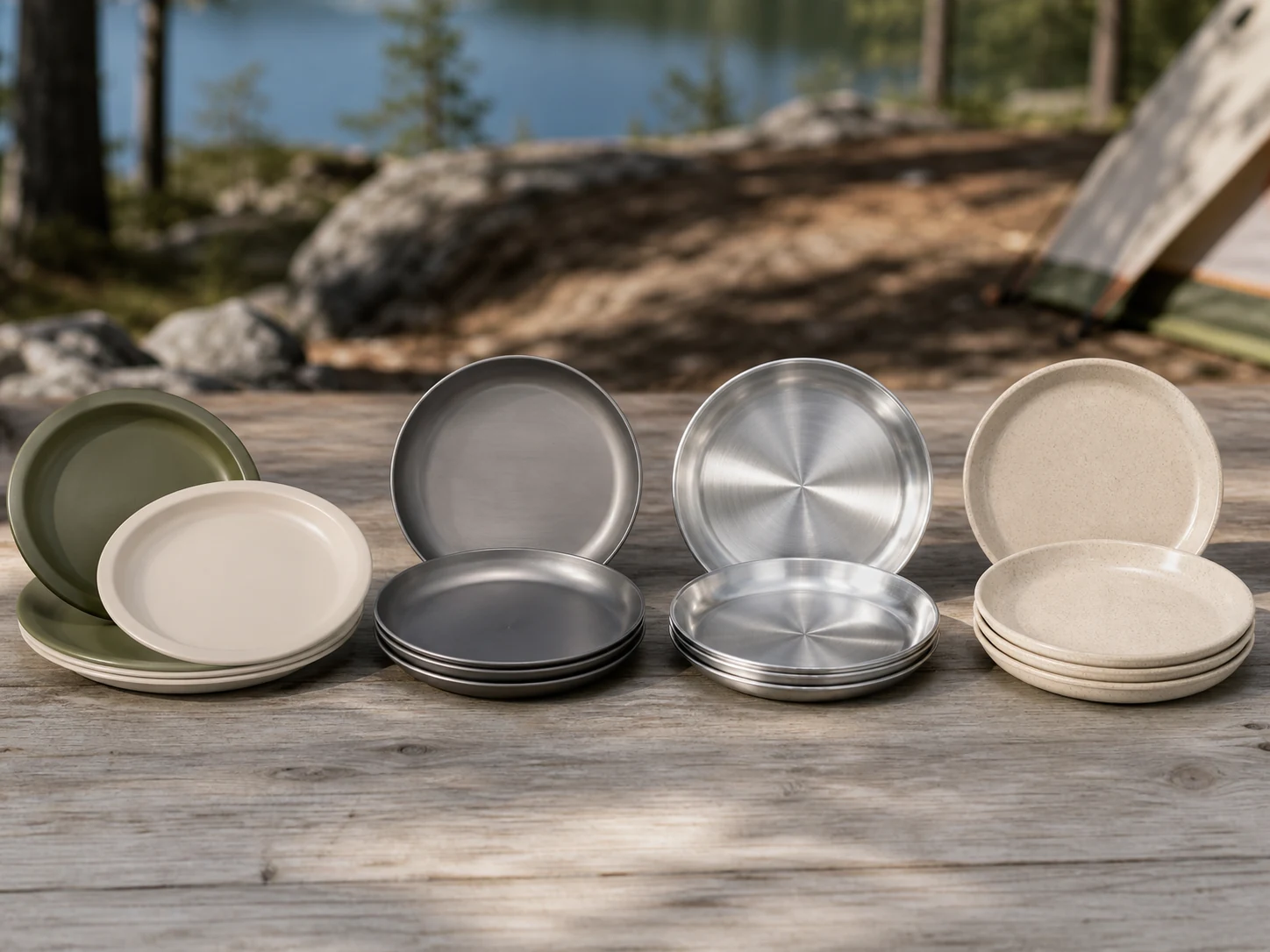
Continue through the outdoor category structure using clear product and material relationships.
Wholesale assortment planning
A B2B plate range should balance eating function, material, pack efficiency and price architecture rather than adding shapes without a clear assortment role.
List diameter, depth, divided or flat format, material, unit weight, color and units per retail pack for each plate.
Define target meals, temperature, drop or dent expectations, dishwasher scope, stacking stability and food-contact market.
Provide price tiers, packaging dimensions, barcode data, forecast by SKU, sample plan and replenishment expectations.
CAMPING PLATE FAQ
MOQ depends on the selected SKU, material, color, logo process, packaging and whether new tooling is required. We confirm the MOQ for each quotation instead of applying one number to every product.
Depending on the SKU, customization may include set configuration, color, logo, surface finish, component geometry, carry case and retail packaging. Feasibility is confirmed after artwork and quantity review.
Suitability must be confirmed for the exact material, finished SKU and use conditions. Request the current care instructions and supporting test scope before publishing either claim.
Send the product list, material, dimensions, quantity, logo, packaging, destination, required tests and delivery target.
Featured products
These products are selected as useful starting points for specification, component matching and customization discussions.
Latest products
This block updates automatically as newly published products match this collection. Open a product page to review its configuration and project boundaries.
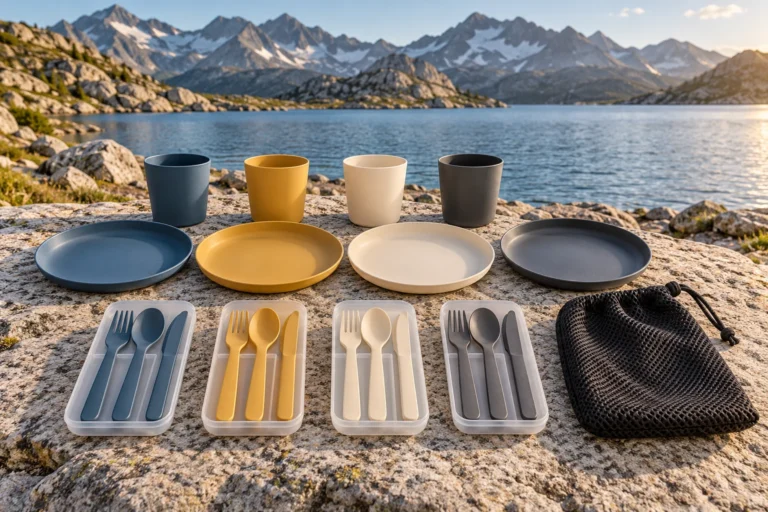
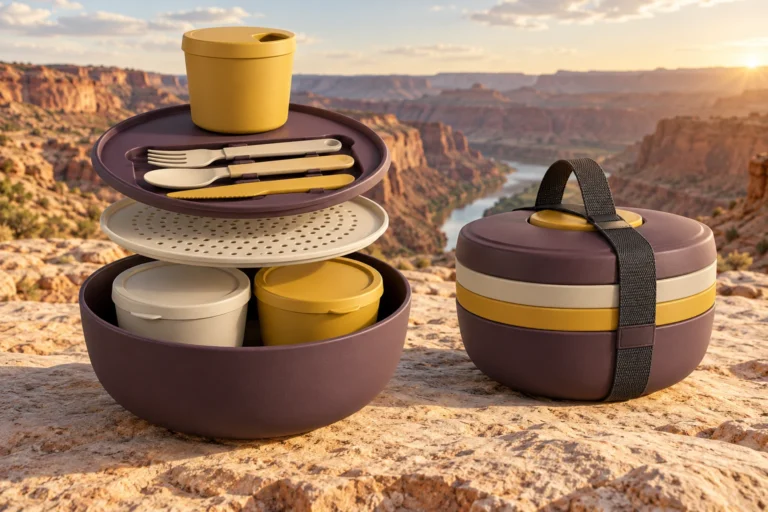
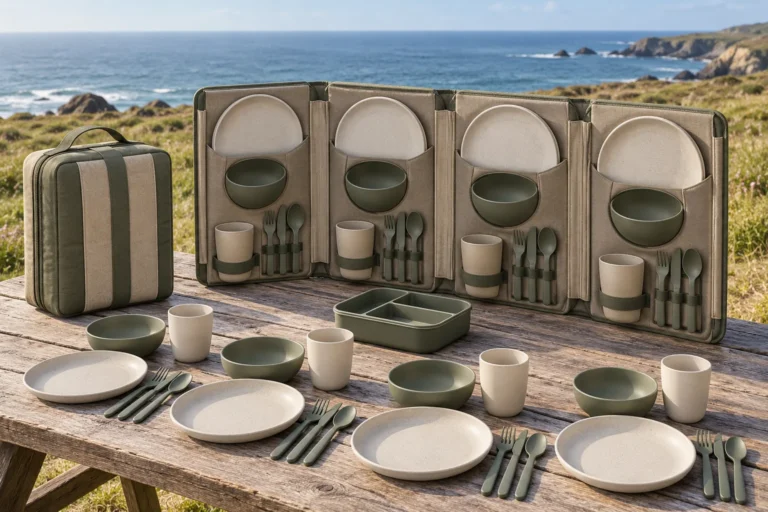
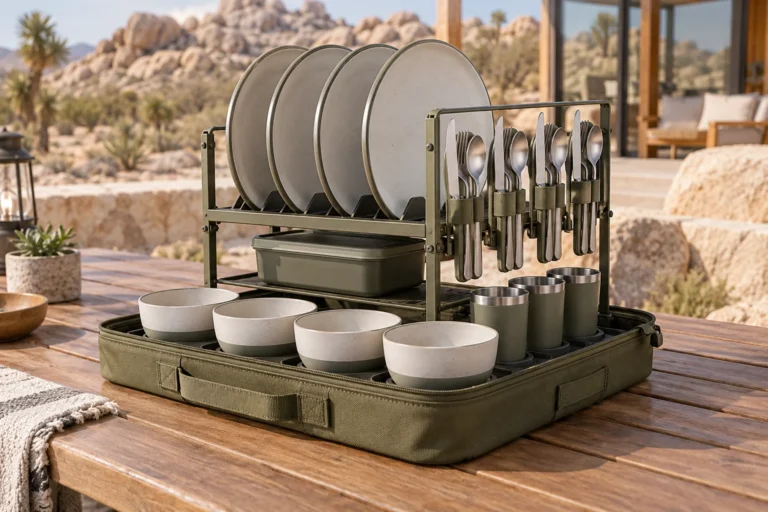


Geometry selector
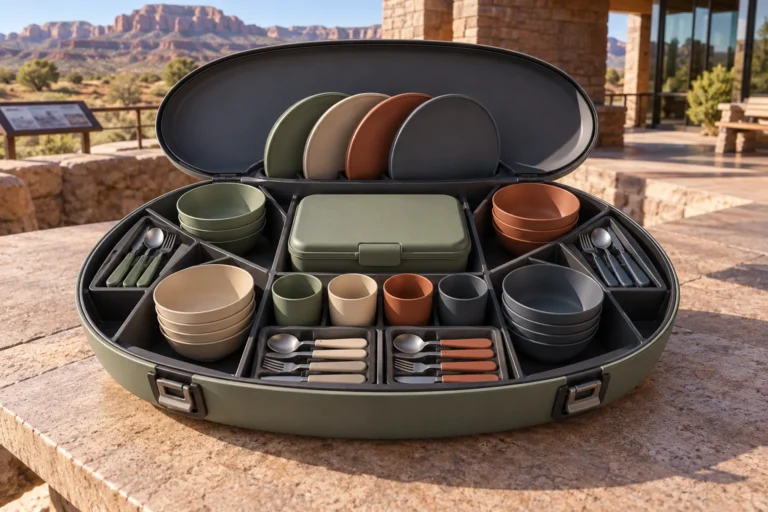
Camping plates wholesale projects should start with the food and carrying method, not a generic diameter. A shallow plate is efficient for dry meals, a deep rim controls sauces, a divided plate separates meal components, and a bowl-plate can reduce total SKU count in compact kits.
Low stack height for family and picnic sets.
Better liquid control for campsite meals.
Useful for children, meal prep and portion separation.
One versatile piece for compact mess kits.
| Field | Record | Purchasing impact |
|---|---|---|
| Outer diameter | Finished maximum width | Retail box and storage fit |
| Usable depth | Inside base to practical fill line | Meal suitability |
| Unit weight | Target plus tolerance | Freight and portability |
| Stack height | Count and total height | Mess-kit pack volume |
| Rim profile | Approved section or sample | Comfort and stiffness |
Match the geometry to camping mess kits, build a complete camping dinnerware set, or compare PP, titanium, stainless steel and wheat-straw composite.
For PP, verify flatness after the intended heat condition and confirm that stacked plates separate easily. For titanium, record finished weight and rim stiffness. For stainless steel, inspect the rolled edge, base stability and surface direction. For wheat-straw composite, confirm the formulation and avoid unsupported environmental claims. The same shape can perform differently in each material, so a geometry approval does not replace a finished-material approval.
Specify whether plates are sold individually, in matched sets or inside a mess kit. Record protective interleaves, visible color order, barcode position, care instructions and master-carton orientation. A packaging mock-up should be tested with the actual plate stack because even a small rim or divider change can alter box depth.
Food-contact requirements depend on market and use. The European Commission food-contact materials overview is an official reference for EU projects.
PRODUCT SUBCATEGORIES