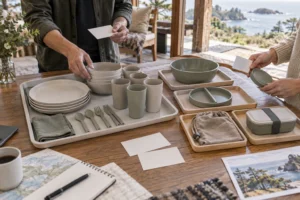
A test report matches the final tableware only when the tested sample can be reconciled to the released component’s material, formulation, pigment, decoration, surface finish, geometry, intended use and production revision. A similar product name or color family is not enough. Record every match, mismatch and unresolved field in a report-to-revision table before approving claims, artwork or shipment.
Buyers often receive a technically valid report that is commercially difficult to apply. The report may describe “plastic bowl, green,” while the purchase order contains several green components, a revised pigment, a matte texture, printed decoration and a different cleaning claim. The tableware test report scope review should answer one operational question: does the tested sample represent the exact finished component being bought?
Build an eight-field report-to-revision reconciliation table
| Match field | Evidence to compare | Buyer disposition |
|---|---|---|
| 1. Component identity | Report description and photo versus released part code, drawing and controlled sample | Match, mismatch or identity unresolved |
| 2. Base material | Declared material or formulation reference versus released BOM | Applicable only to the stated material reference |
| 3. Pigment and color | Tested color, pigment reference and sample appearance versus final color approval | Confirm exact color coverage or reopen evidence |
| 4. Decoration | Printing, coating, adhesive, transfer or other decoration on tested and final parts | Record whether decoration is inside or outside scope |
| 5. Surface finish | Gloss, matte, texture, coating and post-process state | Explain why the finish is equivalent or obtain review |
| 6. Geometry and thickness | Shape, section, food-contact area and construction against the drawing | Assess whether geometry changes exposure or performance |
| 7. Intended use | Food type, contact time, temperature, repeated use and cleaning conditions | Limit the claim to supported conditions |
| 8. Revision and source | Supplier, site, sample date and revision versus production release | Link the report to a dated commercial baseline |
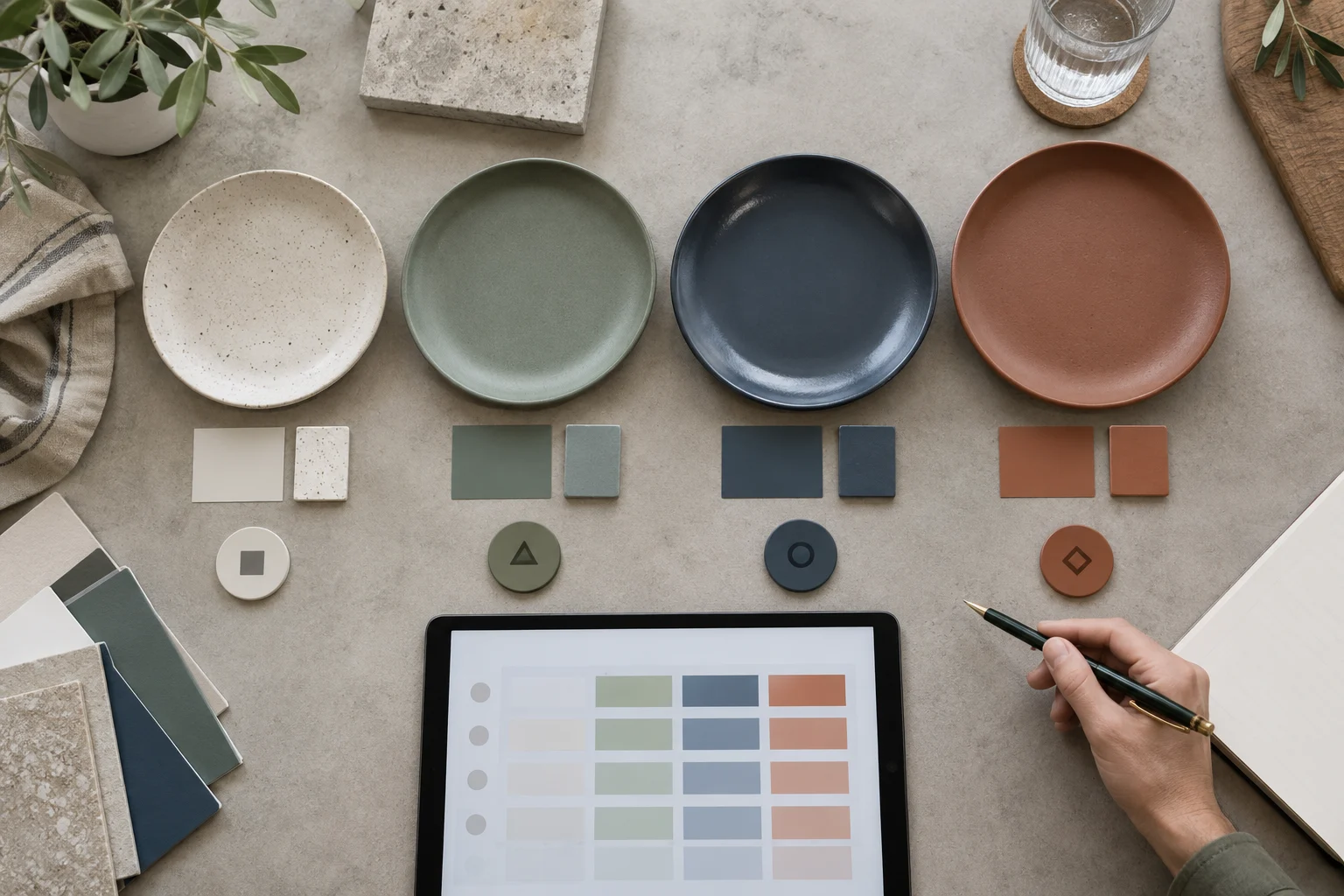
The table is not a laboratory conclusion. It is the buyer’s tableware test report scope decision. A field marked “match” should point to a controlled record, not a verbal assurance. A field marked “unresolved” should have an owner, next action and deadline. The output belongs with the approved BOM and sample register.
Treat color as a controlled finished-component attribute
Color names such as sage, sand or navy are not technical identifiers. Two parts can look similar under office lighting while using different pigments or formulations. Conversely, one controlled formulation may show normal visual variation between texture, thickness or viewing angle. The tableware test report scope decision should therefore use the supplier’s controlled color or pigment reference, the report sample description, an approved physical sample and the released component record.
Do not extend one tested color automatically across a range. Ask whether the evidence addresses the relevant color variants and whether a change in pigment, masterbatch supplier or loading requires a new technical assessment. Record the answer in writing. If the evidence does not identify color sufficiently, the reconciliation remains open.
Separate surface finish from color
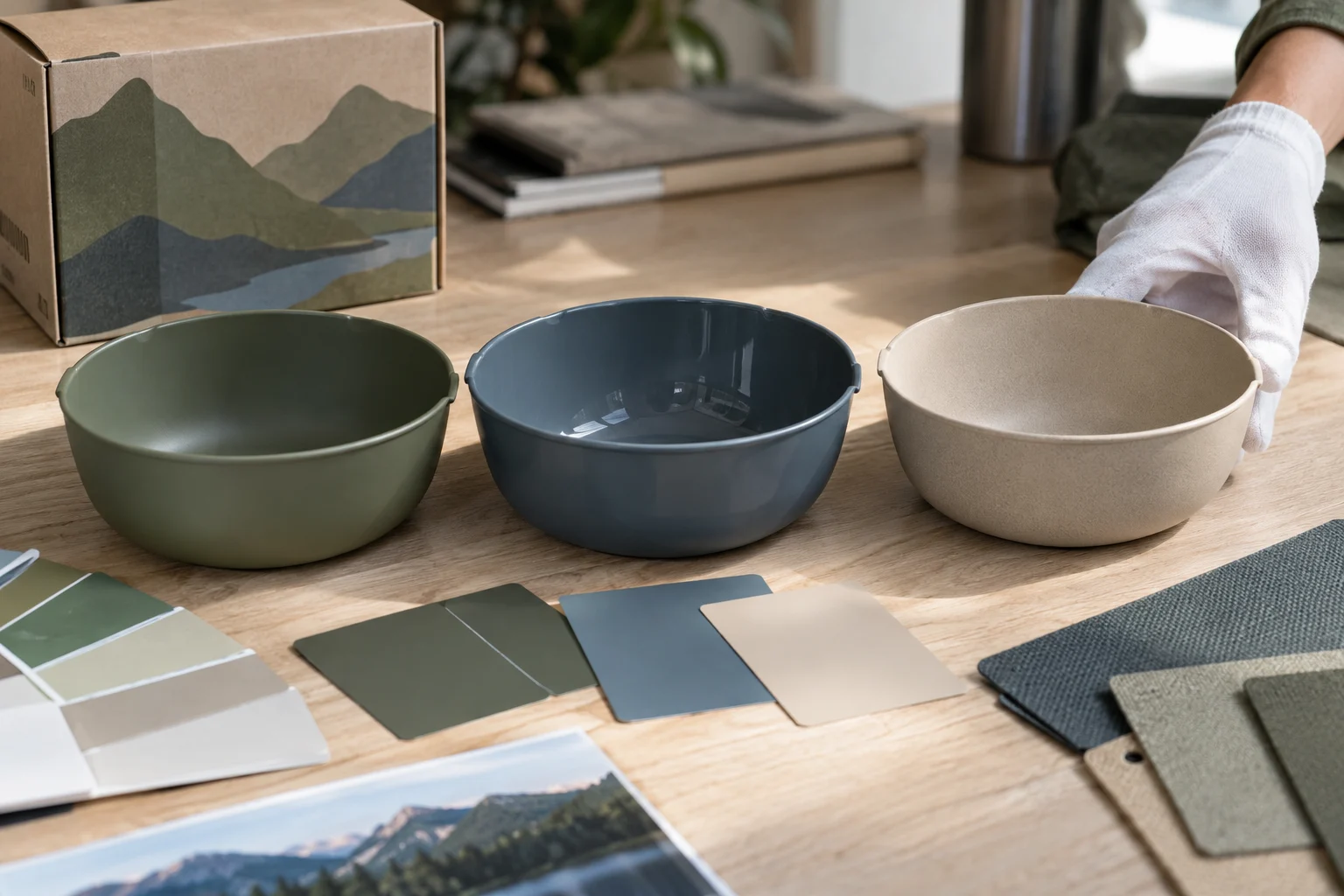
Matte, gloss, textured, coated and printed surfaces may share a base color yet represent different finished conditions. A post-process can introduce a coating, ink, adhesive, roughness, cleaning behavior or exposed edge not present on the tested sample. Compare the complete surface system: substrate, pigment, decoration, coating, cure route and final food-contact location.
A texture-only geometry change does not automatically invalidate evidence, but it should not be dismissed without a documented rationale. The reviewer should identify what changed, whether the tested surface remains representative and who approved the applicability decision. Avoid unsupported statements such as “same material, therefore covered.”
Read the report for boundaries, not just a pass result
Record the report client, issue date, sample description, sample photo, test method, result, laboratory identification and any stated conditions or limitations. Then compare those details with the commercial revision. A report can be genuine and still be irrelevant to the final component because the tested sample, use condition or destination-market requirement differs.
For regulatory context, review the U.S. FDA food-contact substances framework, the EU Framework Regulation (EC) No 1935/2004 and the European Commission food-contact materials overview. These sources explain applicable frameworks; they do not approve an unspecified camping set or replace component-level scope review.
Reconcile every food-contact component, not one representative item
A four-person set may repeat the same plate four times, but it can still contain different bowls, cups, utensils and lunch boxes. Repetition of an identical released component does not require four separate rows; different component identities, colors, finishes or decorations do. Storage cases and textile inserts should remain in the set release record even when their evidence type differs from food-contact dinnerware.
Use the complete-set evidence-file guide to index every part, the food-contact testing framework to define the intended scope and the component change-control map to reopen affected rows after a revision. Dinnerware is not cookware; this review does not support direct-heat claims.
Freeze the decision with the final sample and production release

At handoff, link the tableware test report scope reconciliation to the final BOM, drawings, approved colors, finish samples, decoration artwork, packaging statements and report files. Record the accepted limitations. If production later changes supplier, formulation, pigment, decoration, finish, geometry or intended use, the relevant row reopens even when the product name stays the same.
Recognize the commercial risks of a false match
An overextended report can produce incorrect packaging claims, delayed retailer approval, retesting, relabeling, stock holds or disputes about who authorized the final revision. An unnecessarily narrow interpretation can also waste time and money. The purpose of the tableware test report scope reconciliation is not to reject every difference; it is to make the applicability rationale visible and reviewable.
Buyer Checklist
| Buyer provides | Supplier returns | Approval evidence |
|---|---|---|
| Released BOM, drawings, component codes and final colors | Controlled material, pigment, finish and decoration references | Completed eight-field reconciliation table |
| Target markets, food types, temperature, time and cleaning claims | Applicable reports, declarations and stated scope limits | Use-condition match or documented gap |
| Approved samples, artwork and packaging statements | Production-revision sample and change history | Dated reviewer decision linked to final release |
Buyer FAQs
Does a report for the same material cover every color?
Not automatically. Confirm how color or pigment is identified in the evidence and whether the final variant falls inside that scope.
Can a matte part use a report for a gloss sample?
Only after a documented applicability review of substrate, pigment, coating, texture, process and intended use. Do not assume equivalence from appearance alone.
Is a supplier declaration enough?
It may be one required record, but its usefulness depends on issuer, component identity, jurisdiction, intended use and supporting scope. The buyer should define the evidence package required for the project.
Must every repeated plate have a separate row?
No. Identical repeated components can share one controlled identity row. Different colors, finishes, decorations or revisions require separate dispositions.
What if the report photo is unclear?
Mark identity unresolved and request a traceable sample reference, clearer record or written linkage. Do not manufacture certainty.
When should the tableware test report scope review reopen?
Reopen it after any relevant change to source, material, formulation, pigment, decoration, finish, geometry, intended use or claim.
Request a report-scope review or send the final component and evidence package. Include the BOM, drawings, color and finish approvals, intended-use conditions, report files, artwork and known changes so the reconciliation can identify real gaps without inventing coverage.