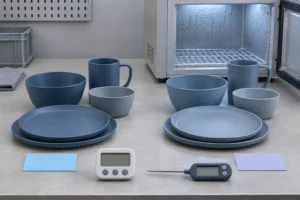
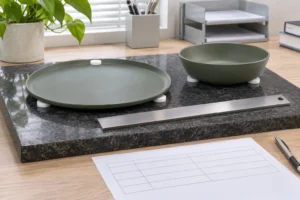
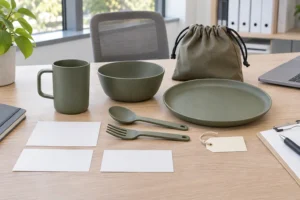
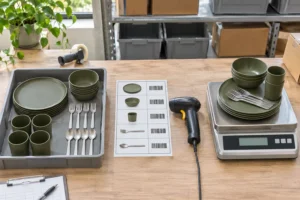
Direct answer: Carton drop orientations expose different load paths through the outer box, insert and packed components. The weakest orientation is the face, edge or corner that transfers impact through the least-supported path into a vulnerable component, closure or divider. Map each orientation to the BOM, follow an approved protocol, and record movement and damage by orientation.
Scope: this is a buyer-side planning and observation worksheet, not a test standard, laboratory result or claim that any Naike Dinner SKU passed a drop test. Test method, drop height, sequence, sample count, conditioning and acceptance criteria must be agreed for the project and target channel.
Start with the load path, not a favorite drop height
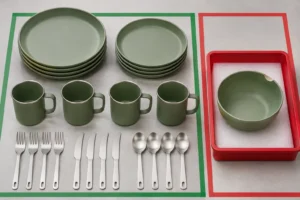
A complete camping dinnerware pack combines nested plates and bowls, cups, cutlery, optional lunch containers, a case or insert and an outer carton. Carton drop orientations should therefore be selected from the actual packed geometry. Each orientation changes which wall supports the load and which component becomes the first receiver. A flat face may load a broad stack evenly, while a short edge can drive cups toward a divider. A corner can combine vertical compression, lateral movement and closure stress. That is why an orientation plan belongs beside the approved BOM, packing sequence and drawings.
Do not borrow a drop height or sequence from another product simply because its carton looks similar. The ISTA 3 Series overview explains that general simulation procedures represent distribution hazards, while FedEx packaging guidance and UPS packaging guidance describe carrier-facing packing principles. These sources help frame the discussion; the approved project protocol controls the actual test.

Carton drop orientations and their load paths
| Orientation family | Likely first load path | Camping-set weak point to inspect | Evidence to retain |
|---|---|---|---|
| Top face | Closure panel → top cushion/insert → uppermost component | Closure opening, lid release, shallow bowl or cup contact, top void collapse | Pre/post closure gap, top-view photo, component position map |
| Bottom face | Bottom seam → base pad → heaviest nested stack | Bottom seam, base dish, plate rim load, tray footing | Seam condition, base deformation, stack release check |
| Long side | Sidewall → divider length → adjacent row | Long-divider bowing, cutlery migration, plate stack sliding | Divider offset, component-to-wall clearance, abrasion notes |
| Short side | End wall → cup/lunch-box zone → central stack | Cup docking, end-zone closure, container-to-plate contact | End-zone photos, clearance change, latch or lid status |
| Edge | Two panels and their joint → concentrated insert line | Divider disengagement, case hinge stress, stacked-rim point load | Edge ID, joint condition, insert engagement marks |
| Corner | Three panels → concentrated corner structure → diagonal movement | Corner crush, diagonal component travel, closure twist | Corner depth, diagonal position change, closure alignment |
Build the orientation sequence without contaminating the diagnosis
- Freeze the pack definition. Record carton drawing revision, inner pack, insert revision, case, component BOM and exact packing sequence. See the retail insert design guide and box-versus-mailer matrix for upstream decisions.
- Name all orientations before testing. A shared diagram keeps carton drop orientations consistent across teams. Use a drawing or photographs so “long edge 2” cannot be confused between teams.
- Set inspection gates. Decide whether the carton is opened after each event, after a sequence, or only at the end. Opening can change the pack, so the choice belongs in the protocol.
- Separate test acceptance from observation. A project may have pass/fail rules, but the observer should still record every movement, crease, scuff and disengagement.
- Retain revision-matched evidence. Photos without orientation ID, sequence position and pack revision cannot support a later packaging decision.
Use the same orientation IDs in the quotation, protocol and report so carton drop orientations remain traceable. The earlier multi-component carry-set drop test plan covers load state and acceptance planning. This article adds the orientation-specific diagnostic layer.
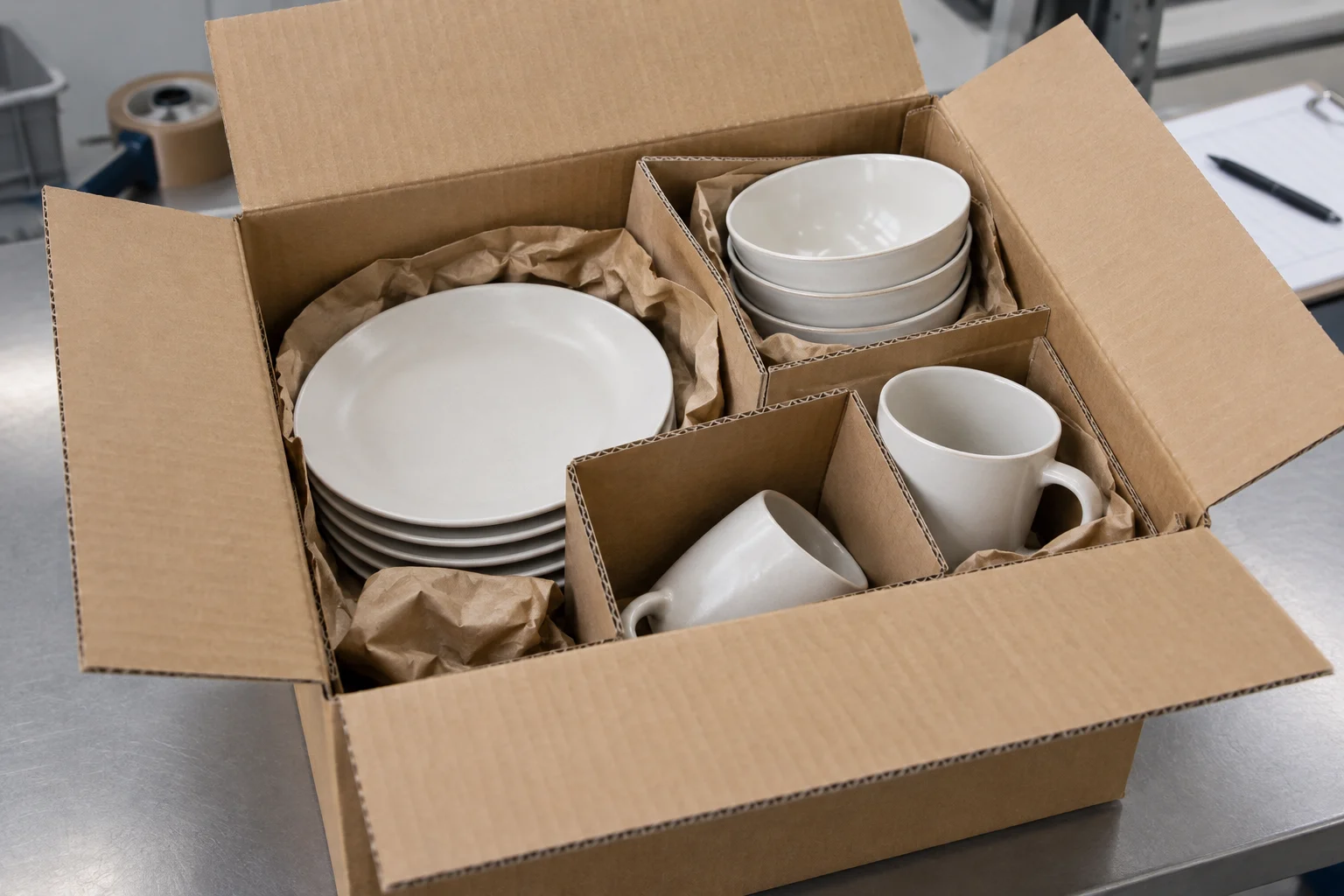
Copyable failure log for carton drop orientations
| Field | Record | Decision use |
|---|---|---|
| Sample / pack revision | Sample ID; carton, insert, case and BOM revisions | Prevents evidence from being applied to the wrong configuration |
| Orientation / sequence | Face, edge or corner ID; event number; agreed condition | Connects the observation to a specific load path |
| Outer carton | Crease, puncture, seam opening, crush depth, closure shift | Indicates whether outer structure or closure needs review |
| Insert / cushion | Disengagement, compression, tear, buckling, permanent set | Identifies retention or support changes |
| Case / internal pack | Latch, zipper, handle, pocket, tray or divider condition | Shows whether the carry system remains controlled |
| Component movement | Before/after position, contact partner, release from dock | Reveals hidden collision and scuff risks |
| Food-contact surface | Visible mark, contamination risk, edge contact; method used | Triggers cleaning, protection or evidence review |
| Disposition | Accept, investigate, redesign, retest; owner and due date | Turns observation into a controlled procurement action |
Example diagnosis with hypothetical inputs
Scenario only: a buyer reviews a four-setting pack with cups at one short end, nested plates in the center and cutlery beside the long wall. After an approved short-edge event, the outer carton remains closed, but the cup divider lifts and one cup touches the plate stack. After a broad-face event, no comparable movement appears.
Comparing carton drop orientations makes the diagnosis useful. The useful conclusion is not “the carton passed because nothing broke.” The short-end load path exposed a retention gap. The team can compare options—deeper divider engagement, a top restraint, revised end clearance or a different component sequence—then document the selected change and repeat the agreed verification. No result should be generalized to another carton size, material, component revision or channel without review.

Buyer checklist
| Buyer supplies | Supplier confirms | Approval record retains |
|---|---|---|
| Target channel, packed BOM, carton and insert drawings, required protocol | Actual sample revisions, packing sequence, component positions and open deviations | Orientation map, sequence, observations, photos and disposition |
| Acceptance criteria and whether cosmetic movement is reportable | Which values or capabilities remain to be confirmed | Approved change, owner, retest scope and final sign-off |
| Evidence needs for the target market and customer | No blanket claim beyond the tested configuration and conditions | Report identity, sample traceability and limitation statement |
Procurement FAQ
Is one corner drop enough to find the weakest orientation?
No. A single corner represents one load path. The required sequence depends on the approved method, distribution route, pack geometry and project risk.
Can we compare two packaging concepts with one test sample each?
You can make observations, but sample count and variability limit the conclusion. Define the sampling rationale before treating a difference as repeatable.
Does an undamaged carton mean the dinnerware is protected?
No. Internal movement, scuffing, divider release or component contact can occur without dramatic outer damage.
Should every movement be a failure?
Not automatically. Record movement first, then apply project-specific acceptance criteria. Movement that creates surface contact, fit loss, closure release or evidence risk deserves investigation.
Can this worksheet replace ISTA, carrier or customer requirements?
No. It organizes buyer decisions and observations. The applicable protocol and qualified test execution remain separate.
Send the pack definition before requesting a test quote
Share the approved BOM, carton and insert drawings, packing sequence, target channel, required method and acceptance criteria. Naike Dinner can review the information boundary and identify open project fields without inventing a test result or universal claim.
Request a packaging review · Send drawings and BOM · Ask for a project quotation