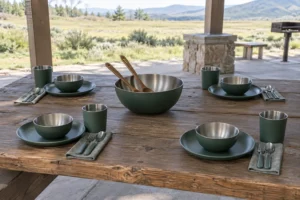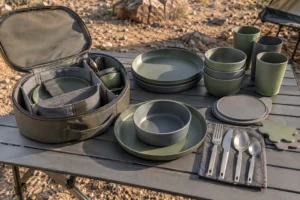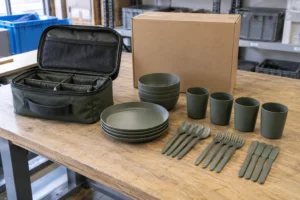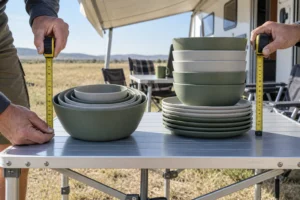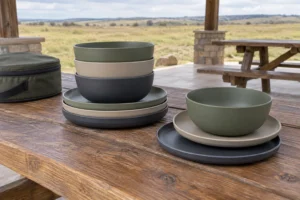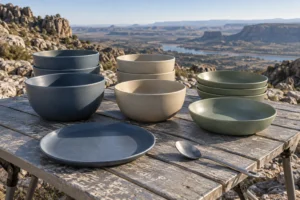
Aluminum camping dinnerware can be safe for its intended use when the finished plate, bowl, or cup uses a verified alloy and surface system, meets the destination market’s food-contact requirements, and is used within documented food, temperature, time, cleaning, and damage limits. “Aluminum” or “food grade” alone is not proof. Buyers need product-specific evidence that matches the quoted construction.
Aluminum camping dinnerware safety: the decision in one table
A buyer cannot answer the safety question from appearance, color, or weight. Bare aluminum, anodized aluminum, hard-anodized aluminum, and coated aluminum are different surface systems. The finished item may also include rolled rims, welded or riveted components, decorative layers, silicone parts, printing, or packaging residues that change the evidence file.
The correct question is therefore not “Is aluminum safe?” but “Is this exact finished article supported for these foreseeable conditions of use?” Define the food types, maximum serving temperature, contact duration, repeated-use pattern, wash method, storage practice, and destination before choosing tests or reviewing reports.
| Buyer question | What a safe decision requires | Evidence to review | Common weak answer |
|---|---|---|---|
| Which metal is used? | Declared alloy and, where relevant, temper tied to the product and lot | Material declaration, input record, drawing and traceability | “Premium aluminum” with no grade |
| What is the food-contact surface? | Clear identification of bare, anodized, hard-anodized or coated construction | Layer description, process specification and supplier declaration | Judging the finish from color |
| Which foods and temperatures? | Conditions matching hot, acidic, salty, fatty or long-contact uses actually claimed | Use specification and applicable release or migration evidence | One generic “food safe” statement |
| Can it be heated? | Dinnerware remains off direct heat unless the exact article is separately designed and verified as cookware | Product classification, instructions and heat-source statement | Assuming every metal item is stove-safe |
| How is damage handled? | Defined limits for scratches, pitting, coating loss, deformation and sharp rims | Approved limit samples, inspection criteria and replacement guidance | Calling every mark cosmetic |
| Does the report match? | Same alloy, finish, model family, contact conditions and production route | Complete report, sample identity, photos, method and scope | An unrelated certificate bundle |
What “safe” means for a reusable metal food-contact article
Safety is not a permanent property created by a marketing adjective. It is a conclusion about a defined article under normal and foreseeable use. The EU food-contact framework Regulation (EC) No 1935/2004 states the general principle that food-contact materials should not transfer constituents in quantities that endanger health, cause unacceptable changes in food composition, or deteriorate organoleptic characteristics.
The framework also addresses traceability, which matters when a buyer approves one alloy and finish but later receives another. For metals and alloys, there is no single EU-wide specific measure equivalent to the plastics regulation. Destination-market law, national provisions, Council of Europe guidance, and the actual construction must be mapped by a competent compliance professional.
The EDQM second-edition technical guide for metals and alloys is an authoritative Council of Europe resource for manufacturers and regulators. It explains metal-ion release, specific release limits where appropriate, and testing considerations. The guide helps define evidence; it is not a product certificate and should not be reduced to a badge on a sales page.
US buyer controls start with the finished utensil, not a material slogan
The FDA Food Code 2022 is a model used by jurisdictions for retail and food-service controls. Its equipment and utensil provisions describe characteristics such as safety, durability, corrosion resistance, adequate thickness, smooth cleanability, and resistance to pitting, scratching, distortion, and decomposition under normal use. These characteristics are practical procurement questions even when a consumer camping plate is outside a particular food-service inspection.
The Food Code is not an FDA approval certificate for an imported dinnerware SKU. Buyers must identify the applicable federal and destination requirements, then build an evidence package for the finished article. A supplier’s statement that the raw metal is “FDA grade” is not a substitute for a legal and technical review.
Aluminum alloy identity matters
Aluminum dinnerware is typically formed from an alloy selected for shape, strength, corrosion behavior, finish compatibility, and processability. Different alloy series and tempers can respond differently to forming, edge rolling, cleaning, and surface treatment. A quotation that leaves the alloy blank makes repeat purchasing and report matching difficult.
The ASTM B209/B209M-21 scope covers specified aluminum and aluminum-alloy sheet and plate in particular alloys and tempers. It can be relevant when the starting material falls within that scope, but conformance of input sheet does not prove that the formed plate or bowl is cleanable, free of unsafe residues, supported for a particular food, or compliant in the destination market.
Buyers should request a controlled material declaration and a traceability route from input to finished lot. The receiving check might include supplier identity, alloy/temper record, thickness or mass control appropriate to the process, and correlation to the approved drawing. Do not invent a laboratory result when the available evidence only identifies the input material.
Bare, anodized and coated aluminum are not interchangeable
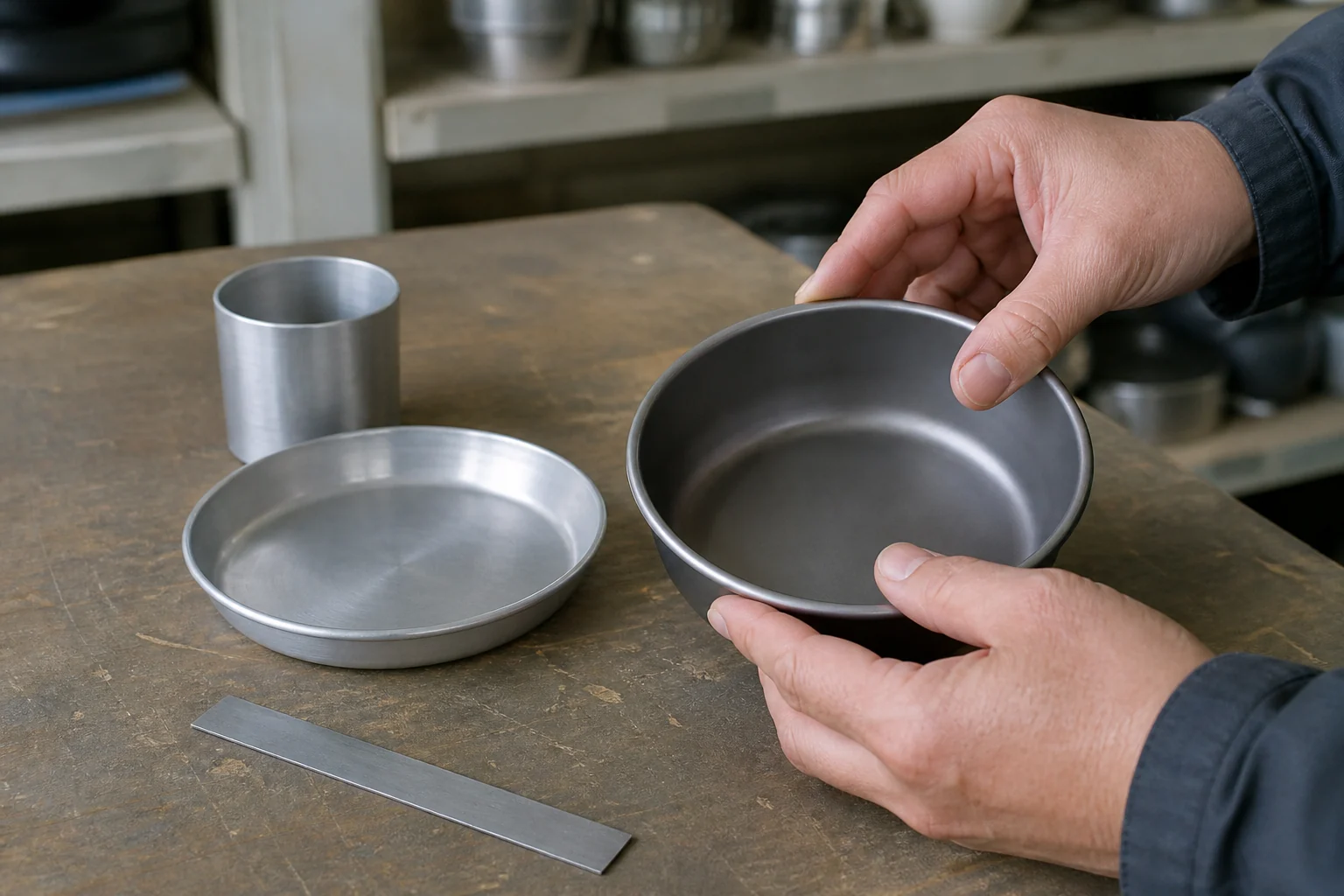
Bare aluminum
A bare aluminum food-contact surface has no intentionally applied coating separating food from the metal. Natural oxide forms on the surface, but the article still requires a defined alloy, finish, cleaning process, intended-use conditions, and release evidence appropriate to the market. Buyers should not describe it as maintenance-free or universally compatible with every food.
Appearance can change through use. Rubbing, mineral deposits, staining, and surface dulling may be cosmetic, but pitting, sharp damage, deep scoring, or residues can affect cleanability or indicate misuse. The specification should distinguish acceptable patina from conditions that trigger rejection or replacement.
Anodized and hard-anodized aluminum
Anodizing is an electrochemical process that deliberately grows an oxide layer on the aluminum surface. “Hard anodized” generally describes a process intended to create a thicker or more wear-resistant oxide than conventional decorative anodizing, but the marketing phrase does not by itself define alloy, process parameters, sealing, thickness, color, or food-contact suitability.
A buyer should ask for the actual process specification and intended contact surface, then verify that the tested sample matches it. Color cannot prove layer type or performance. If a production change alters the alloy, pretreatment, bath, sealing, pigment, supplier, or process window, the evidence and approval basis may need review.
Applied coatings
Some aluminum dinnerware uses a separate organic or inorganic coating. That creates a multilayer article: substrate, pretreatment, coating, decoration, and any topcoat must be described. Food type, temperature, contact time, abrasion, dishwasher claims, and cleaning chemistry can affect the appropriate evaluation.
Coating adhesion and damage are not demonstrated by a visually perfect first sample. Agree an inspection method, acceptable variation, scratch and chip limits, and whether exposed substrate is allowed. Never reuse a report for a different formulation or color without a documented rationale from the responsible compliance party.
Food type and contact time change the assessment
Acidity, salt, moisture, temperature, and contact duration can influence metal release and surface change. A plate used for a short cold sandwich meal presents different conditions from a bowl holding hot tomato stew for hours. Procurement evidence should cover the most demanding intended and foreseeable use rather than the easiest demonstration available.
This does not mean every acidic food makes an aluminum article unsafe. It means the buyer should avoid universal claims and specify conditions. If the intended use includes tomatoes, citrus, vinegar dressings, fruit, salty soups, or prolonged storage, include those scenarios in the compliance and use review instead of relying on a neutral-water test alone.
Dinnerware is normally for serving and eating, not long-term food storage. Instructions can limit prolonged storage when supported by the product assessment. The package and online listing should use the same boundaries so customers do not receive one message before purchase and another only after opening the box.
Hot food is not the same as direct heat
A bowl may be intended to receive hot food while remaining unsuitable for a burner or flame. Serving temperature, wall temperature, rim handling, and user comfort must be evaluated, but none of those checks converts the item into cookware. The comparison of titanium versus aluminum camping cookware concerns vessels designed around compatible heat sources; this page concerns off-heat dinnerware.
Metal can transfer heat quickly to hands and lips. A cup or bowl that is chemically supported for hot food may still present a burn or usability problem if the rim, wall, or handle becomes too hot. Buyer trials should include realistic fill levels and holding points, and instructions should warn users where appropriate.
Do not add “campfire safe” because the article is metal. Direct flame may damage coatings, create severe hot spots, deform thin items, or expose users to hot edges. If a product is genuinely designed for heating, classify and verify it separately as cookware with product-specific evidence.
Cleaning, scratching and corrosion are part of safe reuse
Reusable dinnerware must remain cleanable through its intended service life. Rolled rims, seams, decorative recesses, and attachments should not trap food or water. The surface should be inspected after agreed wash and abrasion conditions, with failure criteria that connect to hygiene and continued use.
Harsh alkaline cleaners, abrasive pads, incompatible dishwasher chemistry, and wet nested storage can affect some finishes. The correct care instruction depends on the exact surface system. Avoid a blanket dishwasher-safe claim until a production-intent sample and finish have been evaluated under a defined cycle and detergent.
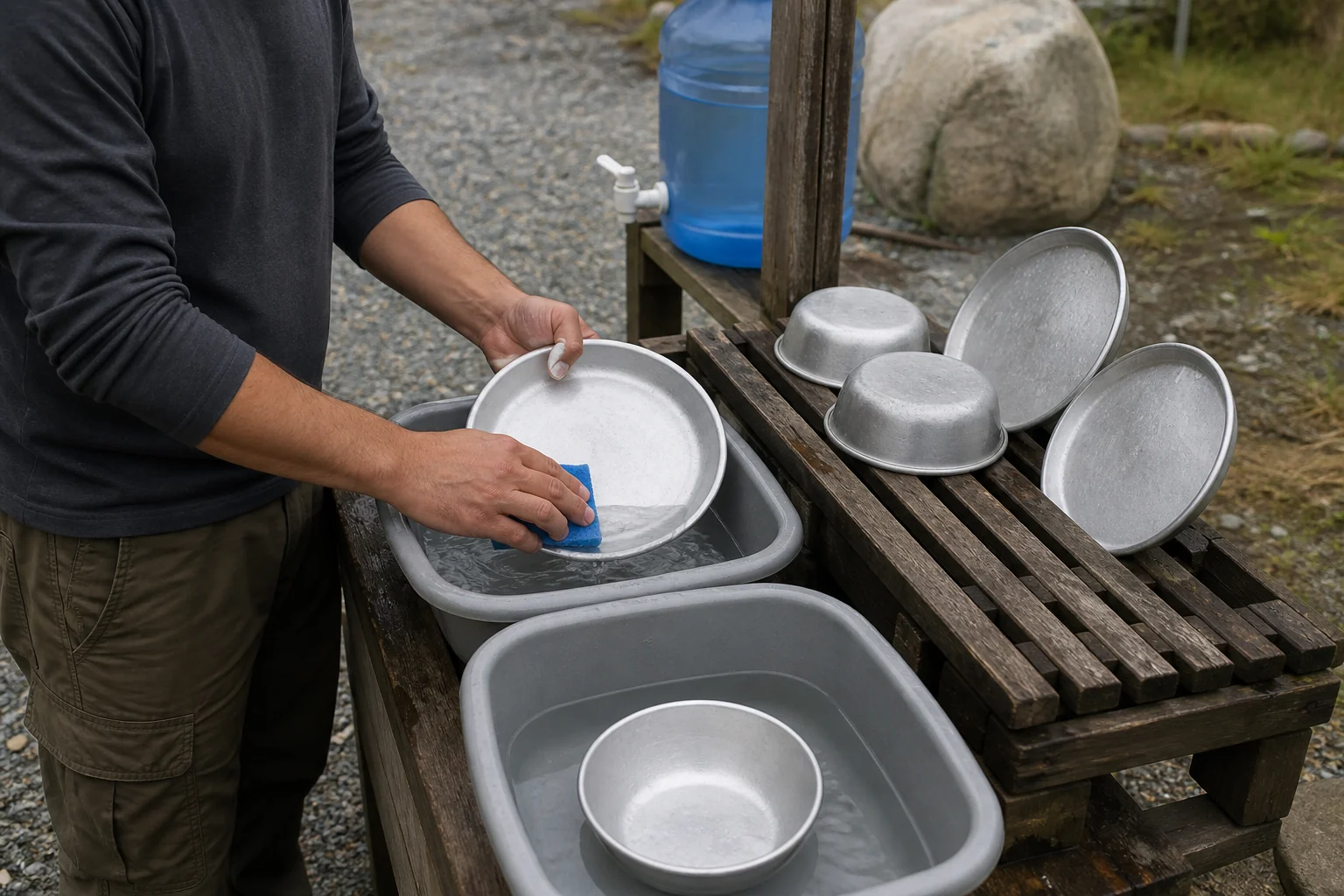
Scratches require context. A light cosmetic mark on a bare metal surface, a deep score that traps soil, a breach through an applied coating, and a sharp gouge are different conditions. The buyer should set limit samples and replacement rules rather than promising that all scratches are harmless or treating every mark as a safety failure.
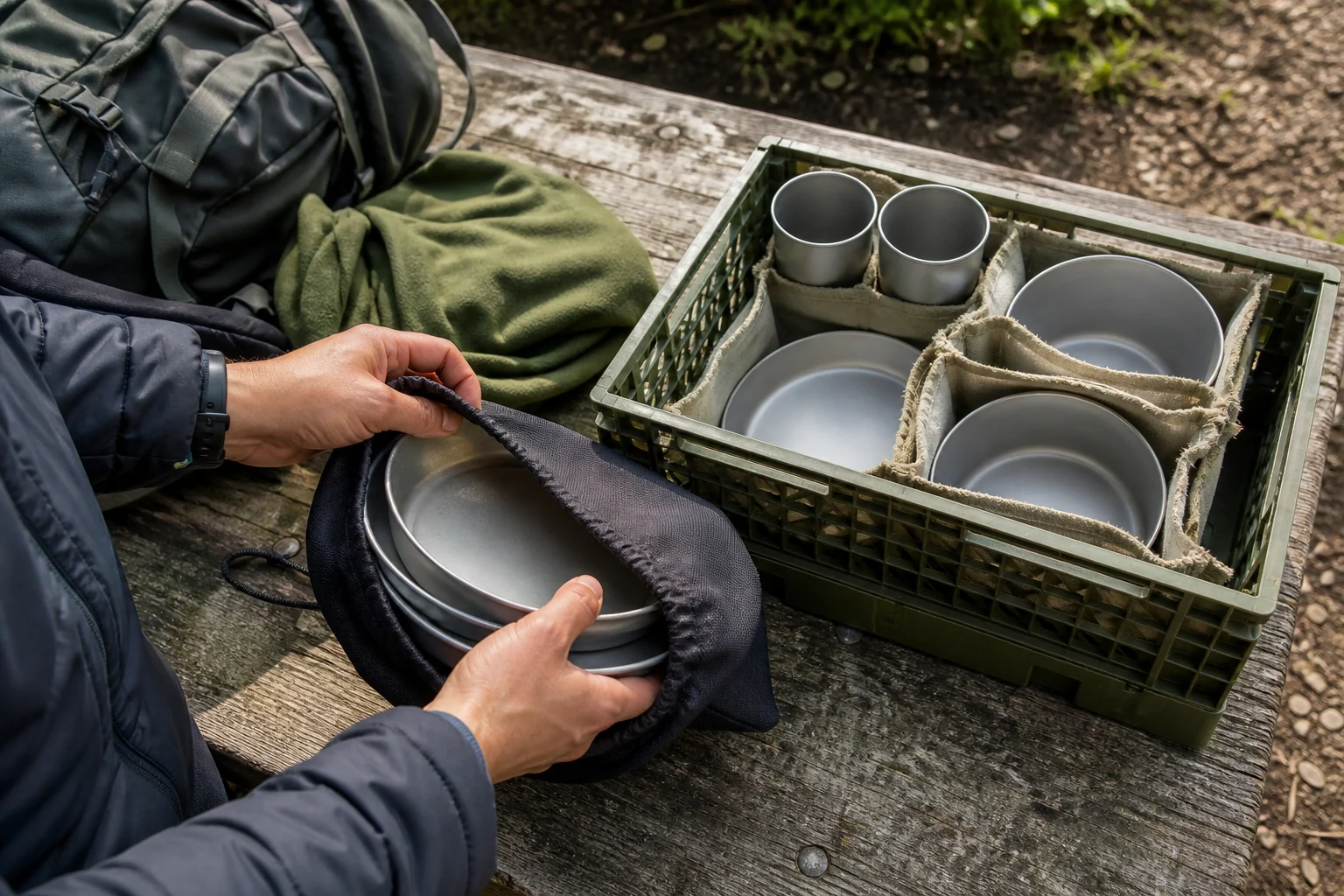
After washing, dry items before nesting and use clean separators when the design is prone to rubbing. Packing controls reduce both cosmetic abrasion and moisture entrapment. They also help a rental fleet or family set remain organized without turning packaging into an unsupported preservation claim.
Suitable outdoor scenarios and their evidence priorities
Backpacking and individual meals
Low mass and nesting efficiency can make aluminum plates, bowls, and cups attractive for hikers. The buyer should verify useful capacity, rim comfort, deformation under packed loads, rattling, and how a wet set dries. If users eat hot rehydrated meals, include fill temperature and holding comfort in the sample review.
Family car camping
Families may value durable stacks, color differentiation, broad plates, and easy cleaning more than the absolute lowest mass. Larger sets increase contact between items during transport, so separators, pouch design, and finish abrasion become important. Serving acidic foods and washing with campground water should be considered in use guidance.
Scout camps, rental fleets and outdoor education
Institutional programs need traceability, replacement rules, inspection frequency, and unambiguous rejection criteria. A plate with a deformed rim or a cup with a damaged coating should be removed according to the program’s documented policy. The FDA Food Code’s cleanability and durability concepts can help frame operational checks even when local rules differ.
Retail and private-label assortments
Retail buyers need consistent names across quotation, evidence, package, product page, and instructions. “Anodized,” “hard-anodized,” and “coated” should not be used interchangeably. The broader guide to the best material for camping dinnerware can help position aluminum against other materials without implying that every construction has identical safety or performance.
Limitations and procurement risks
The first risk is an undefined surface. A quotation may say “aluminum bowl” while the sample is anodized, the report covers bare aluminum, and production later uses a decorative coating. The buyer should freeze the construction in the purchase specification and require approval before any material or process change.
The second risk is report mismatch. Check the tested model, dimensions, surface-area-to-volume conditions, alloy, finish, food simulant or food, time, temperature, laboratory, method, result, report status, and sample photos. A report from another factory or another product family may be informative but does not automatically support the quoted article.
The third risk is unsupported marketing. “FDA approved,” “EU certified,” “non-toxic,” “chemical free,” and “safe for all foods” can overstate what the evidence shows. Claims should name the scope accurately and remain consistent with instructions and foreseeable use.
The fourth risk is capability inference. This article is buyer education and does not verify that Naike Dinner supplies aluminum dinnerware, anodizing, coatings, or particular testing. A project must pass supplier, process, product, capacity, MOQ, lead-time, sample, and evidence verification before any offer is presented as a company capability.
Evidence-first dinnerware review
Send the destination market, user group, alloy and finish proposal, foods, serving temperature, contact time, cleaning method, set configuration, packaging and claim list. We will identify gaps and confirm which capabilities and records must be verified before a documented quotation or sample plan is offered.
Request an evidence reviewA seven-step aluminum dinnerware approval process
Step 1: classify the article
State whether each SKU is a plate, bowl, cup, utensil, container, or cookware vessel. Record that dinnerware is off-heat unless a separate verified classification applies. This prevents a product photo or metal appearance from silently expanding the intended use.
Step 2: define foreseeable contact
List hot and cold foods, acidic and salty foods, contact duration, repeated use, serving temperature, cleaning, storage, and users. Include the hardest credible condition that the brand plans to claim. If a use is excluded, write it into instructions and the product listing.
Step 3: map every material and process
Identify alloy, temper where relevant, forming route, rim construction, anodizing or coating, decorations, attachments, and packaging contact. Request supplier and process identities under confidentiality when necessary. A color chip or generic material name cannot replace the construction map.
Step 4: lock drawing and workmanship
Control useful dimensions, mass or thickness as appropriate, rim geometry, base stability, stack clearance, surface finish, drainage, and edge quality. Define tolerances and inspection methods. The stainless steel camping plate guide provides related questions for rim, stack and serving design, although its material evidence is not transferable to aluminum.
Step 5: build the compliance plan
Identify the destination rules and authoritative guidance, then select representative samples and test conditions with a competent laboratory or compliance specialist. Link the plan to the exact finished article. Do not choose a convenient report first and invent the intended use around it later.
Step 6: approve production-intent samples
Inspect surface, rim, shape, stack, comfort, cleaning, packing and realistic foods under the documented use. Record observations without converting an informal demonstration into certified test data. Resolve deviations and retain a controlled approval sample.
Step 7: control production and change
Set incoming material checks, in-process controls, final inspection, traceability, nonconformance handling and change notification. The camping tableware manufacturer checklist offers a wider supplier review framework. Reassess evidence when alloy, surface process, coating, supplier, geometry, or intended use changes.
Decision-Stage Aluminum Dinnerware Buyer Checklist
| Check | Question | Why It Matters |
|---|---|---|
| Classification | Is every SKU clearly dinnerware, with direct heat excluded? | Prevents unsafe cookware assumptions. |
| Alloy identity | Which alloy and relevant temper are tied to the sample and lot? | Supports traceability and repeat purchasing. |
| Surface system | Is the contact surface bare, anodized, hard-anodized or coated? | Determines evidence, care and damage limits. |
| Use conditions | Which foods, temperatures, durations and cleaning methods are included? | Defines the actual safety assessment. |
| Report match | Does the complete report identify the same finished construction? | Stops unrelated evidence from being reused. |
| Workmanship | Are rim, surface, pitting, coating loss and deformation criteria controlled? | Protects cleanability and user handling. |
| Instructions | Do package and online instructions state the same limits? | Reduces foreseeable misuse and claim conflict. |
| Change control | Must alloy, finish, supplier, process and geometry changes be approved? | Preserves the basis of the evidence file. |
Use the checklist to build a comparable RFQ rather than requesting generic “food-grade aluminum.” The quotation should state all construction and evidence assumptions. To request a structured brief review, contact Naike Dinner with the intended conditions of use.
Eight Follow-Up Questions from Camping Dinnerware Buyers
1. Is bare aluminum camping dinnerware automatically unsafe?
No. A safety decision depends on the exact alloy, finished surface, intended foods, temperature, contact time, care, destination requirements, and supporting evidence. Bare aluminum should not be rejected or approved solely because it lacks a coating.
2. Is anodized aluminum always safer than bare aluminum?
Not as a universal rule. Anodizing changes the surface and may offer useful wear or corrosion properties, but the process, sealing, finish, damage, and use conditions still need verification. “Anodized” is not a substitute for a product-specific food-contact assessment.
3. Can aluminum plates hold hot food?
They can when the finished article is supported for the claimed serving temperature and food contact. Chemical suitability does not automatically prove comfortable handling: thin metal rims and walls may become hot. Include realistic fill, grip and lip-contact checks in sample approval.
4. Can aluminum dinnerware go on a camping stove?
Not unless the exact item is separately designed, classified, instructed and verified as cookware for the specified heat source. This guide treats plates, bowls and cups as off-heat dinnerware. Metal composition alone does not establish burner or campfire suitability.
5. Are acidic foods prohibited?
Not automatically, but acidity, salt, temperature and contact time can affect the assessment. Buyers planning tomato, citrus, vinegar, fruit or salty-food use should include those conditions in the evidence plan and instructions instead of relying on a generic claim.
6. Does a scratch make aluminum dinnerware unsafe?
It depends on the surface and damage. A light mark on bare metal, a deep soil-trapping score, a sharp gouge, and a coating breach are different conditions. Establish finish-specific limit samples and replacement criteria based on the approved construction.
7. What documents should an importer request?
Request material and surface declarations, traceability, controlled drawings, intended-use conditions, applicable finished-article reports, sample identity, instructions, inspection criteria, and change-control commitments. Check whether every document matches the quoted model and production route.
8. Does Naike Dinner currently supply aluminum camping dinnerware?
This educational article does not establish that capability. Material, process, product availability, capacity, MOQ, lead time, compliance scope and production route must be verified for the individual project before Naike Dinner is represented as a supplier.
Request a documented aluminum dinnerware project review
Share the market, users, set pieces, alloy and finish proposal, foods, serving temperature, contact duration, cleaning, packing, claims and evidence expectations. We will separate verified facts from open questions and confirm what must be checked before samples or a documented quotation can proceed.
Submit the project briefReview the supplier checklist