
Reusable Wheat Straw Tableware for Foodservice Programs
Evaluate plates, bowls, cups and utensils for the service style, menu, handling routine and replenishment plan of your operation. Product suitability and care claims are confirmed by SKU—not assumed across the range.
For importers, distributors, retailers, foodservice buyers and private-label programs.
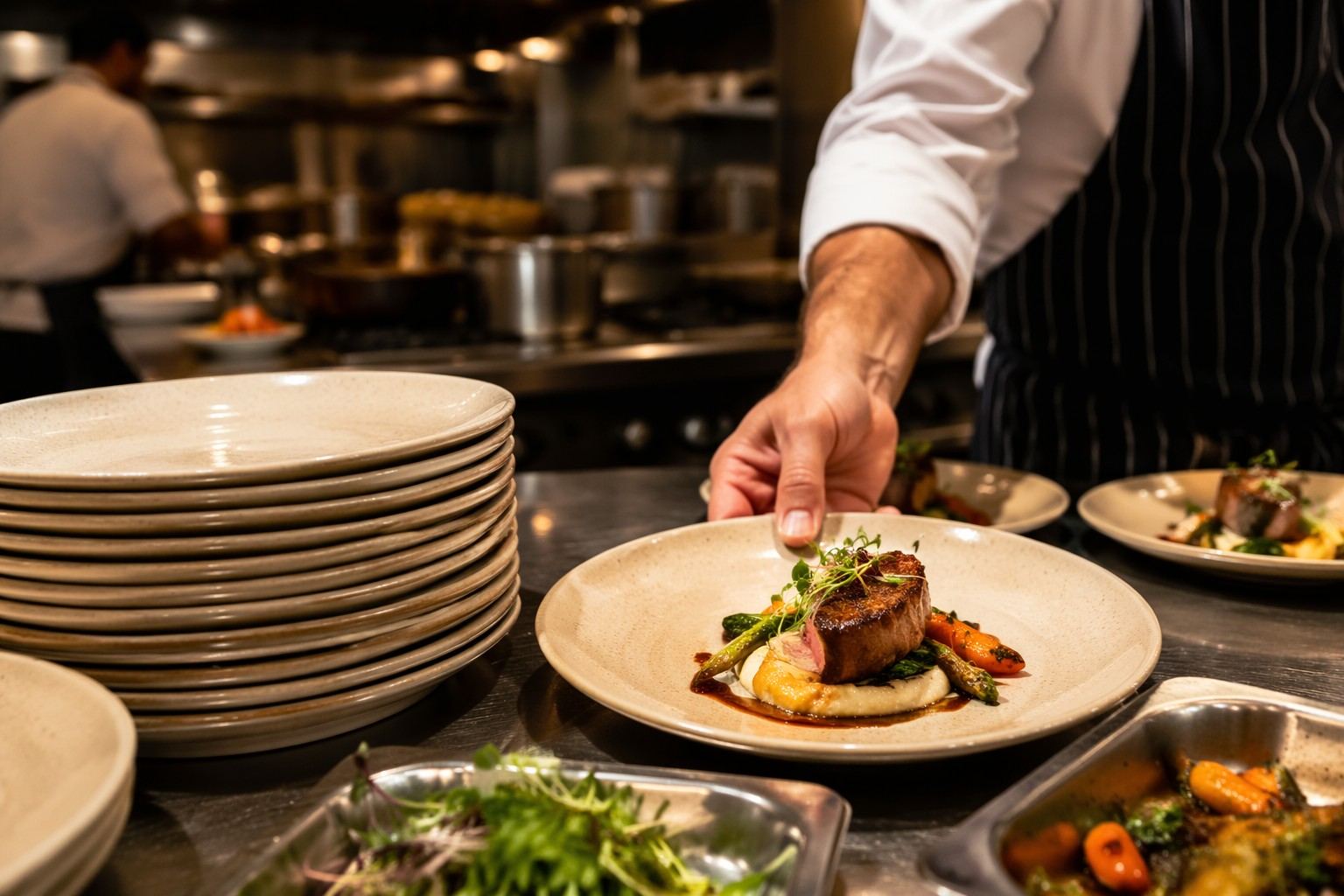
Specify the operating environment before the product
Foodservice buyers should begin with how the tableware will actually be used: dine-in service, staff meals, catering, cafés, events or takeaway support. Share the food type, portion format, temperature expectations, washing routine, storage method and daily handling pattern so the team can identify products for evaluation.
Service formats
Compare dinner plates, snack plates, bowls, cups and portable cutlery for different meal occasions.
Operational review
Discuss stacking, storage, handling, care instructions and replacement planning for the chosen model.
Brand consistency
Coordinate colors, logos and packaging for chains, venues, catering teams or employee dining.
Sample under your real service conditions
A buyer sample should be evaluated with the intended foods, handling and cleaning process. Heat, microwave and dishwasher statements vary by material formulation and SKU, so the final care guidance and documentation must be confirmed for the selected product before purchase.
Include these details in your inquiry
- Service format and expected users
- Food type, capacity and portion needs
- Handling, stacking and washing process
- Brand color, logo and packaging
- Order volume and replenishment schedule
From sourcing brief to production-ready specification
Each stage should leave a clear written decision for product, customization, packaging and timing.
Continue your product review
Questions to resolve before quotation and sampling
Is every product dishwasher or microwave suitable?
No blanket assumption should be made. Suitability and care instructions must be checked for the exact SKU.
Can restaurants order coordinated plates and bowls?
Yes. Available combinations depend on the selected models, colors and project quantity.
Can a chain add its logo?
Logo options can be reviewed based on product surface, artwork, quantity and the required durability.
Can we test samples in our operation?
Yes. Share the planned evaluation conditions so the team can recommend suitable samples and confirm limitations.
How are lead times confirmed?
Lead time is project-specific and depends on sampling, customization, order quantity, packaging and production scheduling.
Send your product, quantity and customization brief
We will review the selected product, MOQ, sample route, lead time, packaging and available documents for your destination market.