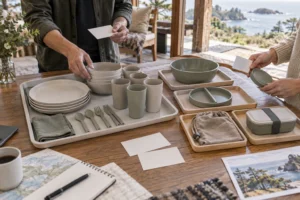
Define camping set intended use conditions for each finished component, not for the bundle as a whole. Record the food type, contact temperature, contact time, repeated-use expectation, cleaning method and prohibited use for every plate, bowl, cup, lunch box, lid, divider and utensil. A set claim is acceptable only when every relevant component supports the same boundary.
A buyer may receive one sentence such as “the set is suitable for hot food and dishwasher cleaning.” That sentence hides several decisions. A plate may only carry dry meals, a bowl may be intended for warm soup, a cup may face beverages, a divided container may hold acidic food, and a textile case may require an entirely different cleaning route. The camping set intended use conditions register below converts those differences into an approval record.
Build the camping set intended use conditions register
| Component | Food or contents | Temperature boundary | Contact pattern | Cleaning and drying | Claim decision |
|---|---|---|---|---|---|
| Plate | Dry, fatty, aqueous or acidic foods to be defined | Buyer states expected serving range; supplier returns supported range | Single meal or repeated use; duration to be stated | Hand wash or machine route; drying orientation | Approved wording, limitation or open evidence |
| Bowl | Soup, cereal, sauce or other named foods | Fill and holding conditions separated | Duration, refill pattern and repeated cycles | Residue access, rim and base drainage | Do not inherit the plate claim automatically |
| Cup | Water, cold beverage, warm drink or other stated liquid | Fill temperature and handling boundary | Short drink service or storage explicitly distinguished | Interior access, inversion and trapped-water check | No leakproof or hot-drink claim unless supported |
| Lunch box and lid | Dry, moist, fatty or acidic meal components | Filling, storage and reheating treated separately | Closed contact time and repeated use | Seal channel, hinge, divider and drying separation | No microwave, freezer or leak claim by assumption |
| Divider | Foods touching both faces and edges | Same or narrower boundary than the container | Fixed or removable use cycle | Edge access and complete drying | Compatibility recorded by revision |
| Cutlery | Foods expected for each utensil | Serving contact rather than cooking exposure | Repeated short contact and storage after use | Joint, tine and handle cleaning | Dinnerware accessory, not cookware |
| Carry case or textile | Normally no direct food contact unless design permits it | Ambient carry conditions to be defined | Clean and used component exposure | Spot clean, washable or replaceable route | Separate from food-contact claims |
Each row needs an owner and a record reference. “To be confirmed” is an acceptable temporary status; a silent blank is not. When one material, color, decoration, geometry or cleaning route changes, reopen only the affected rows and the set-level claims that depend on them.
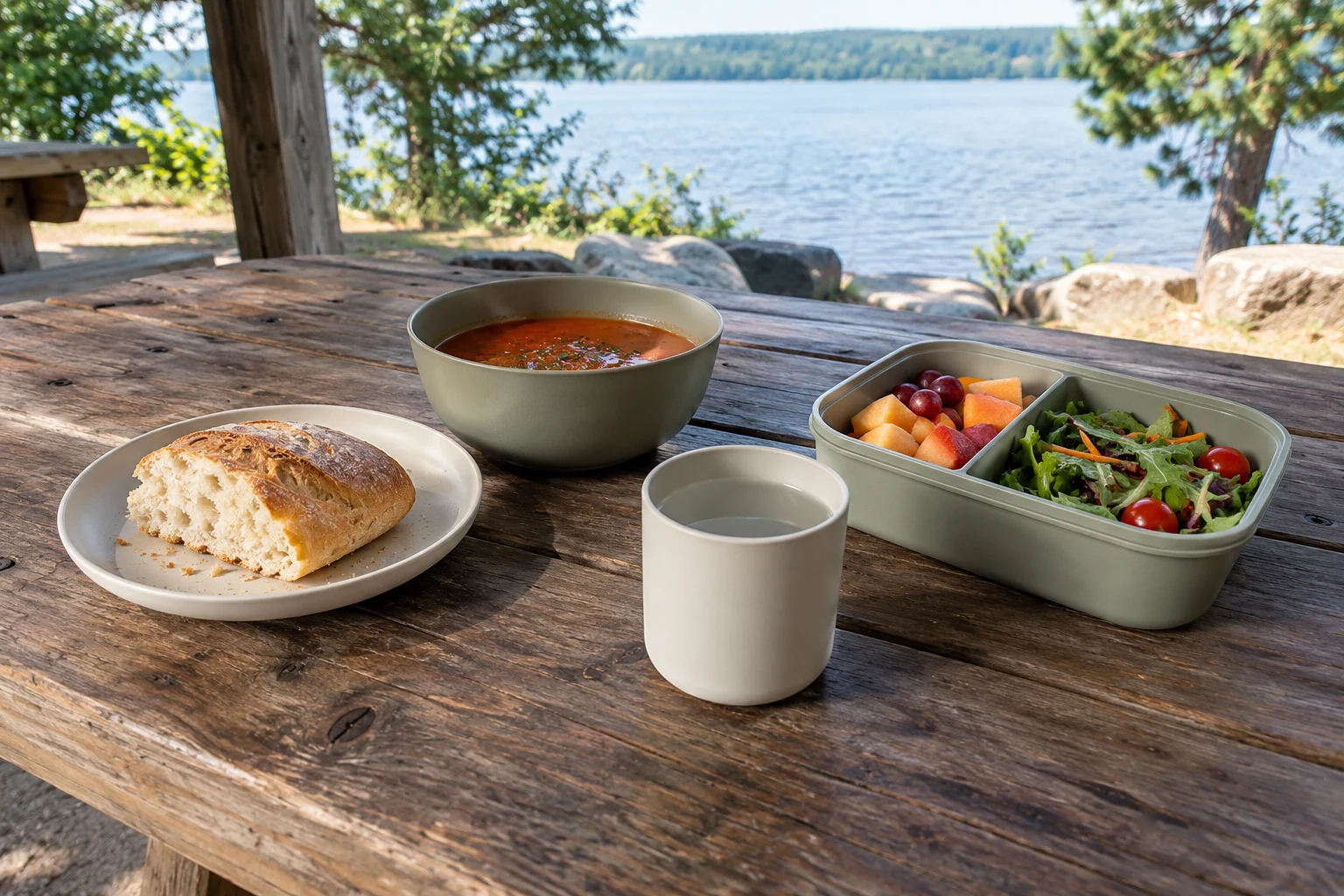
Define food type before asking for evidence
“Food contact” is not one exposure. A component may meet dry bread, water, oil-rich meals, tomato sauce, fruit acids or mixed foods. The buyer should describe realistic foods and the destination market; the supplier or technical reviewer can then identify the evidence needed for that finished component. Do not turn an example food into a universal claim.
Use representative categories only when the applicable technical framework permits them and the rationale is documented. For regulatory context, consult the U.S. FDA food ingredients and packaging overview, the European Commission food-contact materials overview and the Commission’s food-contact materials legislation index. These sources establish frameworks; they do not approve an unspecified set.
Separate fill temperature, holding temperature and heating
Temperature language should describe the event. Food may enter a bowl warm, cool while held, and later be washed under a different condition. That is different from placing a container in a microwave, oven, on a hot plate or over a flame. Dinnerware is not cookware. Unless a finished component has an expressly reviewed heating use, keep cooking and direct-heat claims out of the register.
Ask the buyer to state expected conditions rather than copying a maximum number from another product. Ask the supplier to return the supported boundary and its evidence reference. If a safe limit cannot be verified, the commercial claim remains narrow. The register should never invent a temperature from a visual sample, material name or competitor listing.
Record contact time and repeated use
A plate used for a short meal, a lunch box closed for hours and a cup repeatedly filled are not the same scenario. Record whether the component is intended for serving, storage, transport or repeated cycles. Include the likely duration and whether the food remains hot, cools, or is chilled. These camping set intended use conditions prevent a brief-use assumption from being stretched into a storage claim.
Repeated use also links food contact to cleaning. The register should identify the cleaning method between cycles and the inspection trigger for staining, odor, deformation, surface damage, loose decoration or trapped moisture. It should not promise a service life without verified evidence.
Treat cleaning and drying as component-level conditions

“Dishwasher safe” is a claim, not a convenient default. Plates, bowls, cups, lids, dividers, utensils and textile organizers may need different routes. State hand washing, machine cleaning, disassembly, detergent restrictions, rack position and drying orientation only where supported. If the project has no verified dishwasher boundary, describe the required review instead of making the claim.
Drying matters because nested components, seal channels, utensil sleeves and closed cases can retain water. The cleaning row should say whether parts separate, how airflow reaches hidden surfaces and whether the set must be fully dry before repacking. Link these instructions to the actual pack-out sequence, not to generic care copy.
Approve a set-level claim only after checking every dependency
Create a set-claim row for each proposed statement, such as warm-food use, cold storage, repeated use, hand washing or machine cleaning. List every component that must support it. If one included part has a narrower boundary, either narrow the set statement, exclude that component from the claim, redesign the configuration or obtain the missing review. Do not let the strongest component define the whole bundle.
Connect the camping set intended use conditions register to the complete-set evidence index, reconcile reports with the report-to-revision table, and reopen affected rows through the component change-impact map. These three records keep intended use, evidence and released revision aligned.
Worked review scenario
Assume a buyer proposes a four-person set with plates for sandwiches, bowls for warm soup, cups for cool drinks, a divided lunch box for fruit and salad, cutlery, and a textile case. These are buyer-entered assumptions, not verified specifications. The supplier should return a component-by-component response: supported food categories, use temperature, contact duration, cleaning route, evidence reference and exceptions.
If the cup has no reviewed warm-drink boundary, the set must not be advertised as suitable for hot drinks. If the lunch-box lid has no verified microwave use, “microwaveable set” is inappropriate even when a different bowl has relevant evidence. If the textile case is not washable, the care instructions should prevent it from inheriting the dinnerware cleaning statement.
Commercial risks of a blanket use claim
An unsupported blanket claim can lead to incorrect packaging, retailer questions, relabeling, evidence gaps, customer misuse and disputes after a component revision. An unnecessarily narrow claim can also reduce the product’s usefulness. The register makes both risks visible: it records what the buyer needs, what the released component supports and what remains unresolved.
Buyer Checklist
| Buyer provides | Supplier returns | Approval record |
|---|---|---|
| Component list and revision | Finished-component identity and material reference | One controlled row per distinct component |
| Foods and contents | Supported scope and evidence reference | Food boundary approved or open |
| Fill, hold and storage conditions | Supported temperature and time boundary | Heating and direct-heat exclusions stated |
| Repeated-use expectation | Applicable review and inspection limits | Cycle claim accepted only if verified |
| Cleaning and drying route | Component-specific care response | Set instructions match the narrowest included part |
| Proposed packaging claims | Claim-by-claim applicability response | Approved wording, owner and date |
Buyer FAQs
Can one intended-use statement cover the complete set?
Within the camping set intended use conditions register, use one complete-set statement only when every relevant finished component supports that exact statement. Otherwise use component-specific wording or narrow the set claim.
Should the buyer specify an exact temperature?
Record realistic fill, holding, storage and cleaning temperatures in the camping set intended use conditions register. A supported technical boundary must come from the applicable component review, not from guesswork.
Does a food-contact report prove dishwasher suitability?
No. Food-contact scope and cleaning-performance claims are different questions. Review the stated report scope and the specific cleaning claim separately.
Can the cup and bowl share one row if they use the same material?
Not automatically. Their geometry, color, decoration, use temperature, food type and cleaning route may differ. Combine rows only when identity and conditions are genuinely equivalent.
How should unknown conditions be recorded?
Write “To be confirmed,” assign an owner and identify the evidence or sample review needed. Do not convert an open field into a marketing claim.
What happens after a component change?
Reopen the changed component row in the camping set intended use conditions register and every set-level claim that depends on it. Record the new revision and applicability decision.
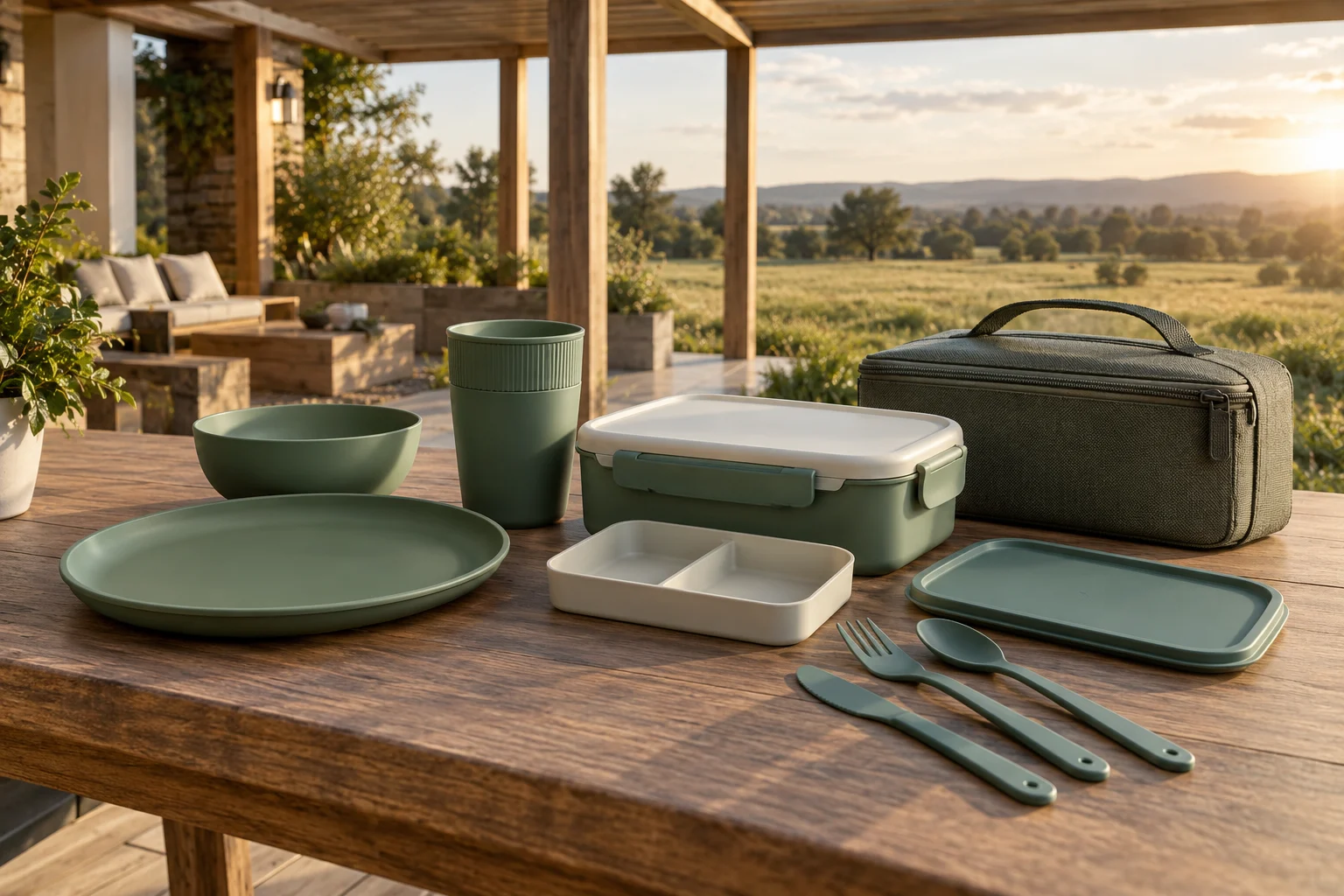
Request a component-use review
Send the final component matrix, materials and revisions, expected foods, fill and holding conditions, repeated-use assumptions, cleaning and drying route, destination markets, proposed claims and available evidence. Request a component-use review, submit the evidence files, or ask for a written quotation after the open conditions are resolved.