20- and 24-Piece Family Sets
Four-person configurations with plates, bowls, cups and cutlery.

Outdoor Material Solution | Wholesale OEM
Reusable food-grade PP camping plates, bowls, cups, cutlery and family sets for outdoor brands and retailers, with nesting design, custom colors, logo, packaging and replaceable components.
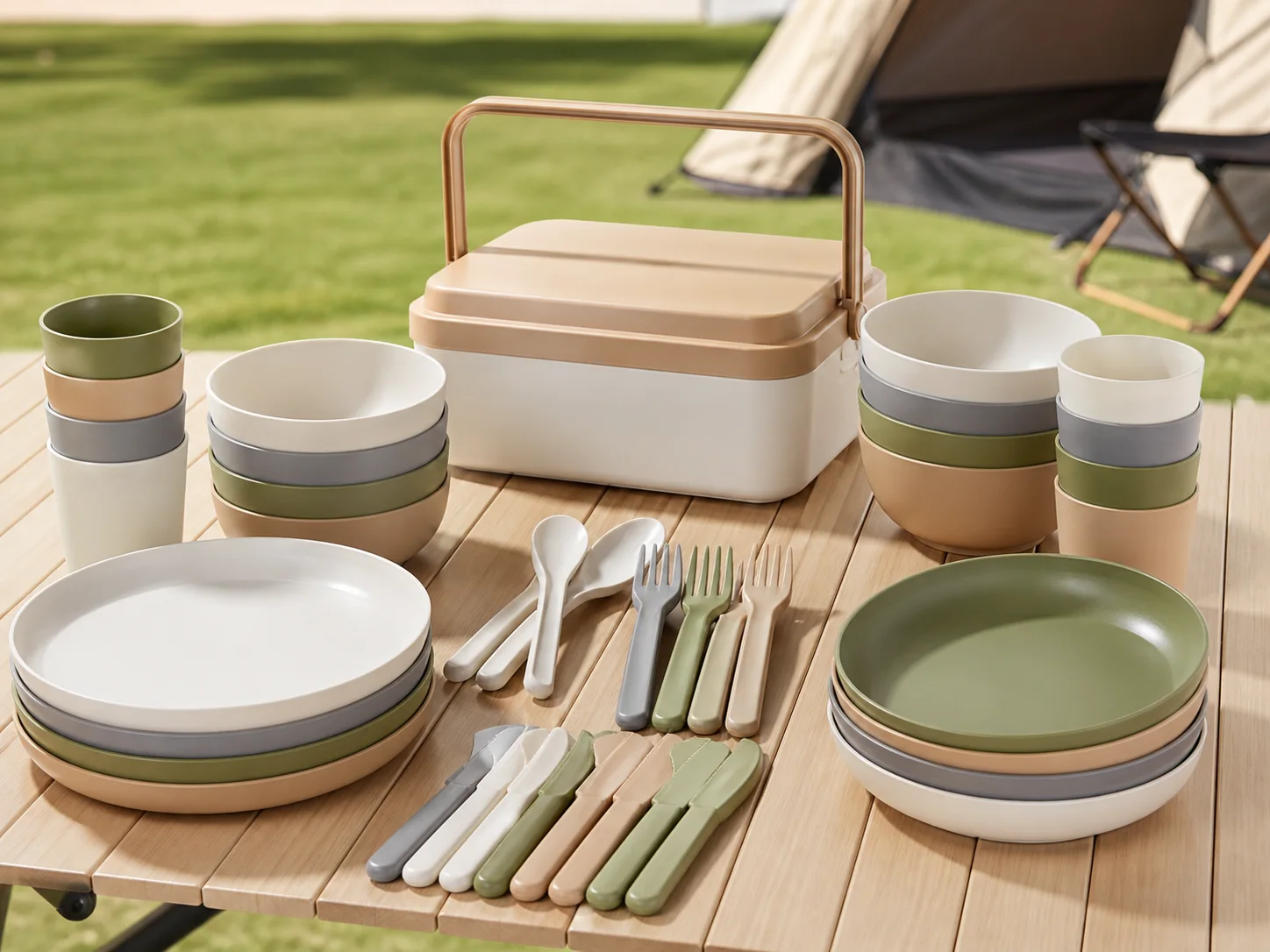
PP is the main scale material for family camping programs because it supports molded color, nesting structures and repeatable high-volume production.
Four-person configurations with plates, bowls, cups and cutlery.
Round, divided and rimmed designs with stackability and target weight defined.
Breakfast, soup and multipurpose formats with capacity and nesting control.
Handled or handle-free formats with capacity, rim comfort and storage fit checked.
Color-coordinated utensils for individual sleeves or full family kits.
Components designed around a carry box, lid, bag or compact nesting system.
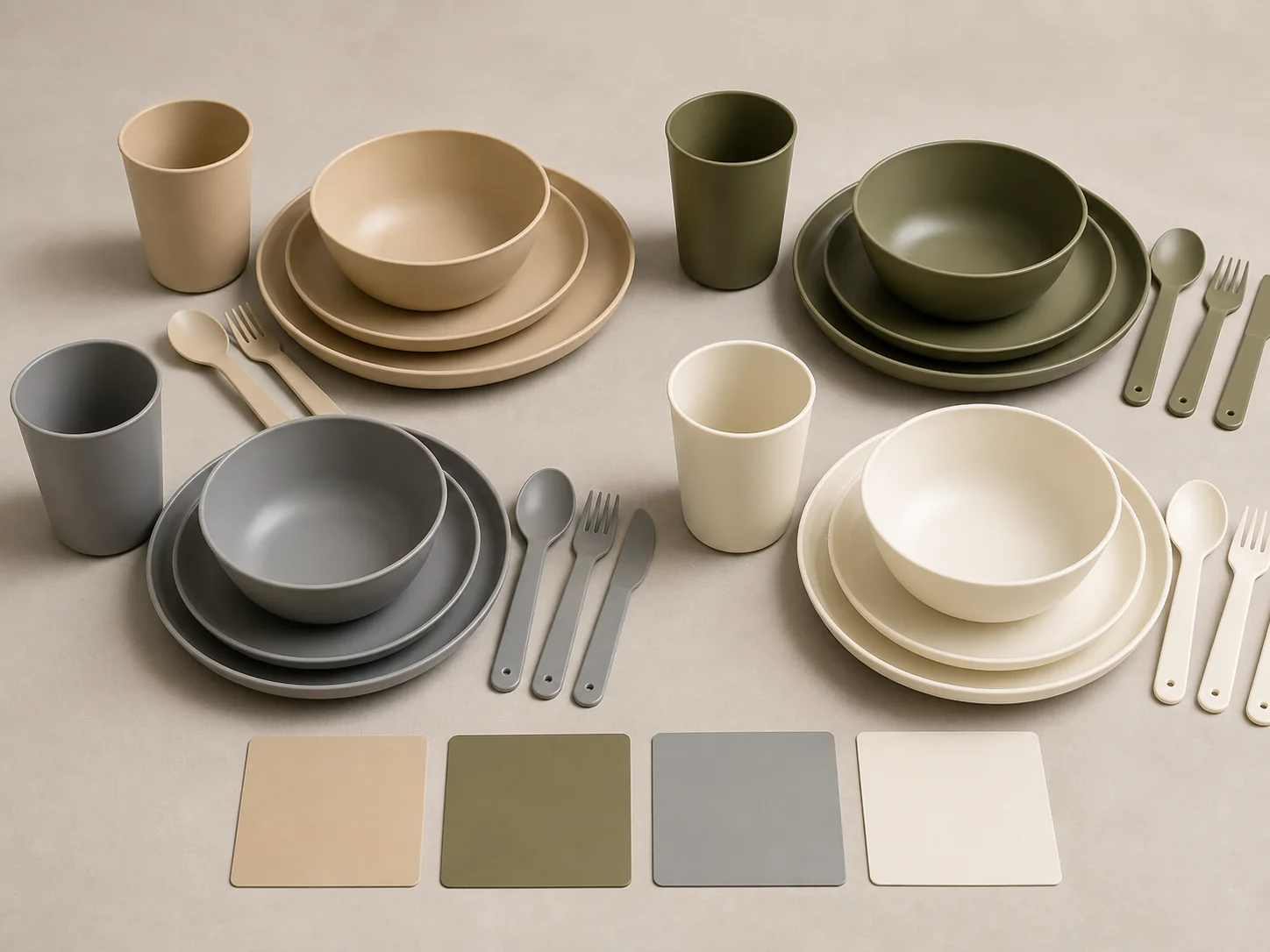
“Food-grade PP” must be supported by the selected resin and actual product test scope. Heat resistance cannot be copied from a resin brochure without confirming the finished SKU.
| Specification field | How it is defined |
|---|---|
| Resin identity | The PP grade and supplier declaration are recorded for the approved production material. |
| Color system | Masterbatch, target color, tolerance and changeover requirements are agreed before production. |
| Wall thickness | Defined by geometry, stiffness, cycle and impact requirements rather than a single site-wide value. |
| Heat performance | Test temperature, time, load and deformation criteria are set against intended use. |
| Drop performance | Drop height, fill condition, surface, temperature and pass criteria are documented by project. |
| Nesting and replacement | Dimensions are controlled so pieces stack correctly and replacement components remain compatible. |
PP programs need both material documentation and finished-product checks. A food-contact resin declaration alone does not validate every color, additive, shape or use condition.
Define destination, food type, contact time and temperature for the finished product.
Use buyer-agreed cycles and deformation criteria only where the product is intended for those conditions.
Test the actual component and packaging configuration using a documented method.
Compare approved color standards under agreed lighting and record acceptable variation.
Check stacking, lid fit, cutlery retention, handle movement and storage-box closure.
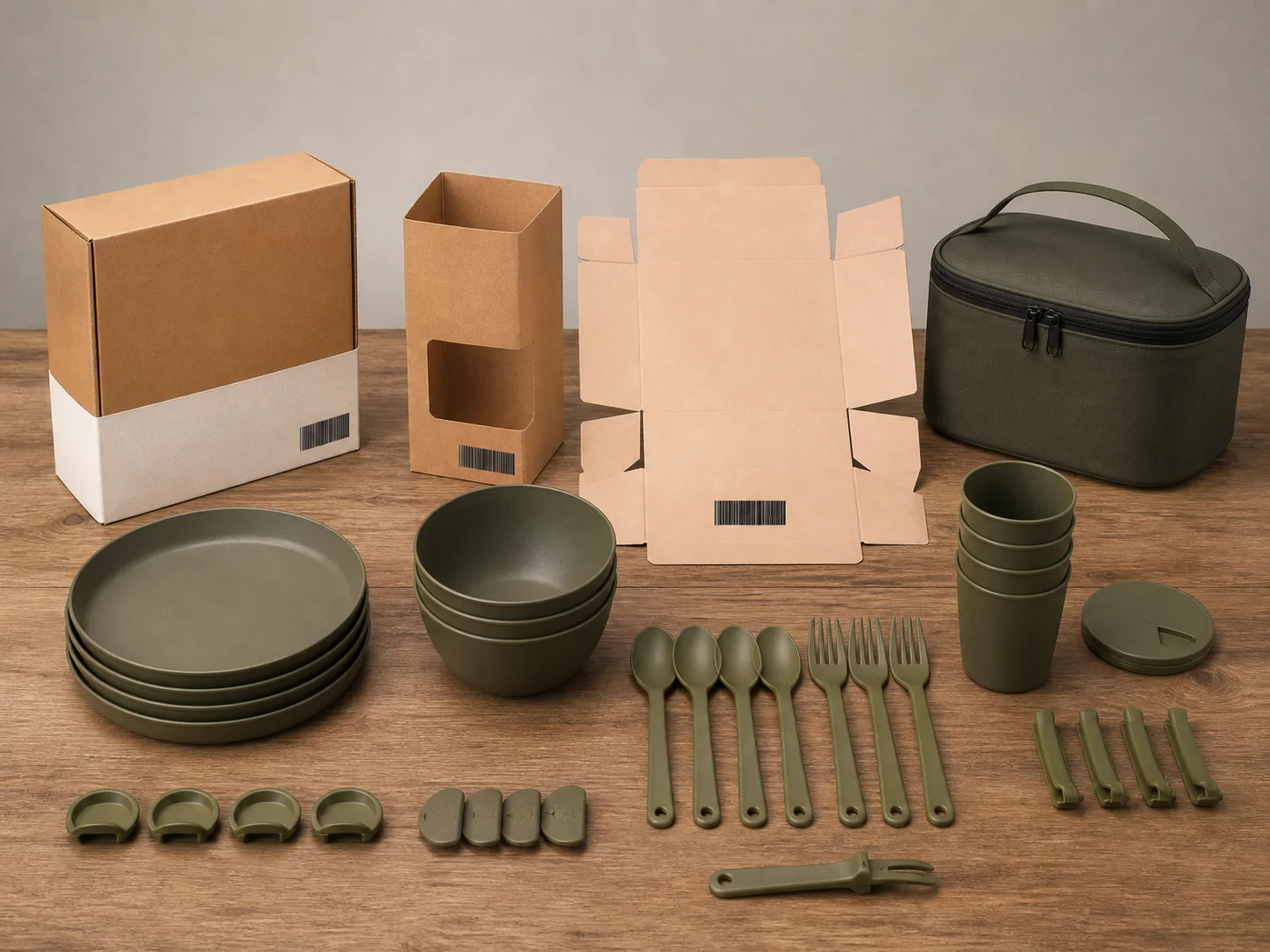
Use approved samples, visual defects, dimensions, component count and functional checks.
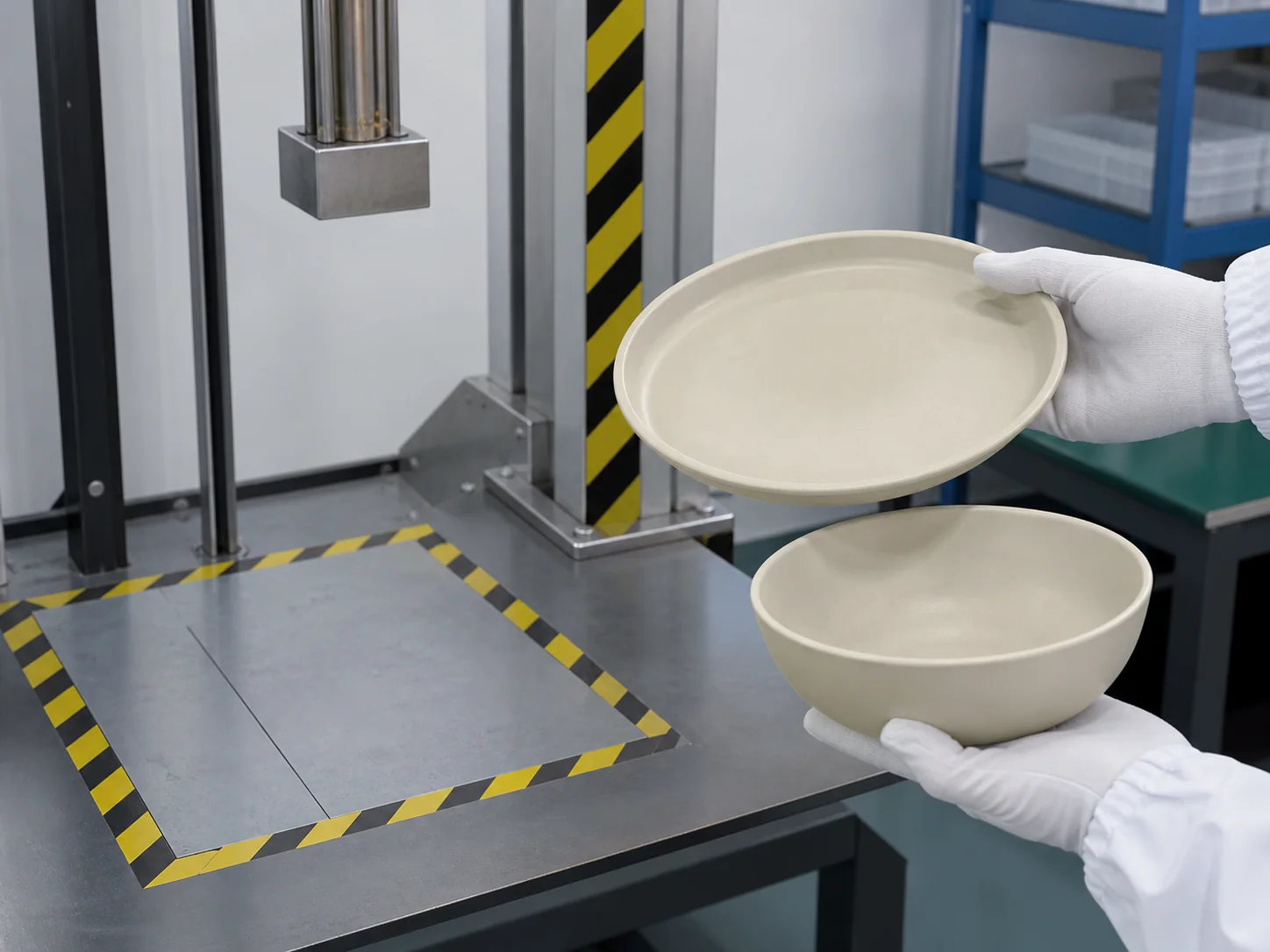
Material selection should follow the use case, target price, performance requirement and evidence needed by the destination market.
Cost, color and pack configuration support scalable private-label programs.
Light weight, nesting and replaceable pieces guide the set design.
Packaging dimensions and differentiated color systems matter.
Logo, color and set count are balanced against delivery schedule and MOQ.
Development proceeds from specification to evidence and approval so material claims, product performance and packaging remain aligned.
Use these internal links to compare the material within the complete outdoor sourcing structure.
Retail program economics
PP programs are built around repeatable molding, stable color, replacement-piece planning and efficient retail packing. Commercial targets should be confirmed before new tooling or custom colors begin.
Define resin identity, food-contact market, temperature range, drop criteria, dimensions, wall thickness and acceptable color tolerance.
Confirm existing molds versus exclusive tooling, SKU count, shared components, color allocation and replacement-piece policy.
Provide forecast, MOQ by color, target cost, shelf or ecommerce packaging, barcode requirements and replenishment plan.
It supports molded color, impact-resistant designs, nesting structures and scalable production at a practical cost.
No. Those claims require a defined finished-product test method and intended-use condition.
Custom matching can be evaluated using an agreed reference, tolerance, resin and masterbatch.
The buyer and supplier should agree height, surface, fill condition, temperature and pass criteria.
Yes when dimensions, colors and production continuity are planned as part of the set architecture.
No. Colorants, additives, manufacturing and intended conditions also affect the finished-product compliance scope.
Send the component list, target market, material requirement, quantity, logo, packaging, tests and delivery target.
Color, scale and replaceable parts
A food-grade PP brief should identify the resin, intended food types, temperature conditions and destination market. Heat resistance, microwave use and dishwasher use are separate claims and should be supported by the relevant finished-product validation.
Limit the launch palette to colors that can share a coherent packaging system. Define master color samples, acceptable variation, pigment restrictions and how replacement pieces will be matched in later batches.
Design plates, bowls and cups as individual SKUs before combining them into a 20- or 24-piece family set. This supports replacement parts, mixed-color assortments and different retail pack sizes without rebuilding the entire program.
| Validation | Test question | Evidence to retain |
|---|---|---|
| Drop performance | Does the agreed filled or empty article survive the defined height and surface? | Method, sample count and result |
| Heat exposure | Does shape, fit or odor change under the intended condition? | Time, temperature and acceptance limit |
| Stack fit | Can users separate and repack parts repeatedly? | Approved stack and cycle record |
| Color control | Does the lot match the approved master under fixed lighting? | Master chip and tolerance method |
Use camping dinnerware sets for family configurations, mess kits for compact packs, or return to all outdoor tableware materials.
Existing molds are the fastest route when the geometry fits the brand brief. A new mold is justified when nesting, grip, capacity, branding area or case fit cannot be achieved with an available part. The tooling brief should include shrinkage assumptions, gate and ejector-mark expectations, texture, draft angle, logo location and the method for approving first-off samples.
Before a production order, confirm the resin and color sample, test the assembled set, and run the selected packaging through its agreed transport check. For United States programs, the FDA overview of food-contact substances provides regulatory context; the finished article and its intended conditions of use still need a project-specific review.