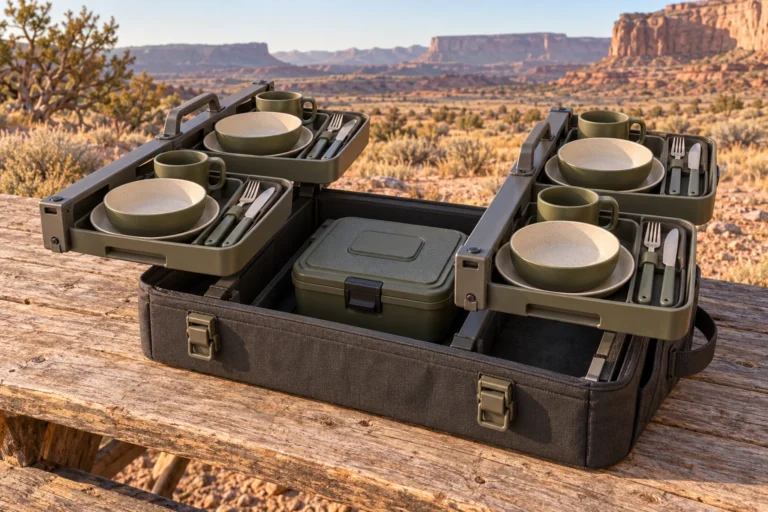
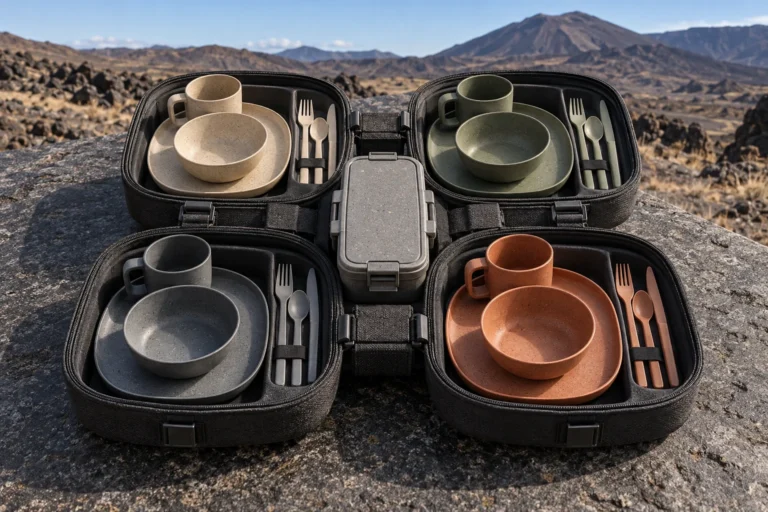
Material identity
Record resin, alloy, steel grade, filler or coating details that apply to the finished SKU.

MATERIAL SELECTION FOR B2B OUTDOOR PROGRAMS
Compare food-grade PP, titanium, stainless steel and wheat-straw composite by product weight, durability, finish, testing scope, target price and retail positioning. This material hub helps outdoor brands, importers and distributors prepare a clearer specification before requesting samples or quotations.
A DECISION PAGE, NOT A PRODUCT CATALOG
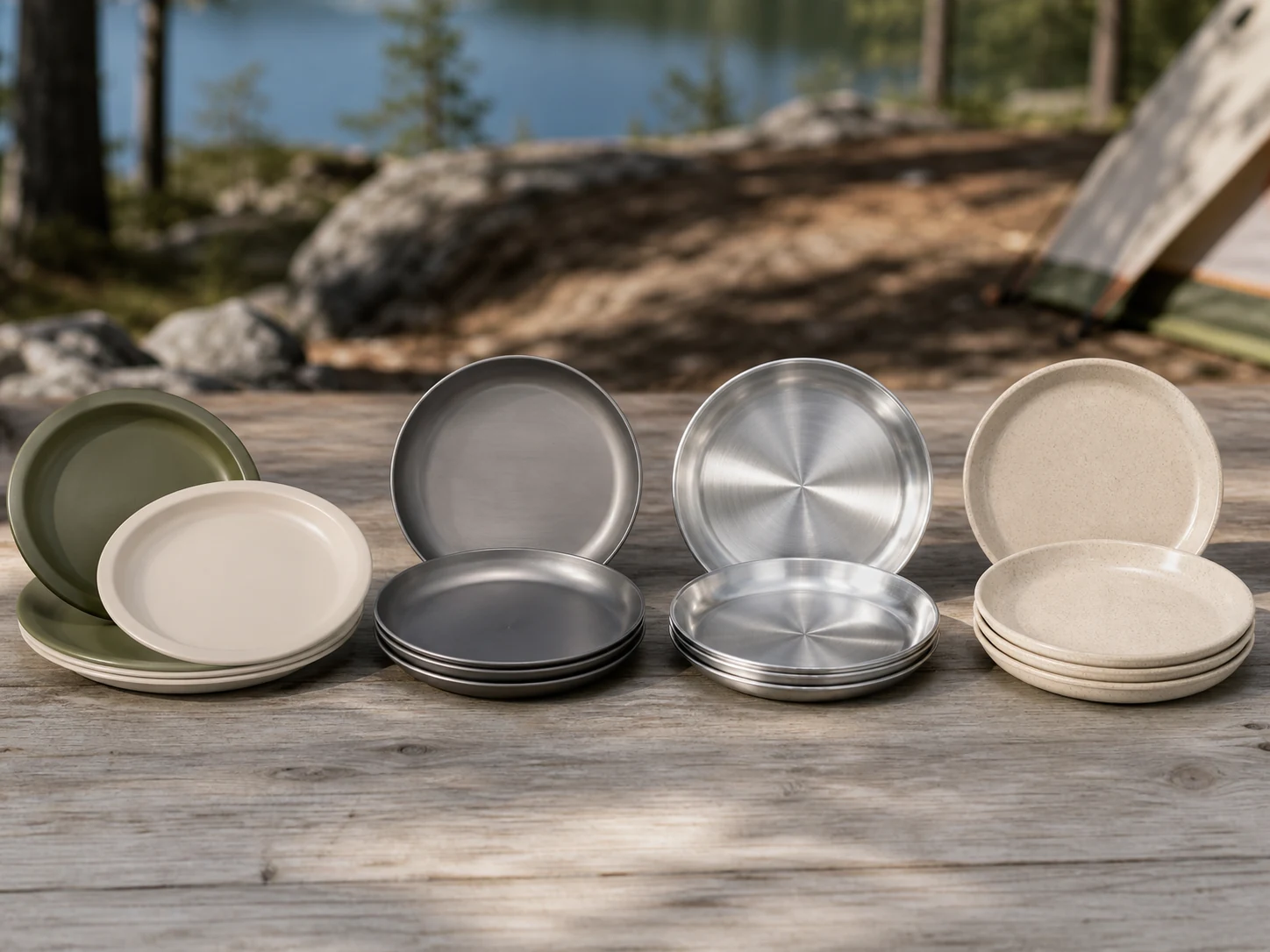
A camping dinnerware set is not defined by material alone. A family set for supermarket retail, a lightweight backpacking kit and a durable RV dining program may contain similar components, yet require very different weight, finish, packaging and price targets. Use the comparison below to narrow the material route, then confirm it through product-specific samples and evidence.
| Decision factor | Food-grade PP | Titanium | Stainless steel | Wheat-straw composite |
|---|---|---|---|---|
| Typical positioning | Scalable family and retail sets | Premium ultralight programs | Durable camp, RV and glamping use | Selected composite programs where market claims are accepted |
| Specification focus | Resin identity, wall thickness, molded color and drop performance | Grade, unit weight, thickness, rim, welds and surface finish | Steel grade, gauge, construction, finish and corrosion scope | PP resin, filler percentage, color system, heat performance and claims |
| Customization route | Molded color, tooling, logo and coordinated set architecture | Laser marking, finish and controlled component selection | Laser logo, brushing, polishing or coating | Molded color, logo, packaging and documented formulation |
| Best starting evidence | Resin declaration and finished-product test plan | Material declaration, weight tolerance and sample measurement | Grade declaration, surface reference and corrosion plan | Full formulation disclosure and destination-market claim review |
01 · VOLUME AND COLOR CONTROL
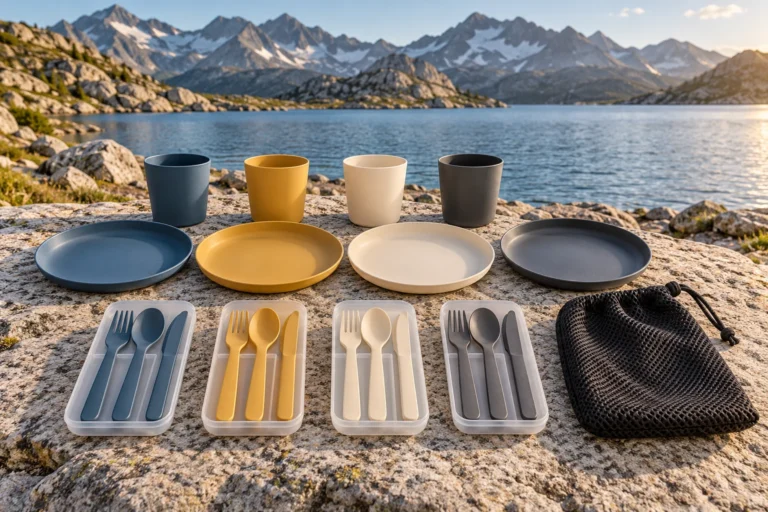
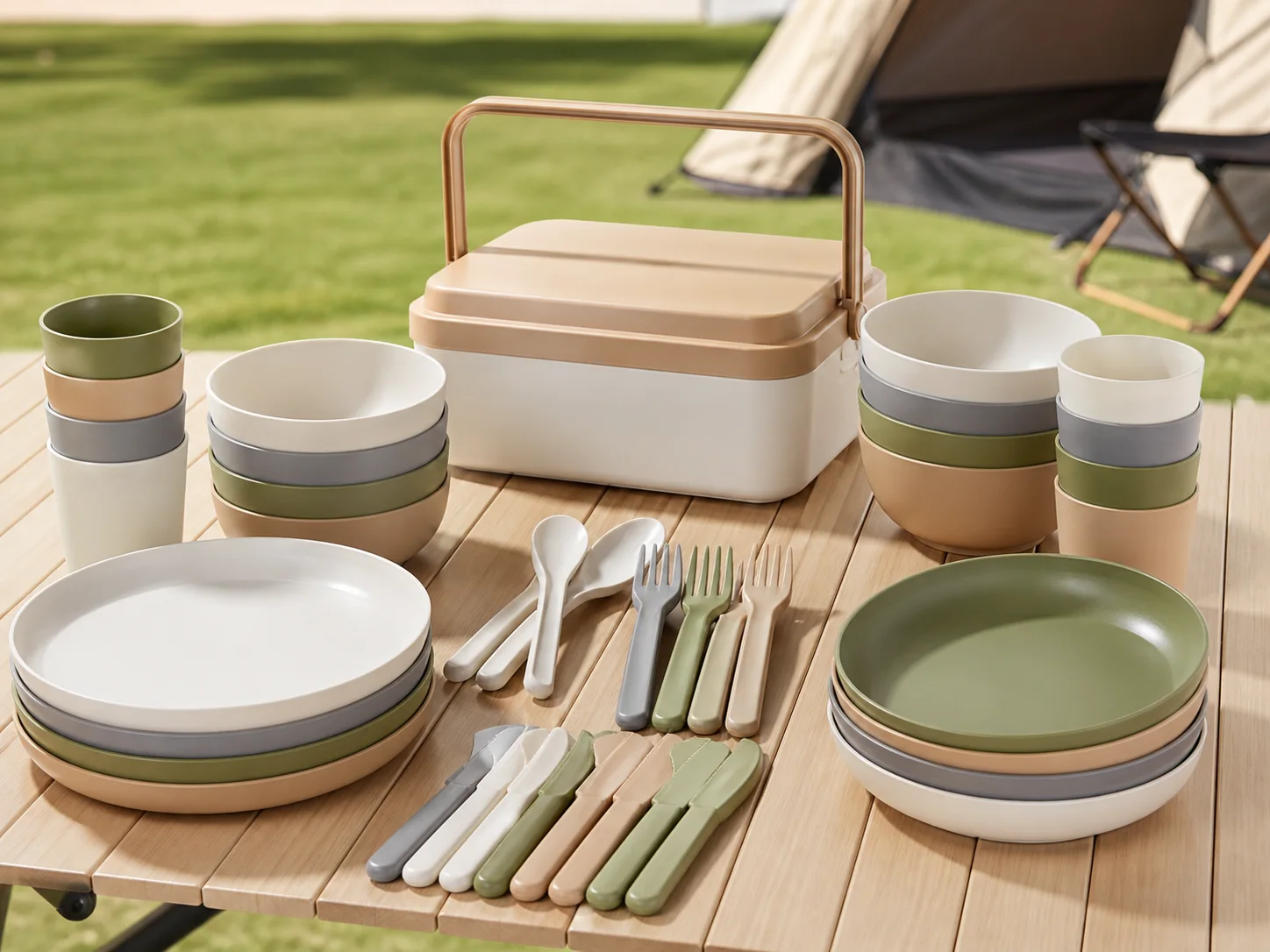
PP is often the practical starting point for family camping sets, promotional programs and private-label retail assortments. It supports molded colors, coordinated plates, bowls, cups and cutlery, and nesting designs that reduce packed volume. A quotation should identify the resin, intended food-contact conditions, nominal dimensions, unit weights and any recycled-content restrictions required by the destination market.
For a reliable comparison, buyers should define whether existing molds are acceptable or whether new tooling is needed. Custom colors require an approved color standard and production tolerance. Drop, heat and dishwasher testing should match the actual article and expected use rather than a generic material claim. Replacement components, storage cases and retail cartons should be planned with the full set because they affect packed size, cost and user experience.
02 · PREMIUM WEIGHT-LED ENGINEERING
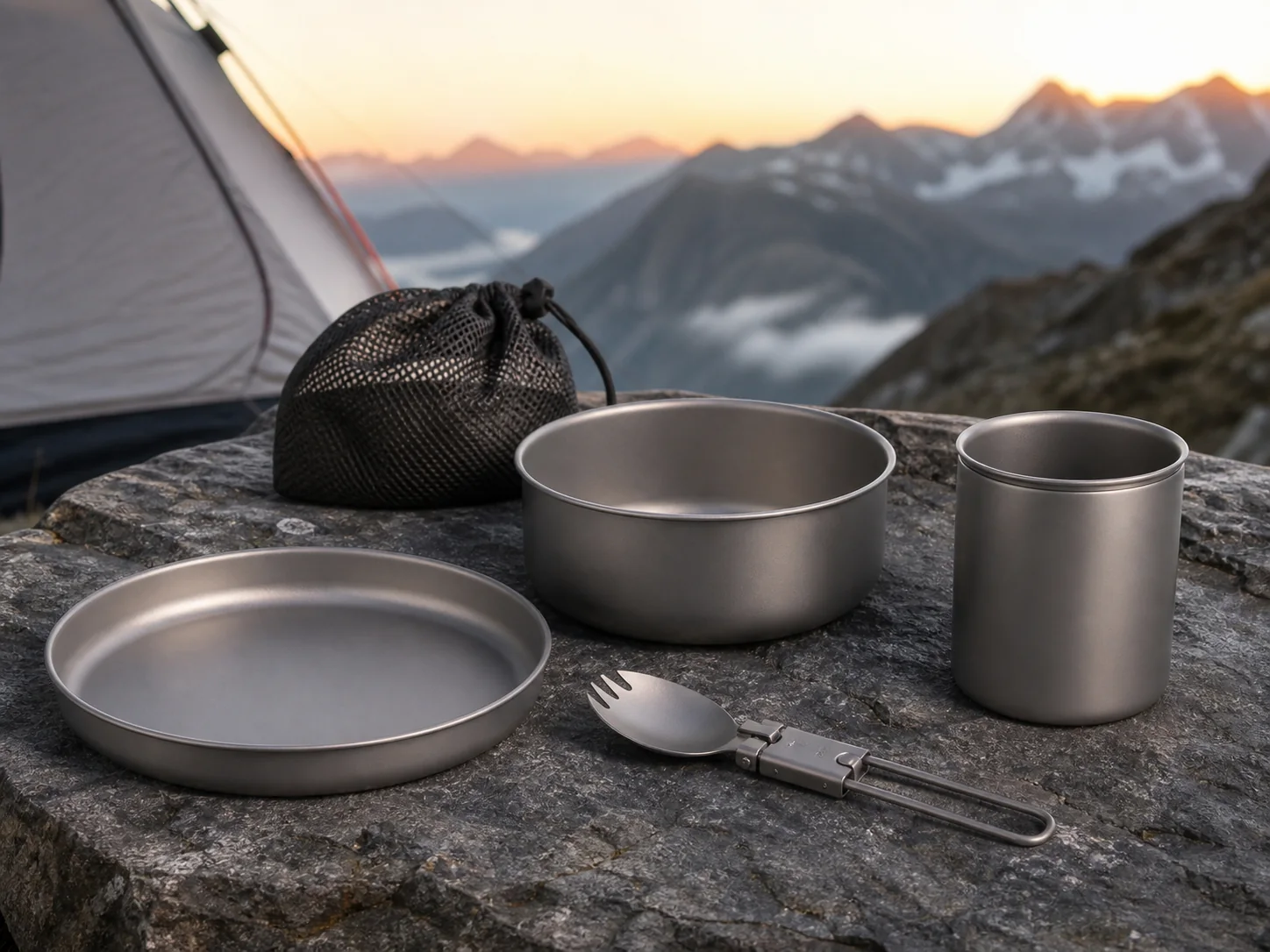
Titanium serves specialist outdoor brands that sell portability, controlled weight and premium material specifications. Buyers normally compare finished unit weight, nominal thickness, alloy or grade declaration, surface treatment, rim construction, handle or weld details and nesting compatibility. A lighter sample is not automatically a better sample if stiffness, stability, comfort or long-term construction is compromised.
Start with a small, controlled range such as a bowl, plate, cup and utensil set. Record weight and dimensional tolerances by SKU, and approve the visual finish under consistent lighting. Packaging must prevent abrasion while staying aligned with the lightweight promise. Titanium projects may use qualified manufacturing and sourcing partners; the responsible production route and available evidence should therefore be confirmed for each quotation.
03 · DURABILITY AND FINISH
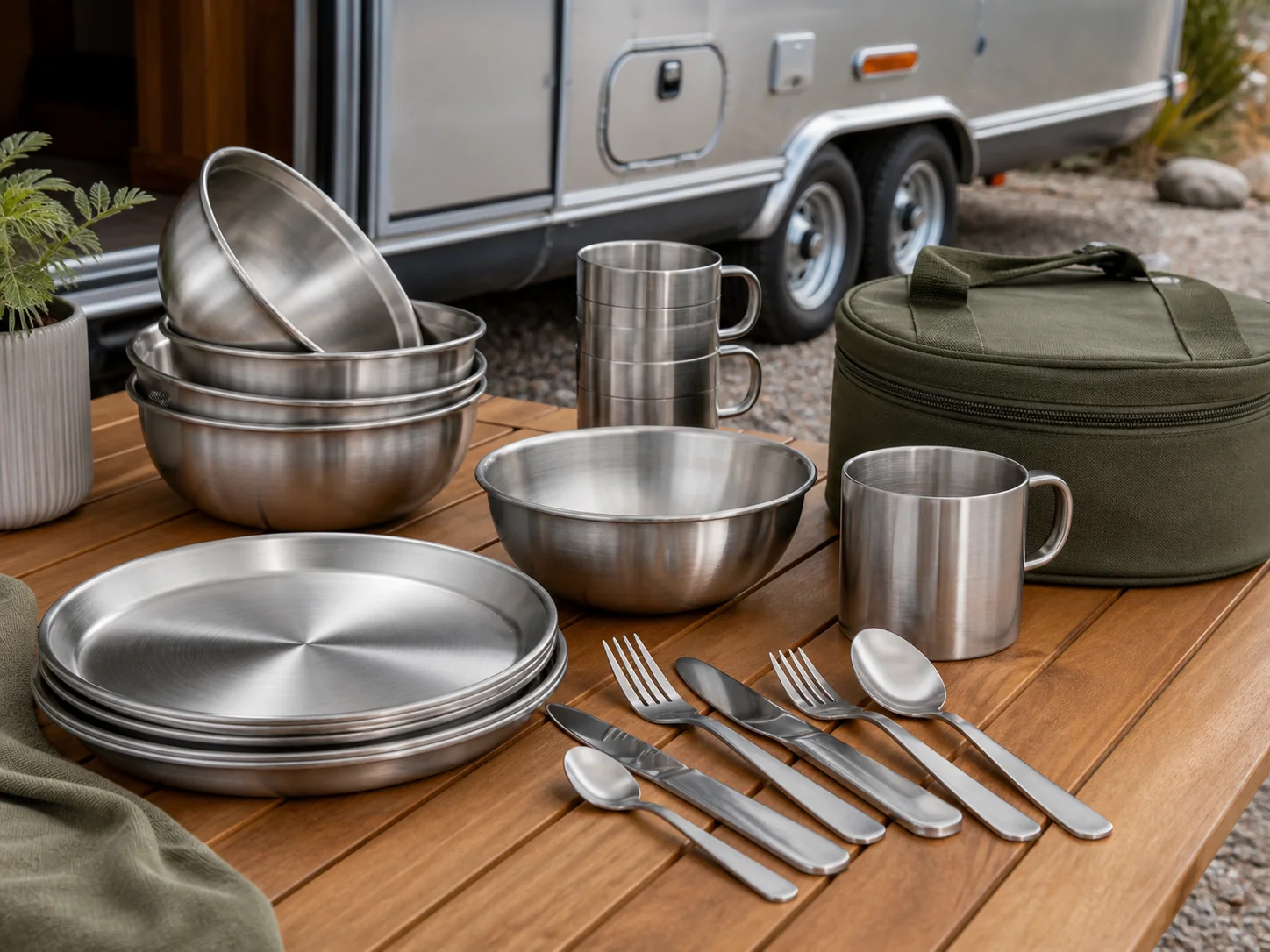
Stainless steel is suited to durable dining programs for RV suppliers, glamping operators, outdoor retailers and project buyers. “Stainless steel” alone is not a complete specification. The purchase brief should state the agreed steel grade, thickness or gauge, finished unit weight, edge and rim design, handle construction, surface finish and whether parts are single-wall or double-wall.
Brushed, polished and coated surfaces create different visual and maintenance expectations. Salt-spray or corrosion testing is useful only when the product design, destination and exposure justify it. Laser marking should be approved on the actual finish, and storage pouches or protective dividers should prevent scratching during transport. As with titanium, stainless programs may involve qualified manufacturing partners, so inspection responsibilities and evidence ownership need to be clear.
04 · FORMULATION AND CLAIM BOUNDARIES
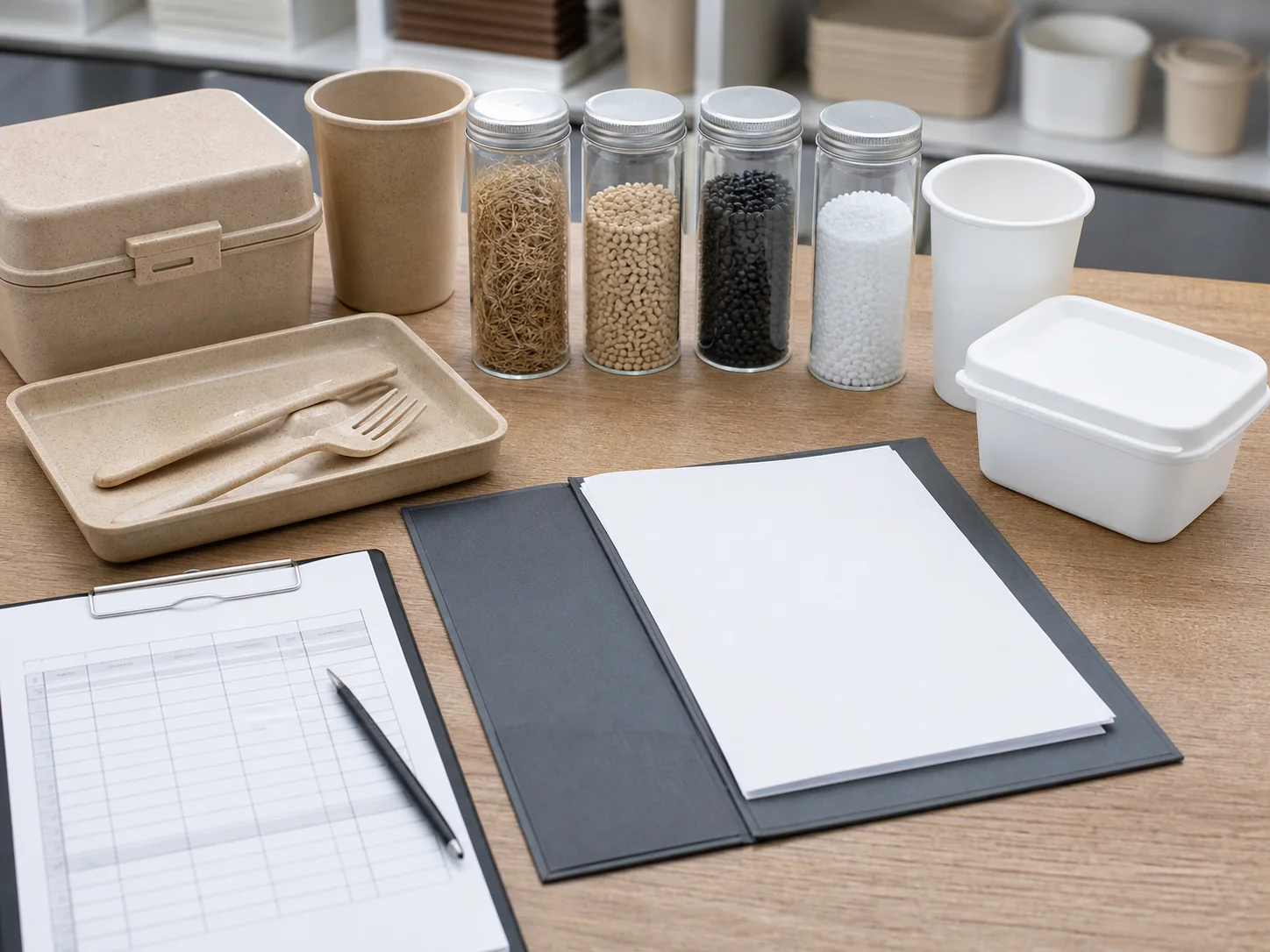
Wheat-straw composite remains an established Naike product branch, but it should be described accurately. When wheat-straw filler is combined with PP, the finished article is a PP-based composite—not plastic-free tableware. The quotation and technical file should disclose the resin, filler, color system and any other relevant constituents, together with the intended food-contact conditions.
Environmental wording must follow the actual formulation, available testing and destination-market rules. Claims such as fully biodegradable, plastic-free or universally compliant should not be used without product-specific evidence. Buyers should also define heat exposure, dishwasher expectations, odor and migration checks, color tolerance and outdoor usage conditions. For markets where composite claims are uncertain, a food-grade PP alternative can be evaluated.
FROM MATERIAL NAME TO PURCHASABLE SPECIFICATION
A supplier cannot select a meaningful test package from the material name alone. The destination, food type, contact time, temperature, reusable-use instructions, coating, printing and complete construction influence the required scope. Agree the evidence plan before tooling or bulk production so the quotation includes the correct sample quantities and laboratory work.
Record resin, alloy, steel grade, filler or coating details that apply to the finished SKU.
Define weight, dimensions, drop, heat, nesting, corrosion or finish checks according to the product.
Approve construction, color, surface, logo, packaging and measurable tolerances before production.
Inspect the batch against the approved specification and retain the agreed production records.
PREPARE A COMPARABLE RFQ
Share the use scenario, destination market, user count, required components, target unit weights or dimensions, annual forecast, expected order quantity, target cost, finish, logo, packaging and delivery window. If the material is not fixed, explain the commercial positioning and performance priorities. Naike can then compare feasible routes without presenting different specifications as if they were the same product.
MATERIAL SELECTION FAQ
Cost depends on dimensions, thickness, component count, tooling, finish, packaging and order quantity. PP often supports scalable volume, but quotations are comparable only when they use the same set architecture and quality targets.
Yes. A kit can combine materials when each component has a defined specification, test scope, inspection standard and nesting relationship. Mixed sourcing also requires clear responsibility for final packing and quality release.
No. Molded reusable products are supported through Naike's established capabilities. Titanium and stainless steel programs may use qualified manufacturing and sourcing partners. The actual production route is confirmed with the project.
Not necessarily. Buyers can submit performance, price and positioning priorities first. The sourcing team can then identify suitable material routes and explain which details still require samples or evidence.
Featured products
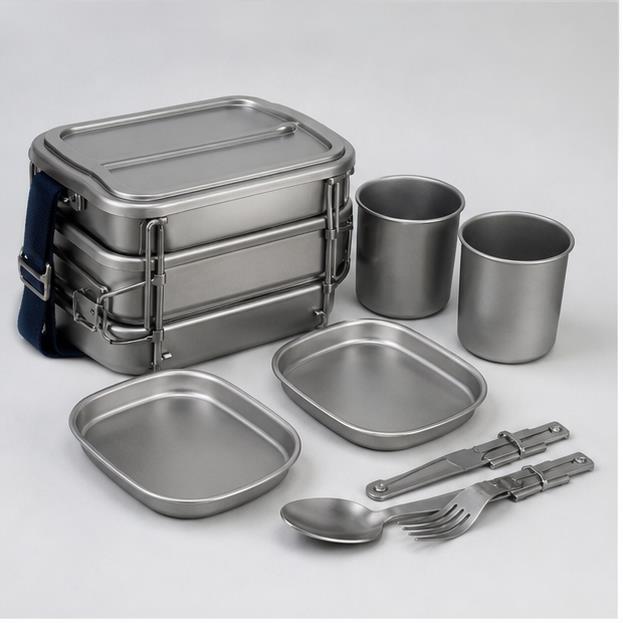
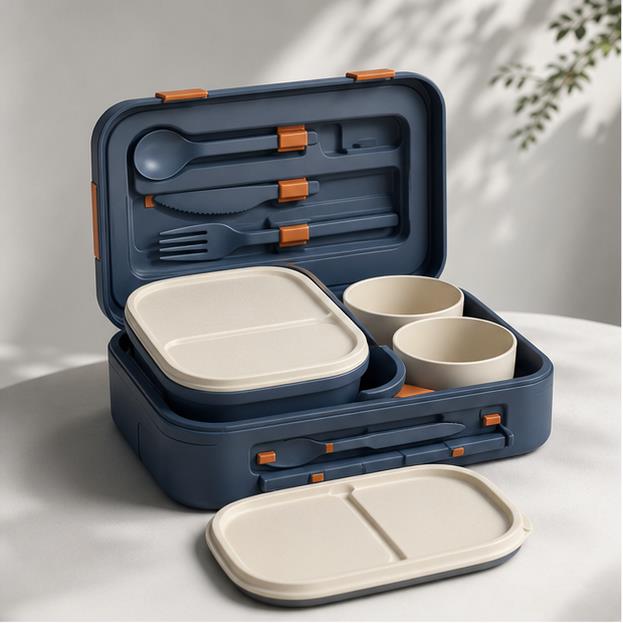
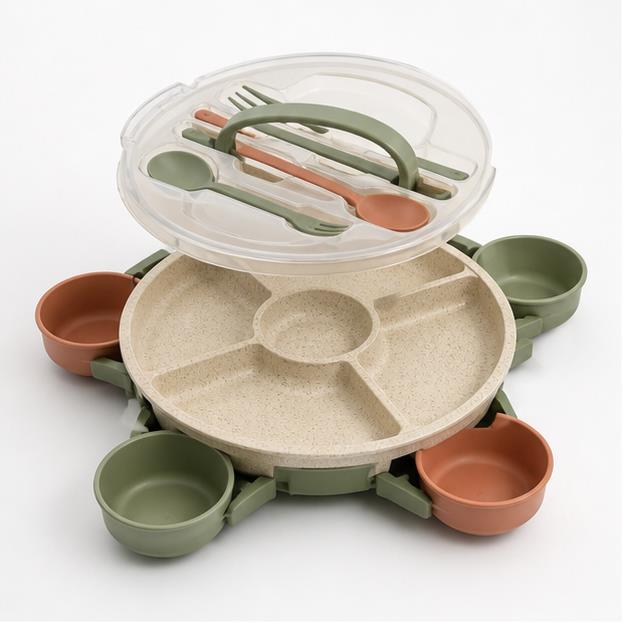
These products are selected as useful starting points for specification, component matching and customization discussions.
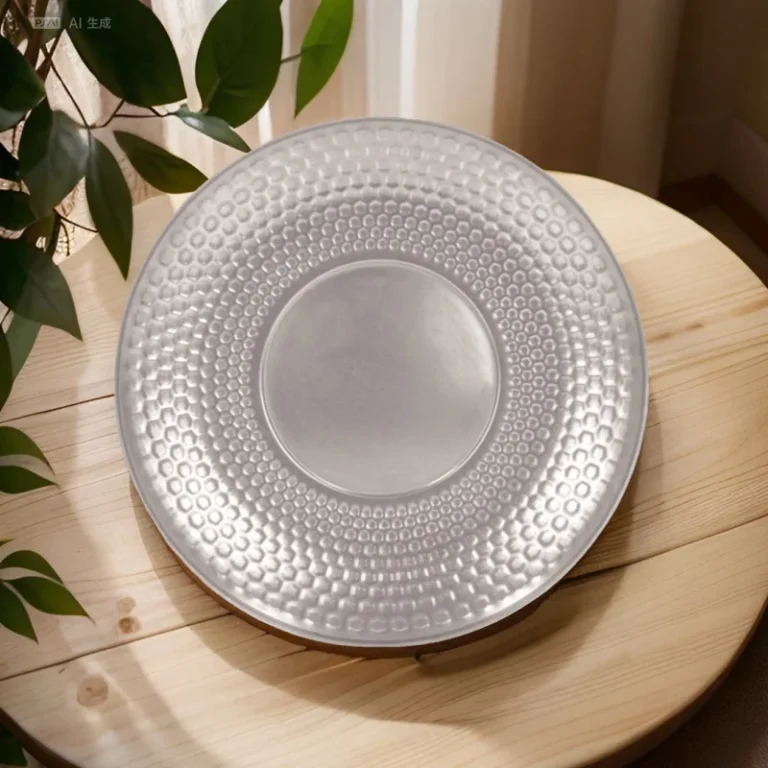
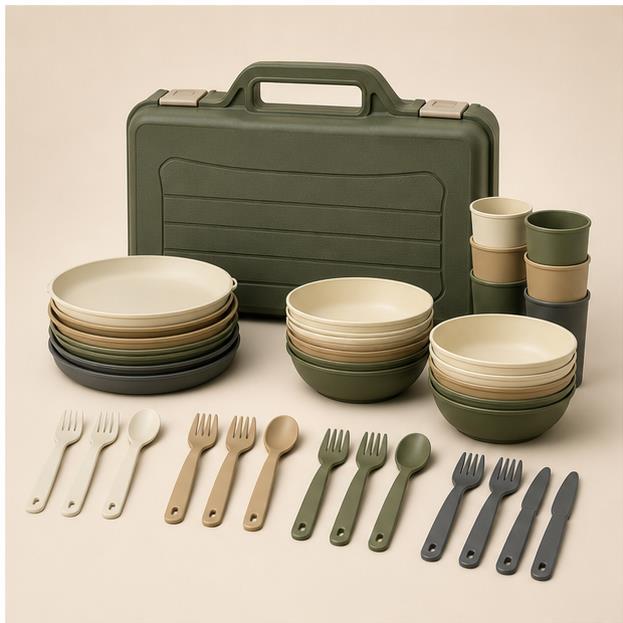
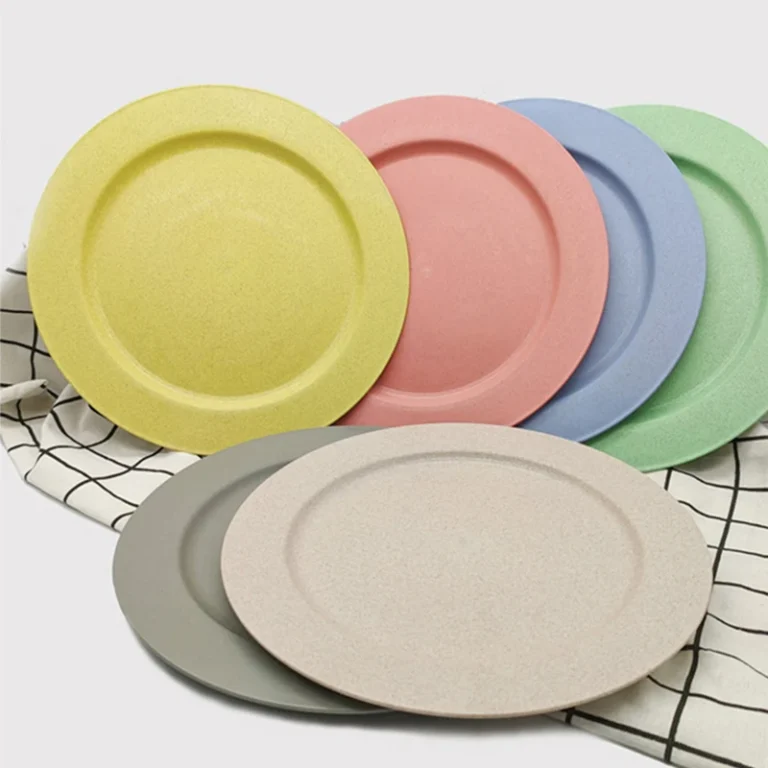
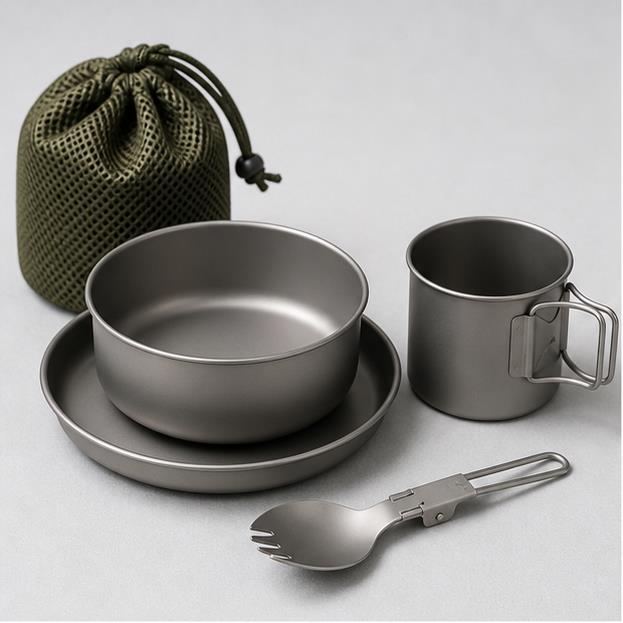
Latest products
Review the newest published outdoor tableware products, then confirm the exact material and evidence scope for your project.