1-Person Dinnerware Sets
Plate, bowl, cup and optional cutlery for individual use or compact gift programs.
related 1-person SKU
Wholesale | OEM | Private Label
OEM camping dinnerware sets for outdoor brands, retailers and distributors, available in food-grade PP, titanium, stainless steel and wheat-straw composite with custom piece counts, colors, logo, packaging and storage.
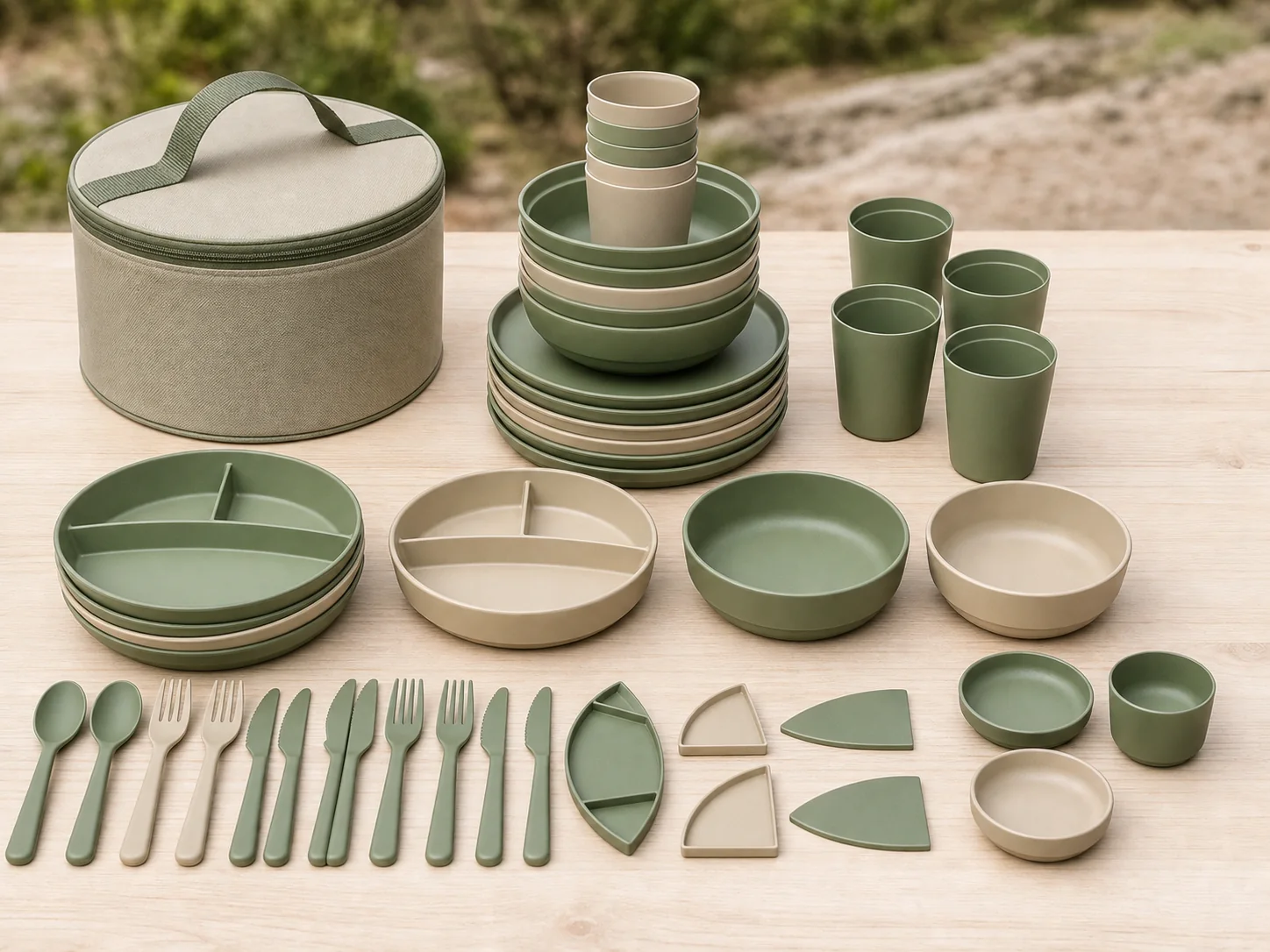
The set architecture should be defined around the user count, component list, nesting volume and retail price before colors or packaging are approved.
Plate, bowl, cup and optional cutlery for individual use or compact gift programs.
related 1-person SKUPaired components with nesting dimensions, separated utensils and a compact pouch or case.
related 2-person SKU20- or 24-piece concepts including plates, bowls, cups and coordinated cutlery.
related family-set SKUCore dining components for brands that source cutlery or storage separately.
related dining-set SKUComplete programs with forks, spoons, knives or sporks assigned by person count.
related set-with-cutlery SKUCoordinated plates, bowls, cups and cutlery packed with a fitted insulated lunch bag as one wholesale or private-label program.
View lunch bag set options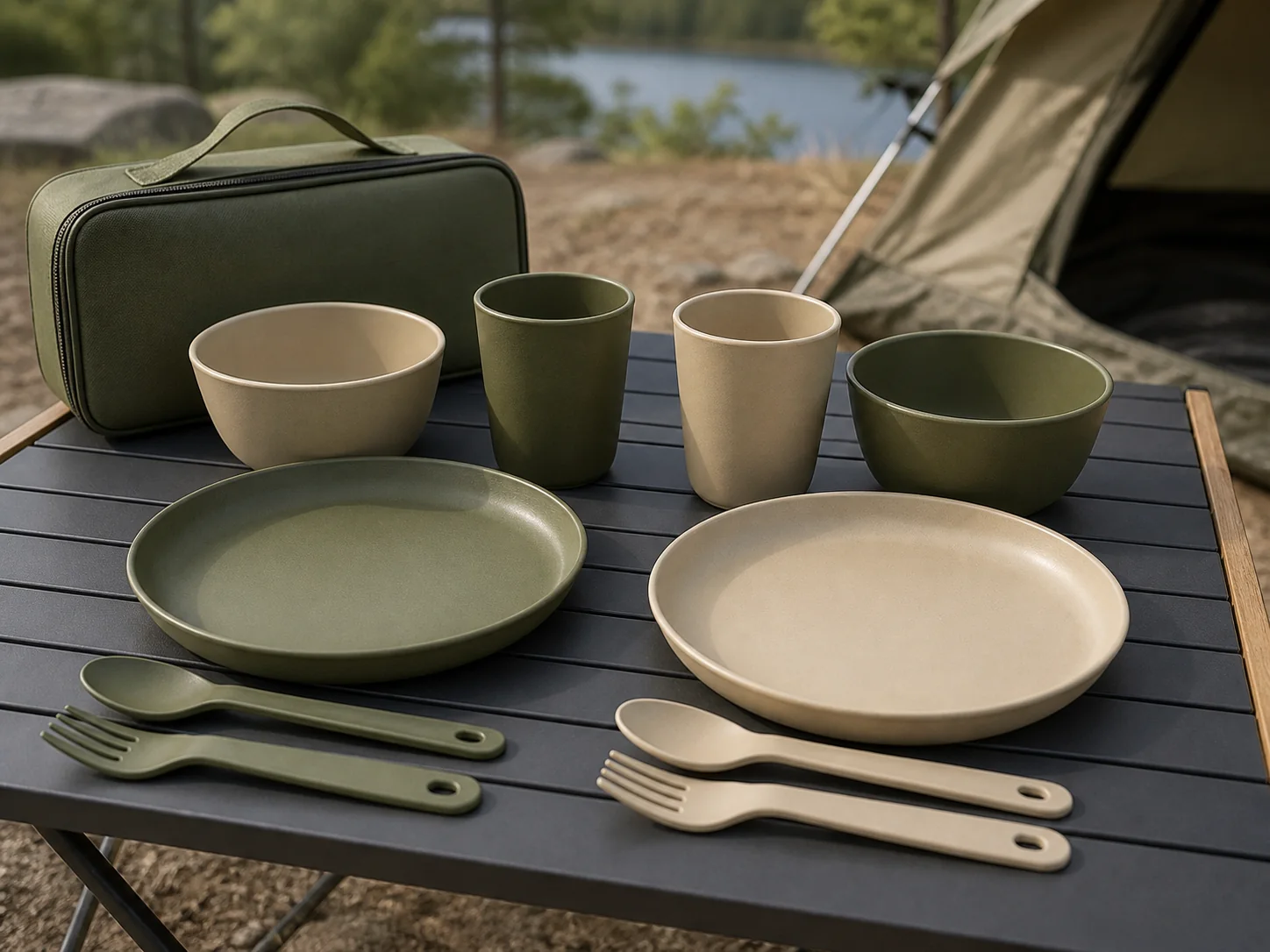
Compare materials against use case, weight, durability, target price and destination evidence rather than treating them as equivalent.
Scalable molded colors, impact-oriented designs and cost-controlled family programs.
Explore PP material detailsPremium ultralight programs defined by grade, thickness, unit weight and finish.
Explore titanium detailsDurable camp dining specified by steel grade, thickness, construction and surface treatment.
Explore stainless detailsPP-based composite programs quoted only after formulation and destination requirements are confirmed.
Review composite claim boundariesA complete set must be engineered and inspected as one system. Individual components can pass inspection while the overall kit still fails to nest or pack correctly.
| Specification field | Project definition |
|---|---|
| Person and piece count | Record the intended users, exact component list and quantity of every piece. |
| Nesting architecture | Control component taper, stack order, lid clearance, cutlery position and rattle. |
| Total set weight | Measure both net set weight and packed weight against shipping and use targets. |
| Replacement compatibility | Maintain dimensions and color records when individual components must be replaced. |
| Storage dimensions | Record hard-case, bag and nested dimensions for shelf, carton and carry planning. |
| Retail pack and carton | Confirm barcode, artwork, pack count, carton size, gross weight and drop criteria. |
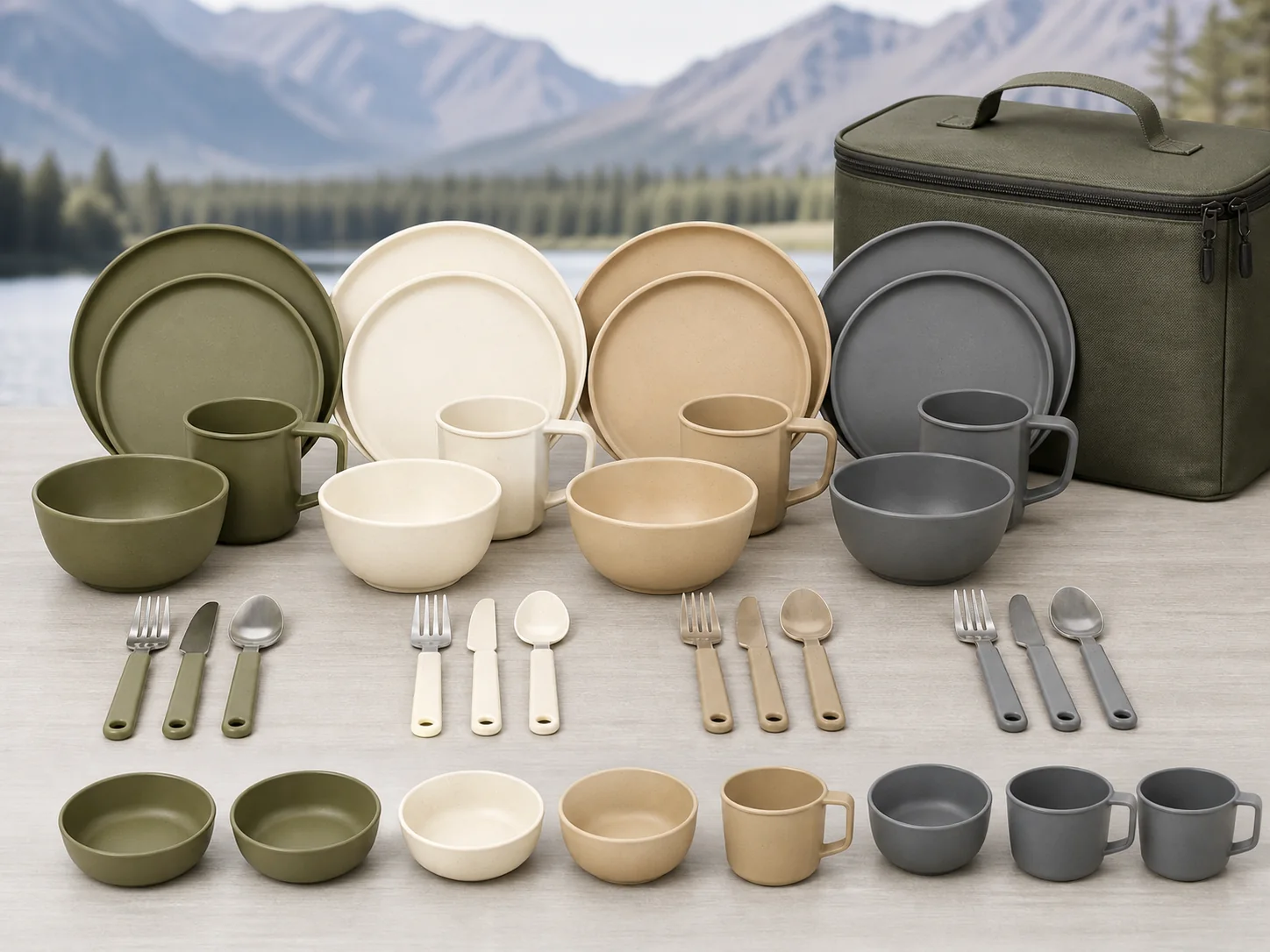
Each component follows its material-specific test scope, while the assembled set also needs count, fit, storage and packaging checks.
Check every plate, bowl, cup and utensil against the approved bill of materials.
Apply heat, impact, corrosion, grade or formulation checks only where relevant.
Confirm stacking order, lid or zipper operation, carry handles and movement in transit.
Compare approved standards across all coordinated pieces and packaging.
Test the complete retail or transport configuration using agreed conditions.
Inspect component count, appearance, dimensions, function, artwork and carton data.
The project moves from product definition to sample evidence and approved production criteria.
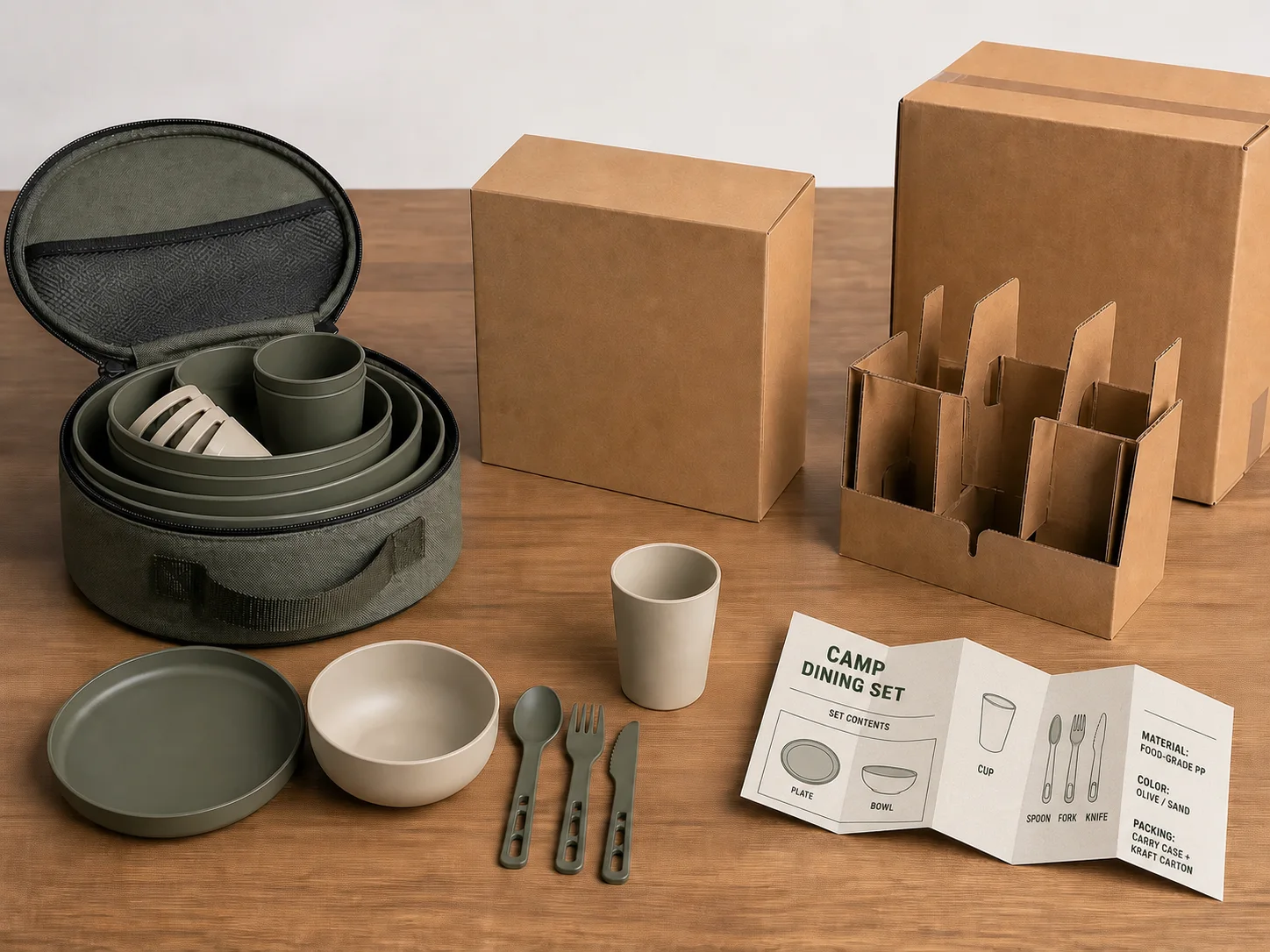
Continue through the outdoor category structure using clear product and material relationships.
Private-label assortment architecture
Set development should begin with the target user, channel and price tier, then define person count, pieces, storage and packaging as one controlled bill of materials.
Confirm 1-, 2- or 4-person use, pieces per person, shared serving pieces, cutlery, storage and replacement components.
Define coordinated colors, logo locations, carry case, retail box, multilingual artwork, barcode and shelf or ecommerce requirements.
Provide forecast, target cost, sample rounds, tooling ownership, testing, approval deadline, production lead time and delivery terms.
DINNERWARE SET FAQ
Yes. Existing samples and custom samples follow different timelines and charges. The quotation will state sample cost, freight, approval scope and whether any fee can be credited against a bulk order.
Timing varies by existing mold availability, material, decoration, packaging, testing and order quantity. Lead time begins only after the relevant specification, sample, artwork and payment milestone are approved.
Options may include kraft boxes, color cartons, sleeves, carry bags, inserts, barcode labels and multilingual instructions. Final dimensions, carton quantity and artwork are confirmed with the product specification.
The quotation confirms Incoterm, port, packaging, shipment documents and delivery responsibilities. After-sales review uses the SKU, batch, order reference, photos and defect details to determine containment and corrective action.
Send the product list, material, dimensions, quantity, logo, packaging, destination, required tests and delivery target.
Featured products
These products are selected as useful starting points for specification, component matching and customization discussions.
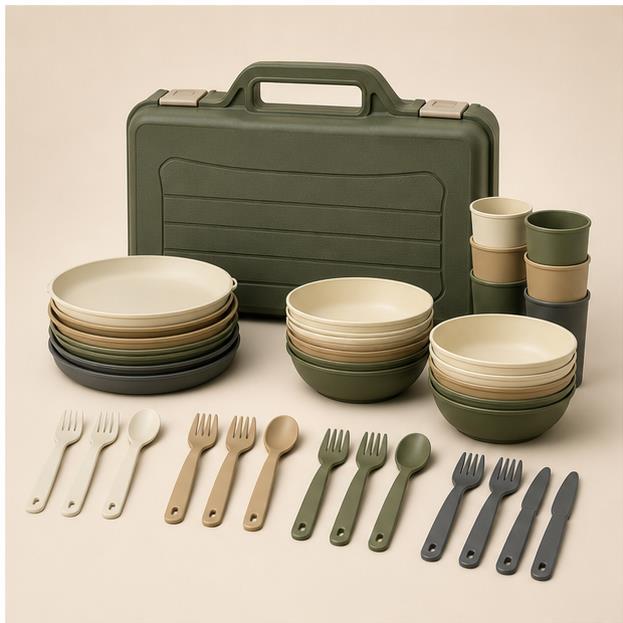
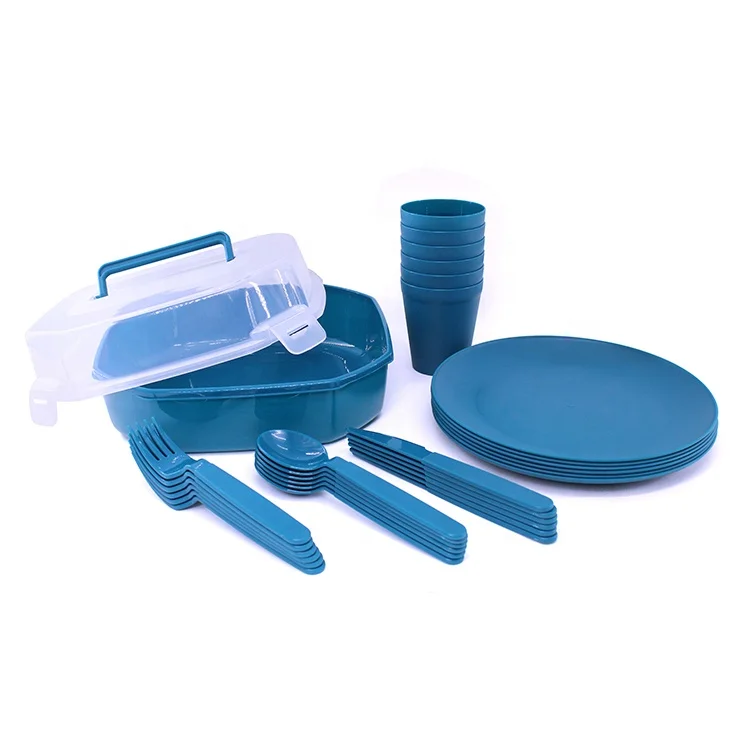
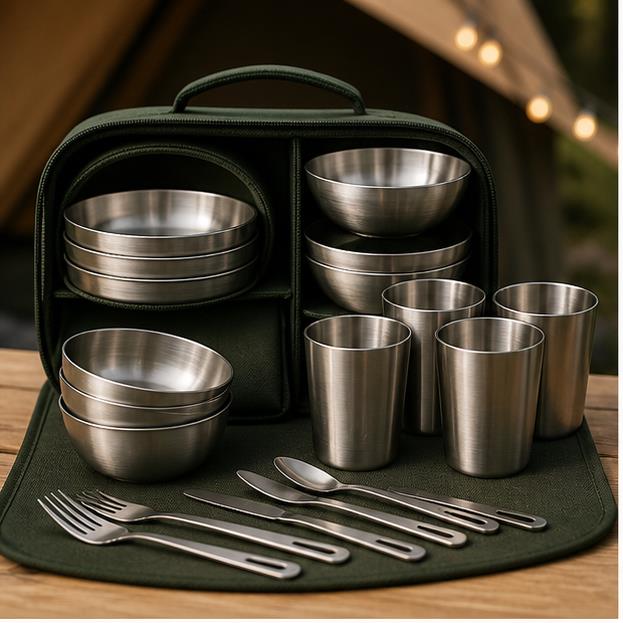
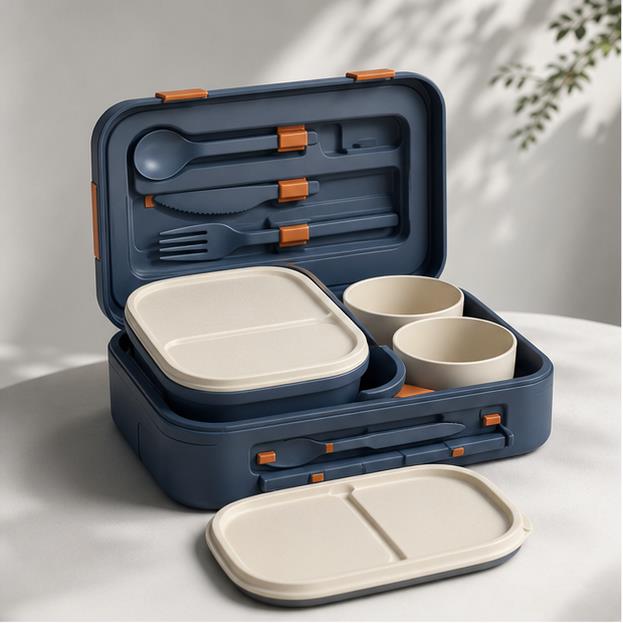
Latest products
This block updates automatically as newly published products match this collection. Open a product page to review its configuration and project boundaries.
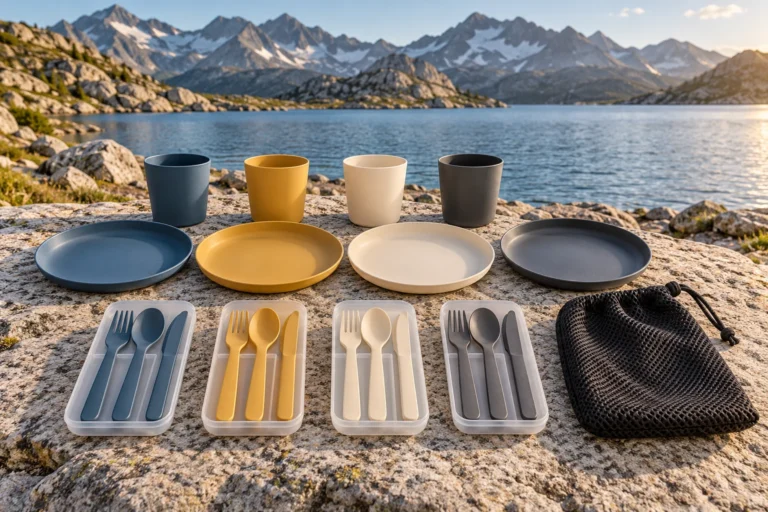
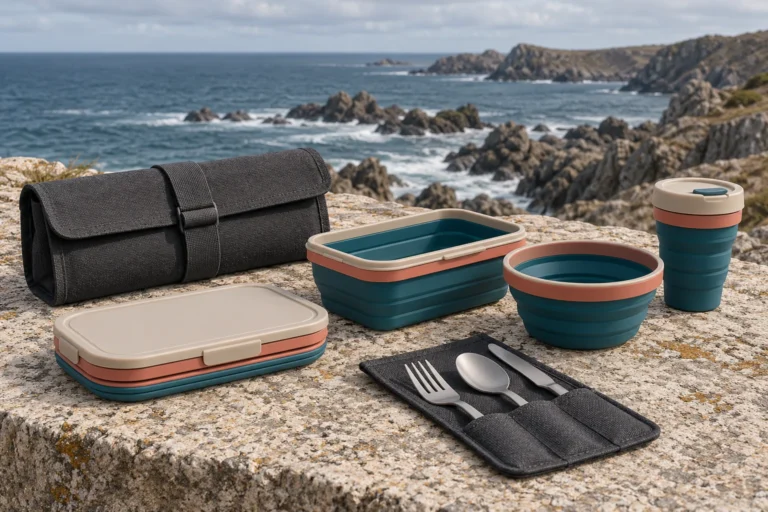
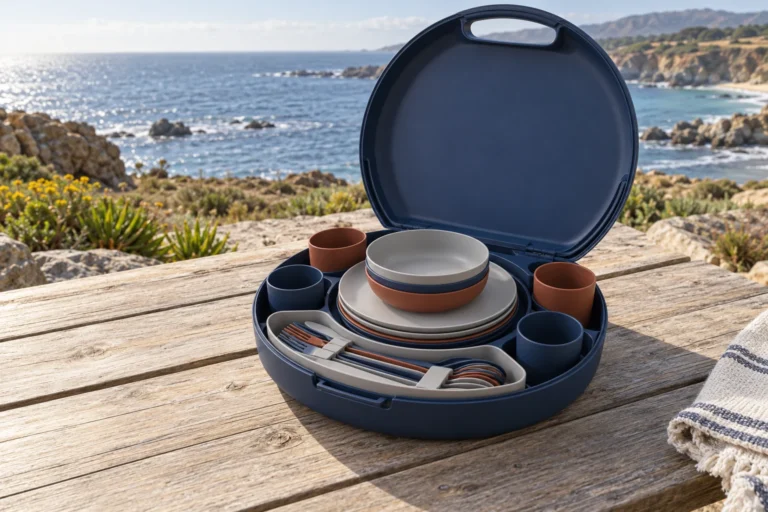


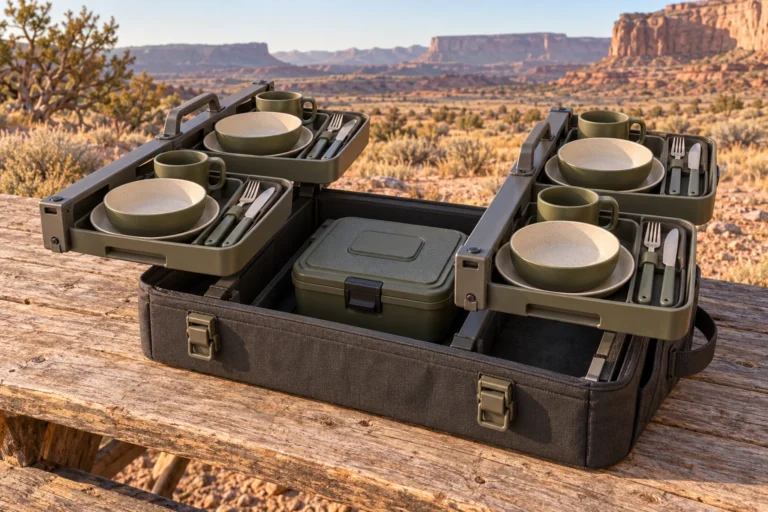
Set architecture
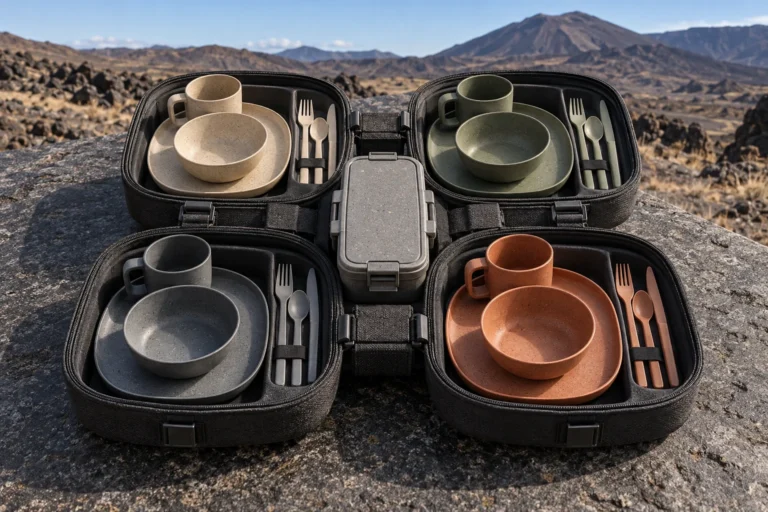
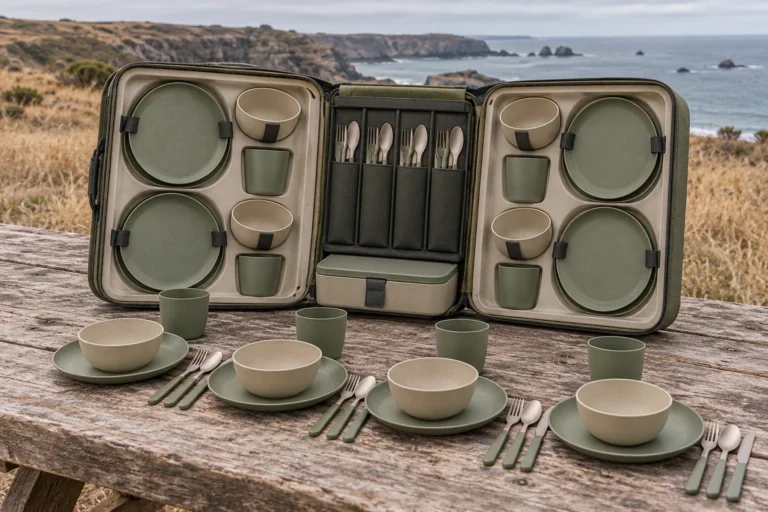
A camping dinnerware set should remain serviceable after launch. We therefore treat each plate, bowl, cup, utensil and storage component as a controlled item with its own drawing, color reference and packing position. The finished assortment can then change from one-person to family formats without losing replacement-part control.
Define the exact pieces per user and whether utensils are individual or shared.
Specify the order, orientation, dividers and allowable movement inside the case.
Confirm label languages, barcode area, color swatches, instructions and carton protection.
Keep selected single pieces available for replacements and future assortment extensions.
| Format | Typical planning logic | Best fit |
|---|---|---|
| 1 person | Minimum volume, multifunction pieces | Backpacking and compact retail |
| 2 person | Paired place settings, shared storage | Couples and gift programs |
| 4 person | 20–24 pieces, color coding, replaceable items | Family camping and private label |
| Project kit | Custom piece count and packaging | Promotional and institutional buyers |
Review compact mess kit options, select individual camping plate geometry, or begin at the outdoor tableware sourcing hub.
Inspect the set twice: first as individual articles and then as one packed system. Individual checks cover dimensions, weight, capacity, edge finish, color and logo. System checks cover nesting order, rattle, lid closure, handle load, instruction placement and carton protection. This catches problems that cannot be seen when each item is reviewed separately.
When requesting a quote, provide the target retail channel, user count, material, color count, pack style, languages, annual forecast and launch date. Mark every unconfirmed number as a target instead of presenting it as a finished specification. The supplier can then identify which decisions use existing components and which need sample development or new tooling.
For regulatory planning, use an official destination-market reference such as the FDA food-contact substances overview, then confirm the finished-product scope with the buyer or laboratory.
PRODUCT SUBCATEGORIES
2-Person Camping SetsPaired plates, bowls, cups and utensils for compact retail and travel programs.View product category 4-Person Family SetsFamily configurations with nesting, carry case and component replacement planning.View product category 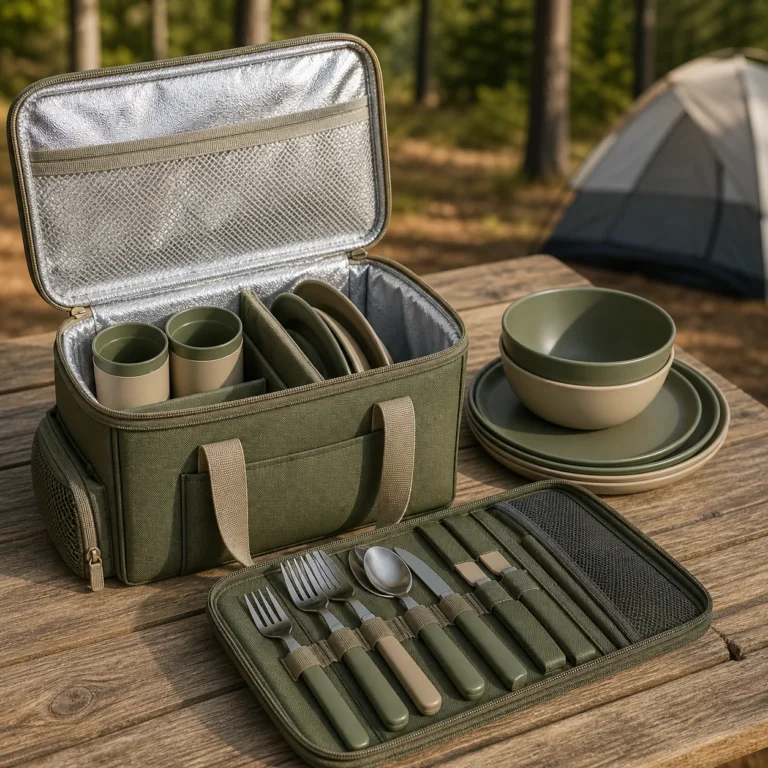 Sets with Insulated Lunch BagComplete dinnerware and fitted lunch bag programs developed as one coordinated retail set.View product category