
Test stack release on revision-matched components before conditioning, immediately after the specified wash and temperature sequence, and again after stabilization. Record separation force or user action, sticking location, re-stack alignment, stack height and case fit. A passing camping dinnerware stack release test needs written conditions and acceptance criteria—not a claim that one warm or wet sample separated.
Define release before changing the sample
Nested dinnerware can behave differently when surfaces are wet, when residual films remain, or when components have experienced a project-defined temperature change. The buyer’s question is not simply whether two pieces can be pulled apart. It is whether the complete revision-matched stack separates in the intended user sequence without unsafe leverage, edge damage, unacceptable sticking or a new pack-out problem.
Freeze component IDs, drawing revisions, material/finish descriptions and the intended nesting order. Define which pair is the controlling interface: plate-to-plate, bowl-to-bowl, cup-to-cup, bowl-to-plate or the complete stack within its case. Link this work to the nested-set tolerance register; conditioning cannot compensate for missing dimensional control.
This trial evaluates dinnerware separation and pack behavior. It does not establish cookware performance, direct-heat suitability, material compliance, migration results, dishwasher claims or production capability. Any such claim needs the final construction, defined use and applicable evidence.
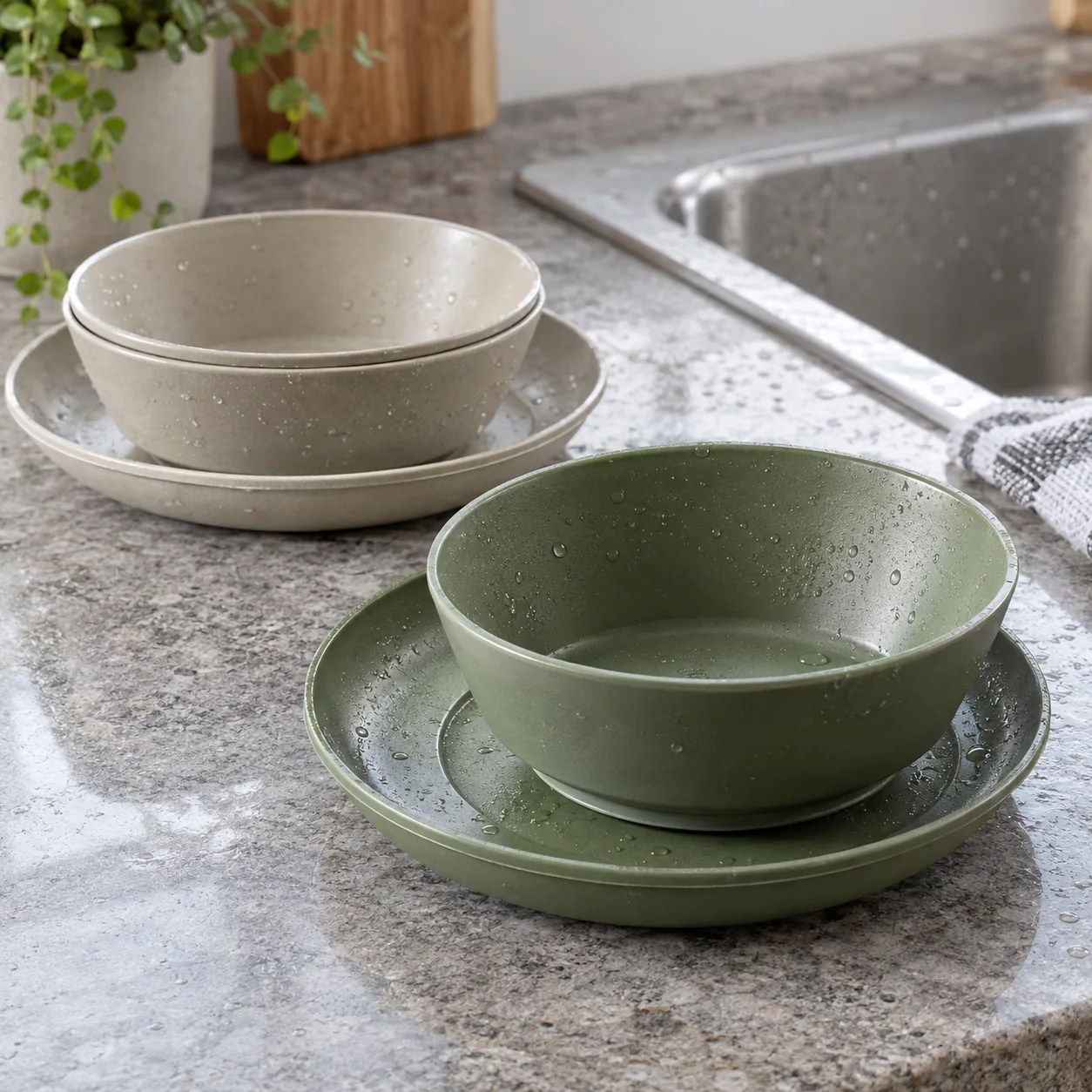
Revision-matched release trial record
| Record field | Buyer decision | Why it matters |
|---|---|---|
| Sample identity | Component IDs, revisions, lot/source and condition | Prevents results being assigned to different geometry. |
| Baseline state | Dry reference, prior use and stabilization state | Provides a comparison before conditioning. |
| Wash inputs | Method, chemistry, contact time, orientation and rinse | Separates the product response from an undefined wash. |
| Temperature inputs | Specified exposure, transition and recovery conditions | Makes the sequence repeatable without inventing universal values. |
| Release action | Permitted grip, pull/twist action and assist tools | Defines what counts as normal use. |
| Observed interface | Sticking location, moisture path, marking or deformation | Turns a pass/fail into corrective information. |
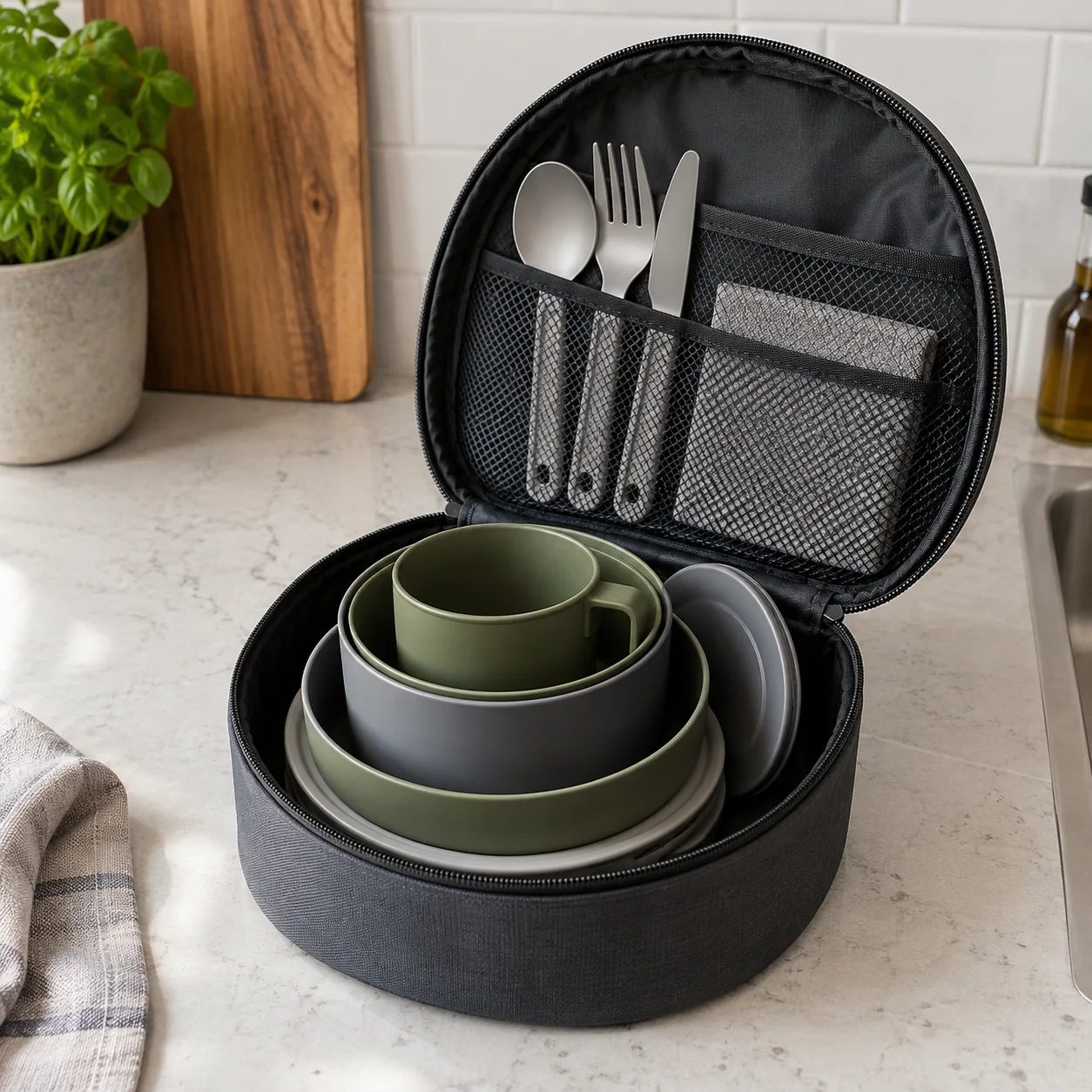
| Pack consequences | Re-stack alignment, height, rattle and case closure | Connects release behavior to the complete set. |
| Disposition | Accept, revise, repeat or request evidence | Creates a controlled release decision. |
Do not borrow wash or temperature values from unrelated materials. The project owner should define conditions from intended use, target-market instructions and the claims under review. The FDA Food Code provides an authoritative hygiene context, while Regulation (EC) No 1935/2004 frames the broader food-contact responsibility. Neither source approves a particular nesting result.
Run the camping dinnerware stack release test in stages
| Stage | Buyer action | Evidence to retain |
|---|---|---|
| 1. Verify baseline | Nest and release the dry matched set using the defined action. | Interface, action, anomalies and stack height |
| 2. Apply wash | Use the written method; control orientation and complete the rinse. | Cycle record and deviations |
| 3. Observe wet release | Check the specified time point without adding an unapproved aid. | Sticking pair, grip and surface condition |
| 4. Apply temperature sequence | Follow the approved exposure and transition steps. | Condition record and sample identity |
| 5. Stabilize | Allow the specified recovery before the next comparison. | Recovery condition and elapsed sequence |
| 6. Re-stack and pack | Repeat nesting, access, restraint and case closure. | Alignment, height, rattle and closure observations |
| 7. Decide | Compare every observation with written acceptance criteria. | Signed disposition, owner and next action |
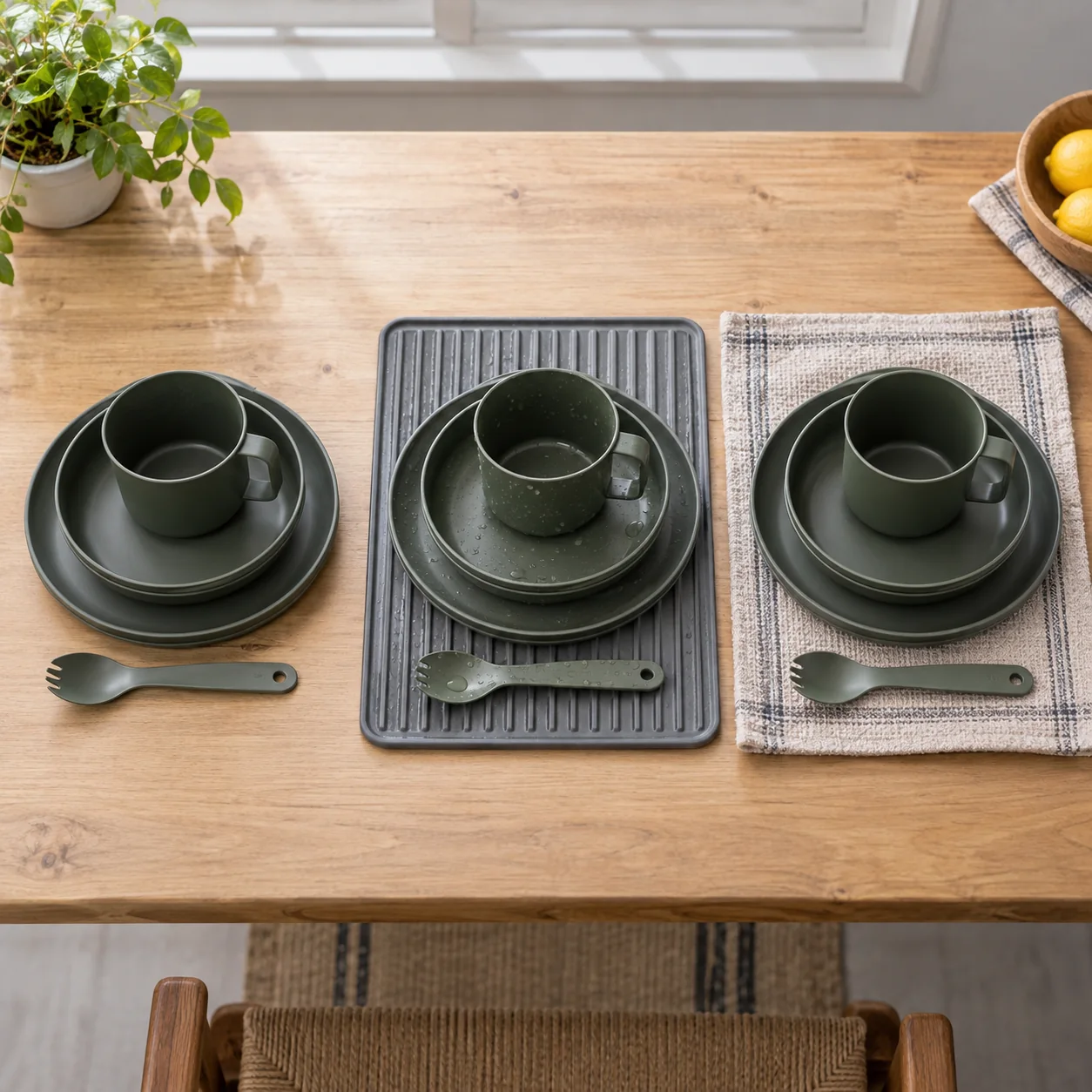
What to observe without inventing a universal force limit
The camping dinnerware stack release test can use a documented user action, an instrumented method or both. If force is measured, specify the fixture, direction, rate, number of interfaces and data treatment. If a practical user method is used, define the permitted grip, whether twisting is allowed and what constitutes an unsafe or unrealistic action. Measurement records should follow suitable traceability discipline; the NIST traceability guidance explains the relationship between results, references and an unbroken comparison chain.
Observe more than separation. Look for rim wedging, vacuum-like surface hold, trapped water, residue, distortion, changed overlap, abrasive contact and loss of case clearance. After release, the pieces must still re-stack in the approved order. Compare with the stackability decision method, nesting-versus-stacking guide and dishwasher-claim boundary.
Scenarios, limitations and commercial risk
Family retail sets: prioritize low-skill separation and clear grip access. Rental fleets: include repeated washing, mixed-piece control and replacement revisions. RV or car camping: check the user’s actual cleaning and dry-out sequence. Premium compact sets: protect the small clearance that creates pack efficiency without making release fragile.
A passing result applies only to the tested construction and written sequence. Different detergents, water quality, temperature transitions, coatings, surface texture, wear and drying state may change behavior. Do not translate one development trial into a universal dishwasher, freezer, hot-water or durability claim. Compatibility to be confirmed by project sample and drawing.
B2B Buyer Checklist
| Check | Buyer question | Release evidence |
|---|---|---|
| Matched revisions | Do every sample and drawing ID agree? | Component matrix and sample labels |
| Defined conditioning | Are wash, temperature and recovery steps written? | Approved sequence record |
| Release action | Is the permitted grip and motion repeatable? | Method note or fixture definition |
| Interface result | Where did sticking or marking occur? | Location-specific observation |
| Re-stack result | Did order, alignment or height change? | Before/after pack record |
| Case integration | Does the conditioned stack still close and release? | Full-case trial |
| Decision boundary | Which claims and revisions does approval cover? | Signed disposition and open risks |
Buyer FAQs
Should pieces be tested while still wet?
Only if wet release is part of the intended use question. Define the observation point, then also check the stabilized state.
Is hand separation enough?
It may support a user-focused screen when grip and motion are controlled. Instrumented data is useful when the decision needs a quantitative limit.
Can one stack represent the whole set?
No. Review every relevant interface and the complete stack because the controlling pair may change with the nesting order.
Does an easy release prove dishwasher safety?
No. Release is one functional observation; a dishwasher claim requires its own defined evidence and final construction.
When should the trial be repeated?
Repeat after relevant geometry, material, finish, process, source, wash instruction, case or component-mix changes.
What should an RFQ include?
Provide the component matrix, controlled drawings, target use, proposed wash and temperature sequence, release criteria, markets, case envelope and evidence requests.
Request a revision-matched release review
Send the component matrix, drawing revisions, nesting order, proposed conditioning sequence, case envelope and release concerns. Naike Dinner can review the brief against verified capabilities and identify samples, records and written confirmations required before approval.
Send your stack-release brief or use the inquiry form beside this article. Contact Naike Dinner for sample and quotation review.