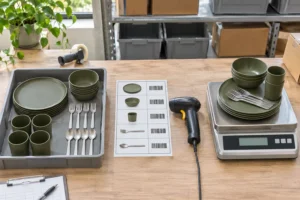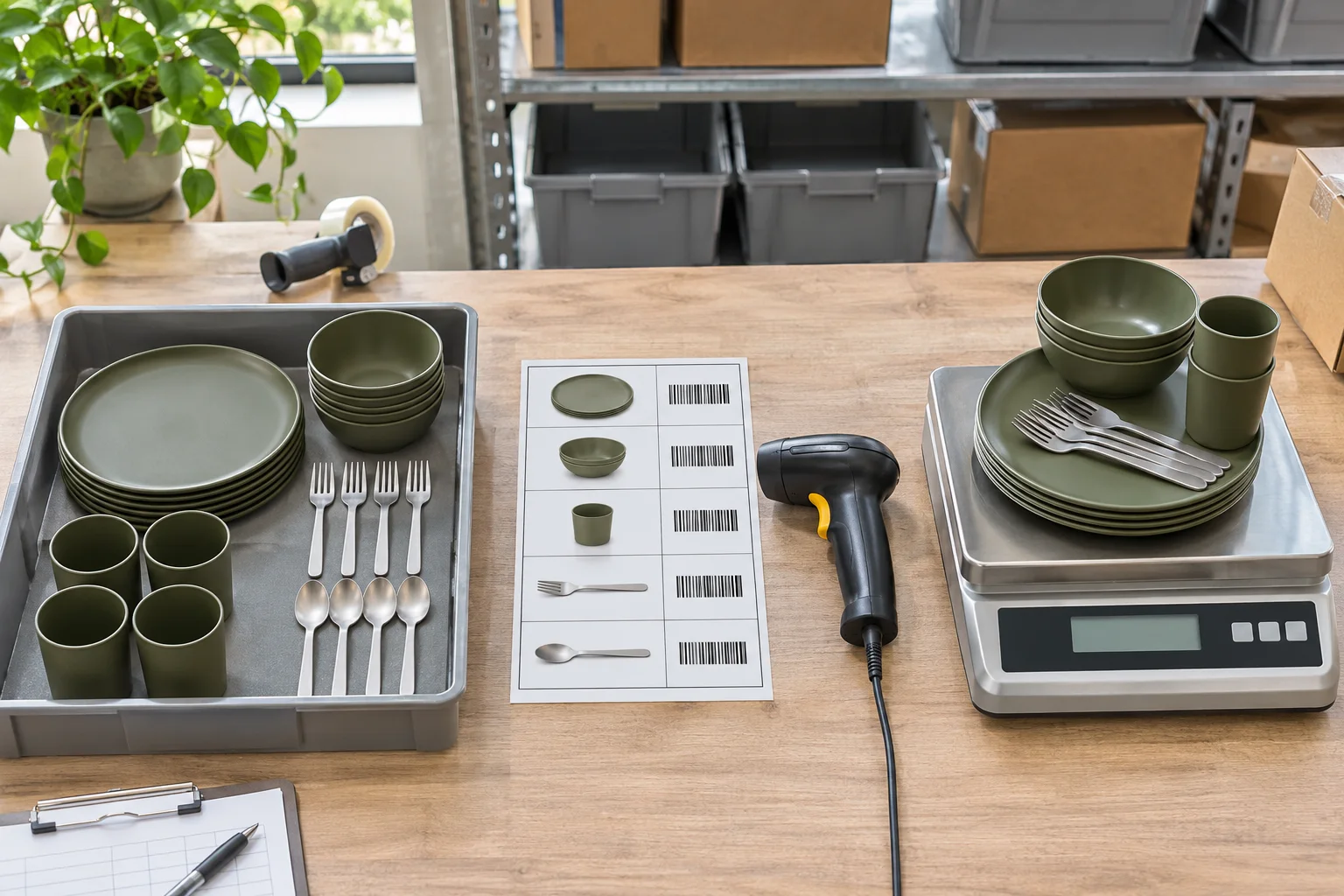
Camping set kitting verification should match the error being controlled. Manual count is visible and flexible, barcode scanning confirms identity when every controlled item carries a readable code, and check-weighing can detect a mass difference only after the expected weight and variation are validated.
Direct answer: use manual count for low-volume or visibly separated components, scanning where identity and revision matter, and check-weighing for stable kits whose missing component changes total weight enough to clear normal variation. Combine methods when one method cannot detect both wrong identity and missing quantity.
Camping Set Kitting Verification Method Selection Matrix
| Buyer risk | Count | Scan | Check-weigh | Recommended control |
|---|---|---|---|---|
| One component missing | Strong when lanes are visible | Strong if every unit is scanned | Strong only if mass separation is validated | Count or validated weight; scan for traceability |
| Wrong component revision | Weak when items look alike | Strong with unique controlled codes | Weak if masses overlap | Scan plus first-kit visual review |
| Duplicate component | Strong with fixed positions | Requires duplicate-event logic | Possible if added mass clears variation | Count or scan logic, then weight as backup |
| Wrong artwork or insert | Possible but human-dependent | Strong when each version is coded | Usually weak | Scan and artwork-version approval |
| Mixed material or color | Visual only | Identity only if codes differ | Not reliable without proven separation | Controlled code plus approved visual reference |
| High mix / frequent changeover | Error-prone without reset | Strong with current master data | Needs recipe control | Scan, recipe lock and line clearance |
Choose the method from the failure mode, not from equipment availability. Link the decision to the set CTQ tree, line-clearance record and lot-code hierarchy.
When Is Manual Count the Better Control?
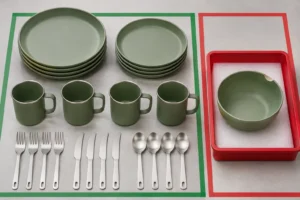
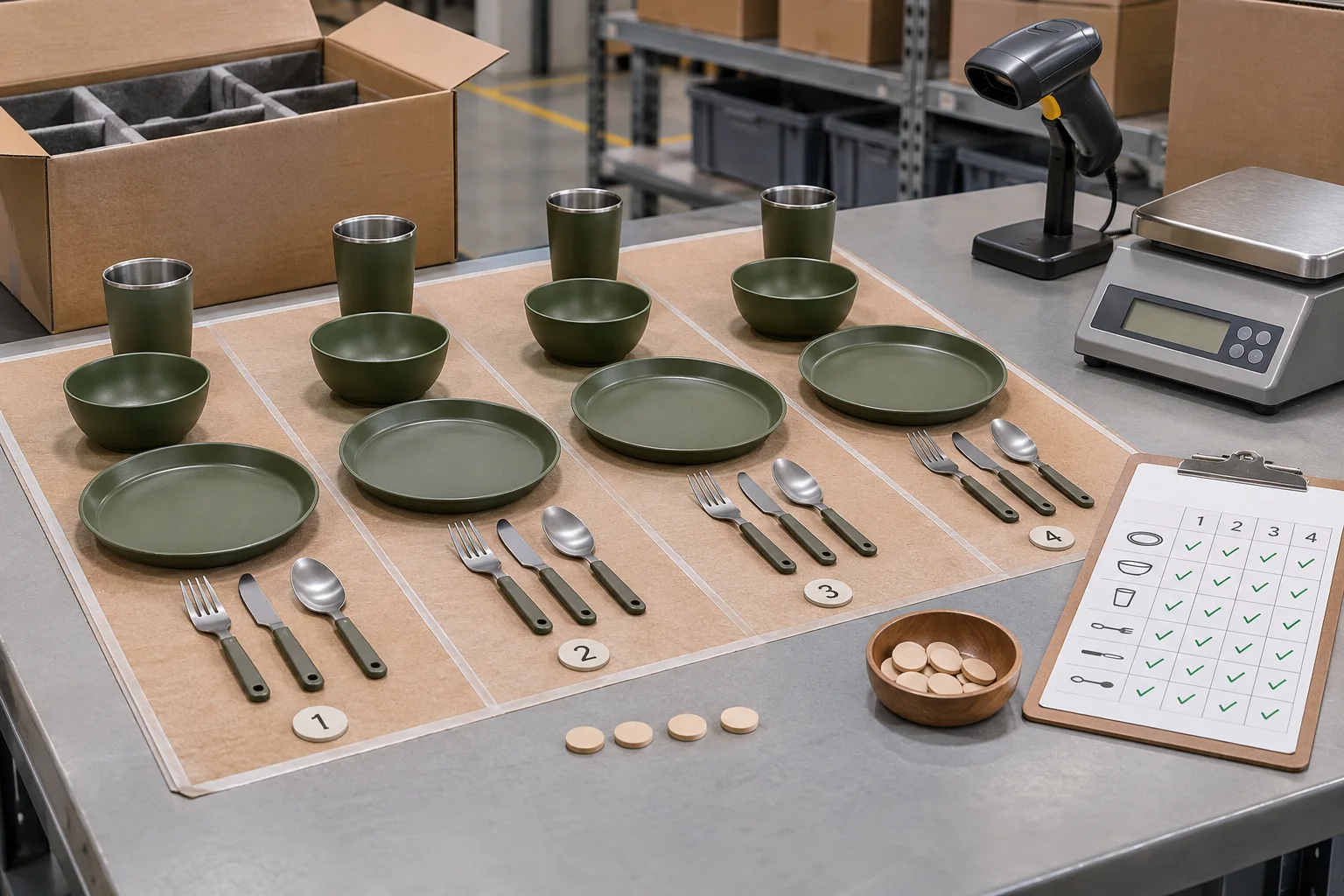
Manual count works when every required item has one unambiguous position, the kit count is manageable and the checker can see the complete set before closure. Define a standard lane or shadow-board layout, count sequence, reset rule, independent first-kit approval and reaction for interruptions.
One position per component and one controlled count sequence.
Released BOM, lane map, first-kit photograph and exception log.
Look-alike revisions may pass a quantity count while remaining wrong.
What Does Barcode Scanning Prove?
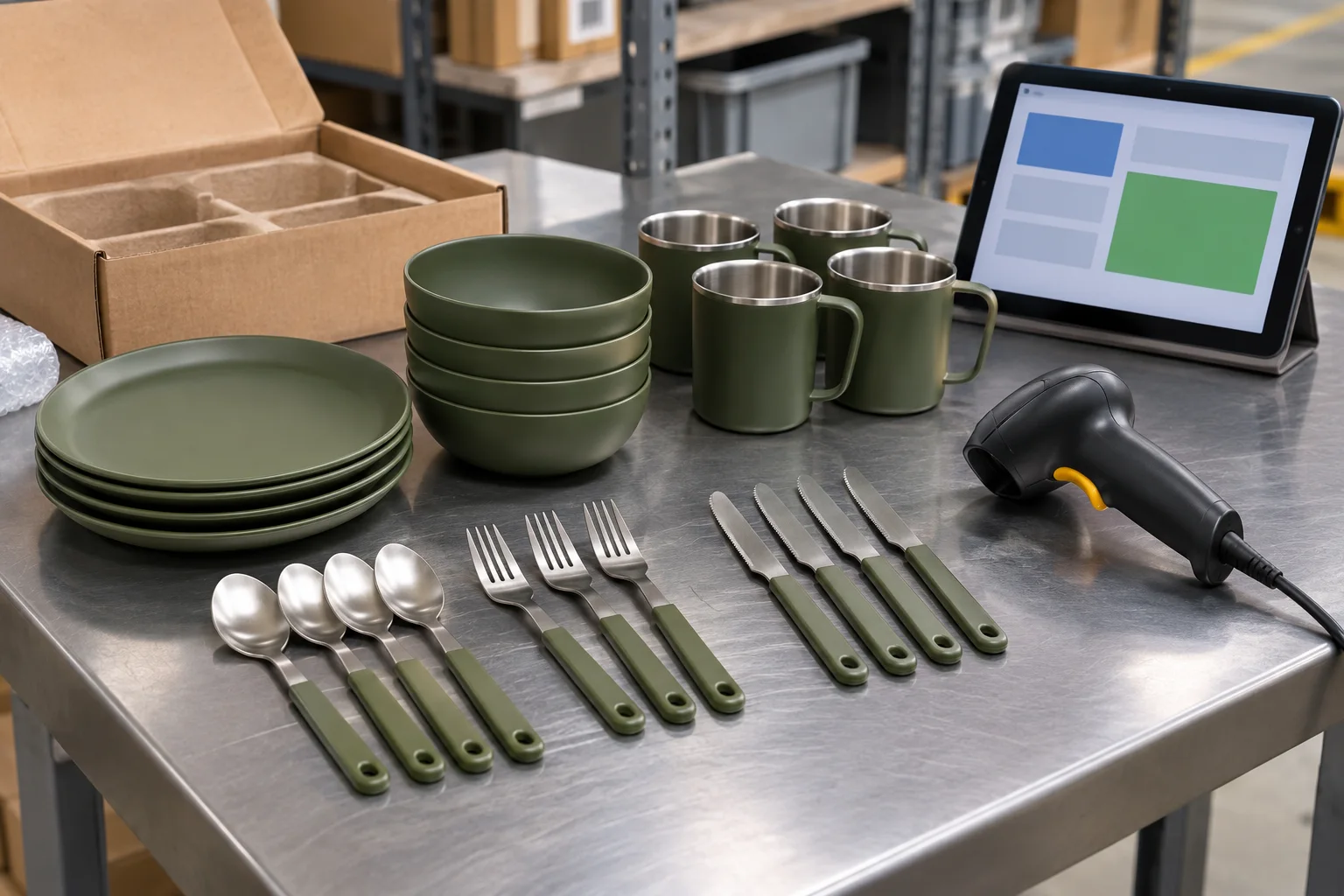
A scan proves that a readable code was captured and accepted by configured logic. It does not prove that the code is attached to the correct component, that an unscanned piece was not substituted later, or that master data is current. Buyers should approve code ownership, revision rules, duplicate-scan handling, offline behavior and the link between scan event, kit ID and carton ID.
The GS1 Global Traceability Standard can inform record linkage when that system is selected. Applicable food-contact manufacturing controls remain product- and market-specific; see Regulation (EC) No 2023/2006 and 21 CFR 174.5. These sources do not verify any Naike Dinner product or site.
How Should Buyers Validate Check-Weighing?
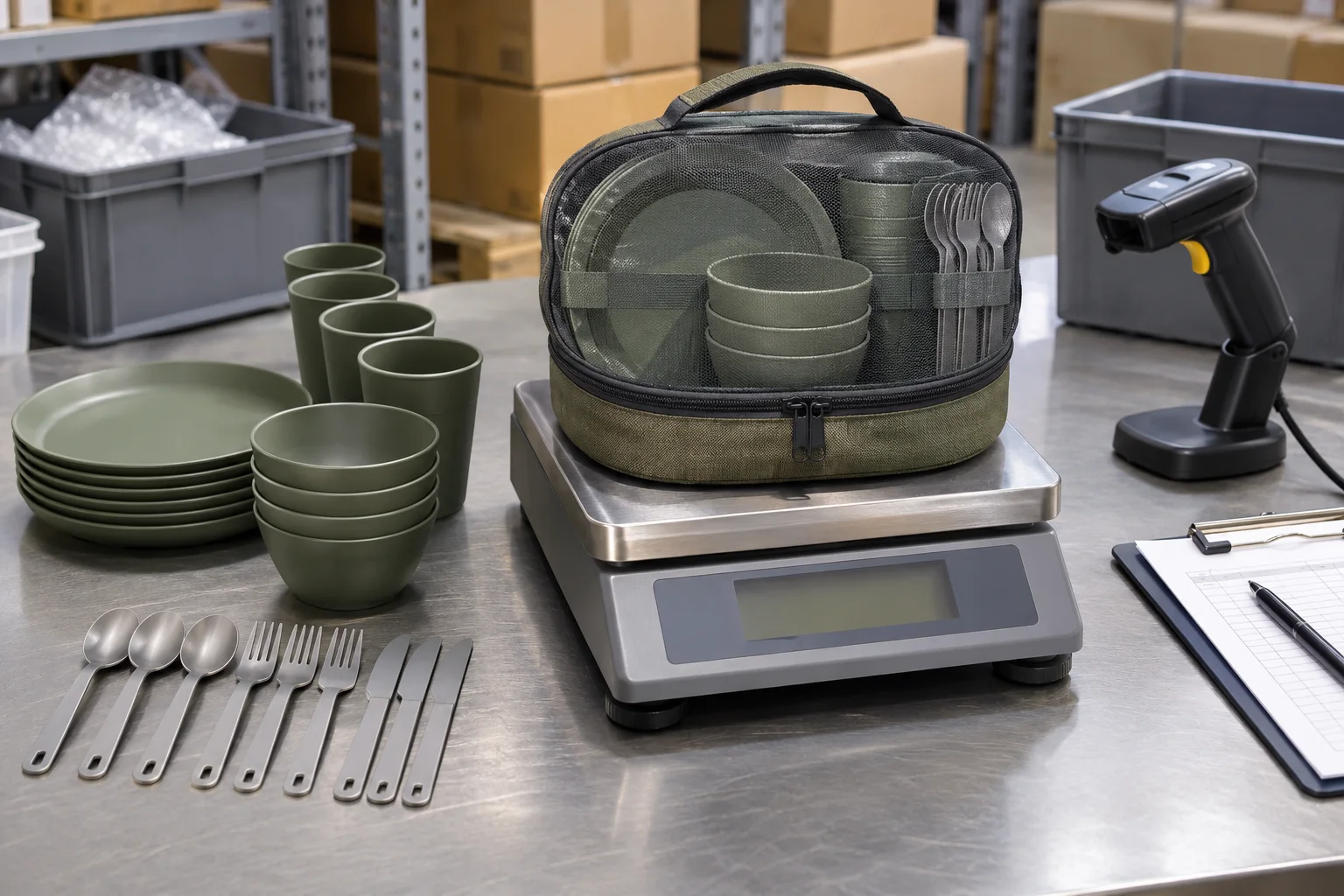
Define the complete-kit target from approved samples, then measure normal variation from components, moisture, packaging and the scale. For each missing or extra component, compare its mass effect with the accepted complete-kit distribution.
Decision margin = smallest relevant component mass − combined accepted variation and measurement uncertainty. If the margin is not reliably positive, weight alone cannot separate good and incomplete kits. Example: if the lightest missing item changes mass by 12 g but combined variation and uncertainty can reach 15 g, the method overlaps and must be paired with count or scan. The numbers illustrate the decision only.
| Validation record | Buyer approval question | Fail action |
|---|---|---|
| Scale identification and current status | Is resolution suitable for the smallest decision margin? | Use another method or instrument |
| Complete-kit sample distribution | Does it include normal component and pack variation? | Expand the study |
| Missing/extra challenge set | Are all critical components challenged? | Add uncovered cases |
| Recipe and revision control | Does the selected limit match the current BOM? | Lock and reapprove recipe |
| Reject confirmation | Are rejected kits opened and diagnosed? | Contain unexplained rejects |
Buyer Checklist Before Releasing the Kitting Method
Released BOM, critical failure modes, code scheme, target components, tolerance and deviation authority.
Method matrix, master-data revision, validation samples, challenge results, exceptions and recheck frequency.
Selected method by component, validated limits, backup control, reaction plan, owner and effective revision.
Buyer Questions About Kitting Verification
Is check-weighing always faster?
Not necessarily. It needs a stable weight distribution and controlled recipe; otherwise investigation and false rejects can outweigh speed.
Can one carton barcode prove every component is present?
No. It proves only the carton identity unless component-level events and packing logic are linked.
Should every component be scanned?
Only where the risk, code placement and workflow justify it. A controlled count may be more robust for obvious low-risk pieces.
What happens after a software or BOM revision?
Revalidate the affected master data, challenge cases and limits before release.
Does this guide prove Naike Dinner uses these controls?
No. It is a buyer decision framework; actual equipment, systems, validation and performance require project evidence.
Request a Camping Set Kitting Verification Review
Send the BOM, component weights, code plan, kit layout, critical mix-up risks and target throughput context. Naike Dinner can organize the inputs into a buyer-reviewable method matrix before sampling or quotation.
Send the verification briefReview kit completenessPrepare a B2B quality inquiry
Evidence scope: buyer decision support only. No specific supplier, line, equipment, compliance, capacity, MOQ, price, lead time or case result is verified.