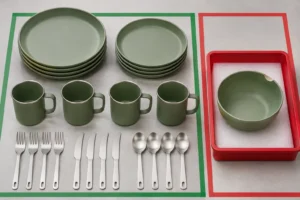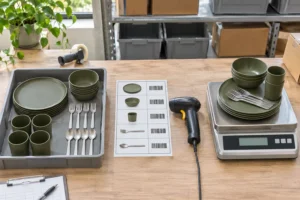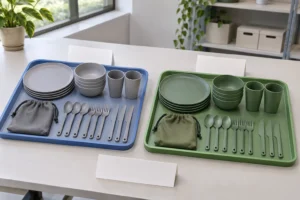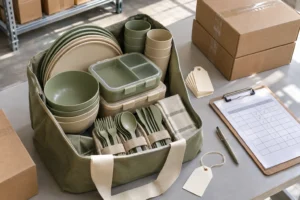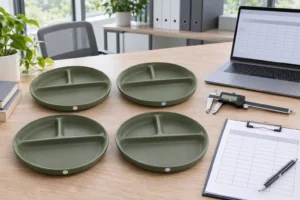
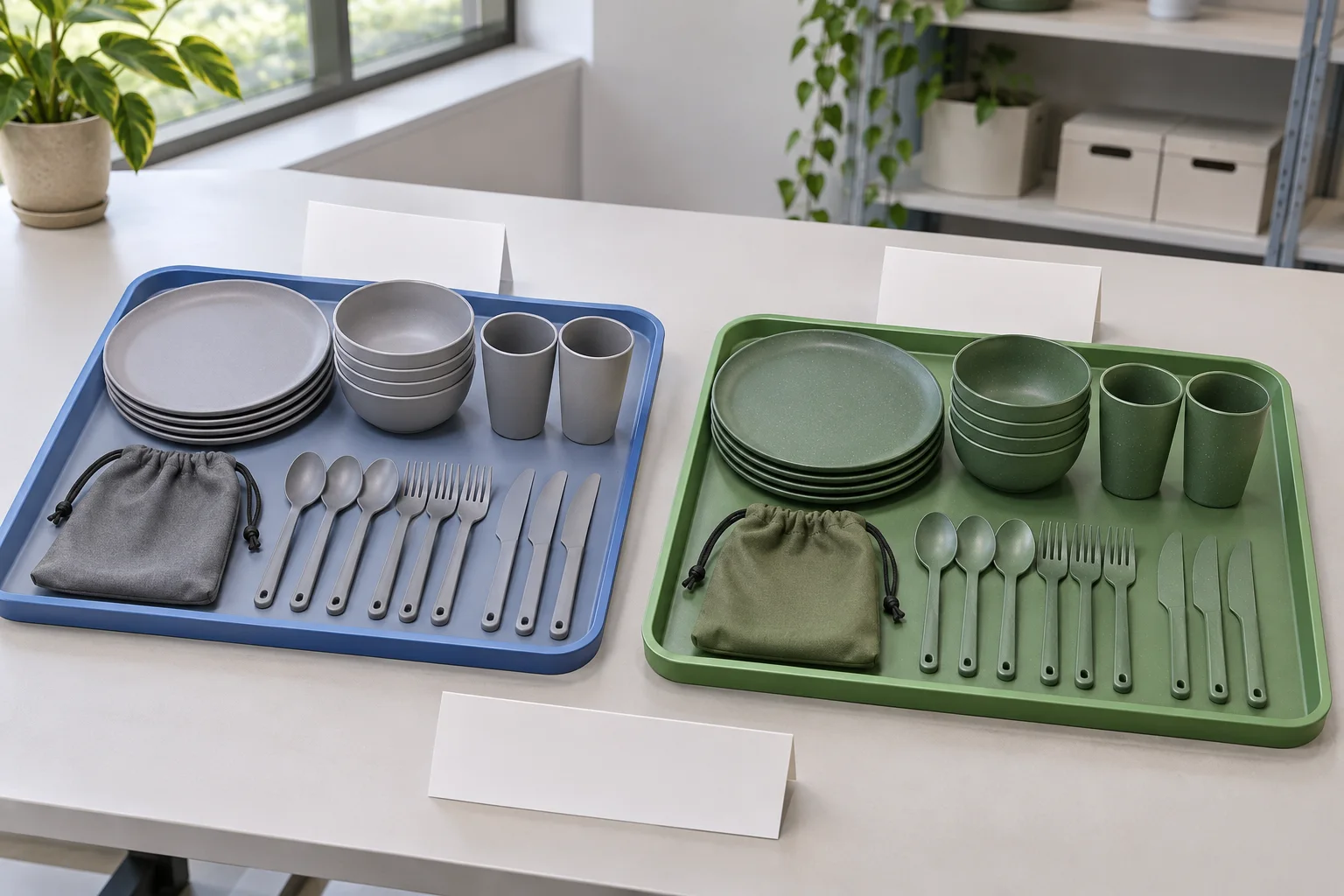
Camping set line clearance prevents an approved new revision from being packed with leftover old components, labels or instructions. Buyers should require a documented stop, remove-and-reconcile step, independent area check and first-kit verification whenever a component, artwork, BOM or pack-out revision changes.
Direct answer: stop the old job, identify its last acceptable unit, remove every old-revision component and document from the kitting area, reconcile used, returned, scrapped and held quantities, clean the defined line boundary, stage only the released new revision, then inspect one complete first kit against the approved BOM before normal packing resumes.
Camping Set Line Clearance: The Buyer Decision
Release the changeover only when the physical area, system issue list, printed materials and first complete kit all point to the same approved revision. A signed checklist without physical reconciliation is insufficient; an apparently empty table without document and inventory control is also insufficient.
When Should Buyers Require Camping Set Line Clearance?
Use line clearance when one controlled identity ends and another begins. The trigger may be a new plate geometry, a bowl color revision, changed cutlery, revised lunch-box lid, different carry case, updated artwork, new instruction sheet, changed carton label or a different set BOM. A routine shift change does not automatically create a new revision, but an unresolved mix-up risk still requires containment.
| Change trigger | Buyer question | Minimum action | Release risk |
|---|---|---|---|
| Component revision | Can old and new pieces be distinguished? | Remove old stock; verify new code, drawing and sample | Mixed geometry or fit |
| Artwork or label revision | Which version is legally and commercially approved? | Reconcile all printed items and system files | Wrong claims or destination marks |
| BOM or quantity change | Does every kit contain the new count? | Clear pick faces and reload the released issue list | Missing or extra components |
| Color or material change | Is the visible difference reliable under normal light? | Segregate lots and verify component evidence scope | Unapproved appearance or evidence mismatch |
| Pack-out change | Do insert, pouch and carton match the same revision? | Clear packing aids and approve one first kit | Damage, count or labeling error |
Connect the trigger to the controlled drawing and BOM revision record and the cross-channel specification reconciliation. If the changed item also affects evidence, revisit the component change-control decision.

What Must Be Inside the Line-Clearance Boundary?
The boundary is wider than the table where kits are assembled. Buyers should define every place from which an old item can return: feeder bins, under-table shelves, carts, label printers, rework containers, sample racks, inspection desks, waste points, digital issue lists and nearby shared storage. Clear only the agreed zone, but make that zone complete.
Physical components
Plates, bowls, cups, cutlery, lunch boxes, lids, cases, dividers, inserts and replacement pieces.
Printed and digital identity
Labels, instructions, artwork files, carton marks, pick lists, scan masters and inspection forms.
Exceptions
Rework, samples, partly completed kits, scrap, returns, loose pieces and unidentified items.
The applicable product and market determine the regulatory evidence. Commission Regulation (EC) No 2023/2006 addresses good manufacturing practice for food-contact materials in its scope, while 21 CFR 174.5 provides U.S. general provisions for indirect food additives. The GS1 Global Traceability Standard can inform identity and record linkage. None of these sources proves that a specific Naike Dinner product, site or process complies.

Buyer-Ready Changeover and Line-Clearance Checklist
| Checkpoint | Required record | Pass condition | If not passed |
|---|---|---|---|
| Old job stopped | Last acceptable unit, time and old revision | Boundary between revisions is retrievable | Hold the unbounded interval |
| Old components removed | Component-by-component clearance result | No loose or staged old item remains | Search, identify and reconcile |
| Printed items cleared | Label, insert, instruction and carton version count | Issued, used, returned, destroyed and held totals reconcile | Block label and pack-out release |
| Exceptions controlled | Rework, sample, scrap and unidentified-item log | Each item has identity and disposition | Segregate; do not relabel by assumption |
| Area checked | Named zones, checker, date/time and evidence | All defined locations inspected | Repeat the incomplete zone check |
| New revision staged | Codes, revisions, quantities and issue list | Only released items are present | Remove and restage |
| First kit verified | Complete kit compared with BOM and approved references | Count, identity, artwork and pack-out match | Hold the kit and correct the setup |
| Normal run authorized | Operator and independent release approval | Open discrepancies are closed or formally contained | Keep the line stopped |
How Should Buyers Reconcile Old-Revision Quantities?
Use one balanced equation for every controlled component: opening quantity + authorized additions = accepted old-revision output + verified remaining stock + verified scrap + verified samples/rework + documented variance. The buyer sets the allowed variance; this guide does not prescribe a universal tolerance.
Example input
Buyer enters 520 old-revision cups opened to the line and 20 later additions.
Recorded disposition
480 accepted kits, 42 returned cups, 12 scrap cups and 4 retained samples are recorded.
Decision
540 issued versus 538 accounted leaves a variance of 2. Hold the affected scope until the variance is resolved or formally bounded.
These numbers demonstrate the calculation only; they are not production, capacity, yield, MOQ or case-history data.

What Evidence Releases the First New-Revision Kit?
Compare the complete first kit with the released BOM, component codes, approved visual references, artwork versions and pack-out instructions. Verify the kit as a system: a correct plate does not compensate for an old instruction sheet, and a correct carton label does not compensate for mixed cutlery.
Released BOM and drawings, revision trigger, approved visual references, evidence scope, tolerance/variance rules and deviation authority.
Old-job close record, quantity reconciliation, zone clearance, new-issue list, first-kit photos and unresolved-exception log.
Signed line-clearance checklist, first-kit disposition, authorized start time, bounded holds, owners and re-clearance triggers.
Use the first-production-unit review for the broader release decision and the lot-code hierarchy to preserve the boundary after normal packing resumes.
Buyer Questions About Camping Set Line Clearance
Is cleaning the table enough?
No. The buyer-defined boundary also includes components, documents, labels, rework, nearby storage and digital issue controls.
Can old and new revisions share one open bin?
Only if a controlled method prevents misidentification and the buyer accepts it. Physical separation is normally easier to audit.
What if one unidentified component is found?
Stop release, segregate it, search the defined boundary and determine whether the previously cleared interval remains valid.
Must every changeover use the same checklist?
The core record can be stable, but checkpoints should reflect the changed component, artwork, BOM, pack-out and risk.
Does a signed form prove the line was clear?
No. The approval should be supported by reconciliation, zone evidence and first-kit verification.
Does this guide confirm Naike Dinner line-clearance capability?
No. It is a buyer decision tool. Actual site controls, personnel, systems, equipment, capacity and performance require project evidence.
Request a Camping Set Line-Clearance Review
Send the old and new BOMs, changed component codes, artwork versions, kitting boundary, quantity records and first-kit approval requirements. Naike Dinner can organize the available inputs into a buyer-reviewable changeover checklist before sampling, quotation or release.
Send the line-clearance briefRequest a revision reviewPrepare a B2B quality inquiry
Updated . Evidence scope: buyer decision support. Nothing in this guide verifies a specific supplier, site, product, line-clearance system, compliance result, capacity, MOQ, price, lead time or case history.