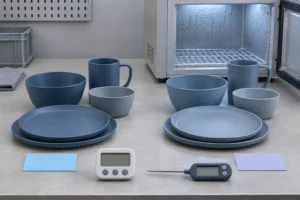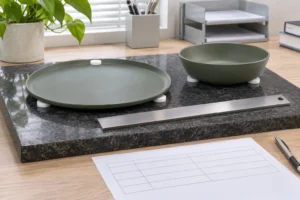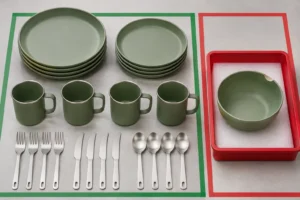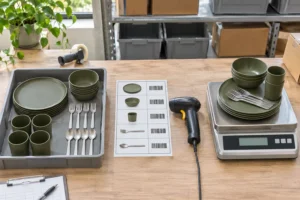
Camping set component change control treats a replacement as more than a BOM edit. Reopen every relationship the part touches: fit, nesting, case pockets, pack sequence, count, artwork, packaging, evidence, claims and quotation scope. Mark each relationship as unaffected, review required or reapproval required, then release the replacement only after linked records agree.
A buyer may ask for a different bowl, cup or lunch box because of cost, availability, styling or user feedback. The procurement risk begins when the change is treated as isolated. A wider bowl can alter plate clearance and case closure. A new color can reopen artwork and evidence questions. A different surface can change cleaning instructions. Camping set component change control therefore follows relationships, not just part numbers.
Start camping set component change control with an impact map
Start with the exact released component and the proposed replacement. Record component code, drawing revision, approved sample reference, material description, color/finish reference, food-use condition and packed location. Unknown fields remain open; they are not copied from the old component. The map below is a decision record, not proof that a relationship is safe.
| Relationship to inspect | Buyer question | Required output |
|---|---|---|
| Component-to-component fit | Does the new profile nest, stack or contact another part differently? | Updated interface notes and representative fit sample |
| Case and retention | Do pocket, tray, loop, divider or closure clearances change? | Loaded-case observation in all carry states |
| Pack sequence | Can the same team follow the released instruction without force or ambiguity? | Revised pack-out steps and blind repack check |
| Counts and BOM | Which set variants, spares and service parts use the component? | Linked BOM and assortment update |
| Artwork and instructions | Do illustrations, names, colors, warnings or cleaning directions show the old part? | Cross-asset artwork disposition |
| Food-contact evidence | Do material, color, finish, decoration or use conditions differ? | Evidence-gap record tied to the finished replacement |
| Commercial scope | Does the quote, packaging or project assumption change? | Written revised quotation scope with open items |
| Release record | Which functions must reapprove and which earlier approvals remain valid? | Dated change decision with owners and references |
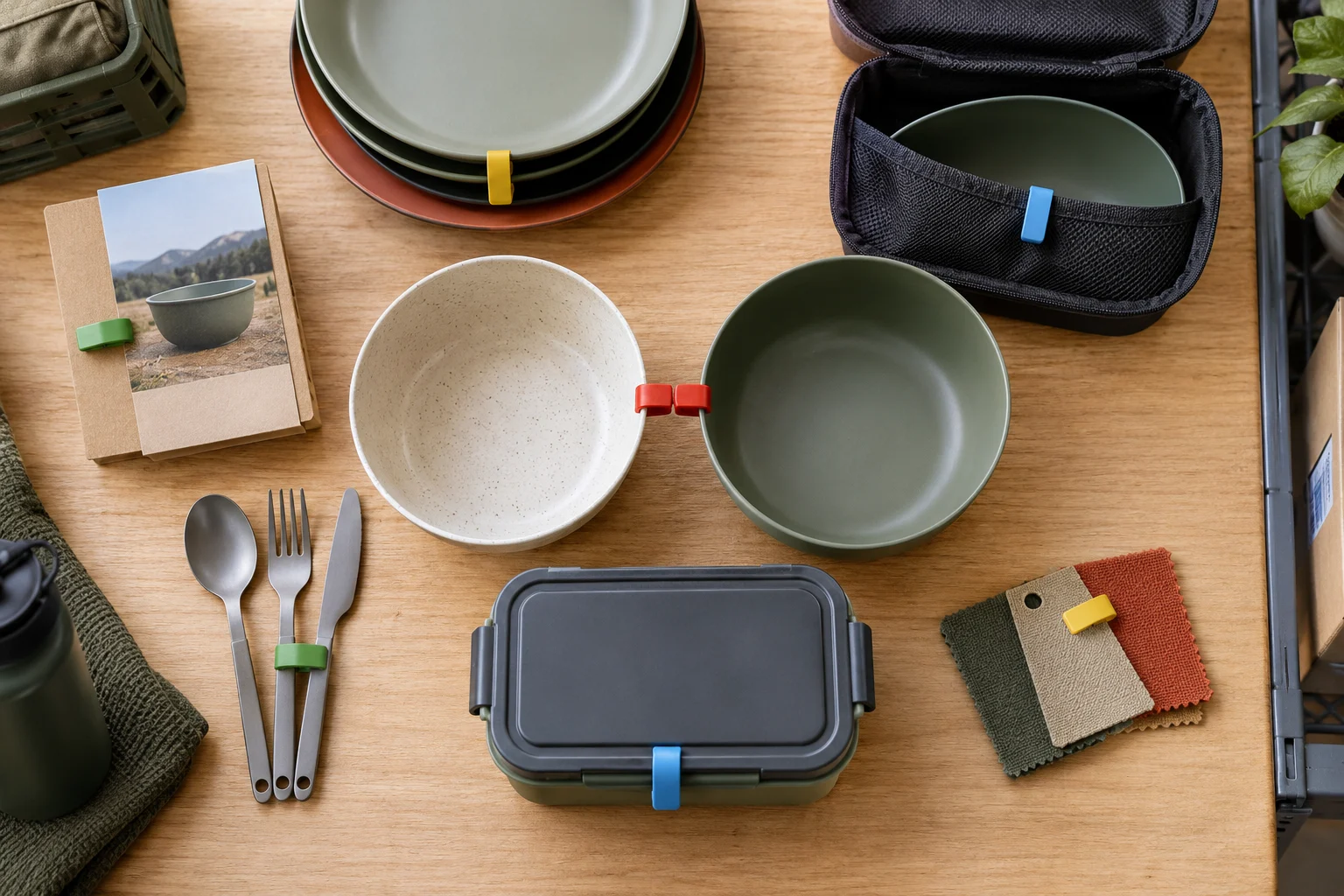
Classify impact without assuming that unchanged means approved
Use three states. Unaffected with evidence means the controlled relationship was checked and its reference remains applicable. Review required means the buyer needs a drawing, sample or document comparison. Reapproval required means a released reference must be replaced or formally superseded. Add an owner and due evidence to every open cell.
A bowl profile change, for example, can require drawing comparison, nesting observation, case fit, stack release after washing, artwork revision and pack-volume recheck. It does not automatically require every test in the project, but the reason for retaining or reopening evidence must be written. The same logic applies to a cup, plate, utensil, divider or case insert.
Run fit and packing checks in the complete set
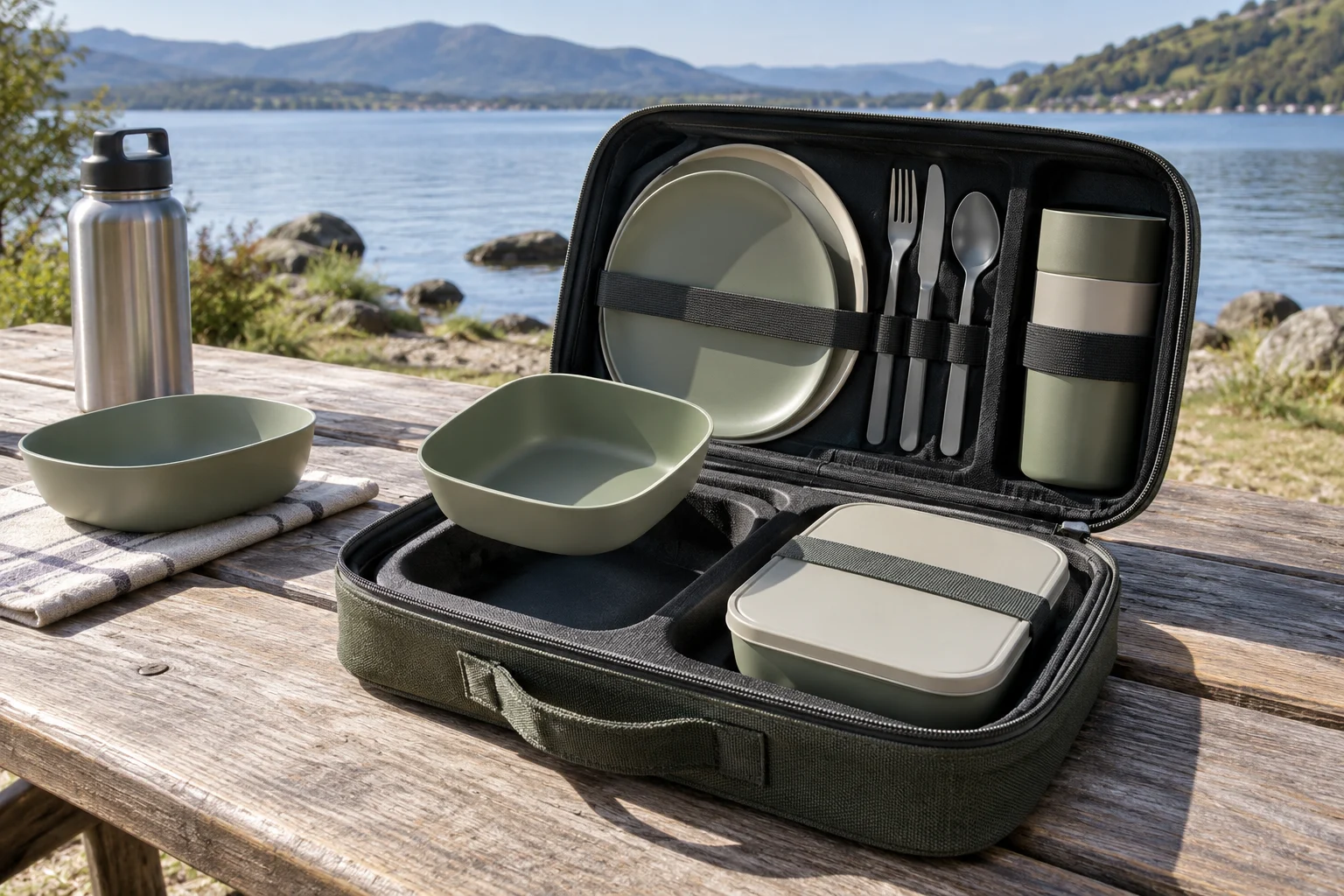
Inspect the replacement in the intended configuration, not alone on a desk. In camping set component change control, load all components, close the case, carry it, reopen it and remove parts in the intended order. Observe contact, rattle, forced rotation, blocked access, displaced dividers, utensil-edge exposure and closure pressure. Record observations rather than inventing tolerances or performance claims.
Where nesting or stack release matters, retain the actual washing, temperature and use conditions in the review brief. Compatibility to be confirmed by project sample and drawing. Dinnerware is not cookware, and a component substitution must not create or imply direct-heat performance.
Reconcile evidence and claims at finished-component level
Material names alone do not establish equivalence. Compare the finished replacement’s material, colorant, surface, decoration, food type, contact duration, use temperature, cleaning method and destination market. Primary regulatory context includes the U.S. FDA food-contact substances framework, the EU Framework Regulation (EC) No 1935/2004 and NIST guidance on traceability. These sources define context; they do not certify an unspecified product.
Use the existing BOM revision-control guide, case-fit checklist and artwork release checklist as linked controls. Do not copy old evidence to a changed part without a documented scope comparison.
Release artwork, packaging and commercial scope together

Check every place the component appears: component illustration, case diagram, retail box, instruction sheet, color name, count statement, replacement-part list and digital listing. Camping set component change control must reconcile these assets with the approved physical reference. A correct physical sample can still fail launch if the box or instructions show the superseded part. Commercially, request a written quotation revision that identifies what changed and which inputs remain to be confirmed; do not infer MOQ, price or lead time.
Buyer Checklist
| Buyer provides | Supplier returns | Approval evidence |
|---|---|---|
| Released part code, drawing, sample ID and reason for change | Proposed part reference and differences | Signed comparison with open issues |
| All set variants and packed locations using the part | Updated BOM and affected configuration list | Linked revision register |
| Use conditions, markets, artwork and packaging files | Evidence gaps and asset-change list | Applicable evidence and artwork approvals |
| Acceptance states and responsible reviewers | Representative complete-set samples | Fit, pack-out and release record |
Buyer FAQs
Can the old drawing stay active if only color changes?
Only if geometry and every other controlled attribute truly remain unchanged and the drawing system permits a separate controlled color reference. Document the decision.
Does a supplier declaration close the evidence review?
No. Review the declaration’s identity, scope, revision, finished component, use conditions and destination requirements against the proposed replacement.
Must the whole set be sampled again?
Sample the complete relationships at risk. The rationale may differ by change, but isolated component review cannot prove loaded-case fit or pack sequence.
What if the replacement fits but changes the artwork?
Keep the physical and artwork release gates separate. The component is not launch-ready until every affected asset is reconciled.
Can one change-impact map cover several set sizes?
Yes, if every affected configuration is listed and differences are explicit. Do not assume a result from one case size applies to another.
What starts a useful review?
Send the released component reference, proposed change, complete-set configuration, drawings, sample IDs, use conditions, markets, packaging and current evidence index.
Request a component-change review or send the released and proposed references. Naike Dinner will identify the drawings, samples, evidence and written confirmations needed before a replacement is approved.