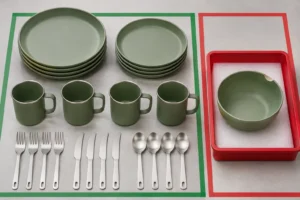
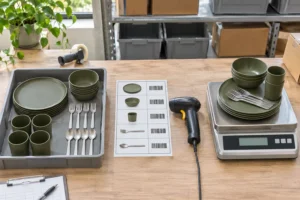
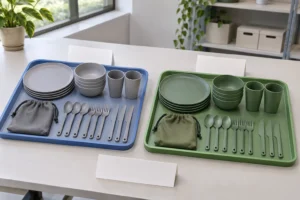
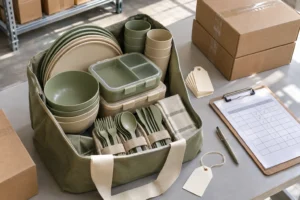
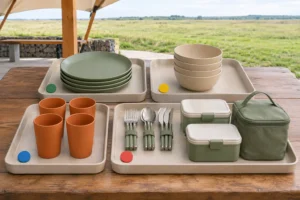
Camping set nonconforming component control starts by holding the affected complete kit, not merely removing the visibly failed part. The decision must preserve component-lot traceability through scope definition, disposition, replacement and final release.
How Does Camping Set Nonconforming Component Control Work?
The camping set nonconforming component remains linked to the suspect kit population until quantities reconcile and an authorized disposition is recorded.
COMPONENT NONCONFORMANCE DECISION GUIDE
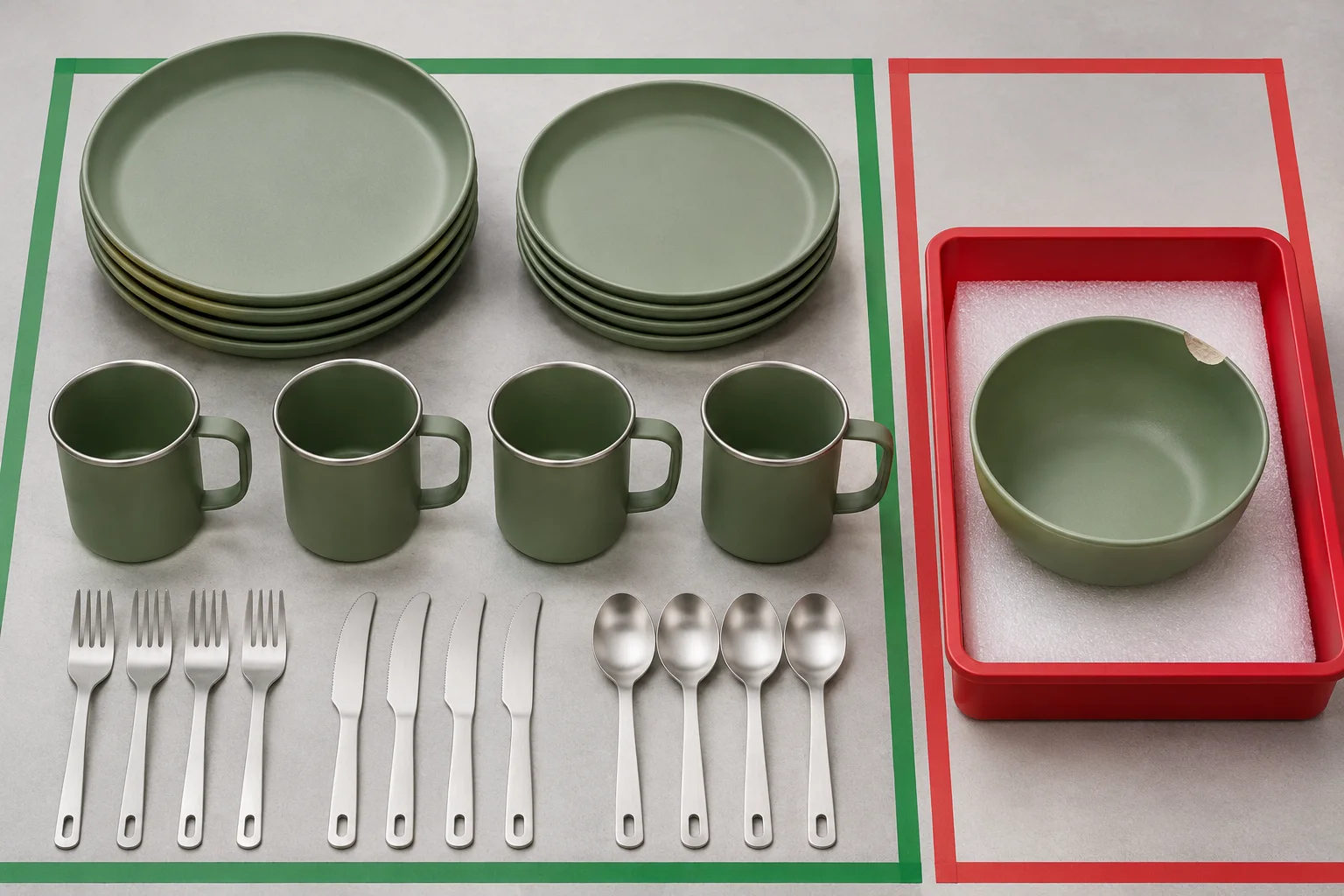
When one component fails but the rest of a camping set passes, hold the complete affected kit first. Identify the failed component and its lot, define the suspect population, then choose sort, replacement, rework review or rejection using approved criteria. Release only after the replacement matches the BOM revision and the rebuilt kit passes completeness and final inspection.
Reviewed November 5, 2026 at 09:07:49 CST · GEO D / S + E
What Is the Five-Decision Path?
| Decision | Buyer question | Required record |
|---|---|---|
| 1. Hold | Which finished kits and loose components could contain the failure? | Hold ID, quantity, location, component code, lot and kit revision |
| 2. Define scope | Is the issue isolated, lot-related or caused by a shared process? | Sampling basis, traceability evidence and suspect-population rationale |
| 3. Disposition | Can units be sorted, replaced or reviewed for rework, or must they be rejected? | Authorized disposition with acceptance criteria and owner |
| 4. Rebuild | Does the replacement match the approved BOM and fit the set? | Component code/revision, source lot and replacement quantity |
| 5. Release | Is the rebuilt kit complete and compliant with the same release rules? | Reinspection result, completeness check and release signature |
Why Hold the Whole Kit First?
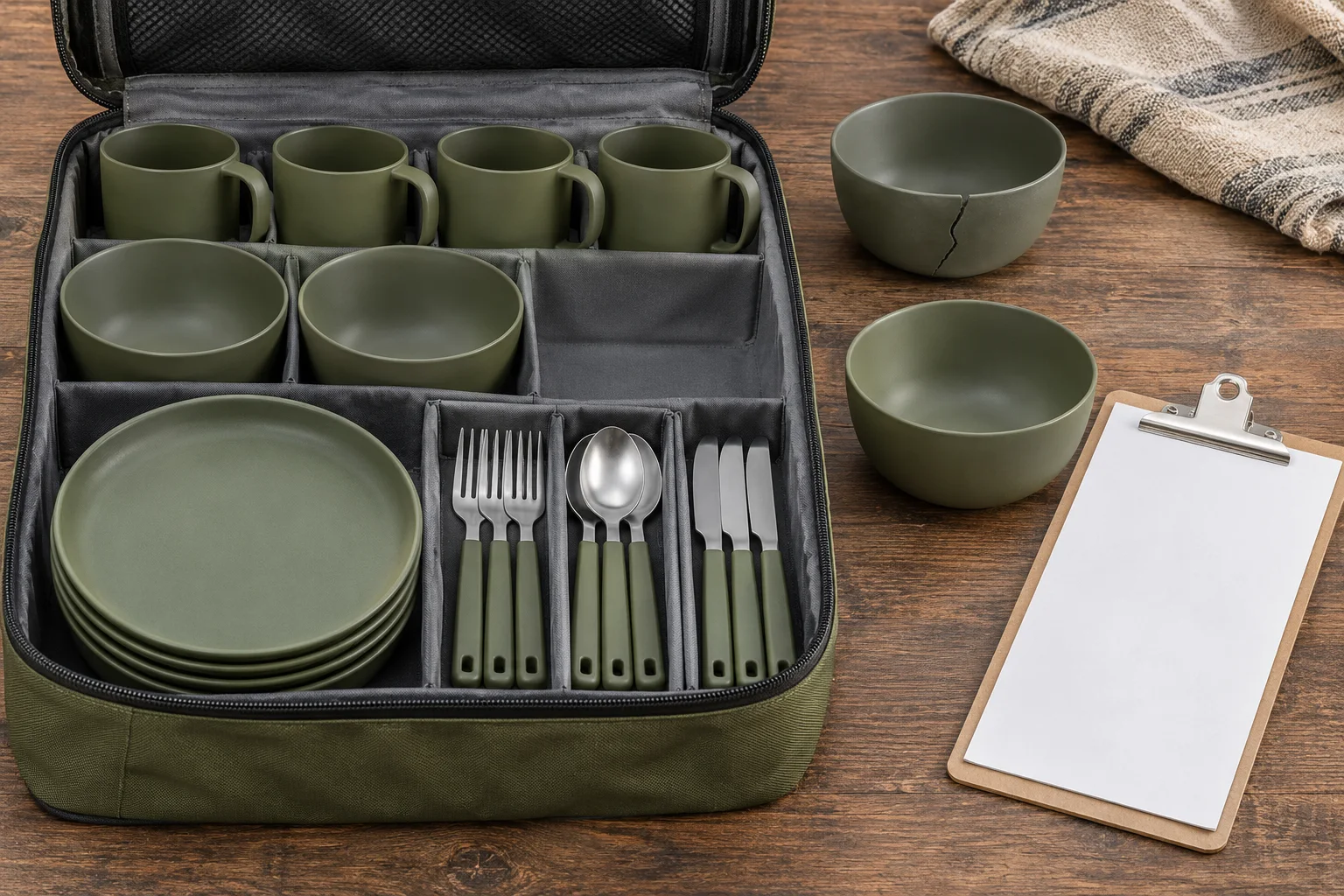
A passed plate, cup or utensil does not automatically make the finished set releasable. The commercial unit is the complete kit. If one bowl fails, the buyer must prevent shipment of kits containing that bowl and preserve traceability while the failure is evaluated. Holding only the visibly failed piece can lose the connection between the component lot, the kits already packed and the remaining loose stock.
Use a hold quantity reconciliation: suspect components received = failed + accepted after sort + replaced/returned + remaining on hold. The same logic should reconcile affected finished kits. Any unexplained difference keeps the hold open.
How Should the Suspect Population Be Defined?
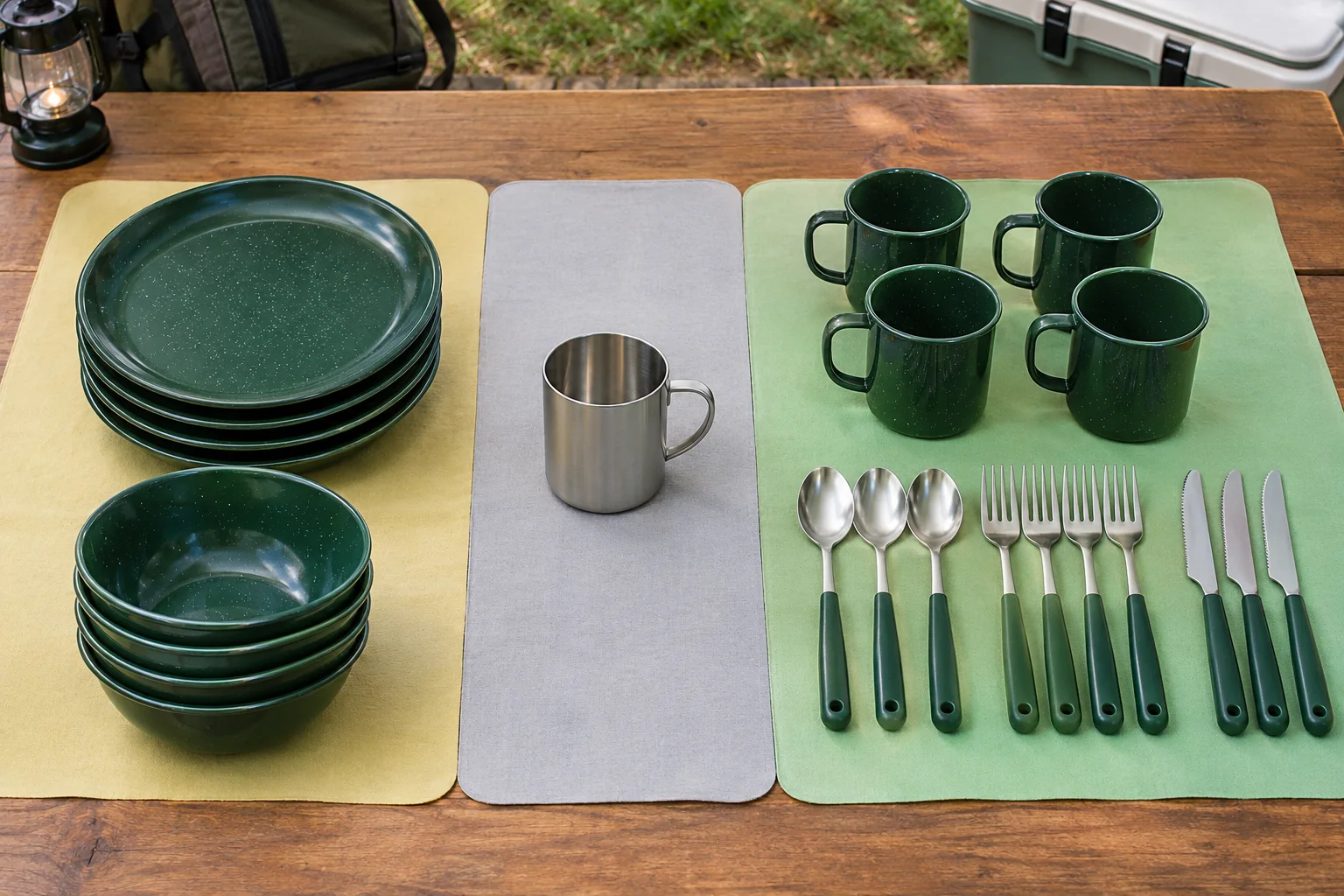
Start from the failed component code, revision and available lot identifier. Expand the scope when units share material batch, molding condition, decoration run, assembly station or packaging period. Narrow it only when evidence supports a clean boundary. A single failed sample never proves that adjacent units are acceptable; it only triggers the investigation.
When Is Sort-and-Replace Appropriate?
Sort-and-replace is appropriate only when the defect can be detected reliably, the inspection method is approved, accepted units remain traceable, and qualified replacements match the released BOM. Rework needs its own instruction and verification. Concession or use-as-is requires explicit authorized approval and should never be inferred from schedule pressure. Safety, food-contact or legal failures require escalation; a cosmetic acceptance rule cannot override them.
What Must the Replacement and Release Record Contain?
| Record field | Minimum content | Release risk if missing |
|---|---|---|
| Nonconformance | Requirement, observed result, component code, revision and lot | Wrong issue may be sorted |
| Scope | Suspect quantity, kit IDs/date range and location | Affected kits may escape |
| Disposition | Sort, replace, rework review or reject; approver and date | Unauthorized use |
| Replacement | New component code/revision, lot, quantity and fit result | Mixed revisions or incompatibility |
| Final release | Complete-set count, visual/functional checks and release owner | Incomplete or unverified kits ship |
Buyer Checklist
| Ask the supplier | Review the evidence | Approve only when |
|---|---|---|
| How was the failed component isolated? | Hold tag, quantities and traceability link | All suspect kits and loose stock reconcile |
| How was the sort method validated? | Inspection instruction, known defect examples and inspector result | The method reliably detects the defined failure |
| Which replacement was used? | BOM code, revision, lot and sample/fit record | Compatibility and evidence match the project |
| Who released rebuilt kits? | Final inspection and completeness record | Authorized approval is linked to the affected population |
Frequently Asked Questions
Can the other passed components ship separately?
Only if the purchase specification allows separate supply and traceability remains intact. Do not silently change a complete-set order into loose components.
Does one failure require rejecting the whole lot?
Not automatically. The approved sampling plan, defect classification, evidence and disposition authority determine the action.
Can a replacement come from another lot?
Potentially, but its code, revision, material/evidence scope and fit must be confirmed and recorded.
What if the failed component is food-contact related?
Escalate to the buyer’s compliance process and applicable destination requirements; do not treat it as a cosmetic sort.
Need a Component Hold-and-Release Review?
Send the BOM, failed requirement, component/lot identifiers, suspect quantities, inspection evidence and intended disposition. Naike Dinner can review the information needed for a project-specific sample, specification or quotation discussion without assuming unverified capability.
Request a nonconforming component review Send replacement specifications Start a camping set RFQ
Which External Requirements Should the Buyer Check?
Use the buyer’s own specification and contract first. For process-control context, review the ISO 9001 quality management overview, the U.S. FDA import basics for food products, and the EU food-contact framework Regulation (EC) No 1935/2004 where relevant. These sources do not replace a project-specific defect classification or disposition approval.
Related Naike Dinner controls: camping set line clearance, kitting verification, and camping set traceability records.