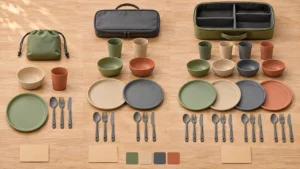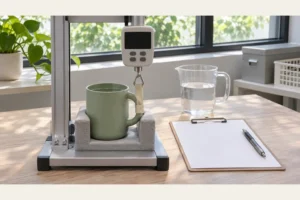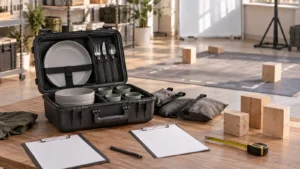
Use a camping dinnerware launch checklist to confirm that product, quality, compliance, and operations approve the same revision, destination, and sales channel. Record evidence and limits against each sign-off. Hold the affected release when a food-contact question, critical defect, or revision mismatch remains open. A narrower release is possible when the excluded scope can be controlled and the remaining scope is independently ready.
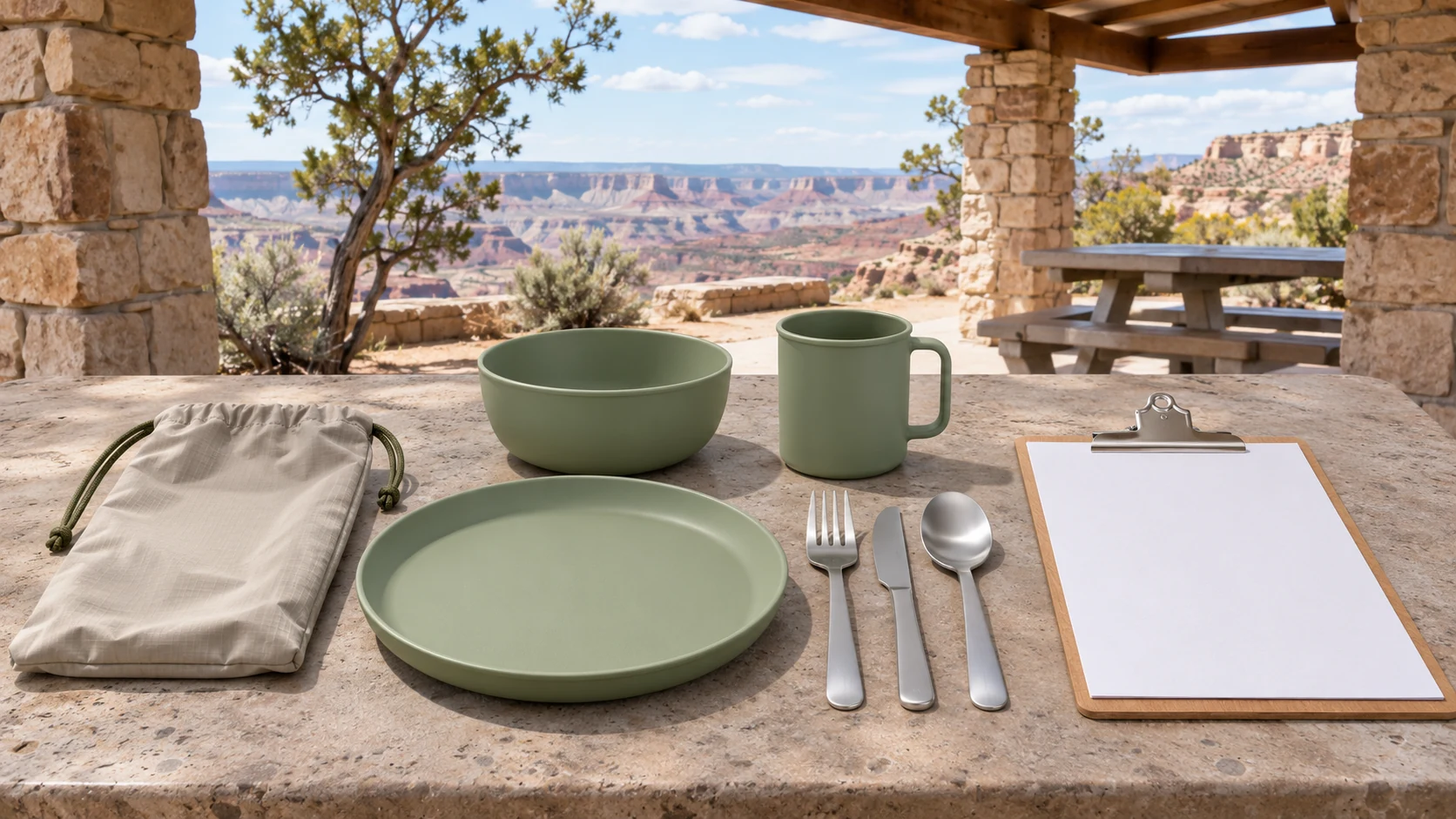
Define the decision
In the release header, enter the set code, bill-of-materials revision, signed reference sample ID, packaging revision, destination, channel, and intended food-contact use. Include the food types, temperature and contact duration where relevant. Identify each add-on. A release for serving and eating does not authorize the same pieces for cooking. Name the action being approved: quotation, listing, production, or shipment. These decisions may occur on different dates.
Camping dinnerware launch checklist and approval record

Copy the camping dinnerware launch checklist into the project file. Enter a document ID, revision and date for every applicable check, followed by Pass, Hold, or Out of scope with a written reason and signatory. A blank cell is an open decision.
| Approval owner | Acceptance question | Evidence references | Status, signer and date |
|---|---|---|---|
| Product engineering | Do the controlled BOM and reference sample agree on every component, option and carry interface? | BOM ___ / drawing ___ / sample ___ | ___ |
| Quality | Did the revision-matched configuration meet the agreed inspection and use checks? | Inspection ___ / exception closure ___ | ___ |
| Compliance | Does the evidence cover the intended use, destination and exact commercial claims? | Component and claim register ___ | ___ |
| Packaging and logistics | Does the packed sample agree with approved artwork, counts, identifiers and receiving criteria? | Packed sample ___ / artwork ___ / receiving brief ___ | ___ |
| Sales and procurement | Do the quotation, orderable options and listing all describe the approved scope? | Quote ___ / assortment revision ___ / listing proof ___ | ___ |
| Release owner | Do the signers agree on one scope, and are all restrictions enforceable? | Signed release ___ / implemented controls ___ | ___ |
Decision header: Set code ___ · BOM revision ___ · Sample ID ___ · Packaging revision ___ · Market/channel ___ · Intended use ___ · Action ___
Decision closeout: Decision ___ · Released scope ___ · Held scope ___ · Hold reason ___ · Owner ___ · Evidence needed ___ · Due date ___ · Re-review date ___
Decide Go, Limited Go, or Hold
| Outcome | When to use it | Next buyer action |
|---|---|---|
| Go | Each owner signs the same revision and defined release scope. | Link the signed decision to the applicable order, listing and pack-out records. |
| Limited Go | A fully supported subset can be sold, packed and shipped independently. | Record the allowed subset and block excluded configurations or destinations in all affected systems. |
| Hold | A critical defect, evidence gap or inconsistent revision affects the proposed scope, or a restriction cannot be enforced. | Record the accountable owner and evidence needed, then reconvene the affected reviewers. |
Suppose the base configuration is ready, but a decorated add-on is awaiting evidence. A limited release is workable only if ordering, pack-out and the listing can omit the add-on consistently. If a single bundle code always includes it, hold the bundle. This example illustrates a decision path rather than an actual product approval.
Buyer checklist before signing
| Ask for | Check against | Reopen the gate when |
|---|---|---|
| A signed sample and controlled BOM | Part codes, counts and approved options | A component, supplier or revision changes |
| A destination evidence and claim register | Intended use and exact listing language | A claim or use condition goes beyond the evidence |
| A packed sample and receiving record | Carton identity, unit count and packaging revision | Receiving cannot distinguish held and released stock |
| Signatory names and authority | Destination, configuration and the release action | A signer approved a different revision or scope |
Evidence and approval handoffs
For U.S. food-contact screening, use FDA component-level guidance to frame questions about the identified substance and use conditions. For the EU, ask the compliance owner to confirm the applicable measures and traceability obligations, starting from Regulation (EC) No 1935/2004. Where the channel uses GS1, review identification changes against the GS1 GTIN Management Standard. The release still needs project-specific evidence and signed approvals.
Attach the relevant first-production inspection record, claims matrix and pre-shipment release sheet. Check bundle and option boundaries against the assortment plan.
Procurement FAQ
Can we sign before artwork corrections are complete? Approve a named earlier action that does not depend on the corrected artwork. Keep affected listings, packaging or shipments open until the final proof is signed.
Who clears a hold? The affected approval owner accepts the new evidence. The release owner checks downstream impact and issues the updated decision. Keep the closed hold and its evidence reference in the camping dinnerware launch checklist so the warehouse and sales teams can reconcile both decisions.
Does an earlier approval carry over to a revised cup or lid? Compare the part revisions, use conditions and evidence scope. Reopen the affected gates and keep the earlier signed record tied to its original configuration.
Request a release record review with the BOM revision, destination and open gates. If the decision requires a physical check, request a revision-matched sample review and identify the acceptance question.