OUTDOOR TABLEWARE ASSORTMENT DECISION
Direct answer: Outdoor tableware product line planning should begin with buyer jobs, not colorways. Reuse a component only when its function, dimensions, material, evidence scope, packing interface and service logic remain the same. Create a separate SKU only when a buyer must order, replenish, identify or approve a meaningfully different configuration. Record every decision in one overlap map before sampling.
What decision prevents duplicate SKUs?
In outdoor tableware product line planning, the key decision is whether a proposed item changes the buyer’s job or only changes presentation. A new color, photograph or bundle name does not automatically justify a new product architecture. Conversely, two sets that look similar may need separate identities when the user count, pack-out, replacement path or approved use condition differs.
Start with a shared core, then test each proposed variation against six controls: user group, component function, physical interface, evidence boundary, packaging path and after-sales replacement. This method extends the logic in the core-set assortment worksheet, the Good–Better–Best tier matrix and the base-set versus add-on decision table.
Outdoor tableware product line planning decision gate
| Decision field | Reuse the same component record when… | Create a separate component or set record when… | Approval evidence |
|---|---|---|---|
| Buyer job | The component serves the same user, meal and handling task. | The new version solves a different task, such as individual carry versus shared service. | Use-case statement and target-user note |
| Physical interface | Dimensions, nesting, closure, divider and carry-case fit are unchanged. | Any mating surface, packed envelope or retention method changes. | Drawing revision and fit review |
| Material and finish | The approved material, color system and surface condition remain within the same evidence scope. | A material, decoration, coating or finished-component condition changes the evidence boundary. | Material/finish record and evidence-gap review |
| Pack-out | Quantity, orientation, protection and case position remain identical. | The configuration needs a different count, insert, case or pack instruction. | BOM and pack-out instruction |
| Commercial identity | The buyer orders the same physical item under the same replenishment rule. | The buyer must order, identify, price, replenish or recall it separately. | Commercial item decision and master-data owner |
| Service path | The same replacement part fits and is approved for every affected set. | Replacement compatibility, color matching or evidence cannot be shared. | Replacement-parts matrix |
Decision rule: a cosmetic distinction can remain a controlled variant, but a change that affects function, interface, approval, orderability or replenishment needs its own controlled record. “Separate record” does not automatically mean a new mold or a public retail SKU; that decision belongs to the project team.
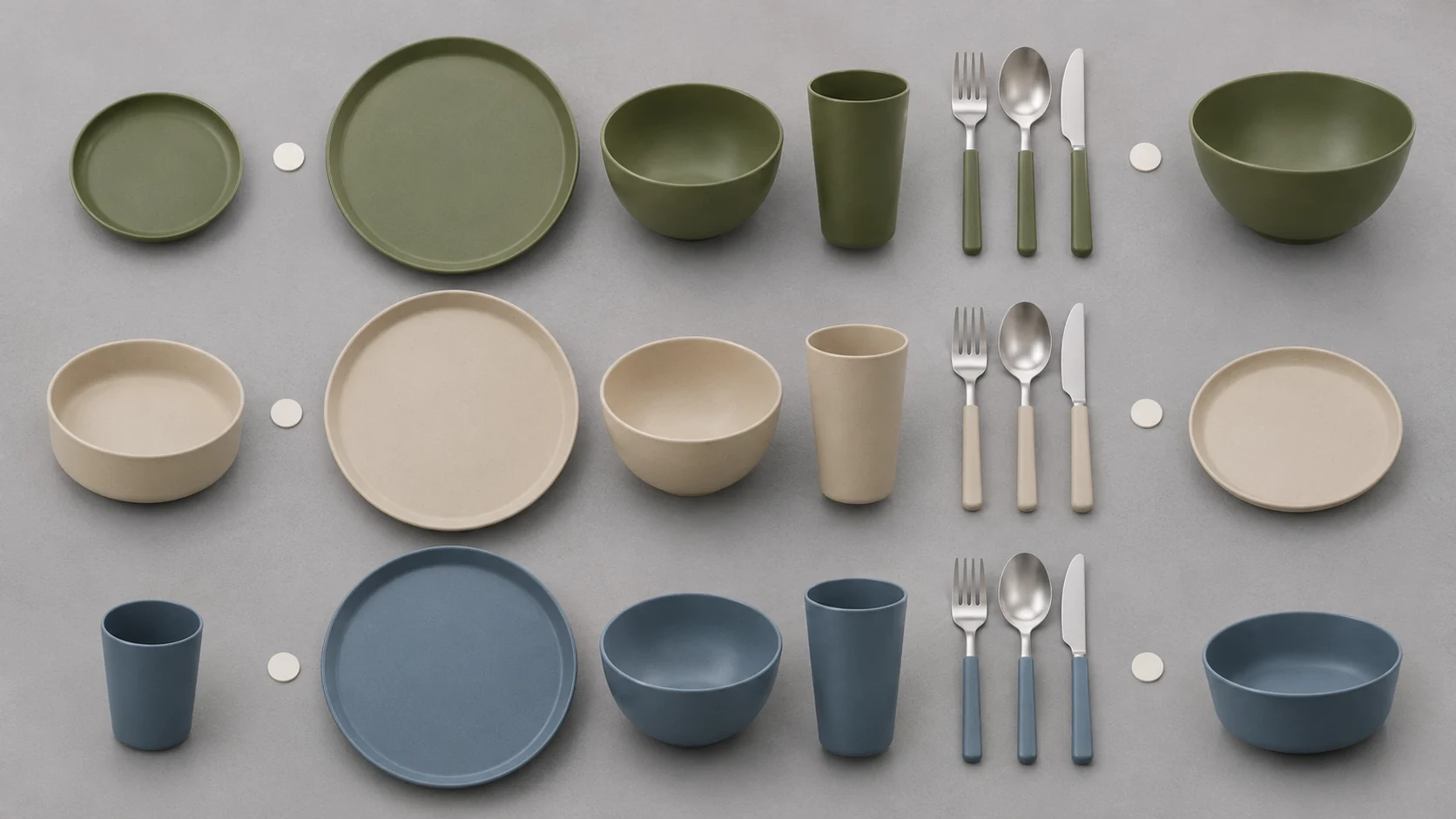
Copyable product-line overlap map
For outdoor tableware product line planning, use this matrix before asking for quotations. Replace the illustrative entries with your approved project facts. Do not copy the example quantities into an RFQ without confirming the intended user count and meal scenario.
| Proposed range node | Buyer job | Shared core | Configuration-specific difference | Duplicate-risk decision |
|---|---|---|---|---|
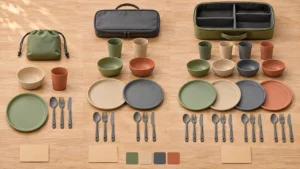
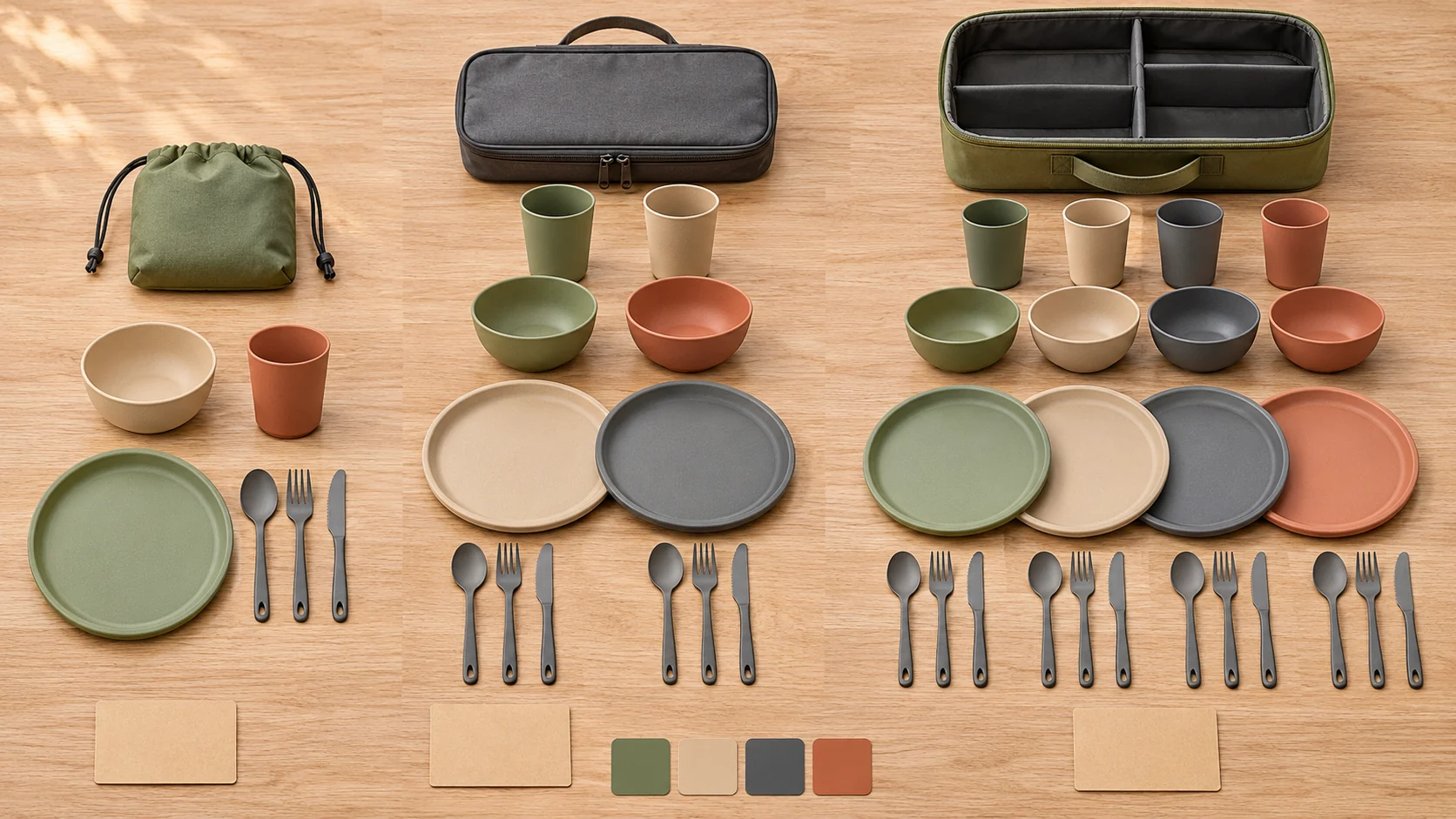
| Solo carry concept | One user carries and counts one place setting. | Plate, bowl, cup and cutlery interface definitions may be shared. | Compact pouch and individual pack-out. | Keep separate only if it is independently ordered and replenished. |
| Two-person concept | Two users share transport but retain individual place settings. | Reuse approved place-setting components where fit and evidence match. | Two-user count, divider map and case opening. | Separate set record; avoid cloning component records without a change. |
| Family concept | Group use with individual pieces and optional shared service items. | Reuse verified individual components where interfaces remain unchanged. | Higher count, service pieces, larger case and replacement plan. | Separate set record; add component records only for genuinely new pieces. |
| Color option | Same job and configuration in an approved color. | All geometry and pack logic remain shared. | Color master and evidence scope may differ. | Variant if ordering and evidence systems support it; otherwise separate controlled item. |
| Retail bundle | Same physical set sold with different approved collateral. | Product BOM may remain shared. | Artwork, language, carton or channel pack. | Do not create a fake product difference; control packaging separately. |
Worked scenario: find overlap before samples
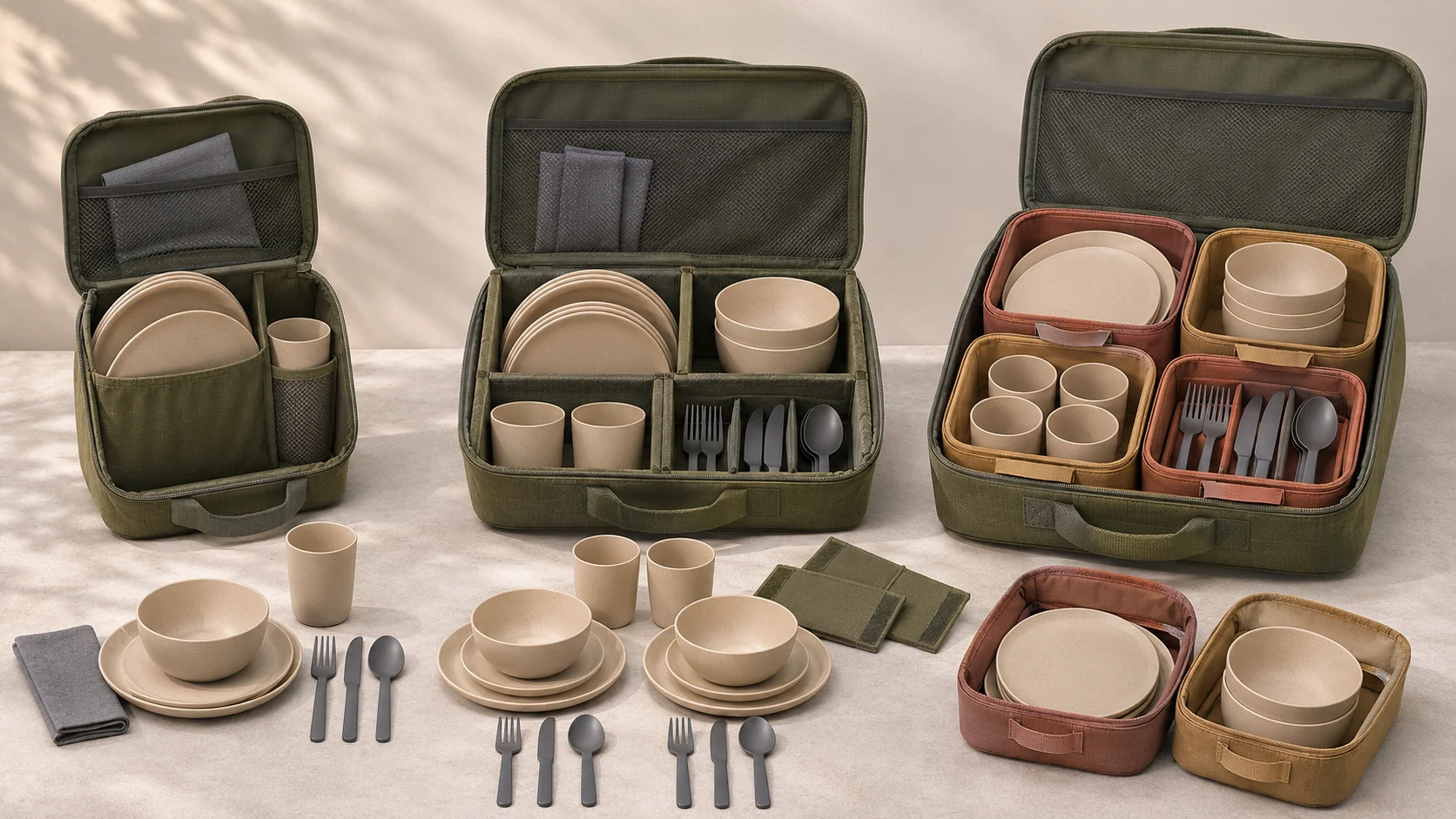
For outdoor tableware product line planning, start with this illustrative scenario, not a Naike Dinner offer: a buyer proposes five listings: solo green, solo sand, two-person green, two-person sand and family green. The first count suggests five SKUs and many component records. The overlap review asks what physically changes.
- Map buyer jobs. Solo, two-person and family use are three different orderable configurations.
- Map shared components. If the approved plate, bowl, cup and cutlery are dimensionally and evidentially identical, reuse those controlled component records across configurations.
- Map color scope. Green and sand can remain variants only if the buyer’s order system, color approval and applicable evidence records can distinguish them without ambiguity.
- Map packaging. Each configuration has a different count and case, so each needs its own BOM and pack-out instruction even when components are shared.
- Map service. Replacement pieces must identify the compatible component revision and color rather than referring only to the public set name.
Outdoor tableware product line planning does not automatically produce “three SKUs” or “five SKUs.” It is a controlled decision: three configuration records, shared component masters where justified, and color records managed at the level required by the buyer’s order and evidence systems.
What evidence belongs in the overlap review?
In outdoor tableware product line planning, the overlap map is a procurement control, not proof of compliance or product capability. Attach only records that exist for the project: approved drawings, BOM revisions, color masters, pack-out instructions, sample decisions and the scope of applicable finished-component evidence. Unknown compatibility should remain open until confirmed by project sample and drawing.
External data rules can help clarify identity without deciding the physical design. Google Merchant Center’s product data specification distinguishes item attributes, its identifier guidance explains identifier submission boundaries, and Google’s product-variant structured-data documentation separates a product group from its variants. These sources govern data representation; they do not verify materials, testing, production capacity or compatibility.
Three-column buyer checklist
Complete this outdoor tableware product line planning checklist before approving samples, quotations or public assortment names.
| Buyer confirms | Supplier/project team provides | Hold or reject when |
|---|---|---|
| Target user, meal scenario, channel and orderable configurations | Component-to-set map with drawing and BOM references | The same name points to different physical contents |
| Which differences are commercial variants versus new products | Open issues for fit, color, evidence and packaging | A color or background change is presented as a new design |
| Replacement and replenishment logic | Compatible revision and identification method | Compatibility is assumed without sample or drawing confirmation |
| Required destination-market evidence | Evidence scope by finished component and use condition | One report is reused for an unverified material, finish or component |
| Final approval owner and effective date | Revision-controlled overlap map and change record | Marketing, carton and BOM describe different contents |
FAQ: controlling assortment overlap
Does every color need a separate SKU?
Not automatically. The buyer’s ordering, inventory, evidence and replacement systems determine whether color is a variant or a separately controlled item. A color change still needs an approved color reference and may change the evidence scope.
Can one component appear in several outdoor sets?
Yes, when the same controlled revision performs the same function and its fit, material, finish, evidence and service path remain valid in every configuration. Record the shared interface rather than copying the component under several names.
When does a bundle become a genuinely new product?
When the buyer must order or approve a different physical configuration, or when the bundle changes function, pack-out, compatibility, evidence or replenishment. A new photograph, campaign name or background is not enough.
Should the public product name drive the BOM?
No. Public naming can support merchandising, but the BOM must identify controlled component revisions and quantities. The same marketing name must not hide different physical contents.
What should be approved before quotation?
Approve the intended configurations, shared-component boundaries, unresolved interfaces, packaging scope and evidence gaps. Pricing is otherwise difficult to compare because suppliers may quote different component counts or approval assumptions.
Request a product-line overlap review
Send your proposed configurations, component list, target markets, color plan and packaging routes. Naike Dinner can review the project brief and identify the drawings, samples and open decisions needed before quotation. Compatibility and project feasibility remain subject to project sample, drawing and evidence review.
Request an assortment review Send the proposed range Ask about SKU overlap