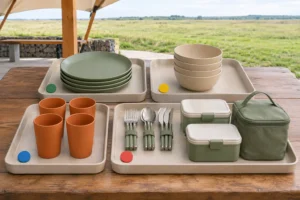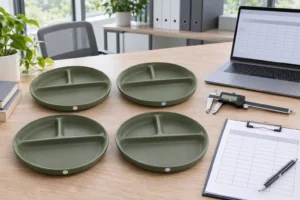
This camping dinnerware product photo checklist turns each image into controlled procurement evidence by defining what it must prove, what must be visible, which revision was photographed and what it cannot establish. A beautiful campsite scene may support merchandising, but it cannot confirm component count, dimensions, material identity, compliance or packed fit.
Direct answer: use the camping dinnerware product photo checklist around four roles: complete-set identity, count-and-scale, interface detail and intended-use context. For every shot, record the visible fact, the required reference object or angle, the linked sample revision and an explicit limitation. Reject images that hide components, mix revisions or imply performance that was not tested.
Start With the Buyer Decision, Not the Camera Angle
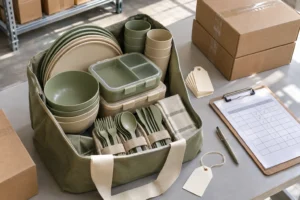
The first question is not “Which background looks premium?” It is “Which approval will this image support?” A buyer comparing a camping dinnerware program needs different evidence from a merchandising team preparing a lifestyle listing. Compare how a table-case set, a six-person case and a picnic backpack set require different interface and pack-out views. The same photograph should not be reused as proof of count, size, color, packed fit and outdoor performance unless each fact is actually visible and traceable.
Use images to show
Component presence, visible geometry, relative scale, surface appearance, nesting order, closure sequence and the relationship between the approved sample and its packaging.
Do not infer from images
Resin identity, food-contact status, capacity, load limit, dishwasher suitability, impact resistance, migration results, production consistency or service life.
Four-Role Camping Dinnerware Product Photo Checklist
The camping dinnerware product photo checklist is the required working record. Keep one row per released shot and link it to the sample ID, drawing revision and approval owner.
| Photo role | Visible fact required | Setup and reference | Limitation to record | Release decision |
|---|---|---|---|---|
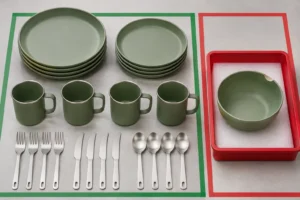
| 1. Complete-set identity | Every included plate, bowl, cup, utensil, container and carry item is visible and countable. | Three-quarter overview plus a clean overhead count shot; no component hidden inside another. | Does not prove dimensions, material, capacity, performance or pack compatibility. | Release only when the visible count matches the controlled BOM revision. |
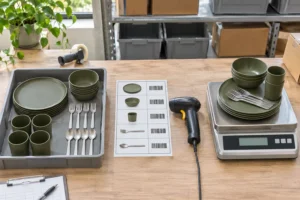
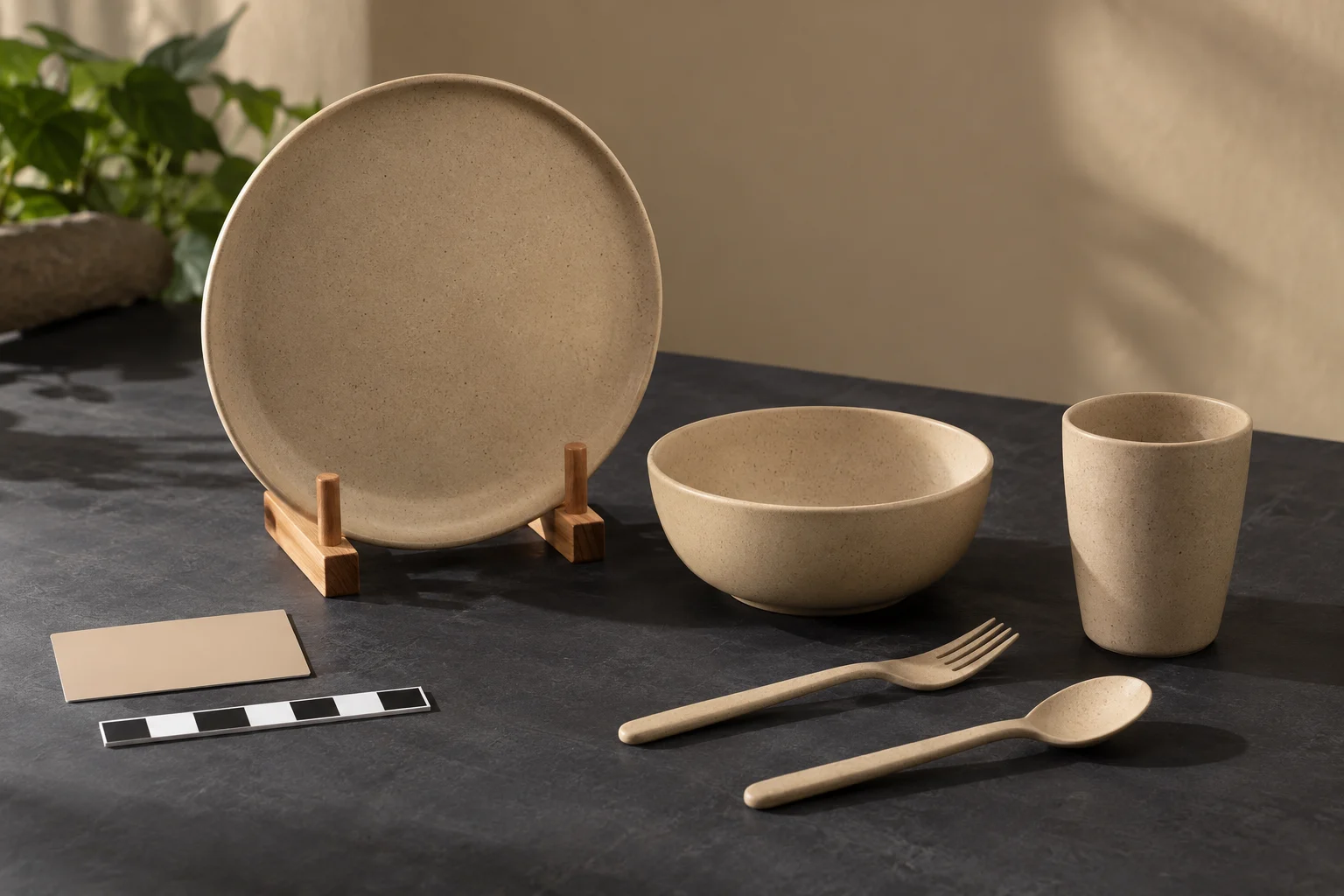
| 2. Count and scale | Component profile, overall envelope and relative size are visible. | Camera square to the part; approved ruler or scale object in the same plane; color reference when color is being reviewed. | Perspective and lens distortion remain; drawing dimensions govern acceptance. | Release when the reference is readable and the photographed sample ID is recorded. |
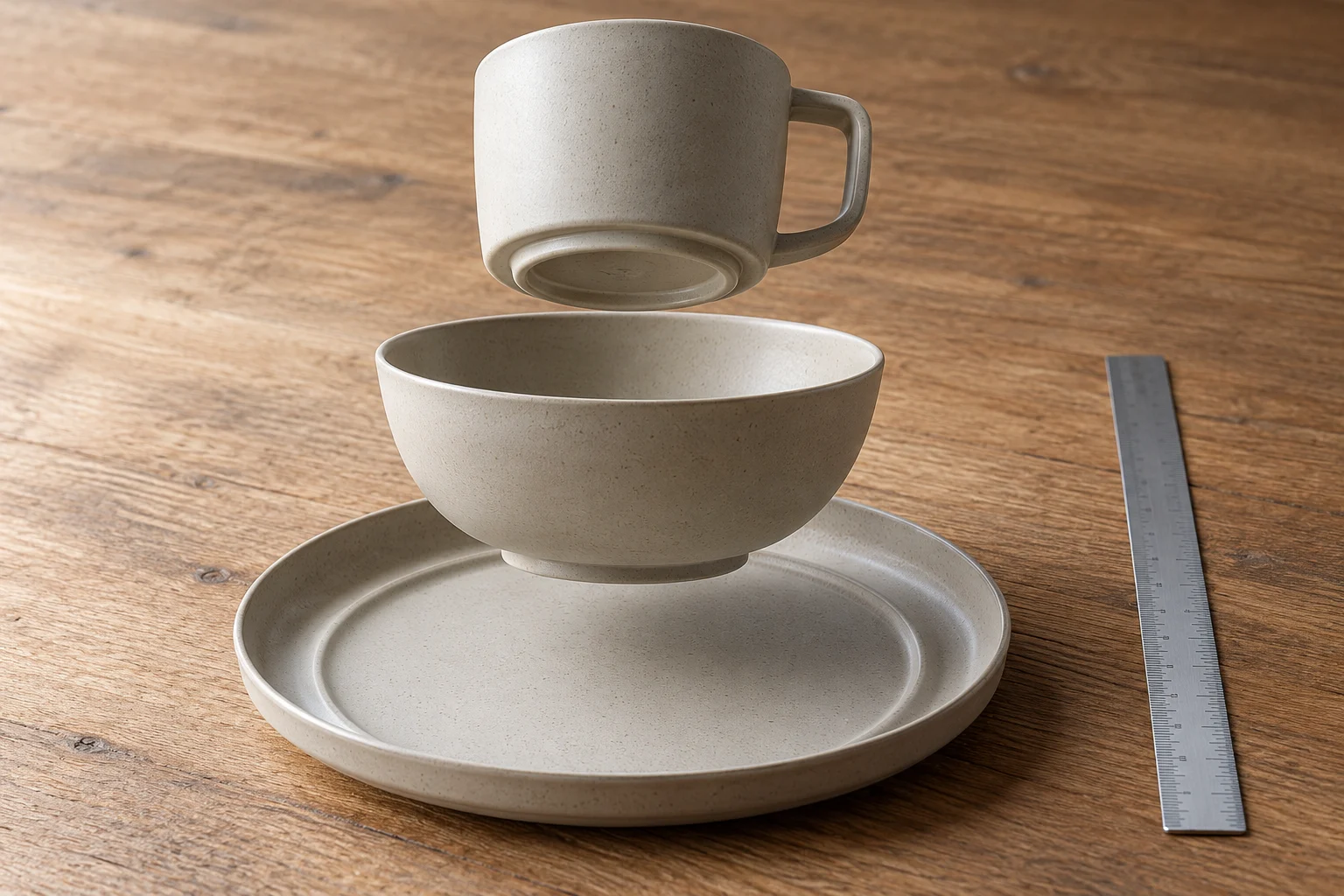
| 3. Interface detail | Nesting, lid engagement, foot ring, rim, divider, latch or utensil retention relationship is visible. | Close view plus one wider orientation view; show contact points without hands covering them. | Does not prove tolerance, retention force, leak resistance or repeated-cycle durability. | Release when the interface matches the approved drawing and no relevant edge is cropped. |
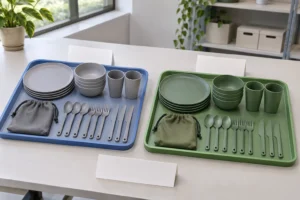
| 4. Intended-use context | The set is shown in its intended channel and use scenario without contradicting the specification. | Show realistic place settings, stable surfaces and safe component placement; keep counts consistent with the offer. | Scene is merchandising context, not evidence of tested outdoor life, load, heat or cleaning performance. | Release only after claims and component counts are checked against the approved listing record. |
Add a Capture Record So the Photo Can Be Audited
File names alone are weak evidence. Store the camping dinnerware product photo checklist with a short capture record containing the project code, sample ID, BOM revision, drawing revision, date, photographer, shot role, component count, color reference, scale reference and approval status. If the sample changes, either reshoot or mark the prior image obsolete. Never silently keep a hero image from one revision beside detail images from another.
Required decisions, channel, destination market, component list, claim list and approval owners.
Sample ID, linked drawings, photographed revision, image files, capture conditions and change history.
Count match, visible references, limitation note, reviewer, decision and approval date.
Control Angles, Scale and Color Without Overclaiming
Use a near-orthographic angle for count and geometry, then a three-quarter angle for form. Place a scale reference in the same plane as the measured feature; a ruler far behind the product creates false certainty. Keep lighting neutral when color is an approval field, but treat the image as a visual reference rather than a substitute for a signed color standard.
The U.S. Federal Trade Commission explains that advertising claims must be truthful, non-deceptive and evidence-based in its Advertising and Marketing Basics. For food-contact projects, photographs do not replace the FDA food-contact substance inventory or the European Commission food-contact materials framework.
Use a Simple Photo Approval Record
| Check | Pass evidence | Hold condition |
|---|---|---|
| Identity | Sample ID and revision are recorded. | Mixed or unknown revisions. |
| Completeness | All promised components are visible and countable. | Hidden, cropped or duplicated pieces. |
| Scale | Reference is in the feature plane and drawing is linked. | Perspective creates an unsupported measurement impression. |
| Claims | Caption says exactly what is visible. | Image implies untested heat, impact, hygiene or environmental performance. |
| Usage rights | Source, license and permitted channels are recorded. | Unknown ownership or third-party branding. |
| Release | Owner, date and approved channels are documented. | No accountable reviewer. |

Buyer FAQ
Can a photo approve dimensions?
No. It can support orientation and show where a dimension applies. The controlled drawing and measured sample record remain the approval evidence.
Should lifestyle photos include all components?
If the image represents the complete offer, yes. Otherwise label the pictured configuration precisely and avoid implying that omitted pieces are included.
Can one color card guarantee production color?
No. It helps document capture conditions. Approve color with the agreed physical or instrument-based standard and define the allowed variation.
What should be reshot after a revision?
Any image whose visible geometry, component count, color, artwork, packaging or interface changed. Mark superseded assets obsolete.
Are AI concept images acceptable?
They can communicate a development direction when clearly disclosed. They must not be presented as a real SKU, production evidence, test, factory or customer order.
Request a Photo-Evidence Review
Send the component bill, sample and drawing revisions, required channel images, claim list and approval owners. Naike Dinner can return a camping dinnerware product photo checklist and identify which fields still need physical-sample evidence.
Request the checklist · Review a sample photo plan · Send a controlled brief
Updated . Evidence scope: buyer decision support; no product capability, certification, material, MOQ, price, lead-time or performance claim is created by this article.