Direct answer: Put an add-on in the base set only when most intended users need it to complete the declared meal, carry, cleaning or counting task. Keep optional serving pieces, channel-specific packs, alternate modules and unverified interfaces in separate bundles. Decide with one controlled use case, then review fit, evidence, packaging and replacement consequences before quotation.
Camping dinnerware add on bundles should make the offer clearer, not hide an incomplete base. This worksheet separates essential function from optional value without inventing material, compliance, MOQ, price or lead-time claims. All component dimensions, compatibility and commercial terms remain project-specific.
Base-or-bundle decision path
- Freeze users, meal pattern and carry condition.
- Define the minimum complete eating function.
- Score each proposed add-on against real usage frequency.
- Review interface, evidence and packaging changes.
- Assign the part to base, optional bundle or project-only review.
- Release a configuration-specific BOM and pack-out.
1. Define a complete base before discussing add-ons
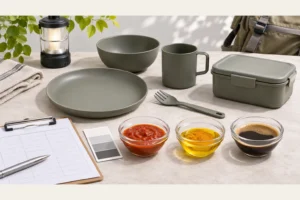
A base set must work for its stated user count and meal scenario without forcing the buyer to purchase an accessory immediately. Plates, bowls, cups or cutlery belong in the base only when the brief requires them. Camping dinnerware add on bundles can hold a lunch box, serving piece, divider, extra cup lid or clean/used pouch, but usefulness alone does not make any part universal.
Start with the camping tableware RFQ checklist and link the decision to the controlled BOM revision. This prevents a later bundle change from silently altering the base.
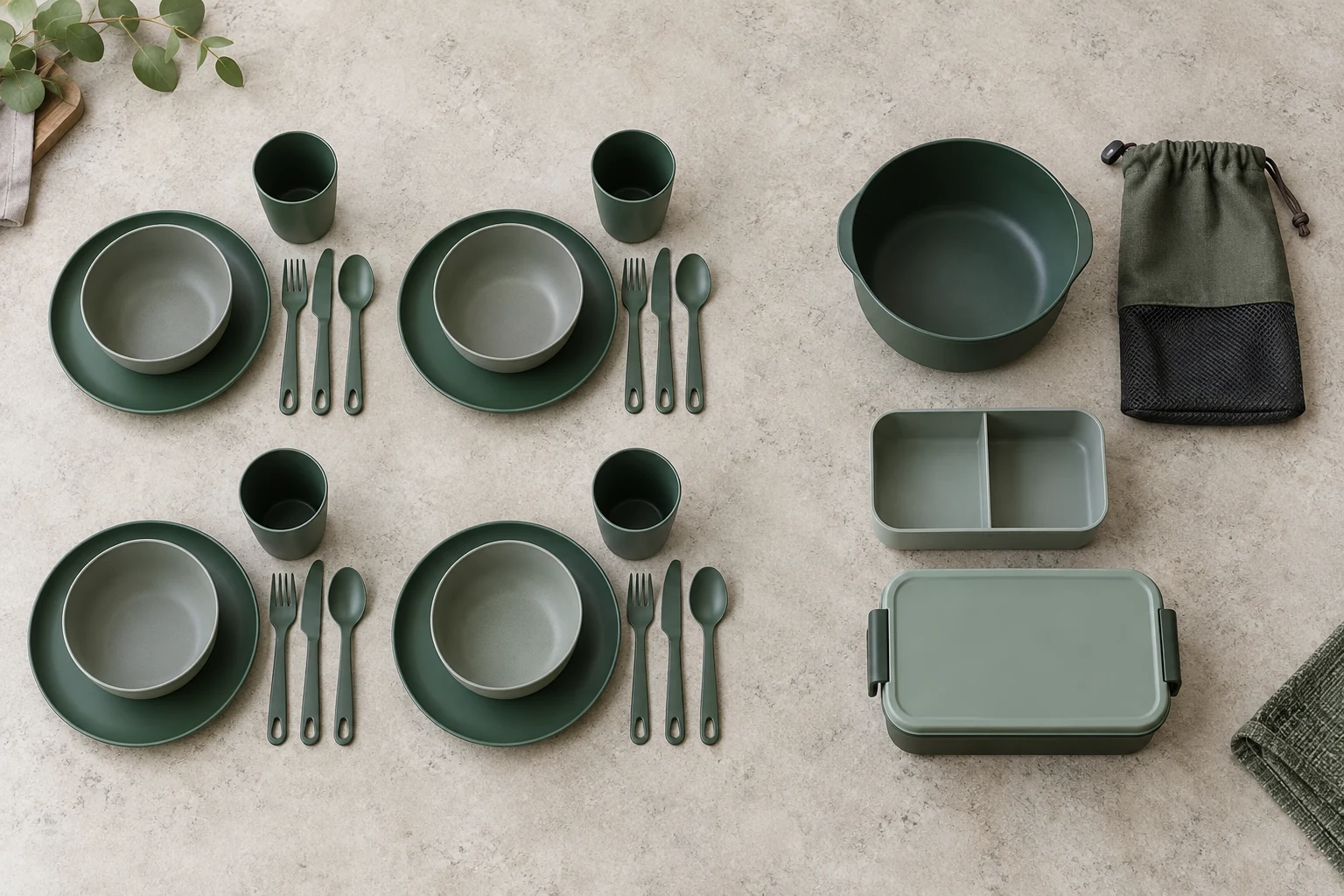
2. Copy this base/upsell decision table
| Decision test | Keep in base set when | Keep as separate bundle when |
|---|---|---|
| Task completion | Removing it makes the declared meal or carry task incomplete | The base still completes the stated task |
| User frequency | Nearly every intended user needs it in the defined scenario | Use depends on trip, menu, channel or buyer preference |
| Interface | It is integral to the released pack-out and verified fit | Compatibility or retention needs a separate review |
| Cleaning flow | It is part of the normal remove, wash, dry and repack sequence | It adds a different cleaning or wet-storage route |
| Evidence | Finished-component and intended-use scope is reviewed with the base | Material, decoration or use condition creates another evidence scope |
| Packaging | It fits the approved unit and transport pack without ambiguity | It changes insert, carton, channel pack or protection needs |
| Replacement | It is essential to service the complete set | It can have its own controlled identifier or optional replenishment route |
| Quotation | Its cost is inseparable from the complete controlled configuration | Buyer should see it as a removable line item |
3. Use three dispositions, not a forced yes/no answer
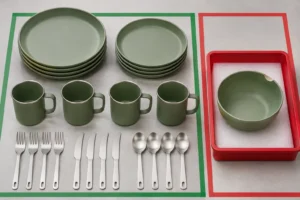
Classify every proposed part as Base, Separate bundle or Project-only review. Camping dinnerware add on bundles need the third state when a component is attractive but its final geometry, evidence or compatibility is not yet established. It avoids approving a bundle merely because it appears in a concept image.
| Example proposal | Likely disposition | What must be checked |
|---|---|---|
| Extra serving bowl | Bundle unless shared serving is part of the core scenario | User count, food use, nesting and pack contact |
| Second cutlery group | Base only when required by the declared user count | Count, retention and missing-piece control |
| Clean/used pouch | Base or bundle according to the handling brief | Wet storage, drying and repack instructions |
| Alternate lunch-box module | Project-only until the interface is confirmed | Drawing, sample, closure and intended use |
4. Review camping dinnerware add on bundles against the case
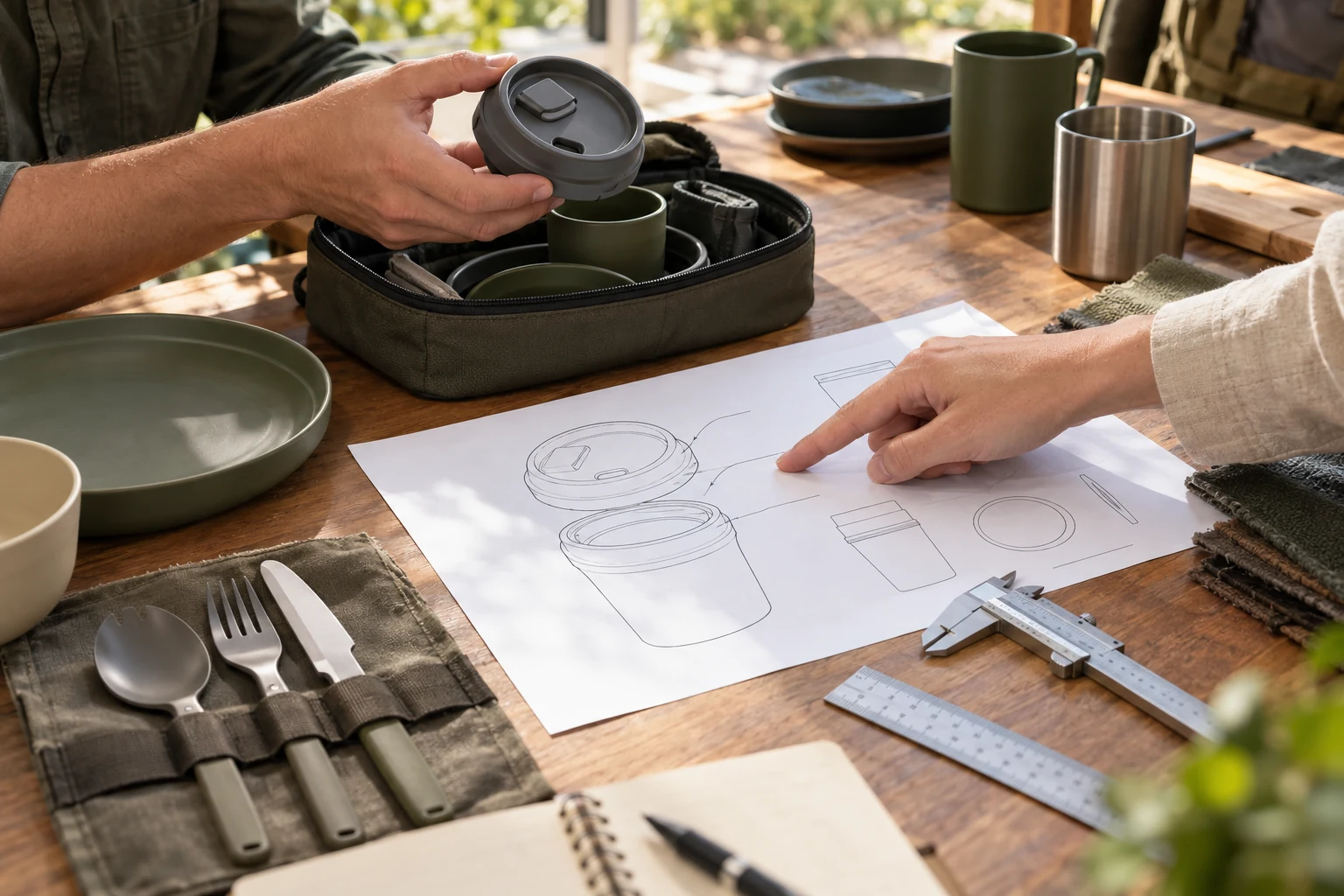
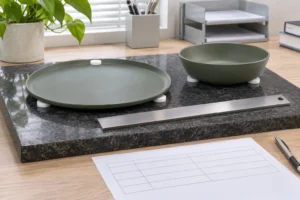
An accessory that physically enters the carry case is also a packing decision. Record its envelope, contact surfaces, retention method, removal clearance and position after use. Camping dinnerware add on bundles need their own fit record when they change the controlled pack-out. Use the component-to-case fit checklist before calling an add-on compatible. Compatibility to be confirmed by project sample and drawing.
5. Keep evidence tied to the exact configuration
The US FDA food-contact notification inventory, European Commission food-contact materials overview and EU General Product Safety Regulation help frame market questions; they do not verify unspecified camping dinnerware add on bundles. Review each finished component, decoration and intended use. Do not transfer evidence from the base to an optional part by assumption.
6. Quote and package the bundle separately
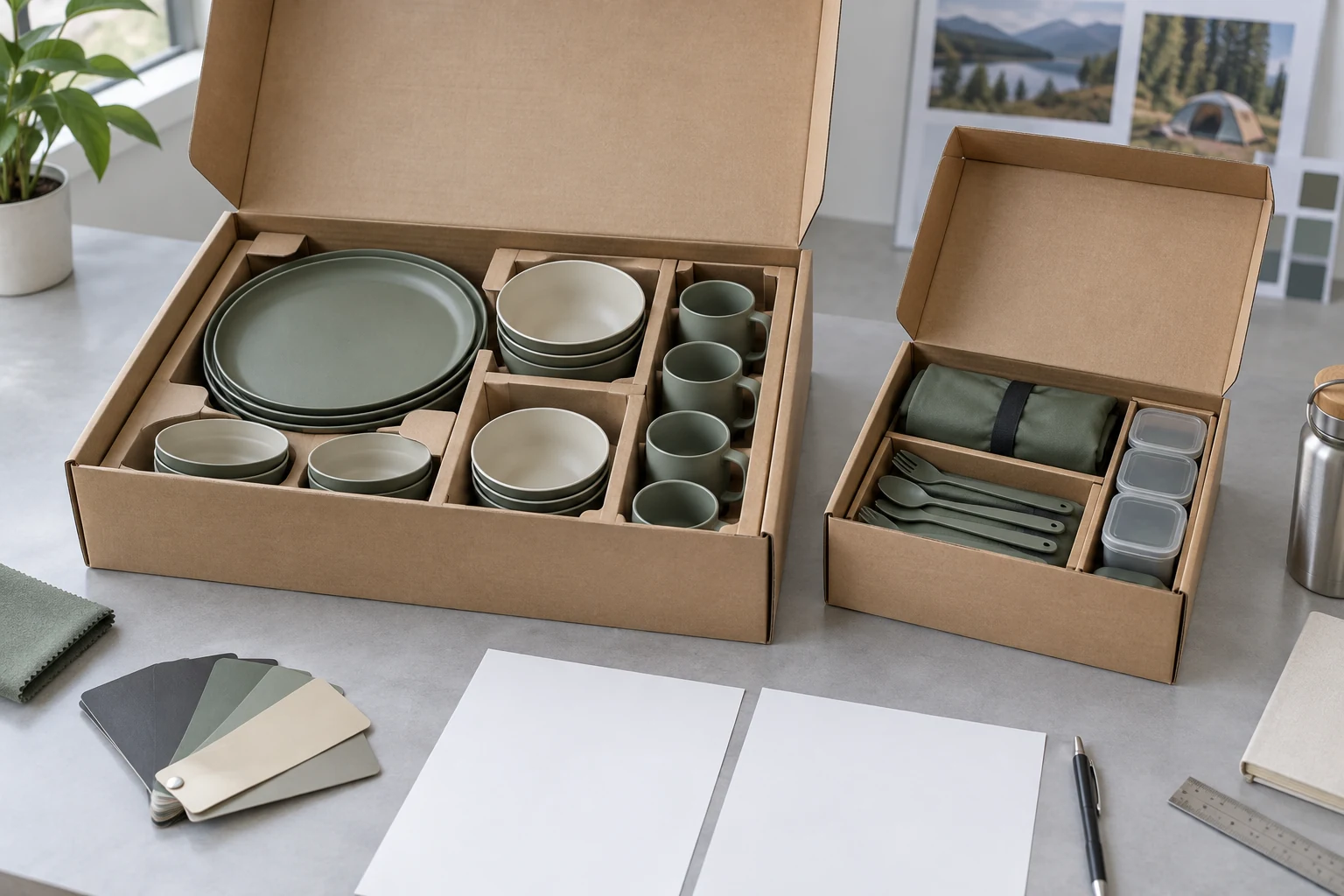
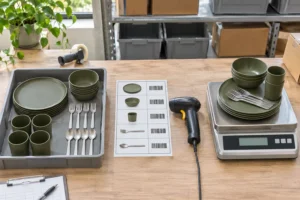
Ask for visible lines for the base BOM, each camping dinnerware add on bundle, decoration, packaging and any development work. Compare camping dinnerware add on bundles only after the quantity basis and base configuration match. Unknown values should read “To be confirmed for the project.” If the bundle changes the retail insert or mailer, approve that channel pack as a separate configuration.
Buyer checklist
| Buyer provides | Supplier returns | Joint approval |
|---|---|---|
| Users, meal pattern and minimum complete task | Base BOM and open assumptions | Base remains complete without optional parts |
| Add-on list, frequency and channel intent | Fit, evidence and pack questions by item | Each item receives one disposition |
| Target market, cleaning and packaging route | Configuration-specific evidence gaps | No unsupported claim crosses configurations |
| Sample purpose and approval owners | Separate sample and quotation lines | BOM, images, artwork and pack-out match |
FAQ
Should a popular accessory always enter the base?
No. Confirm that it is essential to the declared task and used by most intended buyers.
Can one optional bundle fit several base sets?
Possibly, but compatibility must be confirmed for every released interface by project sample and drawing.
Can add-ons share the base-set evidence file?
Only where the exact finished component, decoration and intended use are covered. Record gaps separately.
How should optional items appear in a quotation?
List camping dinnerware add on bundles as separate, removable lines with a clear quantity basis and packaging scope.
Request a base-and-bundle review
Send the intended users, complete base BOM, proposed add-ons, use conditions, target market and packaging channel. Naike can return project-specific questions before sample or quotation planning.
Send the component list · Review add-on fit · Discuss bundle packaging
Reviewed . Evidence scope: buyer-side assortment architecture and cited primary guidance; all project values require confirmation.