
Last reviewed: October 9, 2026 at 16:22:42 CST · Buyer decision guide · GEO: D / Q+E
A defensible camping dinnerware drop test plan starts with the actual packed configuration, declared handling environment and buyer-approved failure rules. Define load states, faces, edges and corners before testing; document every drop and post-drop inspection; then release only against written acceptance criteria. A pass applies only to the tested configuration and does not prove every shipment condition.
1. Freeze the decision the test must support
A multi-component carry set can contain plates, bowls, cups, cutlery, a lunch box, dividers, straps, latches and a carrier. A single phrase such as “drop resistant” does not define which of those items must remain usable, which handling event is being represented, or whether cosmetic damage is acceptable. The buyer should open the camping dinnerware drop test plan by naming the release decision: approve a sample configuration, compare two packaging concepts, validate a component change, or investigate a known failure.
| Decision input | What must be written | Why it changes the plan |
|---|---|---|
| Distribution scope | Parcel, palletized shipment, retail replenishment, rental rotation or consumer carry | The relevant hazards, handling frequency and evidence standard differ. |
| Unit under test | Exact BOM revision, carrier revision, closure, inserts and packed arrangement | A result cannot be transferred automatically to another geometry or BOM. |
| Use boundary | Dinnerware only, or a combined set that separately declares any cookware | Dinnerware impact checks do not establish cookware heating performance. |
| Release question | Design screening, packaging comparison, approval, or corrective-action verification | Replicates, controls and decision authority should match the consequence. |
| Evidence boundary | What the result supports and what remains unverified | Prevents one test from being marketed as a universal performance claim. |
Start with the approved drawings and a controlled sample set. The component-fit sampling plan helps buyers decide which fit pairs and variation sources must be represented. If the test follows a design change, connect it to the component change-control record. Keep the approved comparator aligned with the camping dinnerware golden sample.
2. Build an orientation matrix before choosing drop counts
Do not select orientations by convenience after the sample is in hand. Map the carrier geometry and identify every surface that can plausibly strike the floor: broad faces, narrow faces, loaded edges, closure edges, handle or strap attachment sides, and corners. If the shape is irregular, name orientations with photographs or drawing callouts rather than ambiguous labels such as “front.”
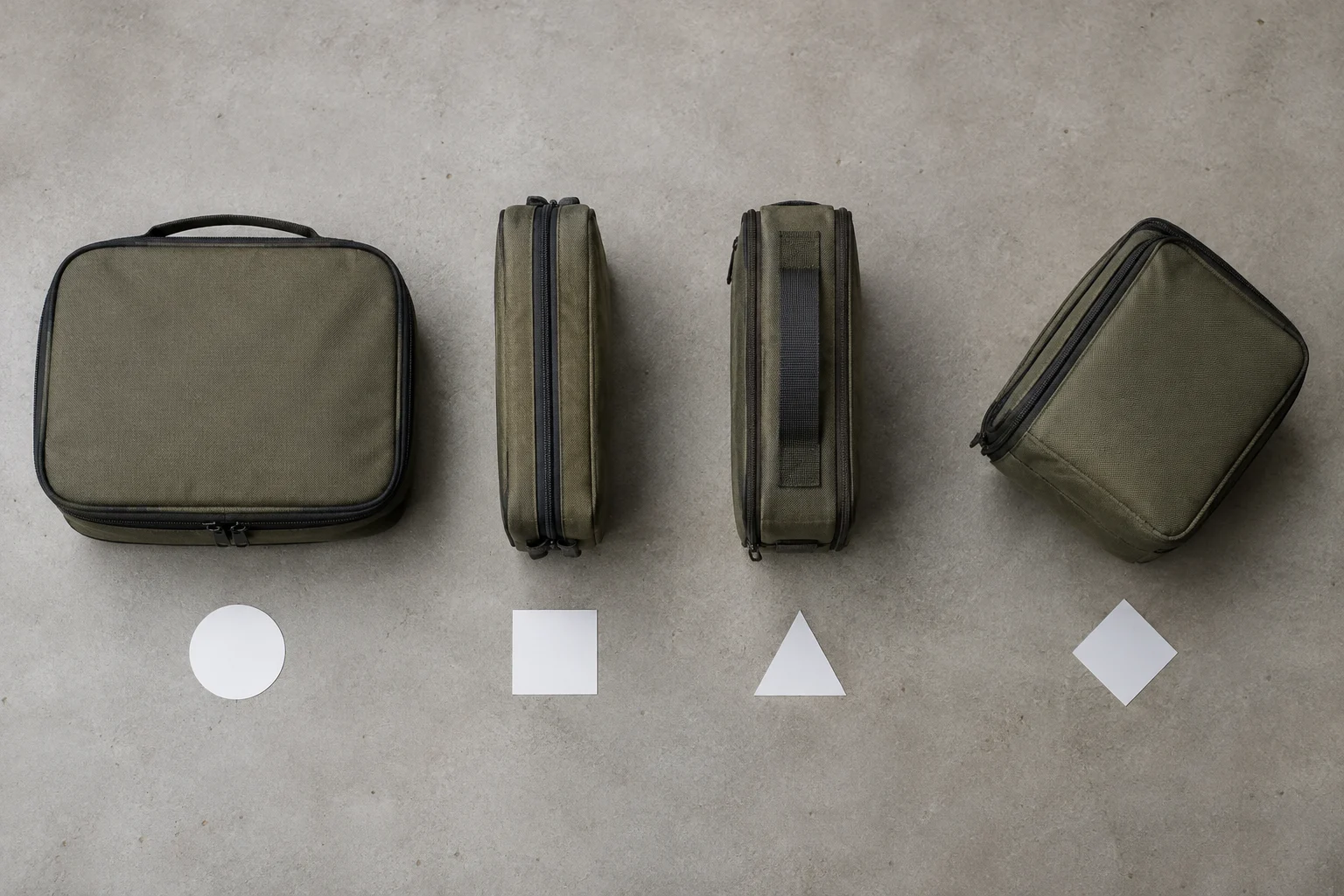
| Orientation family | Selection question | Record before testing |
|---|---|---|
| Primary faces | Which large surfaces are likely to land flat? | Face ID, packed direction, center-of-mass note and expected contact area. |
| Edges | Which edges carry latches, zips, hinges or concentrated component loads? | Edge ID, adjacent faces and nearest retained component. |
| Corners | Which corners combine the greatest structural and internal-load stress? | Corner ID, construction, reinforcement and nearby component. |
| Handle/strap side | Can the carrying system or its anchors contact first? | Attachment geometry, loaded balance and pre-test condition. |
| Closure side | Could a latch, zipper or flap release after impact? | Closure state, adjustment and engagement evidence. |
The International Safe Transit Association test-procedure directory is a useful starting point for identifying recognized distribution-test families, but the buyer must obtain and apply the relevant procedure correctly. Do not claim conformance merely because an internal plan borrows an orientation name.
3. Define load states and conditioning
The same carrier may behave differently when empty, nominally packed or filled to the maximum approved configuration. An empty-case drop can reveal closure or shell weaknesses, but it cannot replace a loaded test. Conversely, a maximum-load result cannot automatically represent a different component layout if the center of mass, restraint or contact path changes.
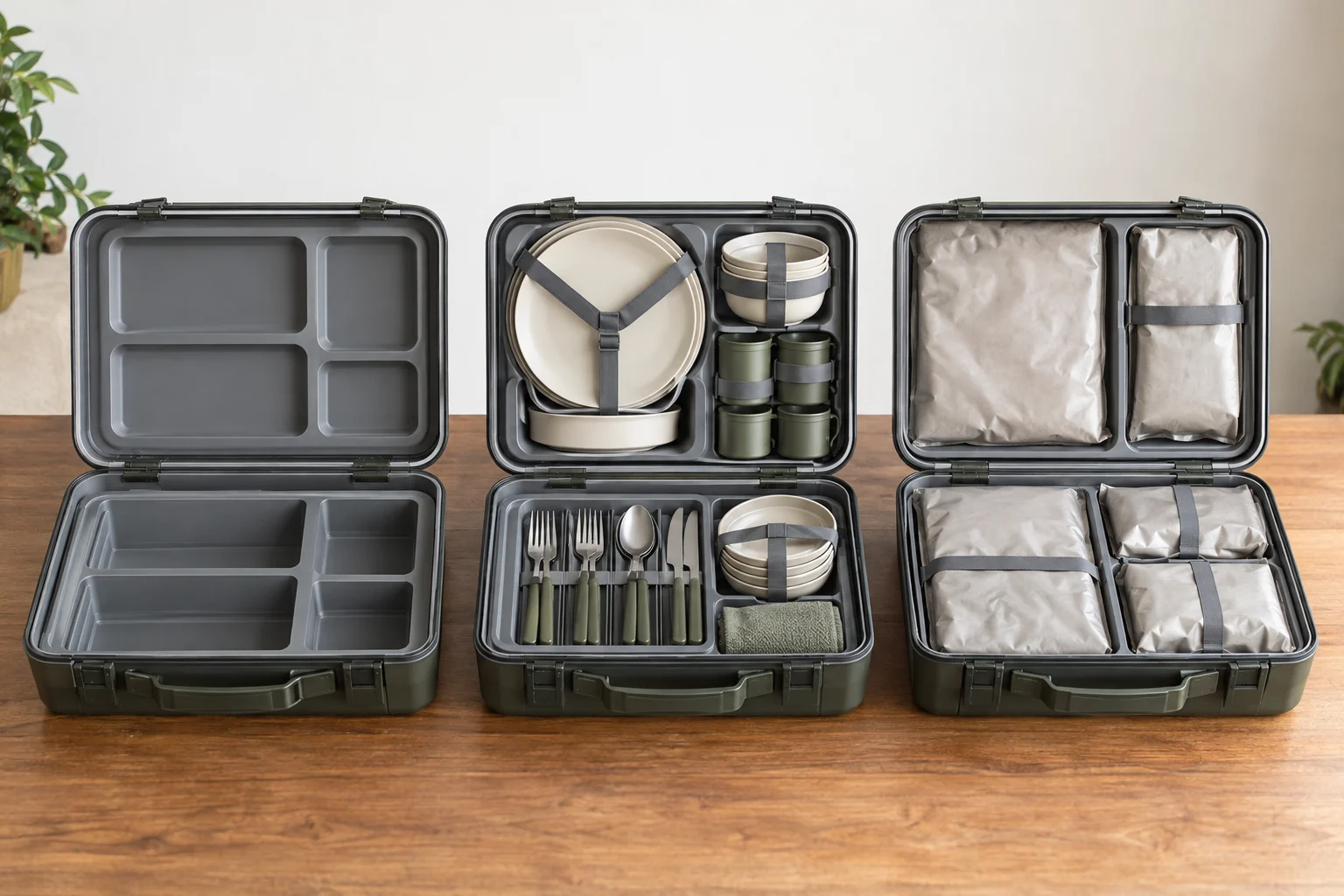
| Load state | Purpose | Controlled evidence |
|---|---|---|
| Empty carrier | Screen the carrier, closure and handle without component momentum | Carrier mass, closure setting and internal supports present. |
| Nominal packed set | Represent the approved sales or use configuration | BOM revision, item count, individual masses, nesting order and photographs. |
| Maximum approved pack | Challenge the highest authorized packed mass and restraint arrangement | Maximum configuration definition, total mass and center-of-mass note. |
| Alternative configuration | Assess an approved module swap or regional pack variant | Difference from baseline and reason it cannot be covered by equivalence. |
| Conditioned state | Represent a defined temperature, humidity or preconditioning state | Condition, duration, transfer time and measurement record. |
Use measured component masses rather than assumed catalogue values. Document any ballast and prevent it from creating unrealistic point loads. Food-contact suitability and physical impact performance are separate decisions; consult the US FDA food types and conditions-of-use guidance when defining the intended food-contact context.
4. Calculate the sequence transparently
There is no honest universal number of drops for every carry set. Build the count from the approved matrix and state what each factor means. A simple planning calculation is:
Example for planning only: 2 configurations × 2 load states × 6 selected orientation sequences × 3 replicates = 72 post-drop observations. This arithmetic organizes work; it is not a statistical assurance claim and does not establish an industry requirement.
Decide whether a sample experiences a cumulative sequence or whether fresh samples are used for specific orientations. Cumulative sequences can reveal progressive damage, but they make it harder to isolate the initiating event. Fresh-sample comparisons improve attribution but require more controlled samples. Record the order, drop apparatus, target surface, measured height, release method and any interruption. The NIST/SEMATECH engineering statistics handbook can support sound experimental planning, replication and interpretation; it does not prescribe a carry-set drop height.
5. Write acceptance rules before testing
Acceptance must connect observable damage to the buyer’s use and distribution risk. Avoid a vague “looks okay” decision. Define critical, major and minor findings for this project, identify who can approve concessions, and specify whether a failure stops the sequence or is documented before testing continues.
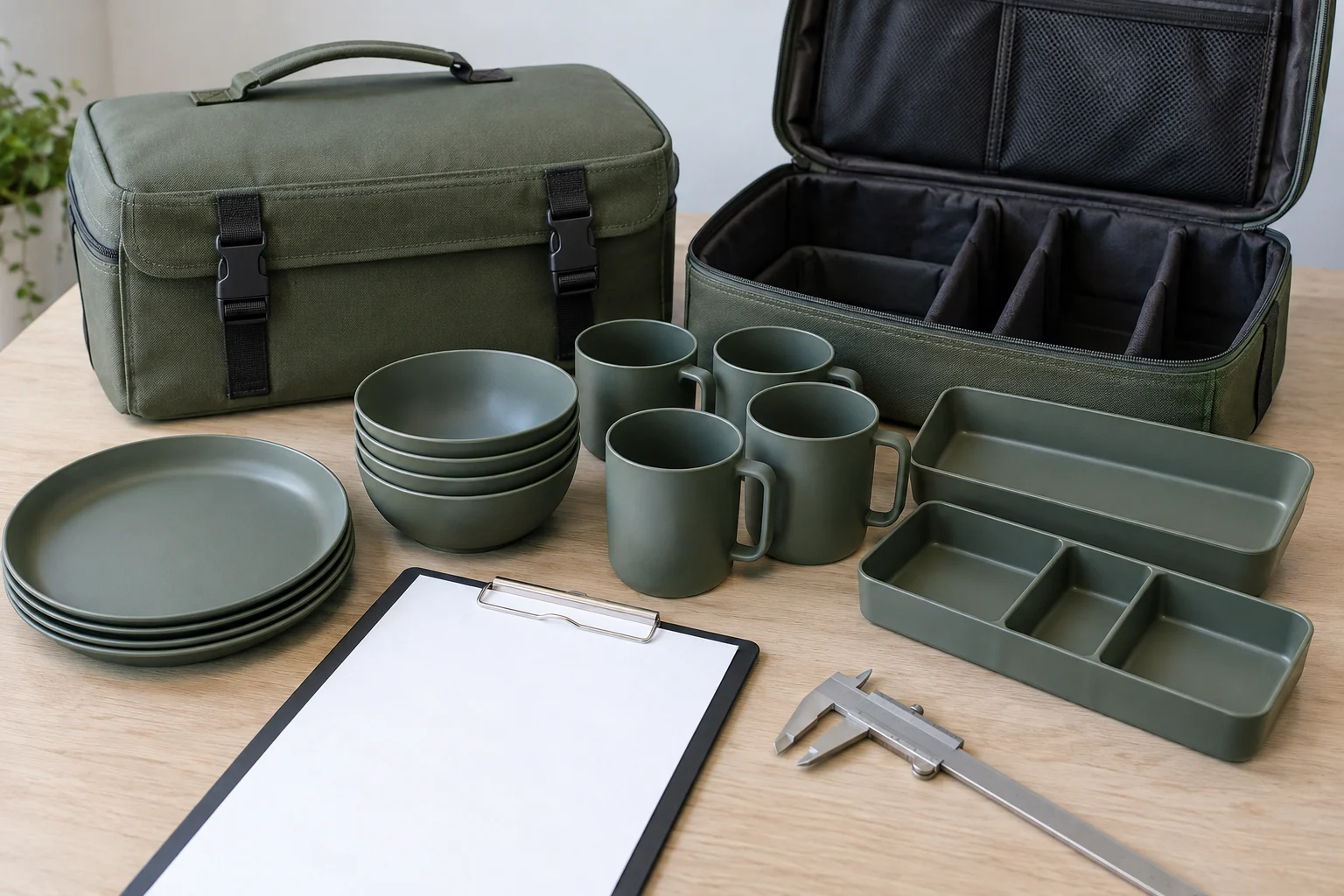
| Inspection area | Recordable check | Buyer decision example |
|---|---|---|
| Carrier and seams | Crack, tear, permanent deformation, exposed edge or loss of containment | Accept, reject, rework review or concession—threshold set in the approved plan. |
| Closure and handle | Latch engagement, zipper travel, strap anchor, handle retention and safe carry | Any safety or containment loss is escalated to the named approver. |
| Internal retention | Divider movement, rail release, plate-slot retention and component migration | Compare against the approved packed arrangement and fit record. |
| Dinnerware | Crack, chip, sharp edge, permanent distortion and nesting or fit loss | Food-contact surface damage and sharp edges require defined disposition. |
| Functional fit | Lid seating, stacking, module insertion, closure and removal | Repeat the same controlled fit checks used before the drop. |
| Cosmetic condition | Scuff, whitening, dent, print or decoration damage | Use buyer-approved viewing conditions and defect boundary samples. |
6. Create an approval-ready evidence record
Each sample needs a unique ID linked to the BOM revision, source, production or prototype status and pre-test condition. Take comparable before-and-after photographs with fixed viewpoints. Capture any dimensional measurements needed to verify fit, but do not imply precision beyond the measuring method. If a component is removed or replaced during the sequence, record the event and do not silently continue as though the original sample remained intact.
The final record should show planned versus completed drops, deviations, findings by orientation, sample-level disposition, unresolved risks and the approving functions. Separate observed facts from engineering interpretation. A statement such as “no visible crack after this controlled sequence” is narrower and more defensible than “drop-proof.”
Buyer checklist
| Check | Evidence to request | Release action |
|---|---|---|
| Scope frozen | Distribution use, BOM revision, carrier revision and test objective | Approve scope or return it for clarification. |
| Samples traceable | Sample IDs, source, masses, drawings and golden-sample relationship | Quarantine untraceable samples. |
| Matrix approved | Load states, orientation IDs, sequence, replicates and conditioning | Sign before execution. |
| Method controlled | Apparatus, surface, height, release, sequence and deviations | Approve method or document limitations. |
| Acceptance written | Critical, major and minor rules plus concession authority | Reject post-hoc criteria changes. |
| Evidence complete | Before/after photos, measurements, finding log and disposition | Release, rework, retest or hold. |
FAQ
What drop height should a camping dinnerware set use?
No universal height applies to every product or route. Select a method and height that match the declared distribution or carry scenario, relevant procedure and buyer risk. Record the rationale and do not generalize beyond the tested scope.
Can one fully loaded sample cover every configuration?
Only if the buyer documents a justified equivalence. A component swap can change mass, center of gravity, restraint and impact contact. When those differ materially, include the configuration or keep it outside the claim.
Should the same sample receive every drop?
That depends on the decision. Cumulative sequences reveal progressive damage; fresh samples improve attribution. State the design up front and keep the interpretation aligned with it.
Does passing a drop test prove food-contact compliance?
No. Physical durability and food-contact compliance are separate evidence streams. Materials, intended food type, conditions of use and market requirements need their own documented review.
Does this plan apply to cookware?
Not by default. This guide concerns a dinnerware carry set. Cookware may require separate heat, handle, coating and use-condition evidence that a dinnerware drop plan does not establish.
Request a configuration-specific review
Send the target BOM, packed arrangement, component masses, carrier drawings, distribution scenario and proposed acceptance rules. Naike can review the scope for a sourcing discussion without treating a concept image or planning calculation as verified performance.
Contact Naike about the drop-test plan
For drawings or evidence lists, use our exact contact page. For a quotation brief, submit the project configuration.