A camping set color approval should treat color as a controlled set decision, not as one universal swatch. Record the master reference, material and finish for every plate, bowl, cup, lunch box, utensil and case surface; compare samples under agreed viewing conditions; define acceptable differences; and sign one revision-controlled record that separates approved matches from unresolved substrate or process limits.
Approve a coordinated set, not a color name
A camping set color approval should answer a practical release question: which physical reference controls each visible surface in the complete set? A color name such as moss, sand or charcoal is useful for conversation but cannot define an approval. Plates and bowls may use one proposed material and finish, cups another geometry, utensils a metal or coated surface, and the carry case a woven textile. The same target can appear lighter, darker, warmer, cooler, glossier or more textured across those substrates.
Start with a component matrix. List every visible part, including lids, dividers, handles, zipper tape, webbing, thread, lining, molded inserts, printing and packaging panels. Mark whether the part is food-contact, high-wear, flexible, textured, translucent, metallic or viewed next to another approved surface. This prevents a plate sample from silently becoming the approval for a case fabric or utensil finish.
Define the intended comparison level. A buyer may require a close visual family rather than an impossible identical appearance across dissimilar materials. If a strict instrument threshold is needed, the buyer and supplier must agree the measurement geometry, illuminant, observer, background, number of readings, sample preparation and acceptance rule. Do not invent a numeric tolerance after samples arrive.
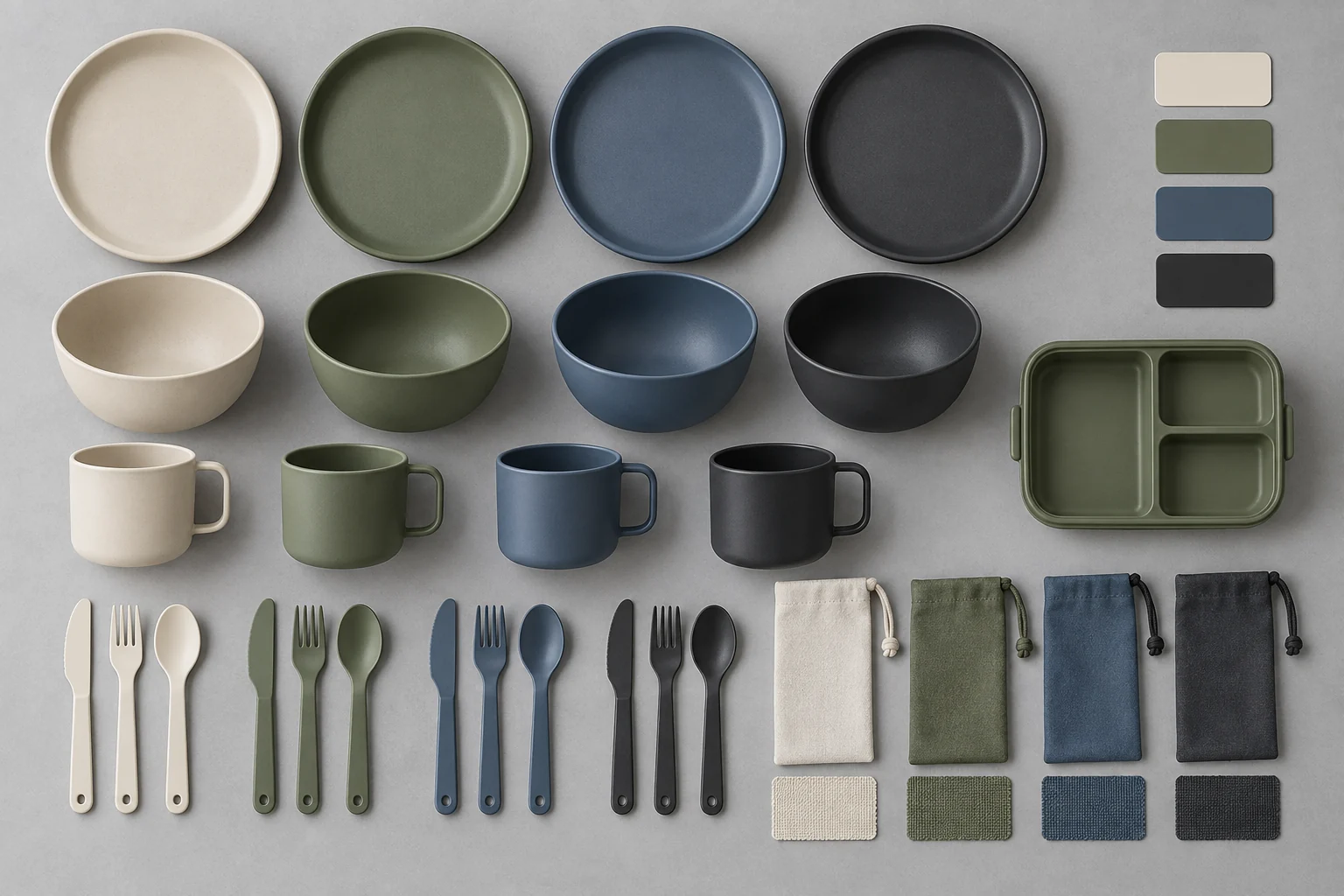
Camping set color approval: copyable multi-substrate record
| Record field | Buyer entry | Supplier evidence or action | Release status |
|---|---|---|---|
| Program identity | Set name, buyer code, market and revision | Quotation, BOM and sample references | Open / approved |
| Master reference | Physical chip, approved part or controlled digital target | Reference source, owner and storage condition | Controlled / not controlled |
| Component | Plate, bowl, cup, lid, lunch box, utensil, case or packaging | Component code and drawing revision | Matched / pending |
| Substrate | Confirmed material or “to be confirmed” | Material/grade proposal and evidence scope | Confirmed / pending |
| Surface | Texture, gloss, opacity and decoration | Process and approved finish sample | Approved / revise |
| Viewing method | Light source, background, distance and orientation | Replicate agreed review conditions | Verified / repeat |
| Measured method | Instrument method only if agreed | Readings linked to sample IDs | Within rule / outside |
| Visual relationship | Exact target, coordinated family or deliberate contrast | Complete-set presentation sample | Accept / reject |
| Allowed variation | Written boundary and defect examples | Production control proposal | Agreed / unresolved |
| Approval sample | Sample ID, photo role and retained owner | Duplicate retained reference | Signed / unsigned |
| Change control | Triggers requiring reapproval | Notification and resample route | Active / missing |
| Decision | Approved, approved with limit, revise or rejected | Owner, date and next action | Released / blocked |
Use exact sample identifiers. A photograph helps document arrangement but is not the color master because camera processing, display calibration and ambient light can change appearance. Retain the physical reference in a protected, labeled condition and record who holds the buyer and supplier copies. If a material or finish changes, treat the prior approval as evidence for the old construction, not automatic approval for the new one.
Decide what “match” means by component
| Surface group | Reason appearance may differ | Buyer decision | Useful approval evidence |
|---|---|---|---|
| Plates and bowls | Wall angle, texture, thickness and gloss alter highlights | One family or separately controlled shades? | Nested and separated samples under agreed light |
| Cups and lids | Curvature, opacity and part thickness affect visual depth | Match plate family or intentional accent? | Side-by-side set sample and component IDs |
| Lunch box | Lid and base may use different processes or transparency | Same target, coordinated pair or contrast? | Closed/open views and retained sample |
| Utensils | Metal, coating and directional finish reflect light differently | Neutral metal, coated match or accent? | Multiple orientations and wear-area review |
| Soft case | Fiber, weave, pile, thread and padding create texture | Close family or deliberate darker/lighter case? | Fabric lot swatch plus constructed case panel |
| Logo and packaging | Ink, print method and white point alter reproduction | Brand target or product-coordinate target? | Process proof on final substrate |
Do not ask a supplier to promise identical readings across unlike surfaces without an agreed technical basis. For many outdoor sets, the commercial decision is a coherent family: components should look intentional together while known substrate differences remain within approved visual examples. If the brand requires a narrow numerical rule, document the full method and confirm that each process can be controlled before quotation.
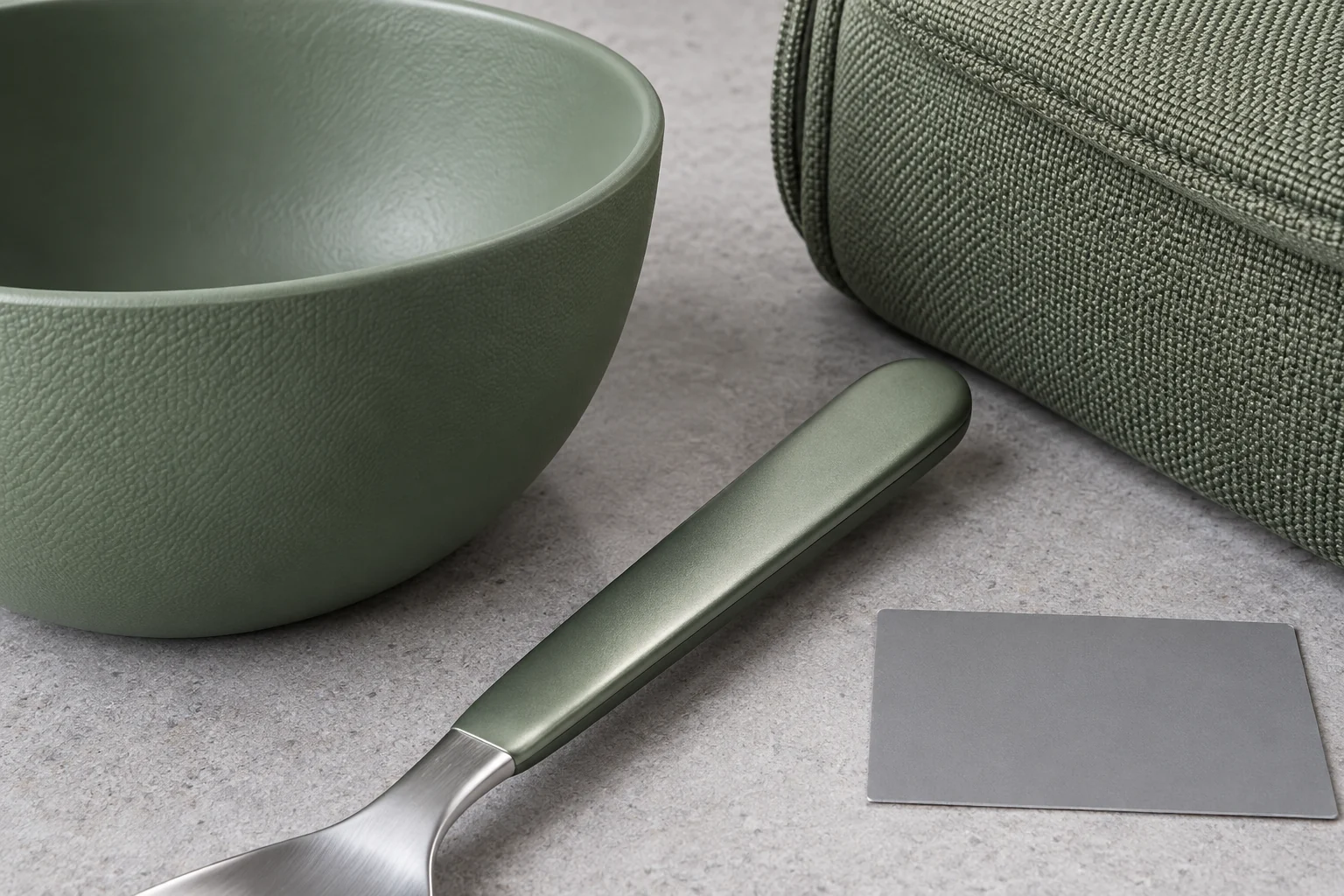
Run a repeatable sample review
- Confirm identity. Check component codes, material/finish status, sample IDs, drawing revisions and the controlling master.
- Condition and clean samples. Record any agreed preparation. Dust, fingerprints, moisture and protective film can alter the review.
- Use agreed light and background. Review the complete set and individual parts under consistent conditions. If multiple selling environments matter, define them in advance.
- Change orientation. Curved, metallic and woven surfaces should be viewed in realistic directions because highlights can dominate one angle.
- Separate color from defect review. A shade decision does not approve flow marks, contamination, scratches, print defects or texture inconsistency.
- Record every exception. State the component, observed difference, evidence, owner and next sample action.
- Sign one decision record. Link approval to the retained samples and revisions that control the purchase.
If measurement is part of the plan, use traceable methods and a stated decision rule. NIST guidance on metrological traceability explains the chain between results and references; it does not certify a dinnerware product or prescribe a commercial color tolerance. For digital communication, ICC specifications explain color-management standards, but a managed file still does not replace approval on the final material and process.
Food-contact and market evidence remain separate decisions. The FDA food-contact substances overview provides U.S. regulatory context, while the EU Framework Regulation (EC) No 1935/2004 establishes general food-contact requirements. Neither source says that a visual color approval validates material identity, migration, durability or a marketing claim.
Link approval to drawings, samples and production controls
A complete camping set color approval should reference the same component matrix used for quotation and the same revision chain used for samples. Connect it to the drawing comparison record, actionable custom-set brief and case-fit checklist. A color change can affect more than appearance if it also changes material, coating, texture, opacity, artwork process or supplier.
Define reapproval triggers before production: new material or grade, pigment or additive change, new finish, mold texture change, process-site change, decoration change, fabric or zipper lot change beyond the agreed boundary, packaging white-point change, or an expired/damaged retained reference. The trigger list should state who stops release and what new sample is required.
Commercial risks to expose before purchase
| Risk | How it appears | Buyer control |
|---|---|---|
| One swatch controls everything | Good plate match but unrelated case, utensil or packaging color | Component-level master and relationship rule |
| Screen approval | Teams approve different display renderings | Physical retained reference plus photo for location only |
| Uncontrolled lighting | Samples pass in one room and conflict in retail daylight | Agreed viewing conditions and additional use scene if needed |
| Color hides process change | Similar appearance but different material or coating evidence | Link approval to BOM, material, finish and process revision |
| Packaging is forgotten | Product family looks inconsistent at shelf or unboxing | Include insert, print and case surfaces in the record |
| No retained sample | Production dispute has no controlled reference | Signed buyer/supplier retained samples and storage record |
Color approval cannot prove resistance to washing, scratching, light, food staining or outdoor exposure. If those outcomes matter, specify separate test questions, sample conditioning, methods and acceptance rules. Do not infer long-term performance from a new sample that looks correct.
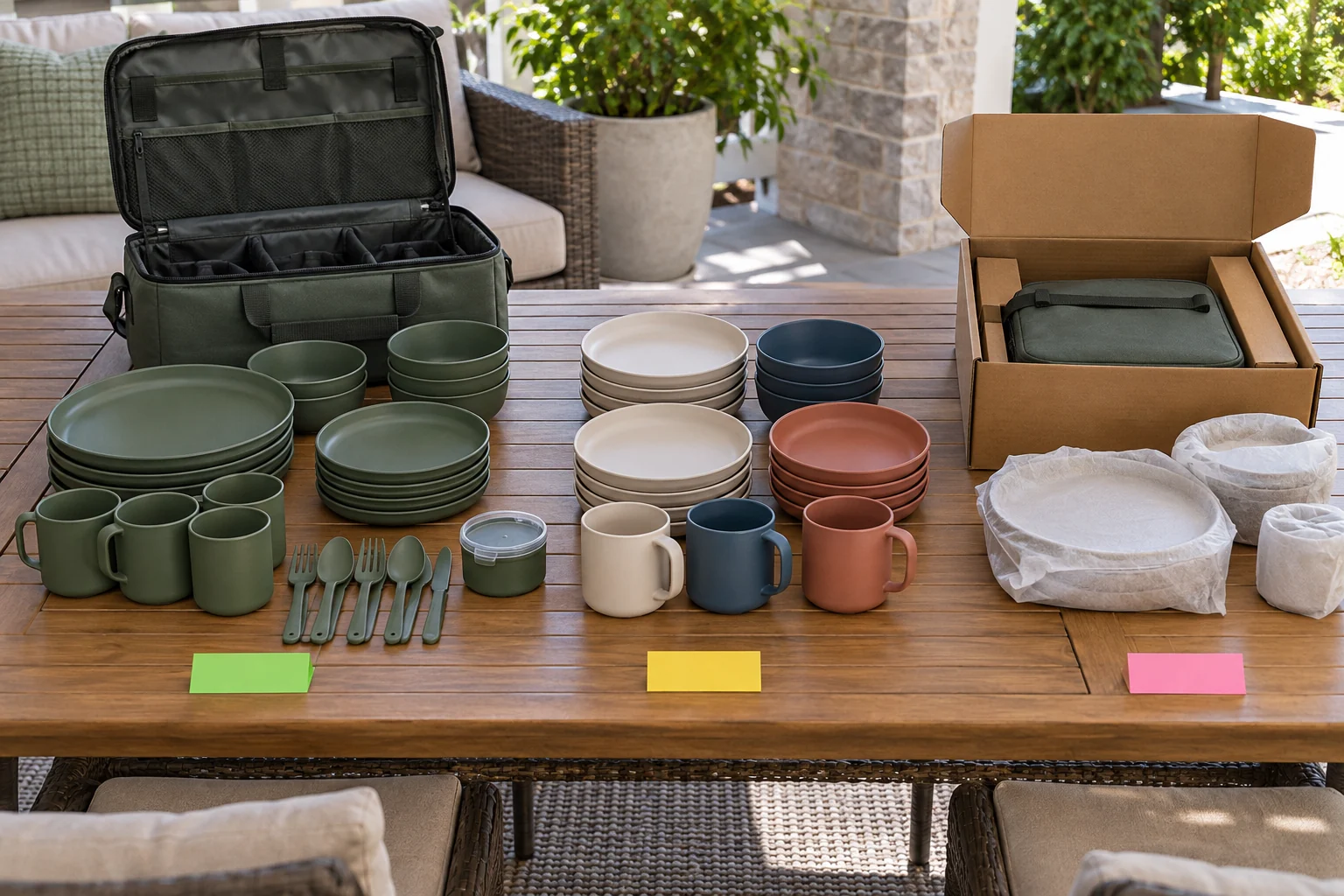
Camping Set Color Approval Buyer Checklist
| Check | Buyer question | Required output |
|---|---|---|
| Scope | Does every visible component and packaging surface appear? | Color component matrix |
| Reference | What physical sample controls each surface? | Master-reference register |
| Material | Are substrate and finish confirmed or still proposed? | Revision-linked material/finish status |
| Relationship | Exact target, coordinated family or intentional contrast? | Written visual rule |
| Method | How and where will samples be viewed or measured? | Review-condition sheet |
| Boundary | Which differences are acceptable, limited or rejected? | Approved examples and defect boundary |
| Retention | Who holds signed samples and how are they stored? | Retained-sample log |
| Change | What change requires a new approval? | Reapproval trigger list |
Buyer FAQs
Can one color code approve every material?
It can communicate a target direction, but each final substrate and process still needs its own reviewed sample or an explicitly approved relationship to the master.
Should the case be darker than the dinnerware?
That is a brand and use decision, not a universal rule. Record deliberate contrast so it is not treated as a mismatch later.
Is a supplier photograph enough for approval?
No. Use photographs to document sample identity and arrangement; approve against controlled physical references or an agreed process proof.
When is instrumental measurement useful?
When the target, device geometry, preparation, readings and tolerance are agreed and feasible for the actual substrate. It should support—not obscure—the complete-set visual decision.
Does color approval include food-contact approval?
No. Material identity, intended use and applicable evidence require separate review.
What should a color resample request contain?
State the rejected sample ID, component, observed difference, controlling reference, viewing method, desired correction, unchanged requirements and next decision owner.
Request a camping set color approval review
Send the component matrix, proposed materials and finishes, master references, brand color role, target markets, viewing conditions, packaging artwork, current sample IDs and known process limits. Naike Dinner can review the request against verified capabilities and identify the physical samples, drawings and written confirmations needed before release.
Send your color approval brief or use the inquiry form beside this article. Contact Naike Dinner for a written sample-scope review.