Last reviewed: October 10, 2026 at 09:08:26 CST · Buyer quality guide · GEO: X / P+E
A camping dinnerware carry case inspection should evaluate the loaded system, not isolated fabric or hardware. Freeze the packed BOM and load state, then inspect seam continuity, zipper travel, handle anchors, tray fit, component retention, balance and closure. Record pre- and post-handling evidence by zone, and release only against buyer-approved defect definitions and traceable samples.
1. Define the system boundary before inspection
A case can look acceptable when empty but distort, open unevenly or overload a handle after plates, bowls, cups, cutlery and trays are installed. Start the camping dinnerware carry case inspection with the exact BOM revision, packed sequence and intended carry orientation. Identify whether the case is the consumer carrier, a retail pack, or only an inner organizer. Do not treat this check as a transit test, food-contact approval or universal durability claim.
| Control field | Evidence to record | Reason |
|---|---|---|
| Case revision | Drawing, material description, supplier reference and sample ID | Prevents a result from being transferred to a changed construction. |
| Packed BOM | Component count, revisions, measured masses and nesting order | The load path depends on what is actually packed. |
| Load state | Empty, nominal packed or maximum approved configuration | Seams, handles and trays see different forces. |
| Use route | Hand carry, vehicle storage, retail handling or another declared route | Determines relevant observations without inventing a test claim. |
| Decision | Prototype screen, sample approval, change verification or incoming inspection | Sets the evidence and authority needed for release. |
Link the inspection to the BOM revision register, the component-fit sampling plan and the component change-control map. A changed tray wall or cup height can alter case closure even if the case drawing is unchanged.
2. Inspect seven connected zones
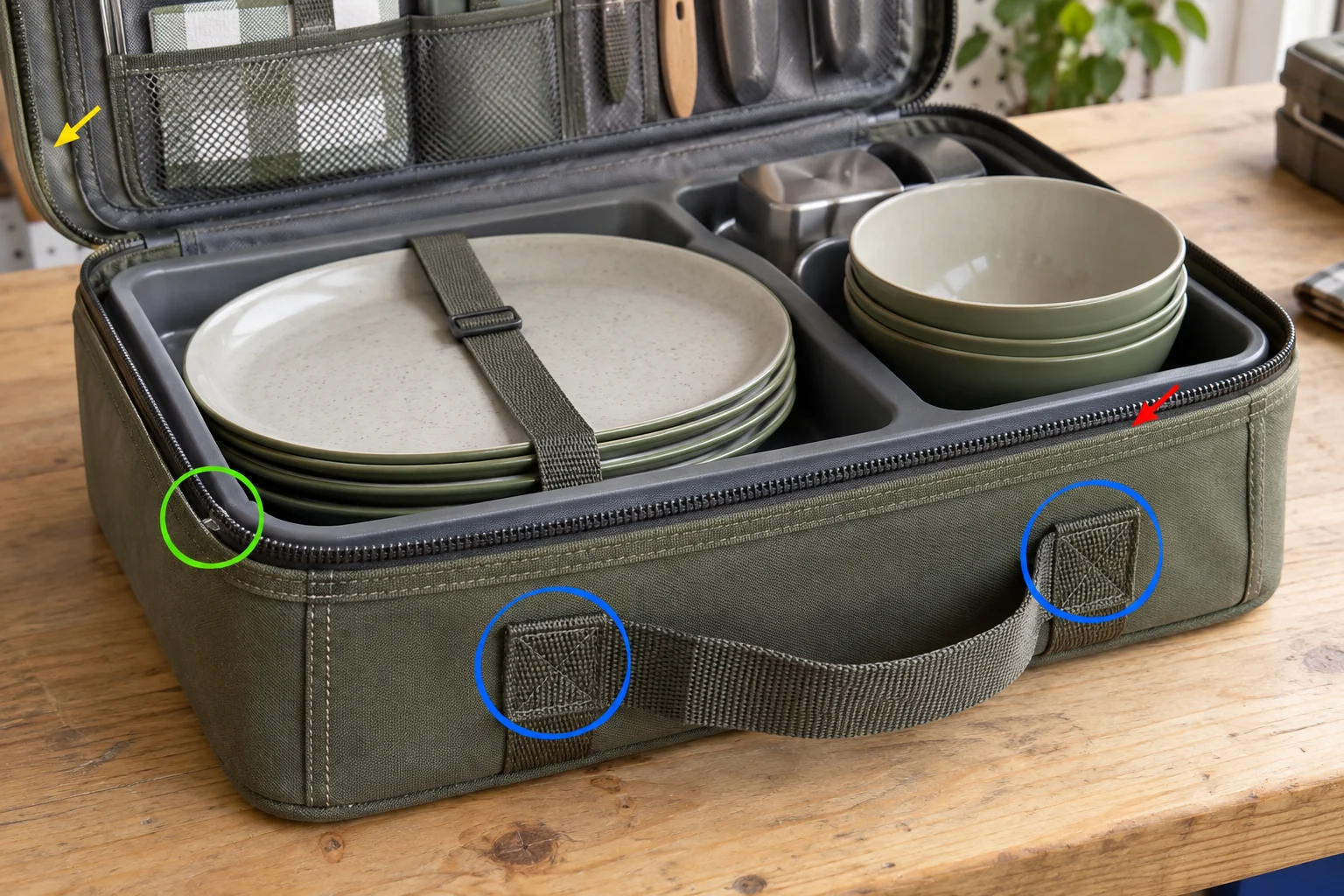
| Zone | Observe under the approved load | Record |
|---|---|---|
| 1. Main seams | Skipped stitches, open seam, puckering, edge exposure and load-related distortion | Zone, length or extent, photo and disposition. |
| 2. Zipper path | Start/stop alignment, slider travel, tooth engagement and obstruction by contents | Direction, load state and any manual correction. |
| 3. Handle anchors | Stitch pattern condition, reinforcement, symmetry and case-wall distortion | Anchor ID and loaded lift observation. |
| 4. Body panels | Permanent deformation, sharp exposure, coating damage or loss of shape | Location and comparison with the approved sample. |
| 5. Tray interfaces | Seating, rocking, edge clearance, removal and interference with closure | Tray revision and fit-pair result. |
| 6. Retention features | Loops, straps, pockets and dividers holding components in the declared orientation | Component migration and contact points. |
| 7. System closure | Even lid seating, latch or zipper completion, loaded balance and safe hand carry | Final closure state and unresolved risk. |
3. Compare load states without confusing them
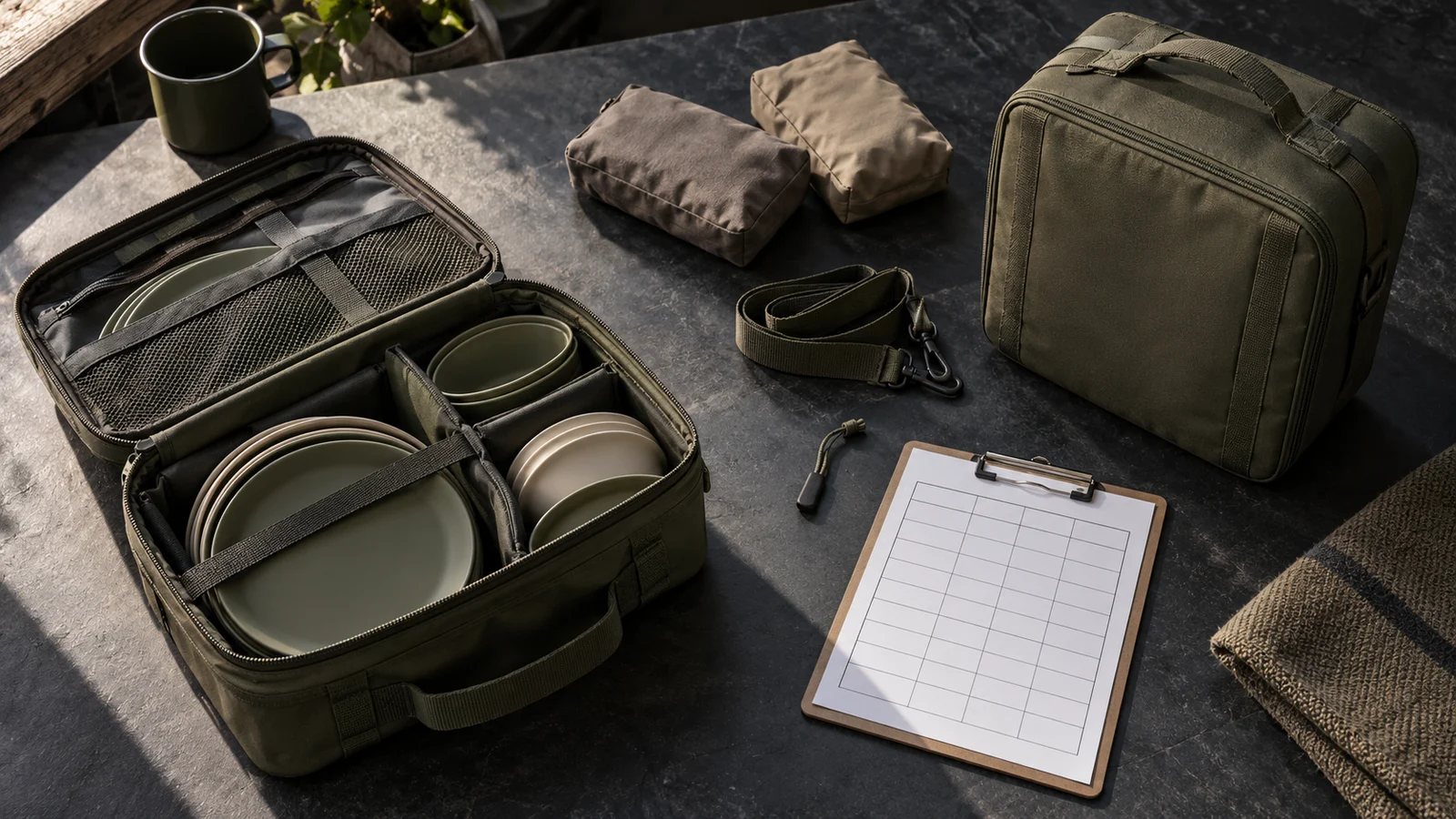
Inspect the empty carrier first to identify construction defects that are independent of the dinnerware. Repeat the relevant checks with the nominal approved set. If a maximum configuration is authorized, define it explicitly rather than filling spare volume with arbitrary weight. Ballast can support early method development, but it must match mass distribution without creating unrealistic point loads.
For distribution-test selection, consult the ISTA test-procedure directory. For experimental design and replication concepts, use the NIST/SEMATECH engineering statistics handbook. Neither source establishes a Naike case performance claim.
4. Use a loaded-case inspection sheet
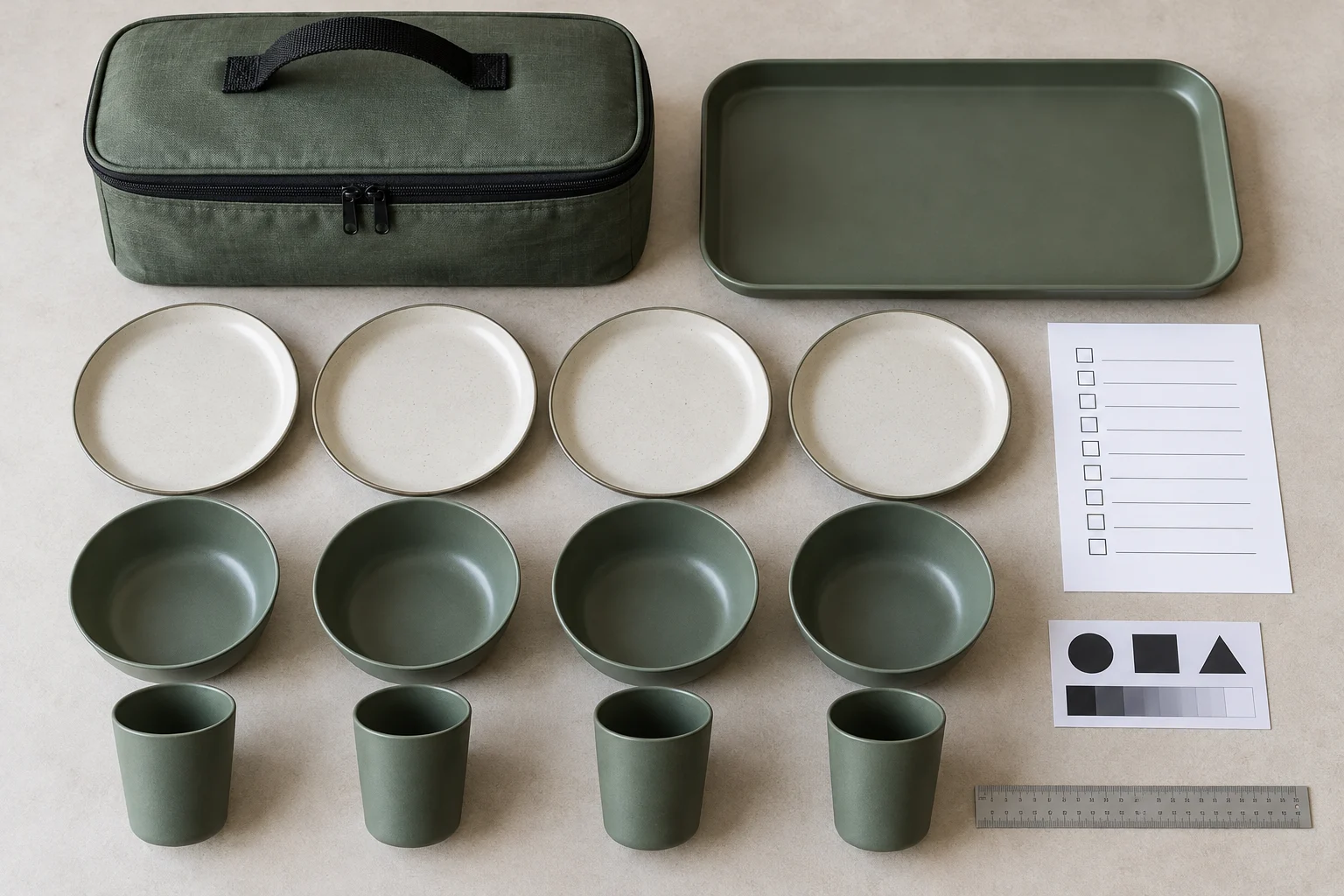
| Sheet section | Required entries | Decision output |
|---|---|---|
| Identity | Case ID, BOM, component revisions, source, date and inspector | Traceable unit under review. |
| Pre-load condition | Seven-zone status, photos and measurements where relevant | Baseline separated from handling damage. |
| Pack-out | Sequence, item count, masses, tray and retention settings | Repeatable loaded configuration. |
| Loaded checks | Closure, zipper path, tray seating, retention and balance | System-level findings. |
| After handling | Same zones, same viewpoints and documented deviations | Comparable before/after evidence. |
| Disposition | Accept, rework, retest, concession or reject with approver | Controlled release decision. |
5. Set acceptance rules before seeing results
Define critical, major and minor findings against buyer risk. Loss of containment, exposed sharp hardware or handle detachment may require a different response from a removable scuff, but the project team must approve those definitions. Do not move a finding between classes after the inspection merely to release the sample. Food-contact component damage should be escalated separately using the intended food and use conditions; the US FDA conditions-of-use framework helps scope food-contact review but does not approve the case.
Buyer checklist
| Check | Evidence | Action |
|---|---|---|
| Scope controlled | Case and BOM revisions, route and decision | Approve or clarify. |
| Load traceable | Counts, masses, nesting and photos | Hold untraceable configurations. |
| Seven zones reviewed | Before, loaded and after-handling records | Close every zone. |
| Fit checked | Tray seating, closure and component clearance | Rework or approve. |
| Acceptance fixed | Defect definitions and concession authority | Prevent post-hoc changes. |
| Decision signed | Disposition, limitations and open risks | Release, retest or hold. |
FAQ
Can an empty-case check replace a loaded inspection?
No. It can expose workmanship issues, but it does not represent tray interference, component movement, loaded balance or handle stress.
Should every visual defect fail the case?
Not automatically. Defect classes and viewing conditions must be agreed before inspection and tied to function, safety, appearance and purchase requirements.
Does smooth zipper travel prove transit durability?
No. It only records one closure function under the inspected load. Transit performance requires an appropriate controlled test and scoped interpretation.
Can the same result cover a changed dinnerware component?
Only after a documented impact review. Changed mass, rim, height or nesting can alter tray fit, closure and load distribution.
Does this inspect cookware?
The scope is a dinnerware carry system. Cookware heat, coating, handle and use requirements need separate evidence.
Request a loaded-case review
Send the case drawing, packed BOM, component masses, pack-out sequence, use route and defect definitions. Naike can review the inspection scope without treating concept images as verified performance.