CAMPING DINNERWARE · COMPONENT-FIT SAMPLING PLAN
There is no universal sample count for component-fit approval. A camping set fit sampling plan should cover every critical mating pair, relevant molds or cavities, batches and agreed tolerance extremes. One pair may screen an obvious mismatch; release approval needs a traceable, risk-based plan with repeated observations, acceptance rules and stated limitations.
Choose the sample count by decision, not habit
A camping set fit sampling plan begins with the decision being made. A single traceable pair can expose gross interference, a missing latch path or an impossible nesting sequence. It cannot describe normal variation, worst-case tolerance pairing, cavity-to-cavity differences, batch variation or repeated-use behavior. Procurement should therefore separate screening, engineering review and release approval.
| Decision stage | What the sample can answer | What it cannot support |
|---|---|---|
| Early screening | Whether intended components assemble, close, nest or enter the storage path | Variation, confidence, durability or production-release claims |
| Engineering fit review | Whether controlled revisions meet criteria across selected sources and tolerance conditions | Unselected molds, batches, colors, materials or uses |
| Release sampling | Whether a defined lot or process meets a written acceptance rule | Future changes or confidence not established by the plan |
| Change verification | Whether an identified change preserves the approved interface | Unrelated claims outside the change assessment |
Build a fit-pair matrix before counting samples
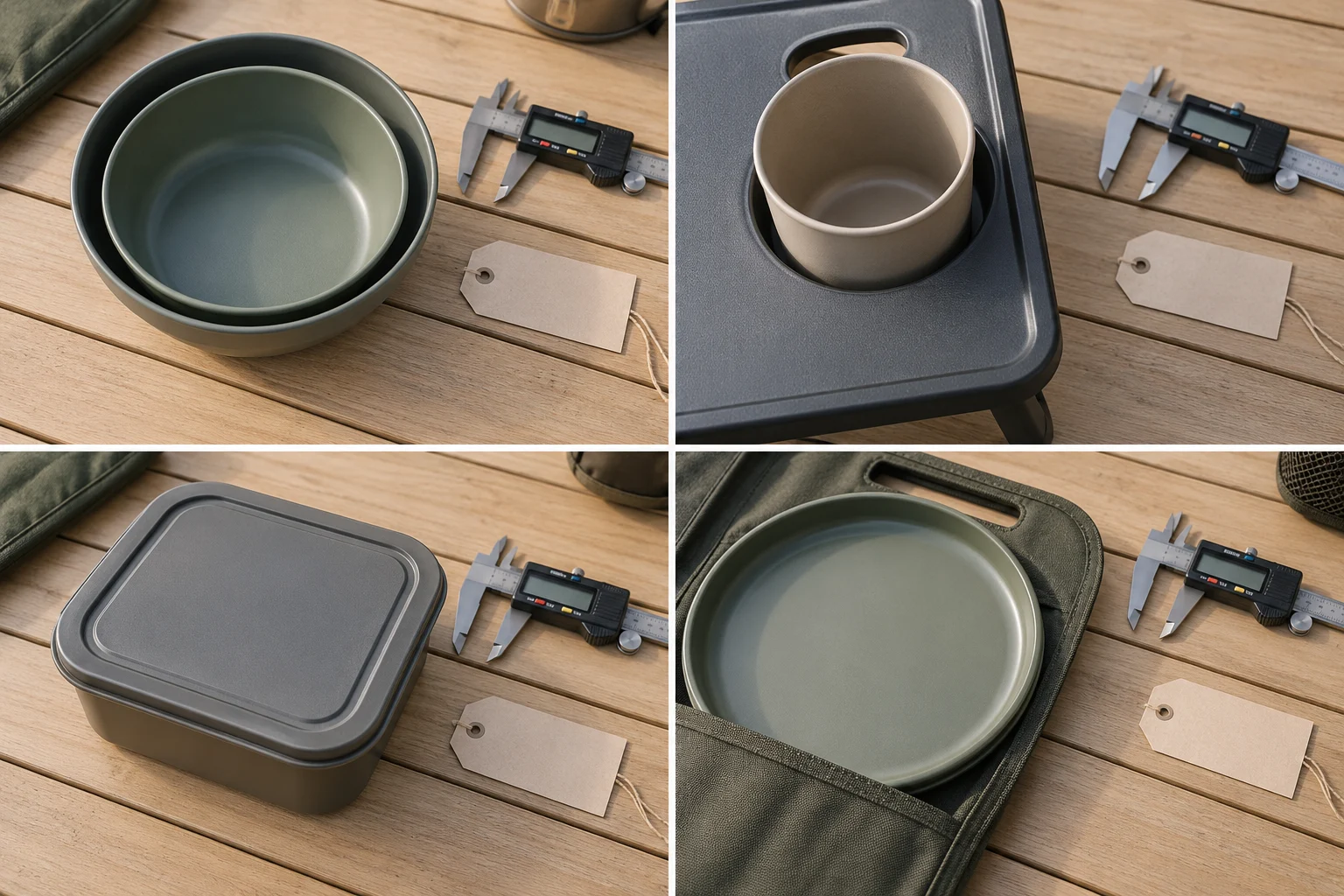
For a defensible camping set fit sampling plan, list each functional relationship rather than counting loose items. A plate that slides into a case, a bowl that nests on another bowl, a cup that locks into a tray and a lid that seats on a container are different relationships. For every relationship, name both controlled revisions, the assembly direction, the acceptance characteristic and the production sources that matter.
| Fit relationship | Review inputs | Observable decision |
|---|---|---|
| Plate to carry slot | Plate profile, slot width, curvature, finish and removal clearance | Full insertion, retention, removal and contact marking |
| Bowl-to-bowl nest | Rim, foot, draft, depth, stack height and release path | Stable nesting, separation and no unintended wedging |
| Cup to tray bay | Cup envelope, base, bay walls, stops and loaded orientation | Seating, rattle control and accessible removal |
| Lid to container | Rim and groove revisions, stiffness, corners and closure sequence | Complete seating and separately defined retention |
| Module to carry case | Envelope, rails, latch path, hinge clearance and packing order | Assembly without interference and repeatable access |
Link the matrix to the BOM revision-control workflow, the component change-control guide and the golden-sample approval record. These controls prevent a passed sample from silently representing a different drawing or material.
Use transparent planning arithmetic
The minimum review workload in a camping set fit sampling plan is driven by the matrix, not by an arbitrary total. Document this planning relationship:
Planned fit observations = critical fit relationships × selected source groups × planned repeats per source group.
A source group may be a mold, cavity, supplier, production batch, controlled tolerance condition or another traceable source named by quality engineering. The formula organizes work; it does not create statistical confidence. Cross-pairing may multiply observations when every selected component source must mate with every counterpart. Paired sampling uses fewer combinations but answers a narrower question. State which method applies.
| Planning input | Buyer question | Record required |
|---|---|---|
| Critical relationships | Which interfaces can stop assembly, access, closure or safe handling? | Fit-pair matrix and drawing revisions |
| Source groups | Which molds, cavities, batches or suppliers could shift the interface? | Traceability and selection rationale |
| Tolerance conditions | Will nominal, measured extremes or controlled limit parts be reviewed? | Measurements and pairing rule |
| Repeats | How many independent observations suit the decision and risk? | Quality-approved rationale |
| Acceptance rule | What passes, fails or triggers more evidence? | Criteria, failure classes and escalation |
State evidence limits before approval
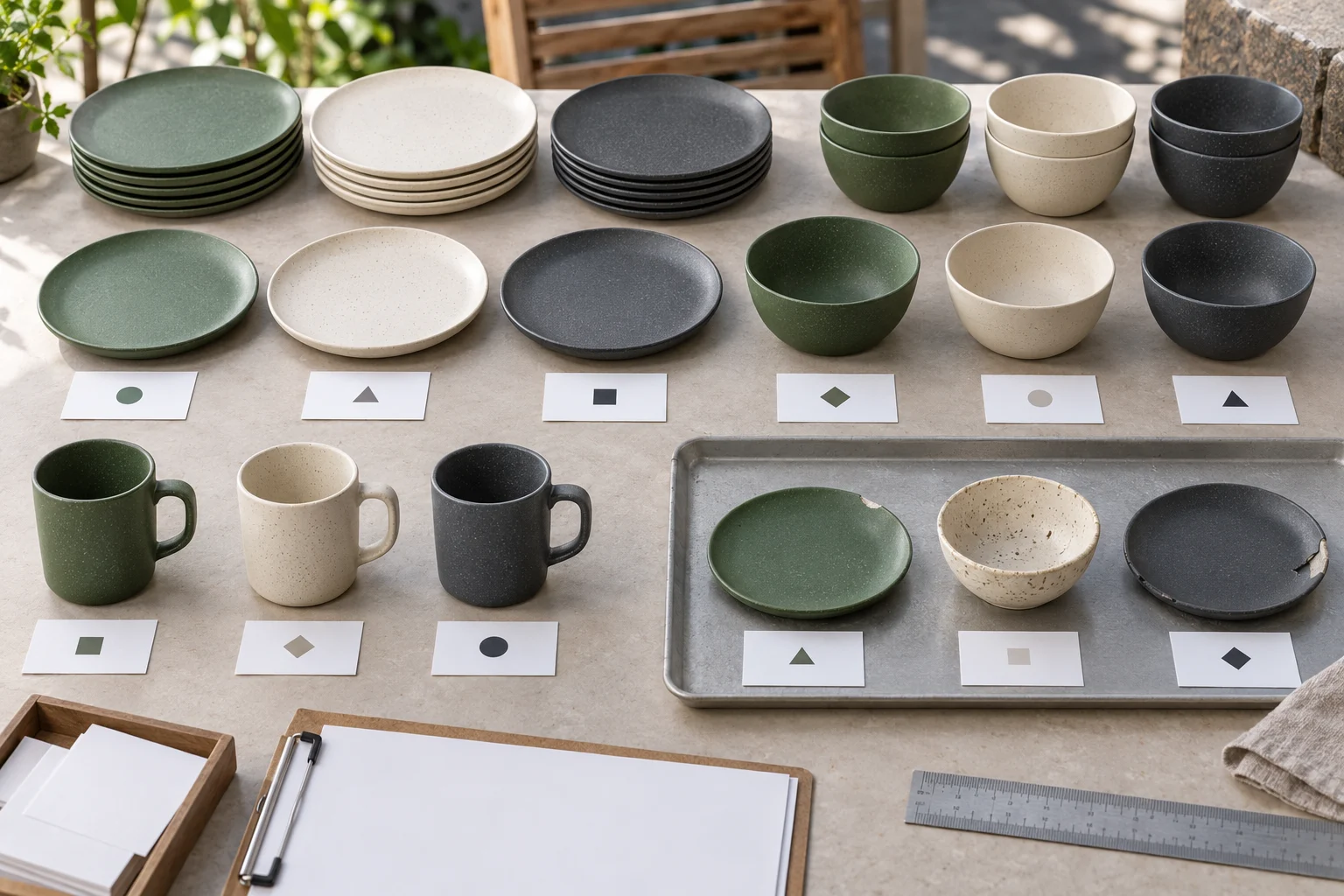
Sampling must not be described more strongly than its design permits. The NIST Engineering Statistics Handbook explains why sampling and uncertainty need a defined method. Its acceptance-sampling guidance distinguishes lot decisions from perfect knowledge of every unit. Food-contact and use claims also depend on intended conditions; consult the US FDA food types and conditions of use when framing a US-market evidence request.
| Observed result | Permitted conclusion | Required limitation |
|---|---|---|
| One nominal pair fits | The identified pair assembled under the observed condition | No claim about production variation or extremes |
| Selected extremes fit | The measured selected pairs met the stated criteria | Only stated revisions, measurements and conditions |
| A defined lot passes | The lot met the approved sampling and acceptance rule | No automatic extension to later lots |
| Repeated cycling passes | Samples met the named cycle and conditioning criteria | No unspecified lifetime or temperature claim |
Dinnerware is not cookware. A fit review does not authorize oven, stovetop or direct-flame use. Material names alone do not prove temperature performance, food-contact compliance, durability or compatibility.
Create an auditable fit approval record
The approval record should identify the project, fit-pair matrix revision, part and drawing revisions, declared materials, sample IDs, molds or cavities when relevant, batches, measured conditions, pairing method, planned and completed observations, results, deviations, rejected samples, claim exclusions, approver and date.
| Status | Evidence needed | Procurement action |
|---|---|---|
| Approved | All defined pairings and criteria passed with complete traceability | Release only the identified scope |
| Conditional | Limitation, owner, containment and due evidence are recorded | Hold the affected interface or claim |
| Rejected | Failure mode and affected source groups are identified | Revise design, tolerance, process or pairing rule |
| Reopen | Material, color, supplier, mold, drawing, use or claim changed | Review applicability before release |

Camping set fit sampling plan buyer checklist
| Ask | Verify | Record |
|---|---|---|
| Which relationships are critical? | Both part revisions, mating direction and failure effect | Controlled fit-pair matrix |
| Which variation sources matter? | Molds, cavities, batches, suppliers and tolerance extremes | Selection rationale and traceability |
| How will samples be paired? | Cross-pairing or matched pairs, repeats and conditioning | Observation plan and criteria |
| What does approval exclude? | Unreviewed uses, claims, markets and later changes | Limitations and reopening triggers |
To scope a project, send the component drawings and fit-pair list, share variation sources and intended use, and identify the decision the sampling must support.
Procurement FAQ
Can one complete camping set be enough?
It may be enough for an early assembly screen, but it cannot characterize production variation or support a release decision without a documented rationale.
Should every lid be tested against every container?
Only when the approved cross-pairing strategy requires it. If parts are deliberately matched, paired sampling may be appropriate, but that narrower compatibility must be recorded.
Do more samples automatically create confidence?
No. Untraceable or duplicated samples can repeat the same information. Confidence depends on selection, independence, method, acceptance rule and decision model.
How are tolerance extremes included?
Use measured production parts or controlled limit samples selected by engineering and quality. Record actual dimensions and do not assume a labeled extreme is accurate.
When must fit approval be reopened?
Reopen it when either interface, drawing, material, supplier, mold, process, color, use condition, storage path or claim changes, unless a documented assessment proves the change is outside scope.
Build a defensible fit-sampling brief
Send controlled drawings, the fit-pair matrix, source groups, intended conditions and release decision. We will structure the sample and quotation questions without inventing a universal sample count or product performance.
Request a sampling-plan review