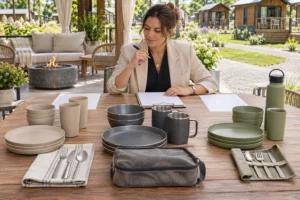
What changes in multigenerational camping dinnerware? The buyer changes the requirement record, not the age label. Specify grip access, rim visibility, component recognition, pack sequence, cleaning ownership and carry context; then test representative samples with intended adult users. Do not claim that one shape is suitable for every older, middle-aged or younger user.
This multigenerational camping dinnerware guide is a procurement framework, not a medical, accessibility or product-performance claim. Public participation data can justify asking better questions, but the buyer must define intended users, trip type, component bill, use environment and acceptance method before a supplier can review a sample or quotation.
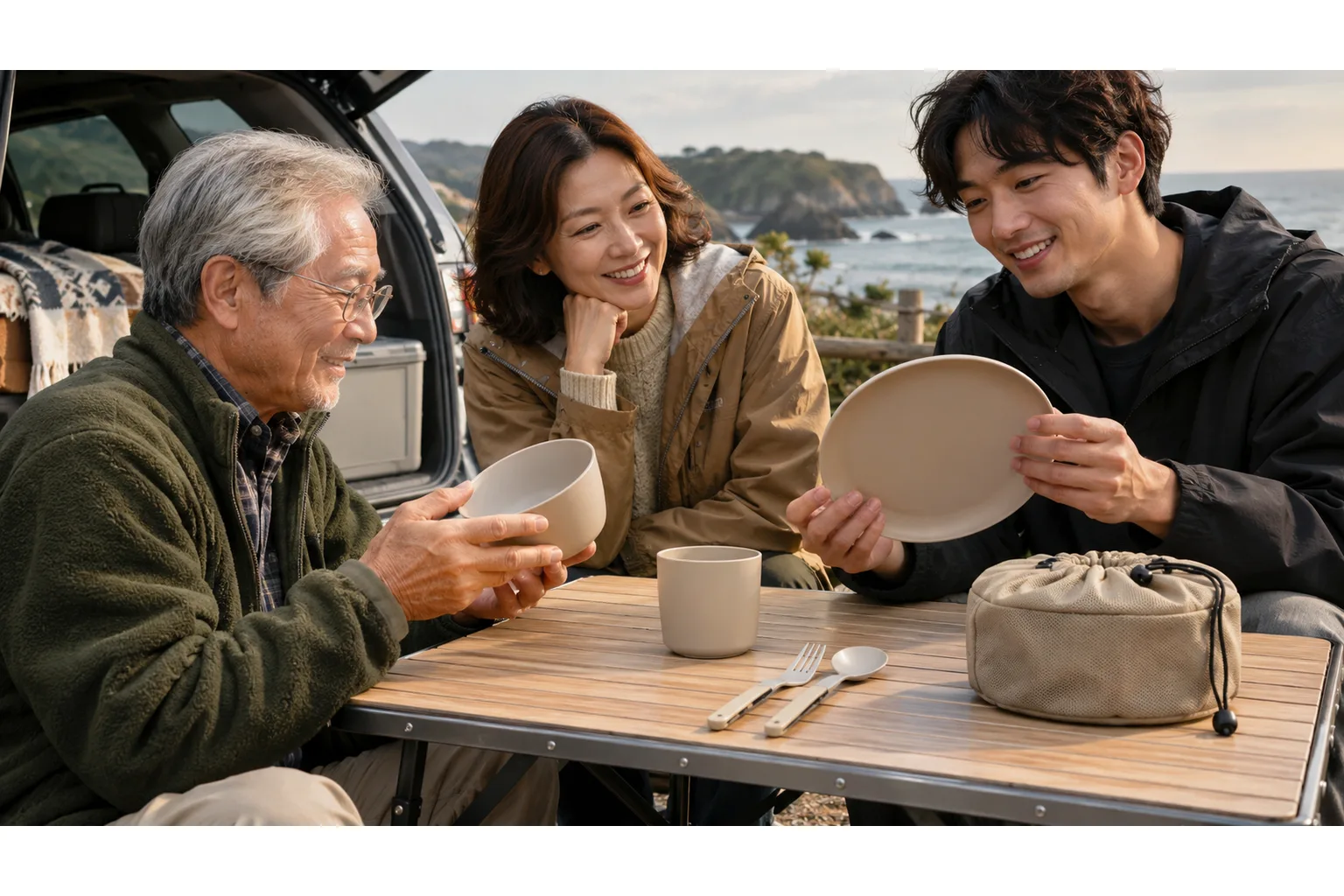
Why Should Buyers Add a Multigenerational Camping Dinnerware Usability Grid?
The Outdoor Industry Association 2026 Participation Trends summary reports growth among older adults and children within a broad U.S. outdoor population. That is a market observation, not proof that a particular dinnerware geometry works for an age group. The World Health Organization ageing and health fact sheet also stresses that older populations are diverse rather than uniform.
For spatial questions, the U.S. Access Board’s technical guidance on reach ranges is an authoritative accessibility reference, but it does not certify camping dinnerware. Use such sources to identify questions; use controlled drawings, representative samples and buyer-approved trials to answer them.
| Evidence | Useful buyer question | It does not prove |
|---|---|---|
| Participation trend | Should the range brief include different adult use contexts? | Demand, component preference or purchase volume |
| Population diversity guidance | Are requirements based on tasks instead of stereotypes? | Suitability for any named age group |
| Reach-range guidance | Where will components be placed and retrieved? | Compliance or accessible use of this product |
| Buyer interview or observation | Which task creates grip, visibility or sequence friction? | Performance outside the observed use condition |
| Controlled sample record | Did the selected users complete the defined task? | Universal acceptance or future sales |
Which Multigenerational Camping Dinnerware Handling Questions Belong in the Brief?
Write requirements around actions: lift, stabilize, drink, identify, pack, clean and dry. Avoid statements such as “senior-friendly” unless the buyer has defined the users, protocol and evidence. Component mass, rim geometry, surface condition and handle clearance remain project-confirmed values.

| User task | Requirement to record | Sample question | Approval evidence |
|---|---|---|---|
| Lift a bowl | Defined fill condition, contact zones and allowed hand positions | Can the user establish a stable hold without contacting food? | Observed task record plus measured sample |
| Drink from a cup | Grip clearance, rim visibility and intended fill level | Is orientation obvious before lifting? | Buyer-approved use trial and drawing |
| Use utensils | Handle section, surface finish and storage orientation | Can each utensil be identified and removed independently? | Component sample and pack sequence |
| Open the set | Opening direction, loose-part count and retention method | Can a missing component be seen before departure? | Open/close sequence and BOM check |
| Carry the kit | Carry distance, packed condition and handle method | Is the carry task defined for the intended trip? | Buyer-defined protocol; no unverified load claim |
Related live references include the camping tableware selection guide, kitting verification methods, and stain and odor test planning.
How Should Multigenerational Camping Dinnerware Control Visibility and Pack-Out?
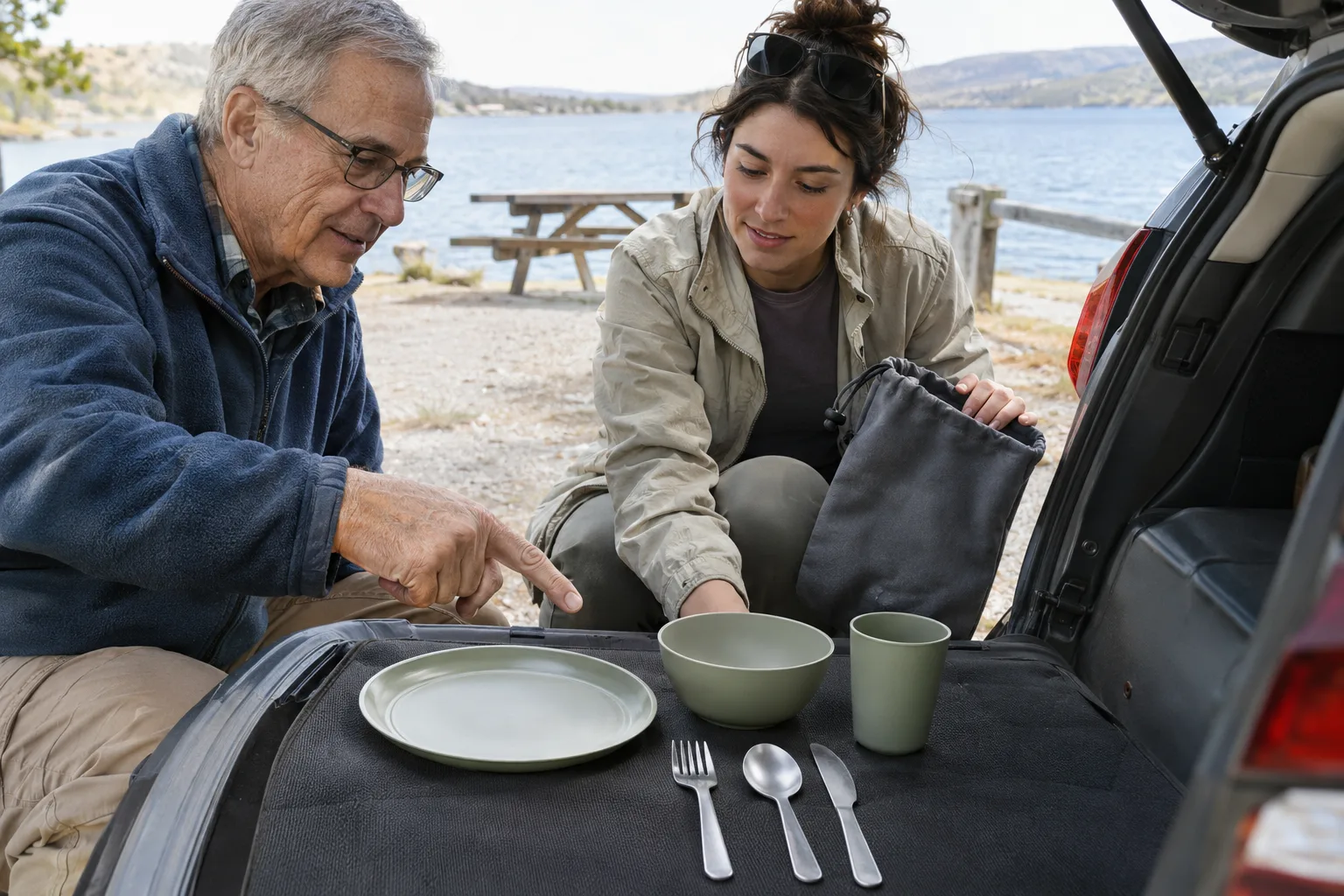
An infrequently used set should not rely on memory alone. Record a component map, orientation, removal sequence and missing-part check. Contrast and markings may help identification, but final colors, artwork, readability and claim language require buyer approval and sample review.
| Pack-out control | Buyer input | Risk if omitted |
|---|---|---|
| Component map | Approved BOM, codes and visible positions | A missing piece is discovered at the use site |
| Opening sequence | Which component is needed first and by whom | Items are scattered or returned in the wrong order |
| Visual distinction | Approved color/marking contrast and artwork limits | Components are confused without validated readability |
| Cleaning ownership | Who washes, dries, inspects and repacks | Moisture or residue is enclosed in storage |
| Replacement rule | Component codes and acceptable substitution process | An unreviewed part changes fit or intended use |
What Should a Multigenerational Camping Dinnerware Approval Record Contain?
Approve the requirement and the evidence together. A photograph is not a dimensional record; a drawing is not a user trial; a short trial is not a durability claim. If the project involves children, care settings or regulated accessibility claims, obtain appropriate specialist and legal review rather than extending this general adult-use framework.

| Approval field | Record | Decision owner |
|---|---|---|
| Intended adults and context | User group definition, trip type, meal and environment | Buyer product manager |
| Controlled component bill | Codes, drawings, sample revision and pack order | Buyer and supplier engineering |
| Task protocol | Lift, drink, identify, open, clean and repack conditions | Buyer usability or quality lead |
| Observed result | Pass/fail rule, exceptions and unresolved risks | Named buyer approver |
| Commercial handoff | Forecast range, packaging, destination and quotation scope | Buyer sourcing lead |
Buyer Checklist
Buyer supplies
Target adults, use context, component bill, task protocol, branding, packaging, forecast and destination.
Supplier returns
Feasibility questions, controlled drawing, sample revision, material boundary and project-confirmed commercial inputs.
Buyer approves
Representative sample, task evidence, unresolved risks, artwork, packaging and quotation basis.
Frequently Asked Questions
Does multigenerational mean one universal set?
No. Multigenerational camping dinnerware means the buying brief tests defined tasks across the buyer’s intended adult users instead of assuming one geometry fits everyone.
Can a supplier call a set senior-friendly?
Not from appearance alone. The claim requires a defined scope, evidence and appropriate legal review. A safer procurement record describes the task and result.
Should the buyer specify dimensions immediately?
Specify the task and constraints first. Final dimensions, mass, clearances and tolerances remain to be confirmed by controlled drawing and sample.
What should be sent before requesting a quotation?
Send the intended users and context, BOM, drawings or reference samples, task checks, packaging, forecast range, destination and claim boundaries.
Move From Age Labels to a Controlled Sample Brief
Send the adult user contexts, component list, task protocol and pack-out expectations. Naike Dinner can review the information as a project brief; feasibility, specifications, MOQ, price, tooling, capacity and lead time remain subject to project confirmation.
Send a Usability GridRequest a Sample ReviewRequest a Project RFQ