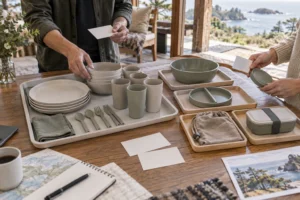
Plate rim shape changes how a user pinches or supports the plate, how far food must travel before leaving the eating surface, and how much vertical space the plate consumes when stacked. Approve a camping plate rim design only after comparing identical meal loads, hand conditions, table angles, nesting clearances and cleaning access. A deeper or wider rim is not automatically better for every program.
Define the rim as a system boundary
The rim is not merely a styling line. It joins the eating surface to the outer edge, creates a hand-contact zone, affects usable food area, and determines where adjacent plates first touch in a stack. One small geometry change can therefore alter grip, spill behavior, stack height, scuff contact and the size of the carry case.
Start by fixing the variables outside the rim: plate material route, nominal outer envelope, intended food types, expected portion, user group, cleaning method and packed-set target. If these change between samples, the review cannot isolate the effect of camping plate rim design. Treat every conclusion as sample-specific rather than a promise for all plates with a similar silhouette.
Use a rim-geometry sample review
Prepare at least two physical samples for each candidate geometry so a single distorted or worn piece does not define the decision. Use the same observation sequence for every camping plate rim design and record what was seen, not what the team expected to see. The table below is a copyable approval record; buyers should enter their own dimensions and results.
| Review field | Buyer question | Observation to record | Decision risk |
|---|---|---|---|
| Outer edge | Where do fingers naturally contact the rim? | Pinch, palm support, underside access and any sharp or narrow contact point | A visually clean edge may be difficult to lift from a flat table |
| Wall transition | How quickly does the eating surface rise? | Food-pushing path, utensil clearance and usable flat area | A steep wall may retain food but reduce the usable center |
| Flange width | Does the rim provide a stable holding zone? | Thumb position, tray fit and space lost from the meal area | A broad flange can increase outer diameter and pack footprint |
| Rim height | How much boundary is available before food reaches the edge? | Behavior with the approved meal load and plate angle | Height alone does not prove spill resistance |
| Stack contact | Which surfaces touch first when plates nest? | Rim-to-rim, foot-to-well or sidewall contact and visible movement | Uncontrolled contact can change stack height or cosmetic wear |
| Cleaning access | Can residue and water leave the rim detail? | Creases, textured zones, undercuts and drying position | A grip texture can create a cleaning or drying trap |
The record should include a sample ID or revision, material and color, user group, meal type, hand condition, table surface, stack quantity and case used. Do not convert a favorable observation into a universal performance claim. The approved output is a traceable camping plate rim design decision for one component revision and one intended-use brief.
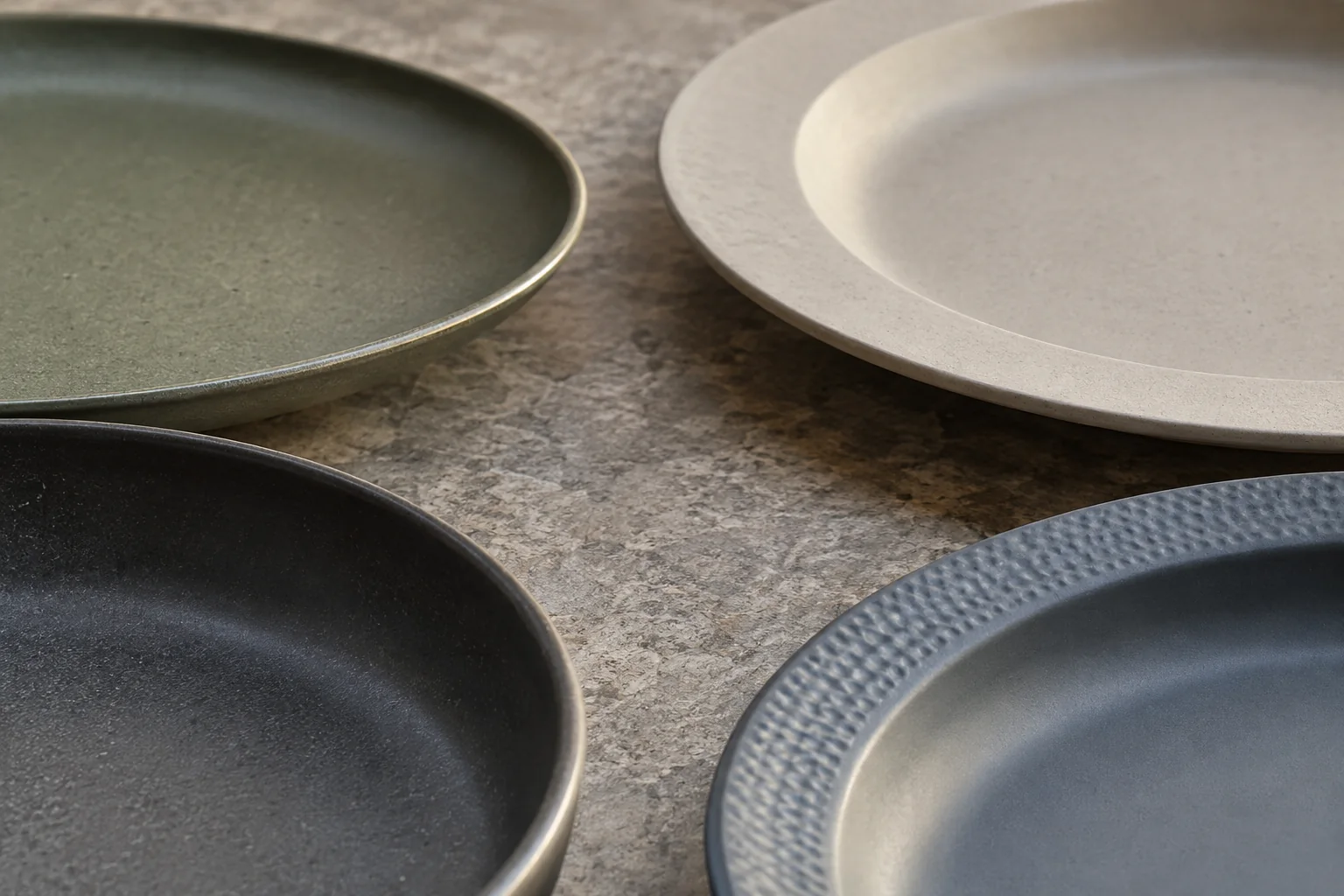
Compare four common rim strategies
Low rolled or rounded edge
A low rounded edge can preserve a broad eating surface and reduce stack height. It may suit compact sets where the user normally supports the plate from below. Buyers still need to observe whether the plate can be lifted from a flat or wet table without sliding a fingertip too far underneath.
Broad flange
A flange creates a visually obvious handling zone and can separate fingers from food. It also consumes part of the outer envelope, can interfere with tray or case walls, and may increase the lever applied to the rim when the plate is carried. A broad flange should be reviewed with the actual case and the actual meal area requirement.
Steep raised wall
A raised wall can help guide food toward a utensil and provide a larger boundary around the eating surface. It can also make the plate behave more like a shallow bowl, reduce flat usable area, and raise the nested stack. Buyers should decide whether the product is still a plate for the intended assortment and presentation.
Textured grip segment
Texture can signal where to hold the plate and may change tactile feedback. It must be assessed for molding definition, decoration conflict, cleaning access and visual wear. Never assume a pattern improves wet grip without a controlled observation on the final material and surface finish.
Run grip observations under defined conditions
Grip is an interaction among rim geometry, plate stiffness, surface finish, hand size, load and motion. A camping plate rim design that feels secure when empty may behave differently with a warm meal, a wet underside or a user wearing gloves. Define the conditions before comparing samples.
Ask each reviewer to lift the plate from the same table, carry it over the same short route, rotate it for utensil access and place it down without touching the food zone. Observe contact location, wrist posture, plate tilt, finger clearance and any need to change grip. Do not manufacture a pass/fail result from one user; record variation and the reason for selecting the final geometry.
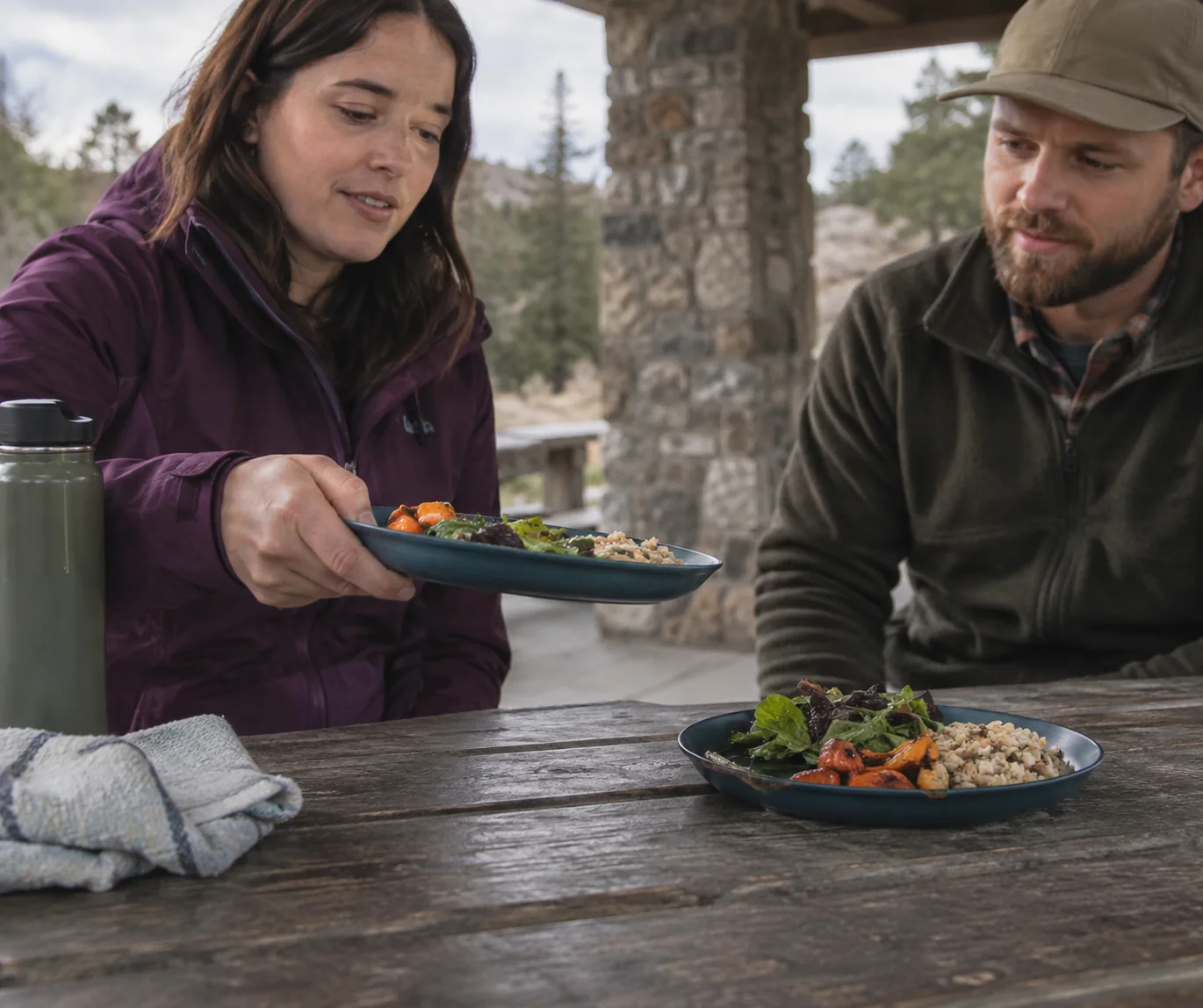
Review spillage without claiming “spill-proof”
Use representative foods within the intended-use brief, including any loose, sauced or cut pieces the program expects. Keep portion mass, distribution, plate angle, carry route and user instruction consistent. Record where food accumulates and whether the rim helps the user recover it with the intended utensil.
A higher rim can delay food reaching the edge, but sudden motion, overloading or an uneven table can still cause a spill. The review is comparative, not proof that a plate cannot spill. For hot-food programs, align the use brief with the published USDA FSIS camping food-safety guidance and evaluate heat-related handling separately.
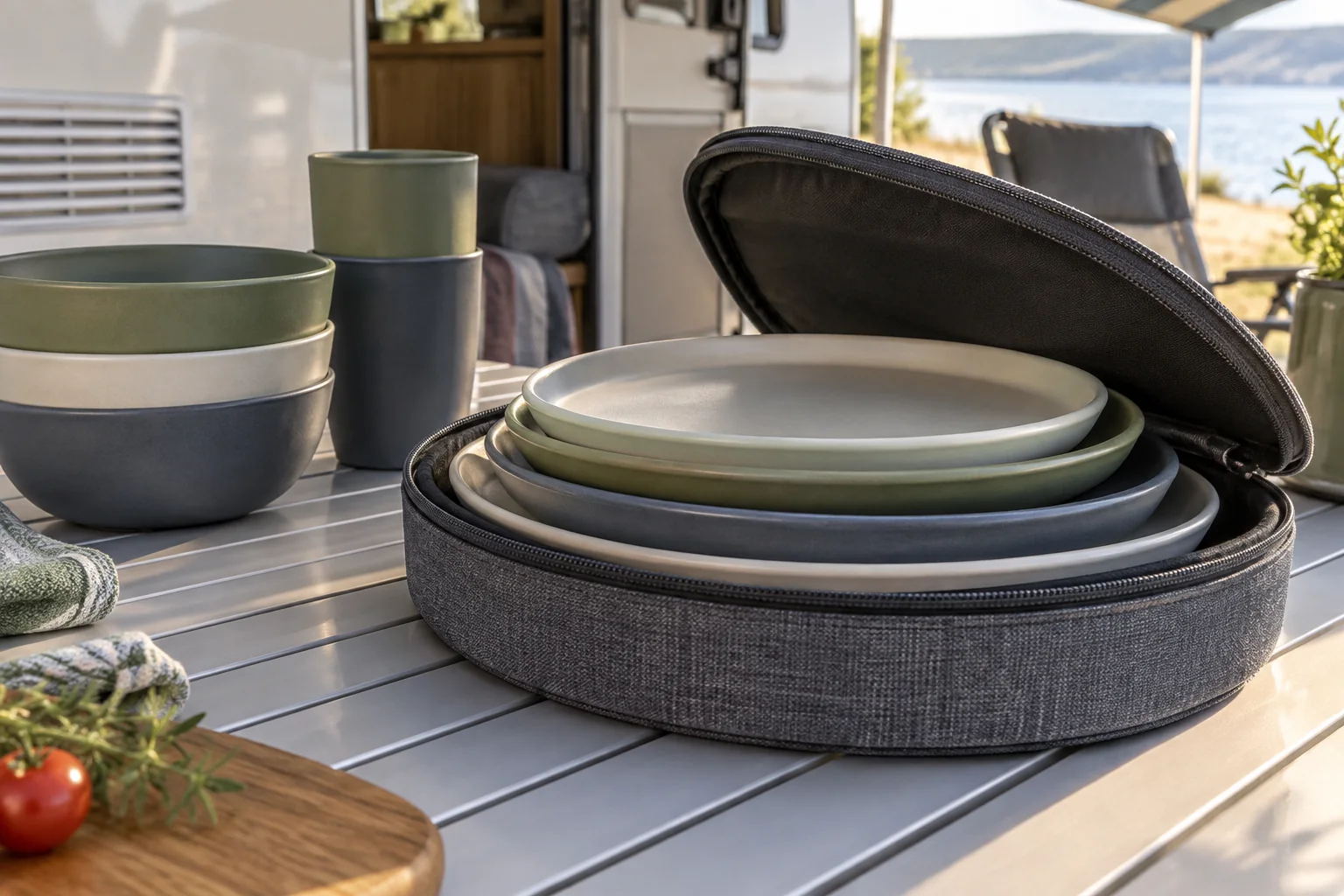
Calculate the packing effect from physical samples
Measure the packed stack rather than multiplying one plate height by the quantity. Nested plates overlap, and the effective increment is controlled by rim, sidewall and foot contact. Record the first-plate height, total height at the approved quantity, vertical movement in the case and clearance to the lid or next component.
Compare the result with the method in How to Calculate Pack Volume for Camping Tableware. Also check whether the selected rim supports the nesting logic described in What Makes Camping Dinnerware Truly Stackable?. A small rim change can move a set from acceptable clearance to lid interference even when the outer diameter remains unchanged.
Keep material and compliance evidence separate
Rim observations do not establish food-contact compliance, temperature suitability, dishwasher suitability or impact performance. Evidence must match the final material, colorants, decoration, construction and intended conditions of use. The FDA conditions-of-use framework and the EU Framework Regulation (EC) No 1935/2004 help buyers define evidence scope; neither source approves a rim geometry or a Naike Dinner product.
Likewise, dinnerware should not be presented as cookware. A raised plate wall does not make the item suitable for a burner, stove, campfire or direct flame. Any heat-use statement requires product-specific evidence and an intended-use definition.
B2B Buyer Checklist
Use the checklist to close the camping plate rim design decision before artwork, case cavities or assortment claims are frozen.
| Check | Question | Why It Matters |
|---|---|---|
| Revision | Are all samples identified by the same drawing or controlled revision? | Prevents mixed geometry from contaminating the comparison |
| User and meal | Does the trial reflect the intended users, portions and utensils? | Links the decision to a real program rather than a generic preference |
| Grip | Were dry, wet and relevant glove conditions observed consistently? | Reveals when hand contact changes |
| Spill boundary | Were load, angle and movement controlled without using absolute claims? | Keeps the result comparative and truthful |
| Pack-out | Was the approved stack placed in the actual case with adjacent parts? | Finds clearance and movement conflicts before tooling or packaging approval |
| Evidence | Does the evidence file match the final material, color and intended use? | Separates geometry observations from compliance claims |
Buyer FAQs
1. Is a higher rim always safer against spills?
No. It may provide a larger boundary, but load, motion, plate angle and user behavior still matter. Compare samples under the same conditions and avoid “spill-proof” language.
2. Does a broad flange always improve grip?
No. It creates a possible holding zone, but outer diameter, stiffness, finish and hand clearance determine whether users actually prefer it.
3. Can one camping plate rim design serve adults and children?
Possibly, but the buyer should review hand size, plate weight, portion and lifting method for both groups. Do not assume one observation represents every user.
4. How many plates should be stacked during review?
Use the quantity planned for the sellable set and any service or sample configuration that uses a different count. Record total stack height and case clearance directly.
5. Should textured grip areas be included in the food-contact evidence?
If the texture is part of the finished food-contact article, its material, color, decoration and intended contact should be covered by the applicable finished-product evidence request.
6. When is the rim decision ready for approval?
When the chosen revision has a completed observation record, actual-case pack-out, scoped evidence request, documented limitations and an owner for any remaining sample action.
Request a plate-rim sample review
Send the camping plate rim design drawing or sample reference, intended meal and user group, planned stack quantity, carry-case envelope, material route, target market and required claims. Naike Dinner can use the brief to discuss available component references and the sample or drawing checks still required without assuming unverified capability.
Request a specification review Review plate and bowl sizing
For a written quotation or sample discussion, submit the controlled requirements through the Naike Dinner inquiry page. MOQ, price, tooling, lead time and final specifications remain To be confirmed for the project.