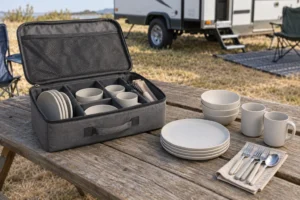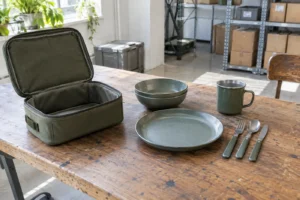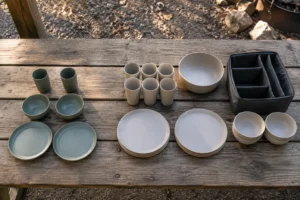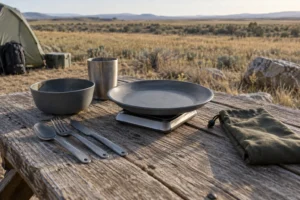
Choose handled cups when controlled grip and a familiar mug format matter more than maximum packing density; choose handleless cups when simple nesting, lower interference and fast counting are the priorities. The correct answer depends on the drink, user, washing method and carry-case geometry. Approve the cup only after a packed-set trial and a documented use-condition review.
Start with the system, not the cup silhouette
Handled vs handleless camping cups is a system decision because a cup occupies space alongside plates, bowls, lunch boxes, utensils and the carry case. A handle that feels useful in isolation can block the neighboring cup, catch a divider or force a larger case. A handleless profile may nest efficiently yet become harder to hold for a user wearing gloves or managing a wide vessel.
Write the intended drink, fill level, user group, cleaning method and packed orientation before discussing style. Those five facts turn a subjective preference into a purchasing specification. If any value is unknown, mark it for project confirmation instead of allowing the drawing or product image to imply an answer.
Neither format is inherently safer, more durable or suitable for hot beverages. Those outcomes depend on the verified material, wall construction, rim, handle joint, surface temperature, food-contact documentation and intended-use instructions. The cup-format decision table below therefore separates geometry from claims that need product-specific evidence.
Handled vs handleless camping cups: decision table
| Decision factor | Handled cup | Handleless cup | Evidence to request |
|---|---|---|---|
| Packed footprint | Handle can extend beyond the cup body and require an indexed slot | Straight or tapered body can often use a simpler round bay | Packed drawing and closed-case sample |
| Nesting | Possible only when handle position and clearance are deliberately engineered | Often easier, but taper and release clearance still require validation | Nested stack section and repeated extraction trial |
| Grip | Provides a defined grip point when handle geometry suits the intended hand | Uses the vessel wall as the grip surface | User trial with intended fill and conditions |
| Heat boundary | A handle does not prove the cup or handle remains cool | No handle means wall temperature becomes especially relevant | Material declaration, use instructions and applicable test plan |
| Cleaning | Handle junction can add corners that need inspection | Continuous exterior can be simpler, subject to rim and base geometry | Cleaning trial and visual inspection criteria |
| Impact and snag risk | Projection may catch straps or dividers; joint design matters | No external handle projection, but rim and wall still need durability review | Pack vibration, drop and use-cycle plan appropriate to the product |
| Counting and replacement | Distinctive handles may aid identification but complicate stack counting | Uniform profiles can support fast stack counts | Pack-out work instruction and replacement policy |
| Brand expression | Handle shape offers a visible design feature | Body texture, color and rim profile carry more of the design | Approved artwork zone and controlled color sample |
Use this table as a request-for-quotation attachment rather than a winner declaration. Score each row against the actual program, then record the tradeoff that was accepted. A buyer should be able to explain why the selected cup fits the complete set, not merely why the cup looked attractive in a rendering.
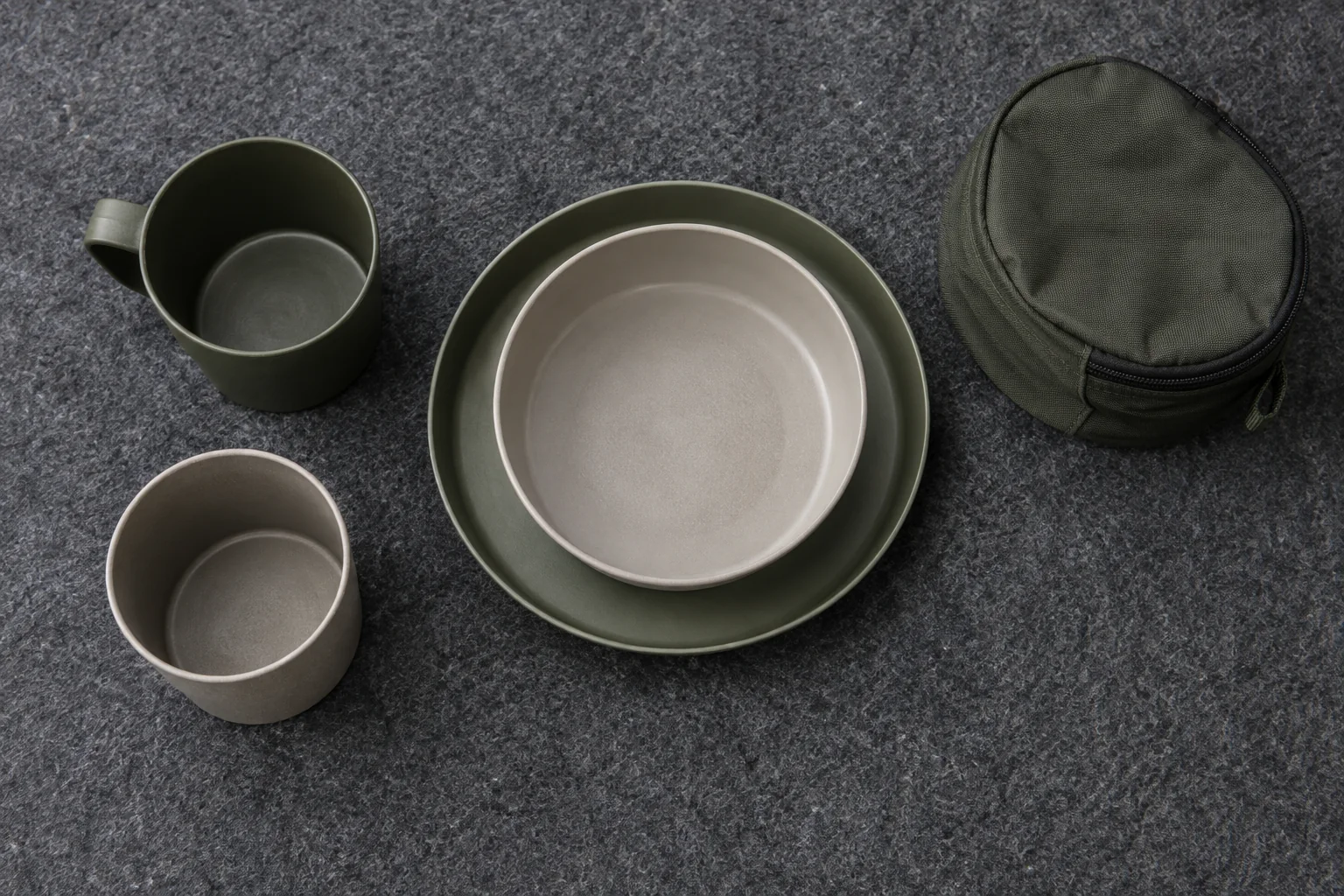
Measure the packing effect before approving a handle
The most useful measurement is not cup diameter alone. Record the maximum body envelope, handle projection, handle opening, rim diameter, base diameter, total height and the clearance needed for removal. For a handled cup, the maximum envelope normally includes the handle even when the cup body nests inside another component.
Build a simple section drawing of the full set. Place plates and bowls first, then show every cup in its real orientation, including the space a hand needs to remove it. A theoretical fit that requires bending a divider, rotating several pieces or pulling on the rim is not a stable pack-out method.
For handleless cups, do not assume that deeper nesting always improves the result. Excessive engagement can create vacuum, friction or wedging, especially when tolerances, moisture and surface texture vary. Define a stop feature or controlled nesting depth when the concept depends on repeated separation.
For handled cups, test whether handles align in a single channel, alternate around the stack or occupy separate side bays. Each strategy changes divider geometry and user sequence. The approved pack drawing should show orientation marks only if the physical product and packing instruction genuinely use them.
A practical pack-volume worksheet
Start with the internal case dimensions and reserve clearance for seams, zipper paths, lids and compressible dividers. Add the cup stack as a real bounding box rather than adding nominal cup volumes. The related guide on calculating camping tableware pack volume explains why external envelopes and packing voids matter more than advertised capacity.
Run the worksheet for both formats. A handleless stack may reduce one dimension but require an extraction gap above it; a handled design may occupy a wider bay but allow shallower stacking. Record the final closed-case dimensions and packed mass only after physical confirmation, not from a concept image.
Define the beverage and temperature boundary
A cup name does not establish a temperature rating. The buyer should state whether the intended uses are cold water, ambient drinks, warm beverages or another defined condition. The supplier should then identify the exact material construction and the evidence relevant to the destination market and declared use.
A handle can move the user’s hand away from part of the vessel wall, but it does not automatically protect the hand. Heat can reach a handle through the joint or cup body, and a small handle may force fingers close to the wall. For handleless formats, wall thickness, double-wall construction, sleeve compatibility and fill temperature may influence handling, but none should be claimed without verified product data.
Keep dinnerware separate from cookware. A camping cup shown beside a meal set must not be placed on a burner, campfire or direct flame unless that exact product has verified instructions supporting the use. The FDA Food Code is a useful primary reference for food-safety controls, but it does not certify a particular cup or replace a product-specific specification.
For European programs, request documentation tied to the finished article and its intended food-contact conditions. The European Commission’s food-contact materials legislation overview provides the regulatory framework; it should not be converted into a generic “compliant” badge without supporting records.
Compare grip and drinking access with real users
Grip is affected by hand size, glove use, surface finish, cup diameter, fill mass and condensation. A wide handle opening may suit gloves but increase the pack envelope. A low-profile handle may pack more neatly but allow only two fingers, shifting load to the fingertips.
Handleless cups require the user to wrap the vessel body. That can feel direct and stable on a narrow textured cup, yet awkward on a broad smooth tumbler. Ask representative adults to lift, carry, drink and replace the cup under the intended conditions, using water at the approved test condition rather than a visually appealing but undefined scenario.
Record observations rather than opinions alone. Note grip method, contact points, interference with the rim, whether the cup rotates, and whether users can return it to the case without rearranging other pieces. Do not turn a small internal trial into a universal ergonomic claim.
Accessibility needs deserve explicit review. Some users may benefit from a large handle; others may find a handle limits alternate grips. When the product is intended for family, rental, education or inclusive programs, broaden the user trial and document who participated without exposing personal data.

Inspect cleaning, drainage and field handling
Cleaning review should include the rim, base recess, handle junction, texture and any double-wall seam. Handles can create tight internal radii or shadowed areas where soil is harder to see. Handleless bodies reduce one feature but can still have a deep base ring or rolled rim that needs attention.
Define the washing environment. A household dishwasher program, a camp wash basin and a commercial rental operation impose different handling and inspection routines. Do not label either format dishwasher-safe without verified instructions for the exact article; use the existing camping dinnerware dishwasher guide to structure the buyer questions.
Drainage matters after washing and during storage. Test whether an inverted handled cup rests at an angle that drains, whether a handle traps water, and whether nested handleless cups retain moisture. The pass condition should be observable and tied to the approved cleaning procedure.
For rental or group programs, inspect counting and segregation. Identical handleless stacks can be counted rapidly, while colored handles may help assign cups to users. Either benefit depends on the actual color plan, packing instruction and replacement process.
Scenario decisions by channel and user
Compact retail set
A compact retail program may favor handleless cups when shelf dimensions and simple nesting are dominant constraints. However, the packaging must still show the intended use clearly, and the sample must release reliably after transport. Avoid promising “space saving” until the final case and comparison baseline are defined.
Family car camping
Family car-camping buyers may accept more volume for familiar mug handling, especially when cups occupy dedicated pockets. Check the user age range, but do not infer child suitability from size or color. A children’s product brings separate design, labeling and evidence questions.
Rental and outfitter fleet
Fleet operators often value countability, replacement and robust pack-out. A handleless cup may reduce snag points; a handled cup may make identification easier. Run a repeated issue-return-clean-repack simulation and ask the operator which errors create real cost.
RV and caravan assortment
Storage geometry is often more important than carry distance. Handled cups can hang or occupy molded slots, while handleless cups can use a vertical cabinet stack. Review vibration, cabinet clearance and noise control alongside the guidance on preventing rattle in nested dinnerware.
Promotional and private-label program
A visible handle may offer an artwork or color-block opportunity, while a simple tumbler body can provide a larger uninterrupted decoration zone. Decoration feasibility, adhesion and durability must be confirmed for the chosen material and process. Never approve an artwork area solely from a rendering.
Limitations and commercial risks
The first risk is approving the cup separately from the set. A late handle change can force a new divider, larger bag, revised carton and altered photography. Freeze the cup envelope before approving packaging tooling or retail claims.
The second risk is confusing appearance with temperature performance. A thick wall, metal rim or large handle may look reassuring without establishing safe touch conditions. Require a declared use condition and evidence appropriate to the exact construction.
The third risk is uncontrolled nesting. Tight stacks can jam after washing, transport or dimensional variation. Loose stacks can rattle, scuff or increase case size. Specify target engagement, clearance and the sampling method used to check production variation.
The fourth risk is weak replacement logic. If cups are sold only as matched sets, a damaged or lost cup may reduce the usefulness of the whole kit. Decide whether replacement units, color coding or component identifiers are part of the commercial program before launch.
The fifth risk is an unsupported compliance statement. Food-contact rules depend on jurisdiction, material, additives, intended foods and conditions of use. For Australia and New Zealand, use the official FSANZ food-packaging guidance as a starting point and request evidence for the actual finished article.
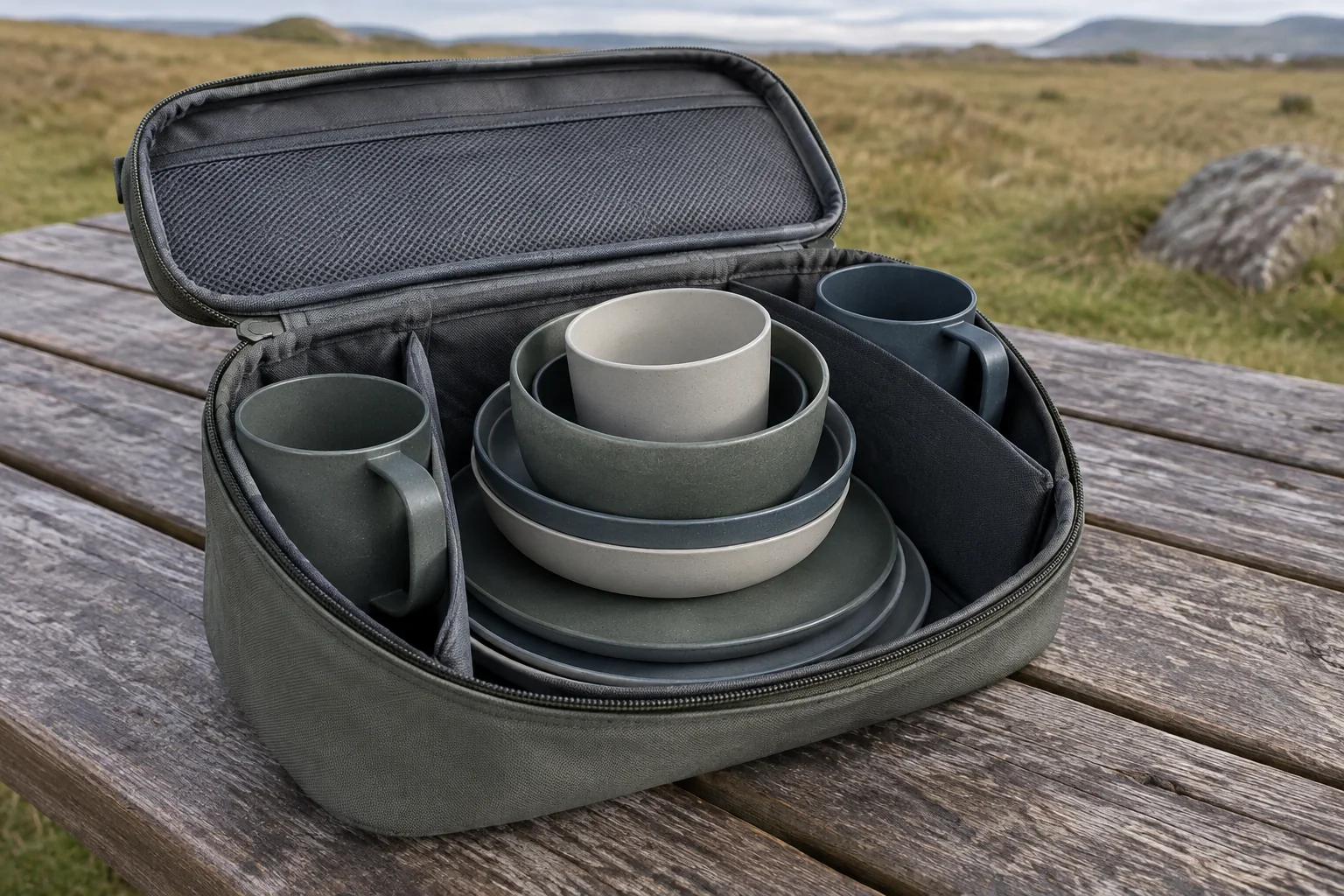
Procurement sequence from brief to approval
First, issue a cup-use statement. Include beverage types, intended temperature range, fill volume target, user group, cleaning method, destination markets and whether the cup is dinnerware only. Keep unknowns visible.
Second, request two controlled concepts where uncertainty remains: one handled and one handleless. Ask for maximum envelopes and a packed-set section, not just beauty renders. The comparison should hold other components constant so the cup effect is visible.
Third, review material and construction records against the intended use. Request the material identity, colorant or coating information where relevant, finished-article documentation and test scope. The buyer should be able to connect every report to the supplied sample and version.
Fourth, run pack, grip, cleaning and handling trials. Use the actual carry case, representative users and documented observations. Photograph the approved configuration without presenting the trial as a certification or laboratory result.
Fifth, freeze the drawing, bill of materials, artwork zone, color standard, packaging and inspection points together. A cup change after this stage should trigger a controlled review of the affected set components and carton.
B2B Buyer Checklist
| Check | Question | Why It Matters |
|---|---|---|
| Intended drink | Which beverages and verified use temperatures are in scope? | Prevents the silhouette from implying unsupported hot-use performance. |
| User grip | Which hand sizes, glove conditions and access needs must be reviewed? | Connects handle choice to actual users. |
| Maximum envelope | Does the drawing include handle projection and removal clearance? | Protects case and carton dimensions from late changes. |
| Nesting release | How is stack depth controlled and separation checked? | Reduces jamming and inconsistent pack-out. |
| Cleaning detail | Are rim, base and handle junction included in the cleaning trial? | Finds geometry that is difficult to inspect or drain. |
| Set compatibility | Has the cup been tested inside the complete packed set? | Confirms real fit instead of isolated dimensions. |
| Evidence identity | Can each declaration or report be linked to the finished sample? | Prevents generic records from being applied to the wrong article. |
| Change control | What must be re-approved if handle, wall, color or material changes? | Keeps packaging and claims aligned with production. |
Questions buyers should answer in the sample review
Ask whether the cup can be removed and returned with the case in its normal orientation. Repeat the action after washing and after a transport simulation. Record any need to twist, pry or move another component.
Ask whether the filled cup can be lifted, carried and tilted without an unstable grip under the declared conditions. A pass should describe the observed behavior and test setup. Avoid converting a limited sample review into broad marketing language.
Ask whether the cup drains and can be visually inspected after the intended cleaning routine. Check the handle joint and base ring where present. Record the inspection lighting and acceptance criteria.
Ask whether color, decoration and component identity remain clear through the packing sequence. Confirm that retail artwork and instructions show the same cup version that will be supplied. Treat every geometry revision as a possible packaging revision.
Build an approval record that survives later changes
The final decision should not live only in email or in a visual sample. Create a one-page approval record that names the selected cup format, drawing revision, material designation supplied by the project, color reference, decoration zone, intended-use statement, cleaning instruction and exact position in the packed set. Attach photographs of the approved packed sequence and record which physical sample was reviewed.
Add a change-impact column for every controlled feature. A handle projection change can affect the divider and carton; a rim change can affect drinking feel and nesting; a wall or base change can affect mass, release and cleaning; a colorant or decoration change can affect the evidence package. This makes later engineering changes visible to purchasing, packaging and quality teams rather than allowing each team to approve a different version.
Define the incoming inspection points that are actually observable. These may include cup count, visible damage, approved color comparison, maximum external envelope, handle orientation, fit in the approved case and release from the nested stack. Do not add a numeric tolerance unless it comes from the controlled drawing and the measurement method is understood.
Retain a complete set, not only one cup. The interaction between the cup, bowl, divider, pouch and carton is the reason the format was selected. When a later shipment is reviewed, the retained system sample provides a more useful reference than a loose component that no longer shows the packing relationship.
Finally, align the commercial description with the evidence. If the approved record supports a compact nested configuration, describe the mechanism accurately without claiming a universal percentage of space saved. If the handle was selected for a particular trial group, describe the design feature without claiming that it is ergonomic for every user.
Sequential buyer FAQs
1. Are handleless cups always better for camping cup nesting?
No. They often provide a simpler external profile, but taper, surface texture, nesting depth and release clearance determine whether they separate reliably. Confirm the complete stack with finished samples.
2. Does a handle make a camping cup safe for hot drinks?
No. A handle alone establishes neither safe wall temperature nor hot-drink suitability. Review the exact material, construction, intended temperature, instructions and relevant finished-article evidence.
3. Can handled cups nest together?
They can when body taper, handle position and clearance are designed as one system. The buyer should request a section drawing and test repeated nesting, extraction and case closure.
4. Which format is easier to clean?
That depends on rim, base, texture, handle junction and the washing method. Compare both samples using the declared routine and inspect drainage and visible soil traps.
5. Which cup format is better for gloves?
A sufficiently large, well-positioned handle may help some gloved users, while a narrow handle can be worse than a grippable body. Test representative gloves and users rather than assuming.
6. Should cups be stored inside bowls?
Only when the geometry, surface contact, hygiene plan and removal sequence have been approved. Compatibility to be confirmed by project sample and drawing.
7. What should appear in the RFQ?
Include user count, drink conditions, target capacity, handle preference, maximum envelope, nesting orientation, cleaning method, destination market, material brief, color, artwork, packaging and evidence needs.
Request a controlled cup-format review
Send the full set component list, internal case dimensions, intended drinks, user group, cleaning method, destination markets and current drawings. Naike Dinner can use that brief to discuss a handled vs handleless comparison and the information needed for a sample review, without assuming unverified dimensions, performance or compliance.
Request a camping cup nesting and specification review. Include the target pack envelope and any existing plate, bowl or lunch-box samples so interference can be assessed as a complete system.
If the project is not ready for a quotation, ask for a written comparison checklist covering drawings, sample questions, evidence and approval records.