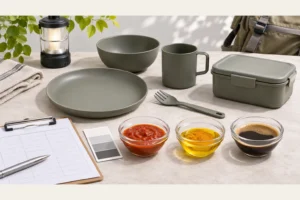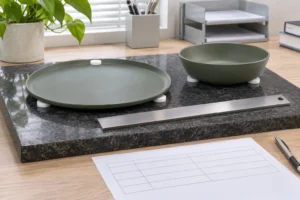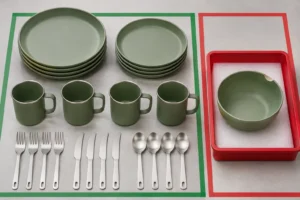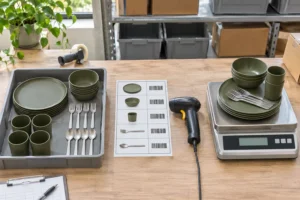
A camping cup lid specification should define the cup–lid interface, intended drinking and carrying conditions, closure features, cleaning access and acceptance evidence. Do not call a lid leakproof merely because it snaps on. Retention, splash control and liquid containment are different claims; each needs a written method, representative samples and an agreed acceptance rule.
Start with the use condition, not the leakproof claim
A buyer first needs to decide what the lid is expected to do. A loose dust cover protects the opening during table service. A friction-fit lid may reduce splashes while walking. A vented sipping lid supports drinking but intentionally contains openings. A lid with a closable port may add containment, yet its performance still depends on the cup rim, seal, closure, temperature, wear and handling orientation.
These functions cannot be merged into one undefined word. “Leakproof” can be interpreted as no liquid escaping during inversion, shaking, transport in a bag or pressure change. Unless the project defines those conditions and has evidence for the final construction, the safer specification describes the verified function: retained during normal drinking, fitted dust cover, open-vent sipping lid, or splash-reducing lid under the stated orientation.
This guide concerns drinkware, not cookware. It does not establish direct-flame, burner, campfire, stove, oven or hot-surface suitability. It also does not confirm a material, food-contact status or performance for any unreviewed product. Those decisions require the final material, construction, intended use and market evidence.
Evidence that belongs in a camping cup lid specification
The specification should connect every claim to an observable condition. Record the cup drawing revision, lid drawing revision, sample identity, molding condition if known, fill level, liquid temperature range, orientation, dwell time, handling action and number of repetitions. If the project cannot control a condition, do not convert an informal observation into a universal claim.
Food-contact review is separate from fit review. The U.S. FDA food-contact overview explains why intended use matters for food-contact substances. Regulation (EC) No 1935/2004 provides the EU framework for materials intended to contact food. Neither source certifies a particular cup or lid; buyers must request evidence that matches the final materials, use conditions and destination market.
Outdoor handling also introduces cleaning and temperature-control questions. The USDA FSIS camping food-safety guidance can inform the broader meal workflow, but it is not a lid performance standard. Keep food handling, material compliance and lid containment as separate approval records.
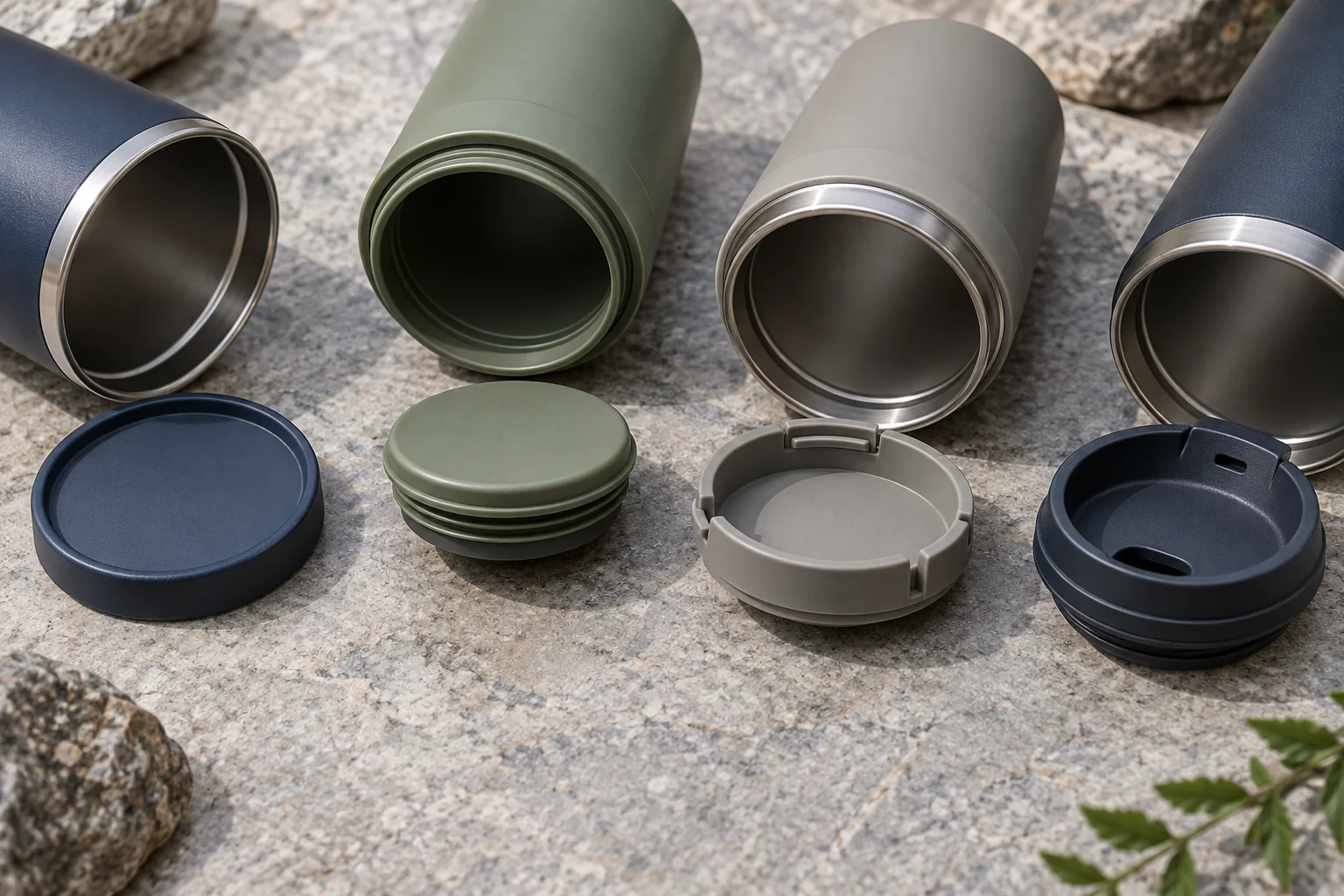
Lid-fit and permitted-claim matrix
| Lid type | Fit interface to verify | Representative use | Permitted wording after evidence | Do not claim without defined testing |
|---|---|---|---|---|
| Loose dust cover | Overlap, lift clearance and seating | Table service and storage from airborne debris | “Removable dust cover” | Splash-resistant, sealed or leakproof |
| Friction-fit plug | Insertion depth, compression, removal force and rim variation | Upright carrying and drinking | “Friction-fit lid” and any observed upright-use result | Inversion or bag-transport containment |
| Snap-on rim lid | Bead engagement, audible/tactile seating and removal points | Repeated opening and upright movement | “Snap-on lid” after fit confirmation | Leakproof or pressure-resistant |
| Vented sipping lid | Sip opening, vent path, rim fit and orientation | Drinking while stationary or walking | “Vented sipping lid” and scoped splash wording if supported | Fully sealed, because openings remain |
| Closable-port lid | Rim seal, port closure, vent closure, wear and reopening | Upright transport under defined conditions | Only the containment result demonstrated by the agreed method | Universal leakproof performance |
This matrix is an approval tool, not a ranking. A camping cup lid fit can be secure for drinking yet unsuitable for inversion. Conversely, a closure designed for transport can be harder to clean or operate. Freeze the use case before comparing samples.
Five fit checks buyers can put on the sample record
1. Seating and visual alignment
Place the lid on the cup according to the intended user action. Record whether it seats evenly, whether the rim remains visible in a consistent way and whether orientation matters. Do not force a sample past its intended stop to make it appear secure.
2. Retention during intended handling
Lift, drink, set down and carry the cup using the same sequence for every sample. Retention means the lid remains attached during those stated actions. It does not automatically establish containment during inversion, dropping or packing with other gear.
3. Drinking and vent behavior
Confirm that sip and vent paths remain open as designed, are not obstructed by the cup rim and do not create an uncontrolled flow under the defined fill and orientation. Any evaluation with hot liquid needs an appropriate safety plan and competent supervision; a sourcing review should not improvise hazardous conditions.
4. Removal and repeated use
Record the intended removal point, hand access and whether the lid deforms or damages the rim. If cycle life matters, define a separate repeated-use protocol and acceptance rule. A few manual cycles in a buyer meeting are not durability evidence.
5. Cleaning, drying and reassembly
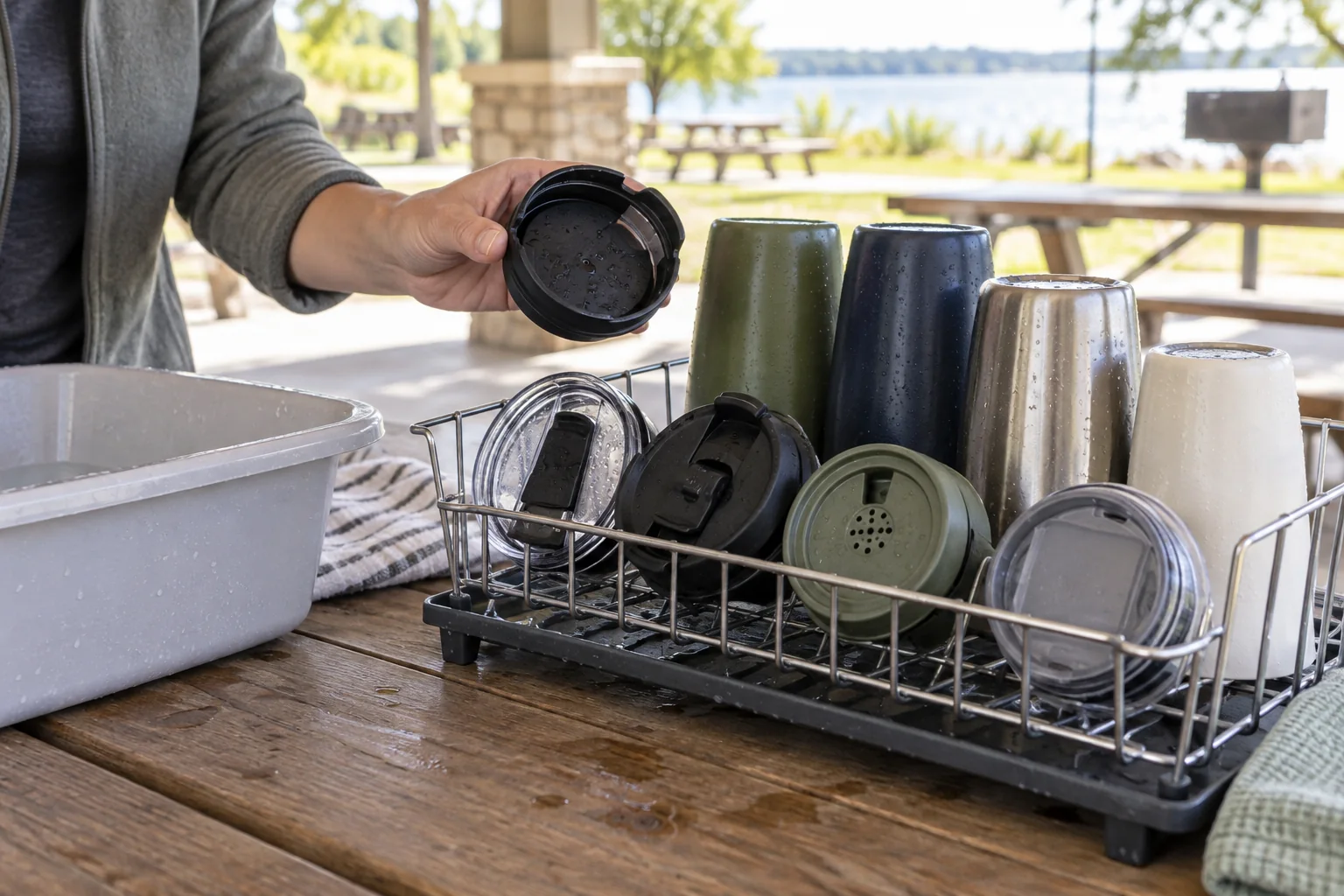
Disassemble every removable part. Inspect grooves, valves, plugs and undercuts for retained soil or water. Record drying orientation and whether parts can be reassembled correctly without tools. A lid that contains liquid but cannot be cleaned within the intended workflow creates another product risk.
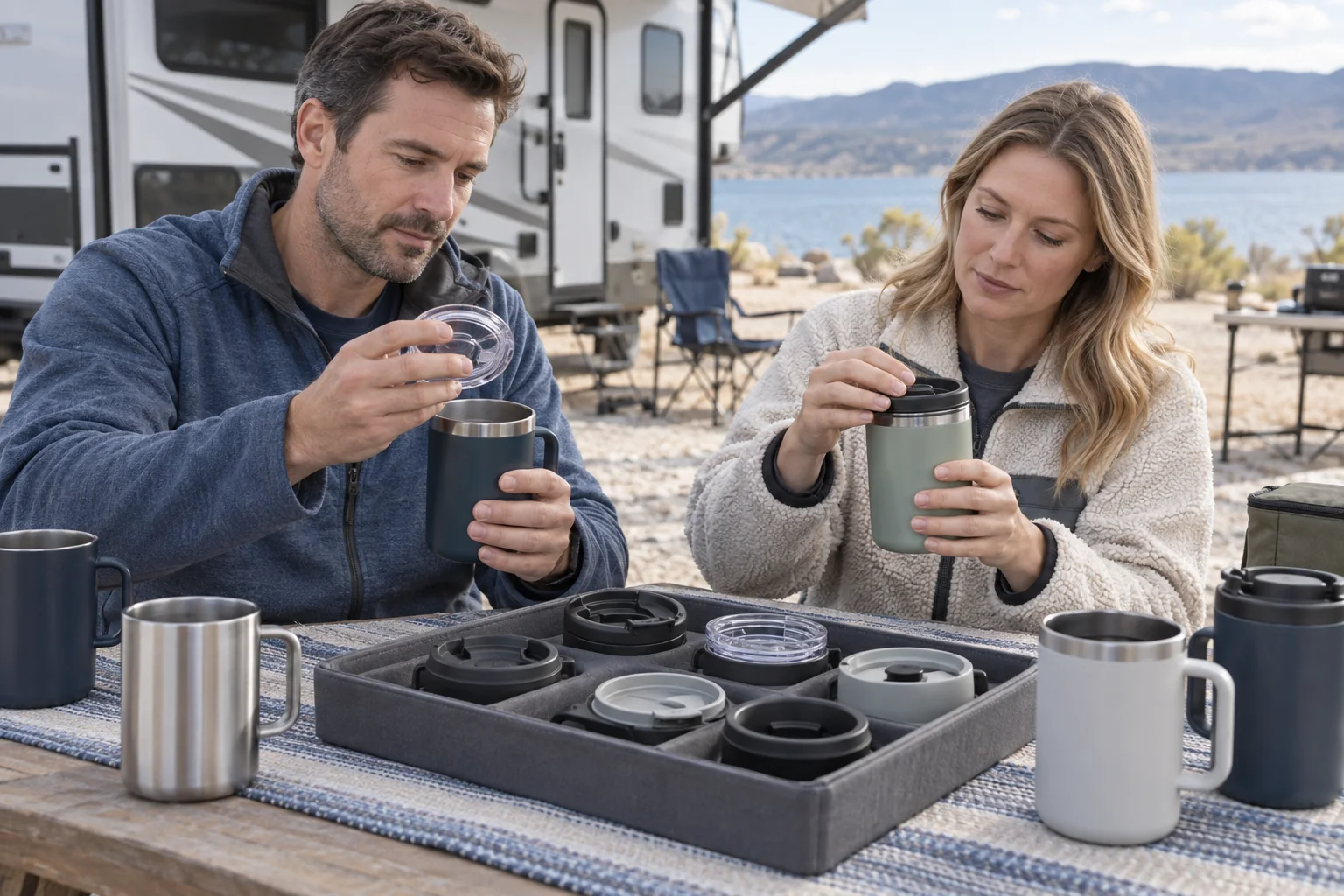
Buyer-ready lid specification record
| Field | What the buyer records | Why it matters |
|---|---|---|
| Sample identity | Cup and lid codes, drawings, revision and received date | Prevents evidence drift between revisions |
| Intended function | Dust cover, sipping, splash control or defined transport | Sets the correct claim boundary |
| Interface | Rim/bead/plug geometry, orientation and assembly action | Controls fit compatibility |
| Use conditions | Fill, liquid type, temperature range, orientation and handling | Defines where observations apply |
| Observation method | Sequence, dwell, repetitions and inspection points | Makes revisions comparable |
| Acceptance | Allowed movement, visible drops, lid displacement or user effort | Turns preference into a decision |
| Cleaning | Parts removed, retained water/soil and drying method | Captures maintenance risk |
| Permitted claim | Exact wording and the evidence reference | Stops marketing language exceeding proof |
| Disposition | Accept, revise or retest with owner and due evidence | Creates an auditable next action |
Apply the specification to the actual channel
Family and park sets: prioritize easy seating, visible alignment and cleaning. Children or occasional users may not apply even pressure, so the sample method should include realistic assembly rather than expert-only handling.
RV and caravan sets: define whether the cup travels only in a fitted rack or may be carried while filled. Review the lid together with the set component matrix and the actual storage sequence.
Retail camping drinkware: match package wording to the verified function. A customer reading “sipping lid” should not be led to expect sealed bag transport. Keep evidence and approved copy in the same product approval file.
Nested dinnerware sets: check whether the lid is stored on the cup, inverted, or separately. The stackability review and pack-volume method help buyers evaluate the system rather than an isolated lid.
Limitations, misuse boundaries and commercial risk
A sample that passes one method is not universally leakproof. Changes in resin, seal hardness, rim tolerance, molding conditions, color additive, temperature, wear or cleaning can alter behavior. Production control therefore needs the approved drawings, material specification and inspection plan, not only a golden sample.
Do not assume that a tighter lid is better. Excessive assembly or removal effort can cause spills, accessibility problems or damage. Do not add a closure component without reviewing small-part, cleaning and loss risks for the intended users. Compatibility to be confirmed by project sample and drawing.
If a claim matters commercially, define the exact test state and retain the result. “No visible leakage during the agreed upright carry sequence” is narrower and more defensible than “100% leakproof.” The claim owner should approve the wording before packaging, catalog and marketplace copy are released.
B2B buyer checklist
| Check | Question | Why It Matters |
|---|---|---|
| Function | What exact job must the lid perform? | Prevents unsupported universal claims |
| Revision | Are cup and lid drawings identified together? | Controls compatibility |
| Conditions | Are fill, temperature, orientation and handling defined? | Scopes the evidence |
| Acceptance | What observable outcome is pass or fail? | Makes supplier comparisons usable |
| Cleaning | Can all parts be separated, washed, dried and reassembled? | Reduces hygiene and service risk |
| Claim wording | Does every phrase match the reviewed method? | Reduces returns and compliance risk |
| Change control | Which material or geometry changes require retesting? | Protects the approved result |
Buyer FAQs
1. Does a snap sound prove the lid is leakproof?
No. It may indicate bead engagement, but containment depends on the whole interface and the defined use method.
2. Can a vented sipping lid be leakproof?
An open vent or sip path permits flow. If closures are added, evaluate their actual closed condition and use precise, evidence-based wording.
3. Should buyers specify removal force?
If user effort is important, define a suitable measurement method and acceptance range with competent personnel. Do not invent a number from an informal hand check.
4. Must every color be reviewed?
Material and process changes can affect fit. The quality plan should state which changes trigger sample review or other evidence.
5. What if the lid fits several cup sizes?
List every approved cup and revision. “Universal” should not be used unless the compatibility scope and evidence truly support it.
6. What belongs in the RFQ?
Send cup and lid drawings or reference samples, intended use, target markets, material preferences, cleaning method, claim wording, sample quantity, evidence request and acceptance record.
Request a lid-fit sample and specification review
Prepare the cup and lid revisions, intended function, fill and temperature conditions, handling sequence, cleaning workflow, target markets and proposed wording. Naike Dinner can review the brief against verified capabilities and identify the samples, drawings and written confirmations still required. No material, compatibility, compliance, price, MOQ or lead time is confirmed until the project is reviewed.
Send the camping cup lid specification or use the inquiry form beside this article. For a written quotation, include the evidence and approval record you expect. Contact Naike Dinner.