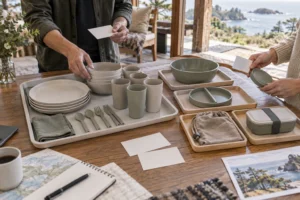
Camping bowl base stability matters because outdoor tables are rarely perfectly flat, rigid or dry. A broad contact zone can reduce rocking, while a narrow foot ring or tall pedestal can amplify movement on slats and warped surfaces. Buyers should compare loaded samples on representative tables and record rocking, sliding, tipping, cleaning and stack-height observations before approving one base.
Define camping bowl base stability as an observed system
A base profile cannot be approved from a render or diameter alone. Stability is an interaction among the bowl, its load, the contact surface and the way a user reaches, scoops or passes the vessel. The same sample may sit quietly on a smooth laminate tray yet rock across the crown of a warped picnic-table slat.
For sourcing teams, the useful question is not “Which base is most stable?” It is “Which profile produces acceptable behaviour on the surfaces, loads and handling patterns written into this project?” That wording prevents an uncontrolled marketing claim from replacing a repeatable sample decision.
This camping bowl base stability review treats bowls as dinnerware, not cookware. It makes no direct-flame, burner, campfire, oven or stove-suitability claim. Material and food-contact documentation also remain separate approvals: geometry observations do not prove regulatory compliance or overall durability.
What buyers can evaluate and what remains project-specific
Camping bowl base stability can be compared through four common geometries that create different contact patterns. A broad flat base may spread load across a larger area, but a table ridge can still create two-point rocking. A narrow foot ring may bridge shallow texture yet catch a slat gap. A recessed center concentrates contact around its perimeter. A low pedestal raises the vessel and can change both stack depth and the lever created by a side force.
These camping bowl base stability mechanisms are not guaranteed rankings. Resin stiffness, wall thickness, bowl depth, fill mass, surface finish, condensation and dimensional variation all change the result. Buyers should therefore request production-intent samples or clearly identified prototypes, then keep the table surface and loading method constant while comparing revisions.
Food-contact conditions also need their own evidence. The U.S. FDA food-contact overview explains that intended use and migration context matter, while Regulation (EC) No 1935/2004 sets a general framework for food-contact materials in the European Union. Neither source validates a particular bowl design; they show why buyers must connect evidence to the intended material, market and use conditions.
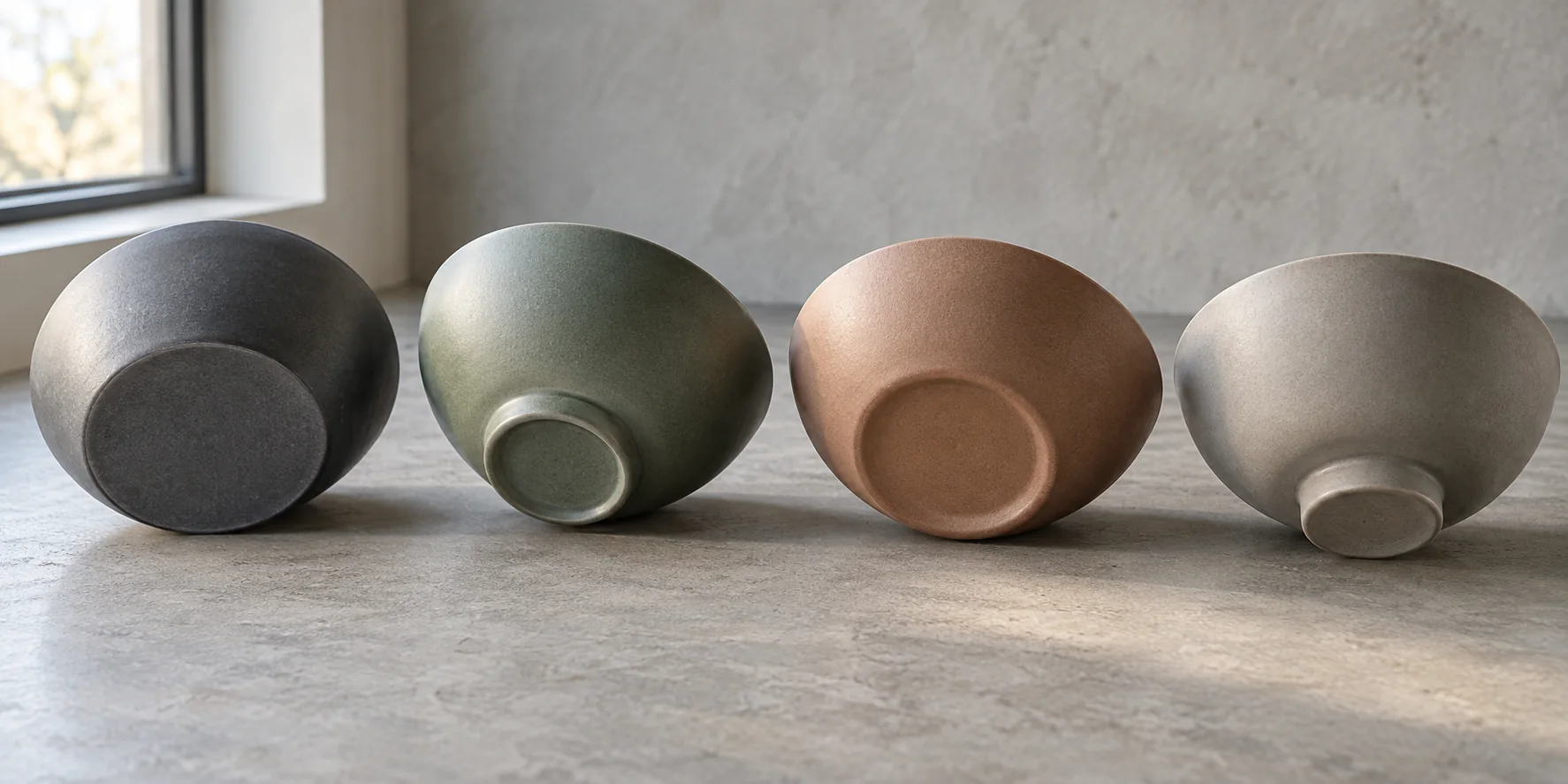
Base-geometry decision matrix
| Profile | Contact pattern to inspect | Outdoor-table concern | Pack and cleaning check |
|---|---|---|---|
| Broad flat base | Wide nominal contact area; check molding crown and warp | May bridge minor texture, but a ridge can create rocking | Inspect drainage, scuffing and whether bases trap moisture when stacked |
| Narrow foot ring | Annular contact band; record ring width and continuity | May enter slat gaps or slide differently when wet | Check the ring groove for soil retention and nesting interference |
| Recessed base | Outer perimeter carries load while center is clear | Perimeter may span texture but react to local high points | Inspect the recess for drying access and stack contact marks |
| Low pedestal | Smaller elevated foot under a higher bowl body | Side forces may produce more visible movement depending on load | Measure actual stack height and whether the pedestal keys into the next bowl |
Use this camping bowl base stability matrix to choose what to observe, not to preselect a winner. A successful sample is the one that stays within the project’s written acceptance limits across the intended tables and meal loads.
Camping bowl base stability observation sheet
Create one camping bowl base stability sheet per sample revision and photograph the exact surfaces used. Do not replace observations with a single “pass” checkbox. A buyer should be able to reconstruct what happened, which load was present and why the team accepted or rejected the profile.
| Record field | What to enter | Decision use |
|---|---|---|
| Sample identity | Supplier sample code, drawing revision, cavity if known, received date | Prevents results from being attached to the wrong revision |
| Surface | Smooth tray, slatted table, warped wood, textured laminate; dry or damp | Connects the observation to a real use condition |
| Load state | Empty, representative solid meal, representative liquid or mixed load | Shows how mass and fill height change handling |
| Initial rocking | None, detectable or operationally disruptive; record direction | Identifies contact irregularity before active use |
| Slide response | Observed movement during a consistent side nudge; record wetness | Separates rocking from low-friction sliding |
| Scoop and rim load | Movement while a user scoops, cuts soft food or rests a utensil | Represents common one-handed eating actions |
| Tilt/spill boundary | Qualitative onset under the agreed handling method; no invented angle | Supports comparison without claiming laboratory precision |
| Clean and dry | Soil trapped at foot/recess, drainage access, wipe effort | Captures maintenance trade-offs |
| Stack and pack | Stack height, nesting contact, rattle points, removal effort | Links table stability to the pack envelope |
| Disposition | Accept, revise or retest, with owner and evidence requested | Creates an auditable next action |
Run a controlled comparison without pretending it is a laboratory test
1. Freeze the comparison set
Compare bowls with the same intended capacity range and similar load. If depth, fill mass and base profile all change at once, the team cannot tell which change drove the result. Record unavoidable differences instead of hiding them.
2. Select representative surfaces
Use the actual channel scenario: a campsite picnic table, caravan tray, park table or catering surface. Photograph seams, slat gaps and visible warp. The USDA FSIS camping food-safety guidance is useful for planning outdoor food handling, but it does not certify tableware geometry; keep hygiene planning and base evaluation as separate records.
3. Repeat the same actions
Place, rotate, scoop and apply a modest side contact in the same order. Use the same user where practical and record anomalies. If a method needs exact force, angle or metrology, define an appropriate controlled test with competent personnel rather than inventing numbers in a sourcing worksheet.
4. Review the result with packing
A wider base can improve one table observation yet increase stack diameter. A deeper recess may protect a center surface but create a drying pocket. Cross-check the result with the stackability review and pack-volume method before freezing a component.
Match camping bowl base stability to the intended channel
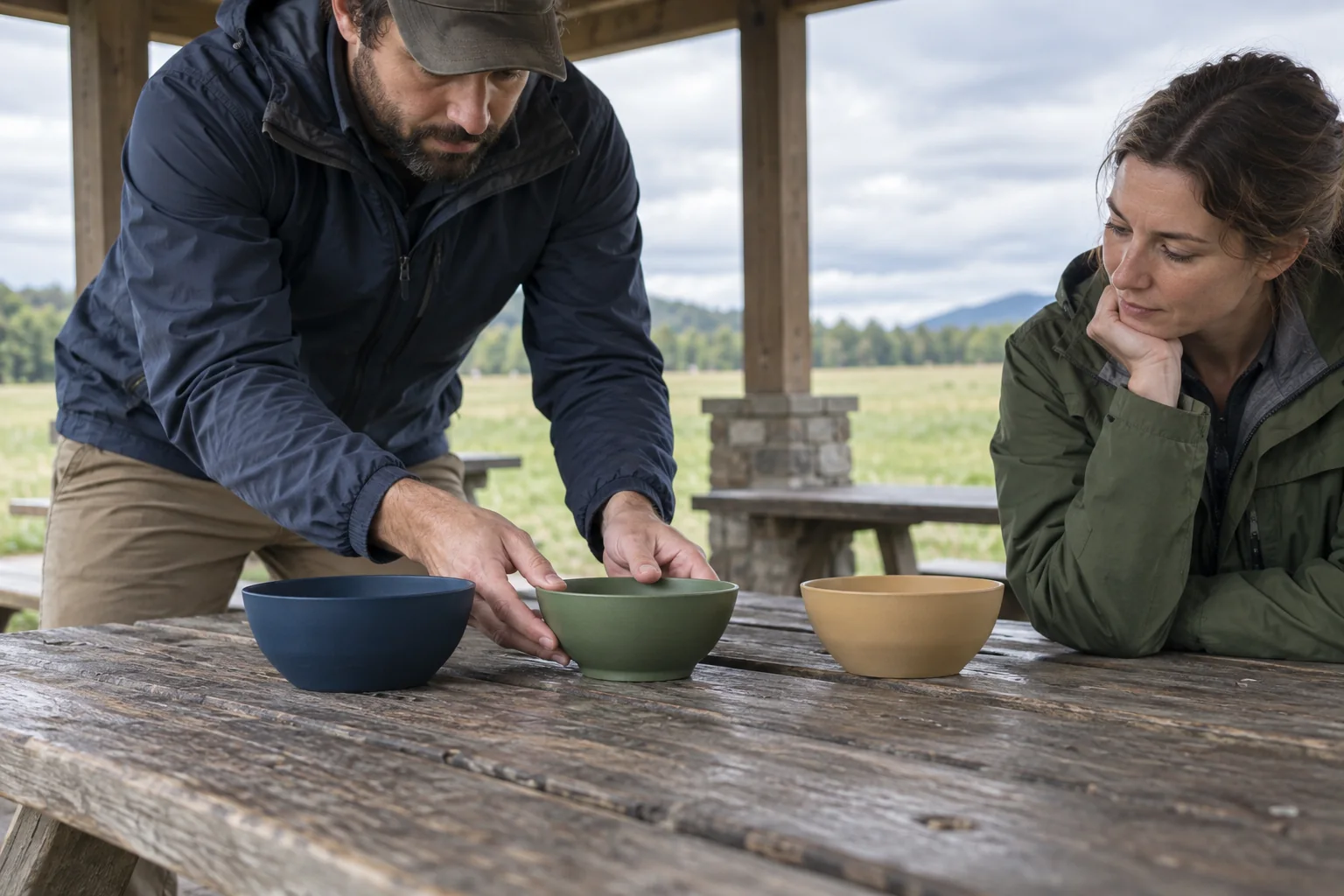
Family and park sets: Shared tables, children reaching across the setting and mixed meal loads make rocking and accidental side contact visible. Buyers should examine how the base behaves when a bowl is partly filled, not only when empty.
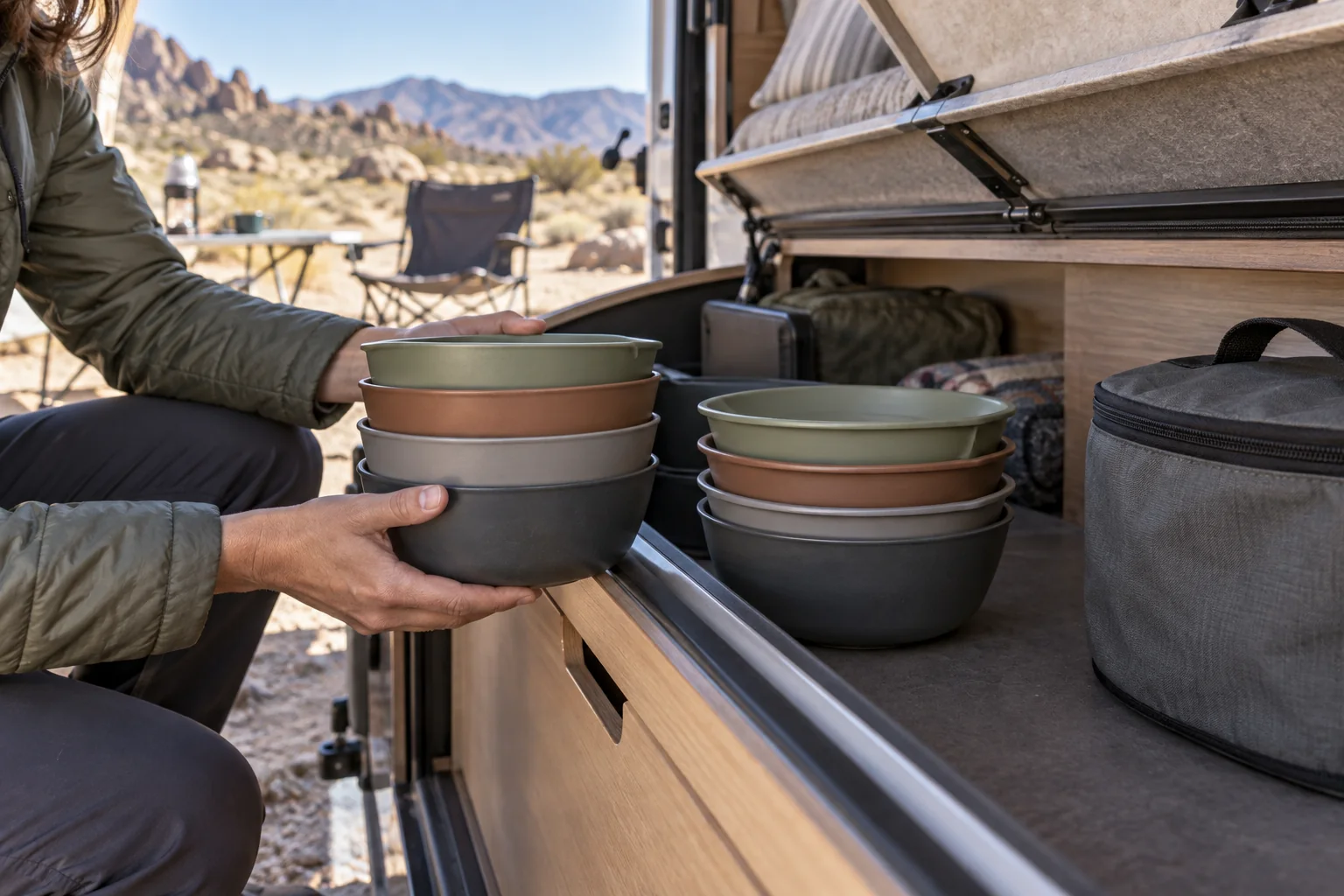
Caravan and RV assortments: Compact trays and moving storage priorities connect base choice to stacking. Compare the set in the intended cabinet or case, then place it on the actual tray surface. A bowl that packs neatly but is awkward to remove may transfer risk from transport to service.
Retail camping sets: The specification should define the expected use environment without promising universal stability. Give retail teams a clear component matrix and sample evidence rather than a superlative claim that cannot be applied to every table.
Catering and group use: Repeated clearing and wet surfaces can make sliding and drying as important as rocking. Evaluate the base profile alongside workflow, cleaning access and stack separation.
Limitations and commercial risks
A camping bowl base stability sample review does not establish a universal anti-tip rating, coefficient of friction or dimensional capability. It also cannot substitute for material declarations, applicable food-contact evidence, migration testing where required, or production quality controls. State the scope on the approval record.
Do not copy a base from one material into another without review. Shrinkage, stiffness and molding details can change flatness and contact. Compatibility to be confirmed by project sample and drawing.
Misleading stability language creates return and reputation risk. Prefer “observed on the defined sample surfaces” over “stable on any outdoor table.” Link the approved wording to the same revision reviewed by sourcing, quality and marketing.
B2B buyer checklist
| Check | Question | Why It Matters |
|---|---|---|
| Revision control | Does every observation name the sample and drawing revision? | Stops evidence from drifting between prototypes. |
| Surface scope | Which real table and tray conditions are represented? | Prevents a studio-only result from becoming a broad claim. |
| Load state | Were empty, solid and relevant liquid loads compared consistently? | Mass and fill position can change movement. |
| Use actions | Were placement, scooping and side contact observed in the same sequence? | Makes revisions comparable. |
| Pack effect | How does the base change stack height, nesting and removal? | A table improvement must not break the pack brief. |
| Cleaning | Can the foot or recess be washed and dried without trapped soil or water? | Supports practical outdoor maintenance. |
| Evidence boundary | Which claims still require material, compliance or controlled test evidence? | Keeps observation separate from certification. |
| Approval wording | Is the accepted claim limited to the reviewed conditions? | Reduces commercial overstatement. |
Buyer FAQs
1. Is the widest bowl base always the most stable?
No. Contact flatness, surface ridges, bowl height, load and user action also matter. Compare production-intent samples on the surfaces written into the project.
2. Should buyers request a foot ring?
A foot ring is one option, not a universal requirement. Review ring width, slat-gap interaction, soil retention, sliding, nesting and mold feasibility together.
3. Can a silicone feature solve sliding?
Only project evidence can answer that. An added part changes material declarations, assembly, cleaning, wear and cost. Request a sample, construction details and applicable documentation before approval.
4. How should a bowl be compared with its matching plate?
Keep separate observation sheets, then review the combined stack. The plate rim and bowl base can interact during nesting. See the plate rim sample review and plate-and-bowl sizing guide.
5. Does this review prove spill resistance?
No. It records behavior under a defined buyer method. A performance claim needs a controlled method, acceptance criteria and evidence appropriate to the claim.
6. What should be sent with an RFQ?
Send the component matrix, intended users, meal types, target markets, representative surfaces, pack envelope, preferred base concepts, sample quantity and the evidence you need quoted.
Request a bowl-base sample and specification review
Prepare the observation sheet, table photographs, load scenarios, component stack and target-market requirements. Naike Dinner can review the brief against verified capabilities and identify which dimensions, interfaces, samples and written confirmations are still needed. No geometry, compatibility, compliance, MOQ, price or lead time is confirmed until the project is reviewed.
Send the bowl-base review brief or use the inquiry form beside this article. For a written quotation, include drawings or reference samples and the intended evidence package. Contact Naike Dinner.