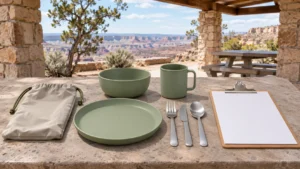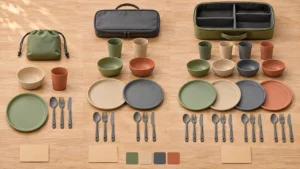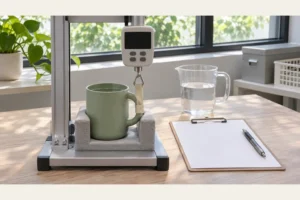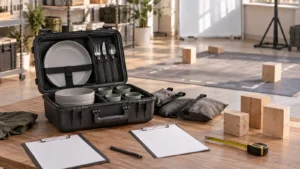
Keep cooking, stovetop, oven, flame, induction and direct-heat language out of a dinnerware listing unless the exact finished component and intended heating condition are supported by applicable evidence. Review every plate, bowl, cup, container, lid and utensil separately. Approve only serving, eating, drinking, carrying or storage wording that matches the component’s documented use boundary.
The practical issue is not whether a seller calls the bundle “tableware,” “dinnerware,” a “mess kit” or a “camping set.” The issue is what the listing tells a buyer or end user to do with each part. A broad food-contact statement does not automatically support boiling, frying, oven use, microwave use, direct flame or contact with a heated cooking surface. This dinnerware vs cookware claims review turns each proposed sentence into an approval decision.
Use a part-by-part dinnerware vs cookware claims review
| Part | Intended role to confirm | Potentially acceptable listing wording | Cookware wording to block unless substantiated | Evidence or decision required | Owner / status |
|---|---|---|---|---|---|
| Plate | Serving and eating named foods | Plate for serving and eating under stated food, temperature and time conditions | Cooking plate, grill plate, oven plate, flame-safe | Finished-part identity; food, temperature, contact time and cleaning scope | Buyer and technical reviewer / open until referenced |
| Bowl | Serving soup, cereal or other named food | Bowl for serving under the approved fill and holding conditions | Boiling bowl, cooking bowl, stovetop bowl, oven-safe bowl | Fill versus holding temperature; food type; repeat-use and cleaning boundary | Technical reviewer / record decision |
| Cup | Drinking stated beverages | Drinking cup for the supported beverage conditions | Heating cup, cooker cup, direct-flame mug | Beverage, fill temperature, handling and cleaning evidence; no leak claim by assumption | Buyer and supplier / confirm |
| Lunch box or food container | Serving, carrying or storage, each stated separately | Food container for the approved closed-contact and transport condition | Microwave cooker, oven container, steam cooker | Storage time, closure function, reheating scope if proposed, finished lid and body revisions | Product and technical teams / open |
| Lid or divider | Closure, separation or splash control as documented | Removable lid or divider for the named configuration | Pressure-cooking lid, steam-control lid, heat-sealing cookware lid | Fit, contact surfaces, closure intent and interface revision | Engineering / drawing check |
| Cutlery | Eating and serving | Eating utensils for the released set | Cooking spatula, frying turner, heat-resistant cooking tool | Utensil geometry, use temperature and food-contact scope | Buyer / approve narrow role |
| Carry case or organizer | Transport and storage of clean or used parts | Carry case or organizer under the stated pack-out routine | Insulated cooker, hot-holding vessel, thermal cooking case | Contact role, cleaning route, ventilation and carry-load review | Packaging owner / separate claim file |
Use one row for every distinct finished part and revision. This dinnerware vs cookware claims table must identify the exact part behind every statement. If one bowl, lid, decoration, color, coating or material differs, do not inherit another part’s claim automatically. “To be confirmed” is a valid temporary status; an unsupported marketing statement is not.
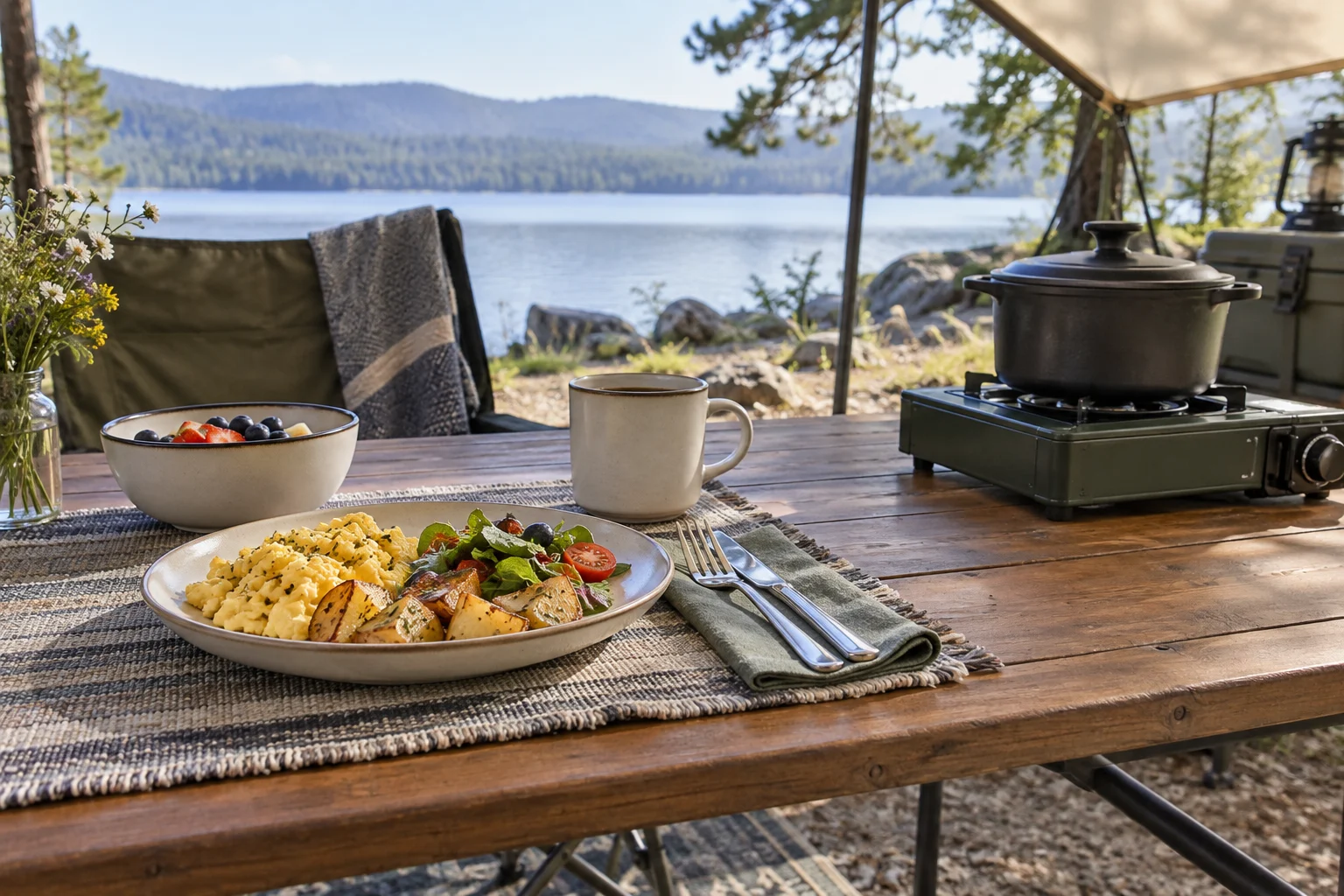
Define dinnerware vs cookware claims by use, not by nickname
Commercial names overlap. In some regulatory or technical contexts, “kitchenware” can include articles used for preparation, serving and eating. That does not make every item cookware, and it does not authorize a heating claim. For procurement, the safer control is a verb-and-condition record: serve, eat, drink, carry, store, reheat, cook, boil, fry, bake or place on direct heat. The last group requires a different evidence question from ordinary serving use.
The European Commission food-contact materials overview includes kitchenware and tableware within food-contact scope. The U.S. FDA food ingredients and packaging overview likewise explains that cookware, containers and food-contact articles are regulated according to intended conditions of use. These frameworks are starting points; neither page approves an unspecified product or claim.
Do not convert food-contact evidence into a cooking claim
Food-contact review asks whether a defined material or article is suitable for a stated contact condition. A cookware claim adds a heating event, heat source, duration and often a performance expectation. A report may cover a material simulant and time/temperature condition without evaluating flame exposure, hot-plate contact, oven cycling, microwave behavior, thermal shock, warpage, handle temperature, hot-load stability or repeated cleaning.
Read the report title, sample identity, color, finish, test condition and conclusion. Then compare them with the exact claim. The European Commission Joint Research Centre’s testing conditions for kitchenware emphasizes contact time, temperature and worst foreseeable use. It is a technical reference, not evidence that a particular dinnerware part is suitable for cooking.
Separate six claim types before approval
| Claim type | Decision question | Typical mistake | Required buyer action |
|---|---|---|---|
| Serving | Which food, fill temperature and holding time? | Calling a warm-food bowl “heatproof” without defining the condition | Write the serving boundary and evidence reference |
| Storage | Open or closed, how long, and under what temperature? | Turning a serving container into a long-duration storage claim | State duration, closure and food conditions |
| Reheating | Which appliance, power, time and finished configuration? | Assuming “food contact” means microwave safe | Keep the claim blocked until the exact finished part is reviewed |
| Cooking | What heat source and food process? | Using “camping mess kit” to imply cooking capability | Name each cooking action and demand relevant evidence |
| Cleaning | Hand wash or machine route, with what restrictions? | Assuming dishwasher suitability from migration results | Approve cleaning wording separately |
| Performance | What measurable outcome is promised? | Using “unbreakable,” “leakproof” or “heat resistant” without a defined method | Specify method, acceptance criterion and applicable revision |
Run the listing review before artwork release
- Freeze the component matrix, revision, color, finish and decoration.
- Extract every use verb and performance adjective from the title, bullets, parameter table, images, packaging and FAQ.
- Assign each statement to one or more finished parts.
- Classify it as serving, storage, reheating, cooking, cleaning or performance.
- Link the exact evidence or written engineering decision.
- Narrow, qualify or block any statement without a matching scope.
- Record the approved wording, owner, date and reapproval trigger.
Apply the same dinnerware vs cookware claims logic to marketplace attributes and pictograms. A stove icon, flame symbol or photograph of a bowl on a burner can communicate a cookware use even when the text avoids the word “cook.” Image review therefore belongs in the same approval record.
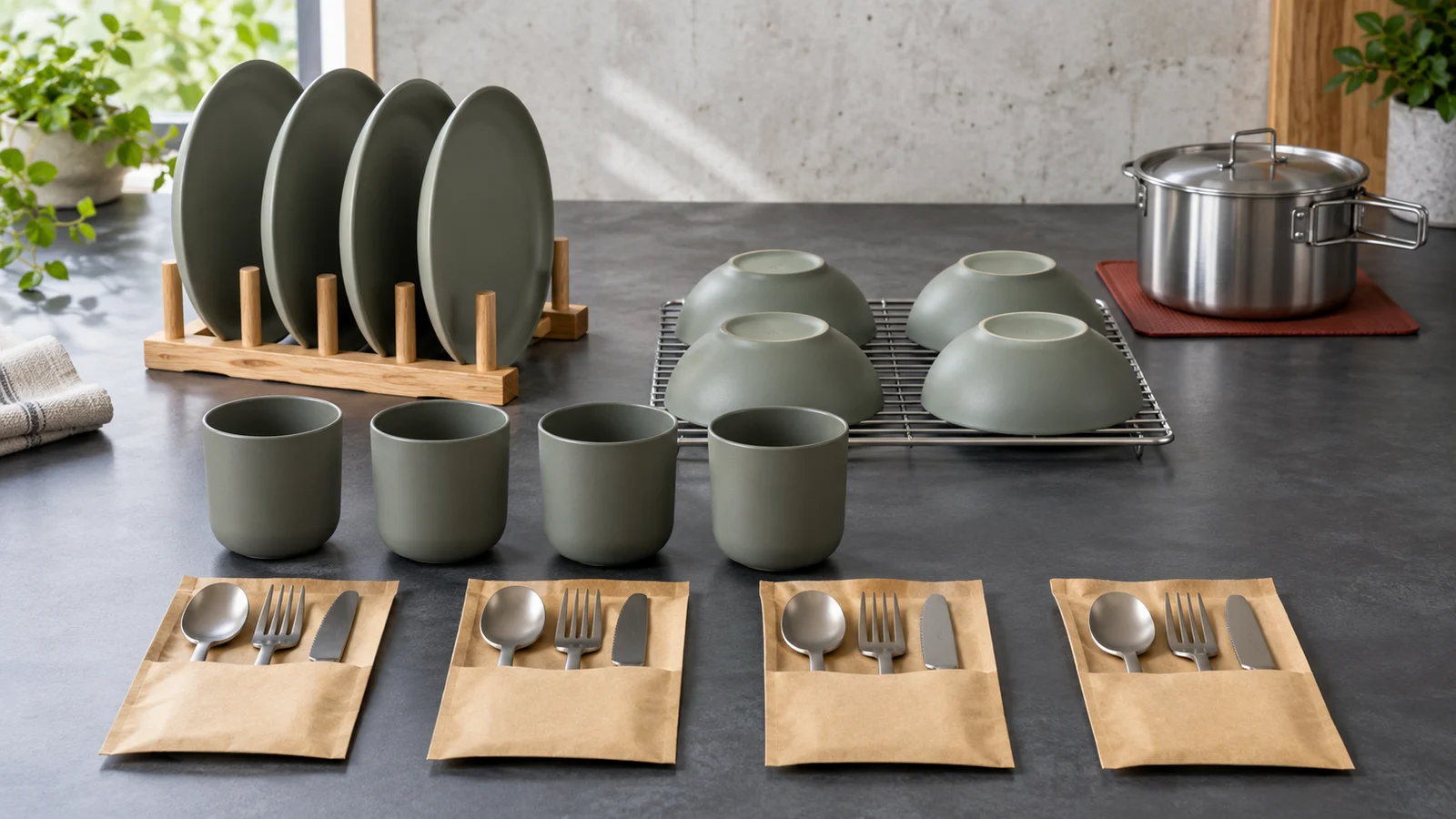
Worked hypothetical claim-boundary review
Assume a proposed four-person set contains plates, low bowls, handleless cups, cutlery, a divided container, a lid and a carry case. The buyer wants the phrase “heat-resistant camping cookware set.” These are hypothetical requirements, not Naike product specifications.
The reviewer first removes “cookware” because none of the listed parts has a defined cooking role. The plates remain “plates for serving,” the bowls remain “bowls for serving,” the cups remain “drinking cups,” and the cutlery remains “eating utensils.” The container can be described for carrying or storage only after its closed-contact conditions are agreed. “Heat-resistant” remains blocked until the buyer defines the event and the exact component evidence supports the wording.
If one separate pot is later added, that pot receives its own cookware review. Its presence does not turn every plate, cup and case into cookware. The listing title, component table and imagery must preserve that distinction.
Choose one of four defensible outcomes
- Approve: the exact statement matches the finished part and documented condition.
- Narrow: replace a broad statement with a specific serving, storage or cleaning boundary.
- Separate: keep a true cookware component in its own row and exclude dinnerware parts from that claim.
- Block: remove the statement and related icon or image until evidence exists.
Connect this decision to the component use-condition register, the complete-set evidence index and the report-to-final-revision review. Together they show what the component is, how it is intended to be used and whether the evidence actually covers it.
Commercial risks when the boundary is ignored
Unsupported cookware language can cause buyer rejection, retailer attribute disputes, relabeling, platform complaints, unsafe use expectations and liability questions. Overcorrecting also has a cost: removing a supported serving or reheating statement may weaken the offer. The claim-boundary review makes the trade-off explicit and keeps the published listing no broader than the evidence.
Buyer Checklist
| Buyer provides | Supplier or reviewer returns | Approval record |
|---|---|---|
| Finished component list, materials and revisions | Identity confirmation and open discrepancies | One row per distinct part |
| Proposed title, bullets, attributes, icons and images | Statement-to-component mapping | Approved, narrowed, separated or blocked |
| Food, temperature, time and cleaning conditions | Supported boundary and evidence reference | Exact wording and limitations |
| Any cooking, reheating or direct-heat request | Heat source and finished-part review needed | No claim until scope matches |
| Destination market and sales channel | Applicable review path and missing documents | Owner, date and market scope |
| Change notice for material, color, finish or geometry | Affected claims and reapproval list | New revision linked before release |
Buyer FAQs
Is “mess kit” automatically a cookware claim?
No. The term can describe different bundles. List the actual components and define what each one does. Do not infer cooking capability from the bundle name.
Can a bowl for hot soup be called cookware?
Not merely because it receives warm or hot food. Serving a prepared food differs from cooking it over a heat source. Record the supported fill and holding conditions.
Does food-contact compliance prove microwave suitability?
No. Microwave use is a separate intended condition that must be evaluated for the exact finished component and configuration.
Can one cookware report cover matching plates and cups?
Only if the report and applicable evaluation explicitly identify those finished parts and the proposed conditions. Shared material or color alone is not enough.
Should cookware words be removed from SEO fields too?
Yes when they imply an unsupported use. Review the SEO title, meta description, alt text, URL, structured data and marketplace attributes alongside visible copy.
Who should approve dinnerware vs cookware claims?
The product owner, technical reviewer and market owner should sign the same part-level record. The final approver must be able to trace every published statement to the released component and its evidence.
What should happen when evidence is incomplete?
Use narrow dinnerware wording, mark the broader statement blocked, assign an owner and request the missing sample, specification or written review.
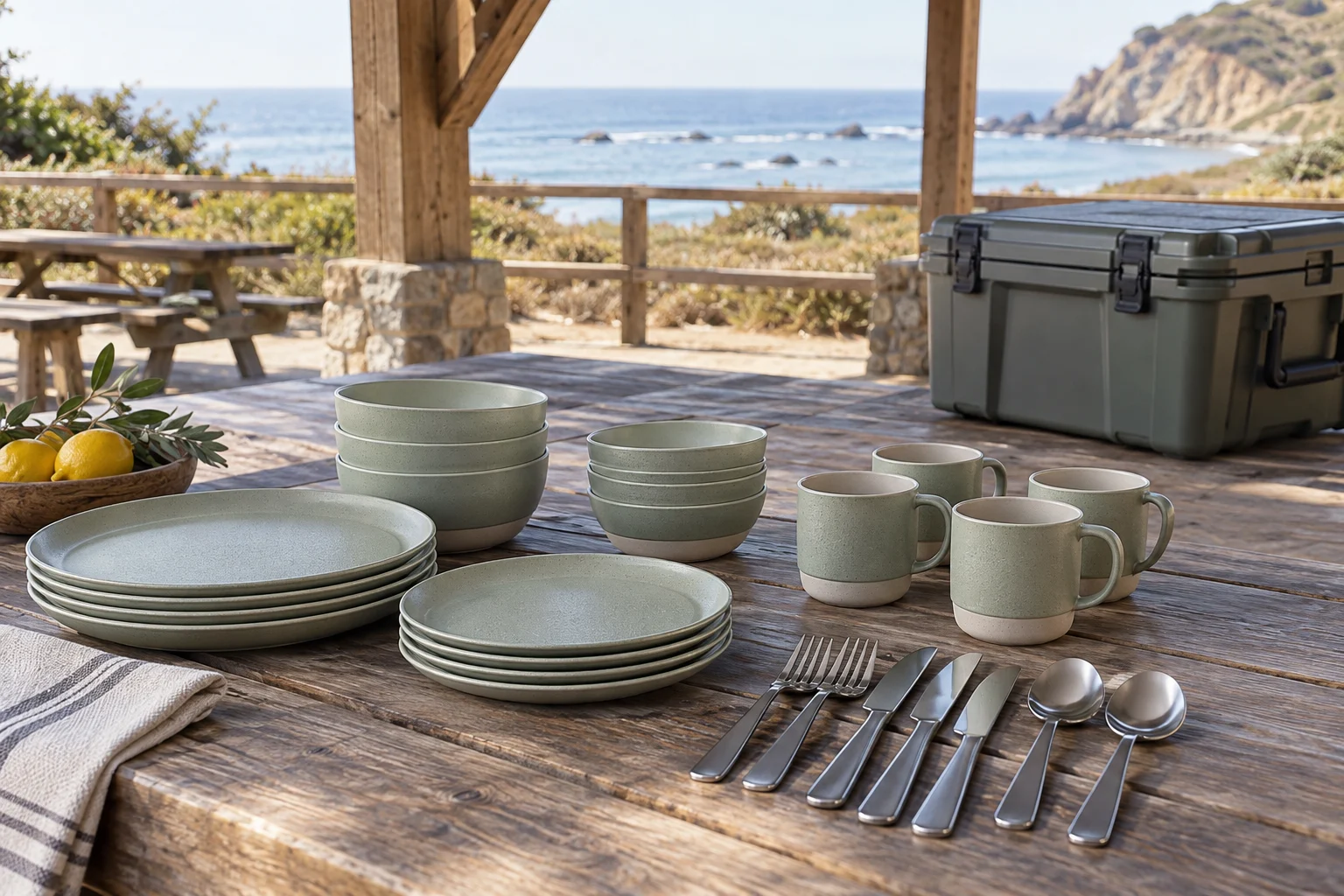
Request a claim-boundary review
Send the component matrix, finished-part revisions, proposed listing and artwork, intended foods, temperature and time conditions, cleaning route, destination markets and available evidence. Request a part-by-part claim review or submit the specification and evidence files before requesting a written quotation.