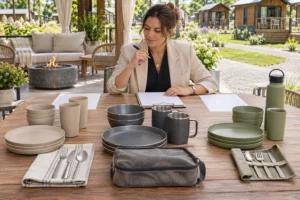
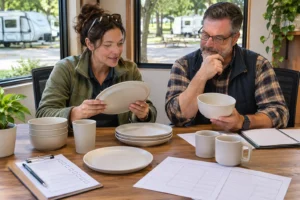
What belongs in a campground tableware RFQ? Define the operating program, controlled component bill, intended meals and users, washing and drying process, replacement ownership, pack-out, branding, destination and evidence required before approval. Ask suppliers to confirm project unknowns against drawings and samples; do not turn occupancy data or market trends into unverified demand, performance or commercial claims.
A campground tableware RFQ should translate an operator’s service model into supplier-reviewable inputs. It is not a generic request for “durable camping plates.” The operator must decide whether sets are loaned, placed in units, sold at retail or used by staff, because ownership and cleaning rules change the specification.
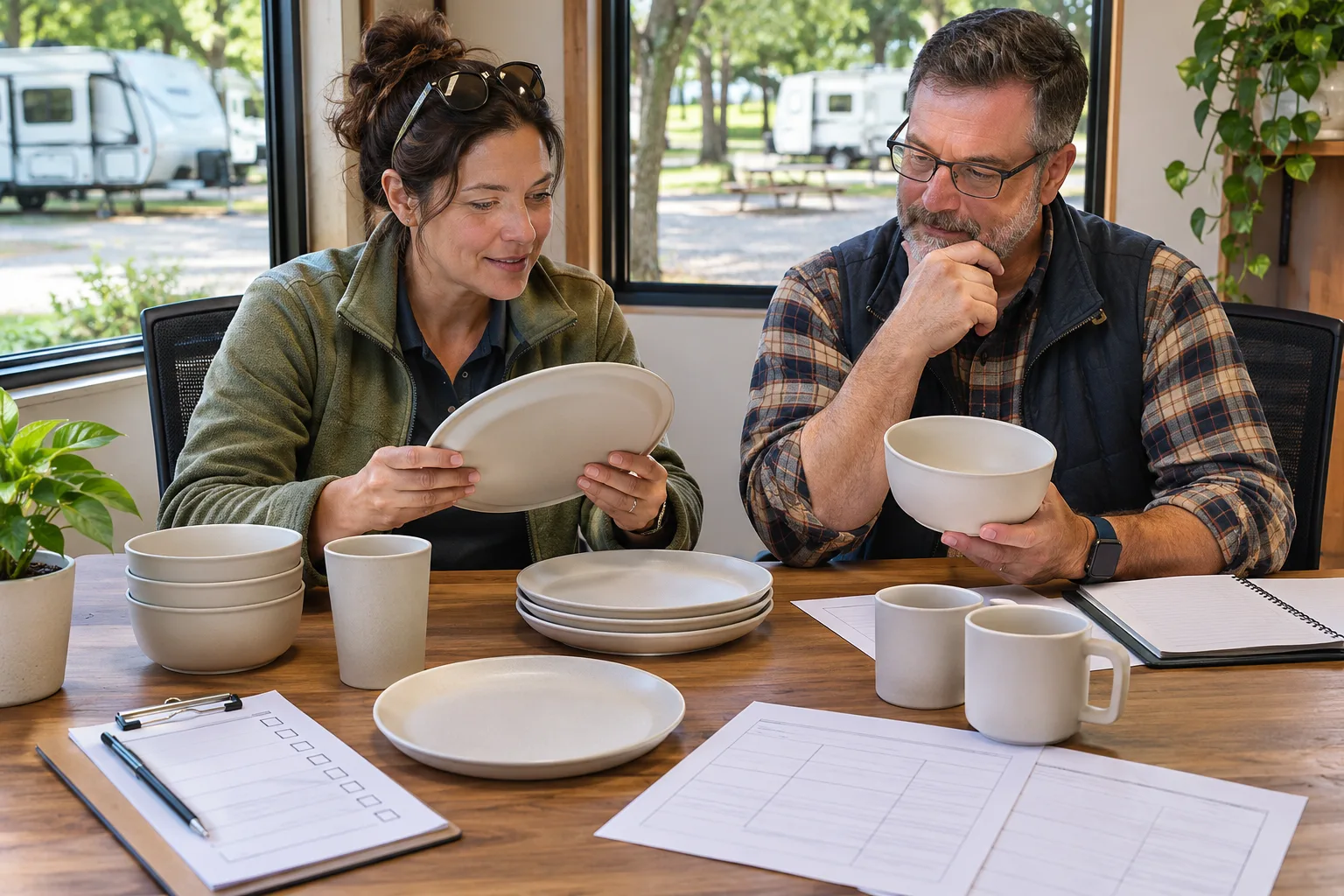
Why Should a Campground Tableware RFQ Start With the Program?
The Outdoor Industry Association 2026 Camping Report describes a growing vehicle-accessible camping segment while noting a different RV participation pattern. Eurostat separately reports camping grounds, recreational vehicle parks and trailer parks within accommodation statistics in its 2025 camping and caravanning update and publishes the underlying tourism accommodation dataset. These sources show market context, not a specific operator’s demand or specification.
| Program | Operator decision | Supplier input | Risk if omitted |
|---|---|---|---|
| Guest-unit issue | One set per unit, per bed or per booking | Controlled BOM and replenishment rule | Counts and replacement ownership remain unclear |
| Rental or deposit | Check-out, return, inspection and loss process | Component codes and pack map | Partial returns cannot be reconciled |
| Retail | Consumer pack, claims, barcode and artwork owner | Pack drawings and approved copy | Operator-use and retail obligations are mixed |
| Staff service | Meal, wash station and storage conditions | Use and cleaning brief | Supplier assumes an undefined household context |
Which Fields Make the Campground Tableware RFQ Supplier-Ready?
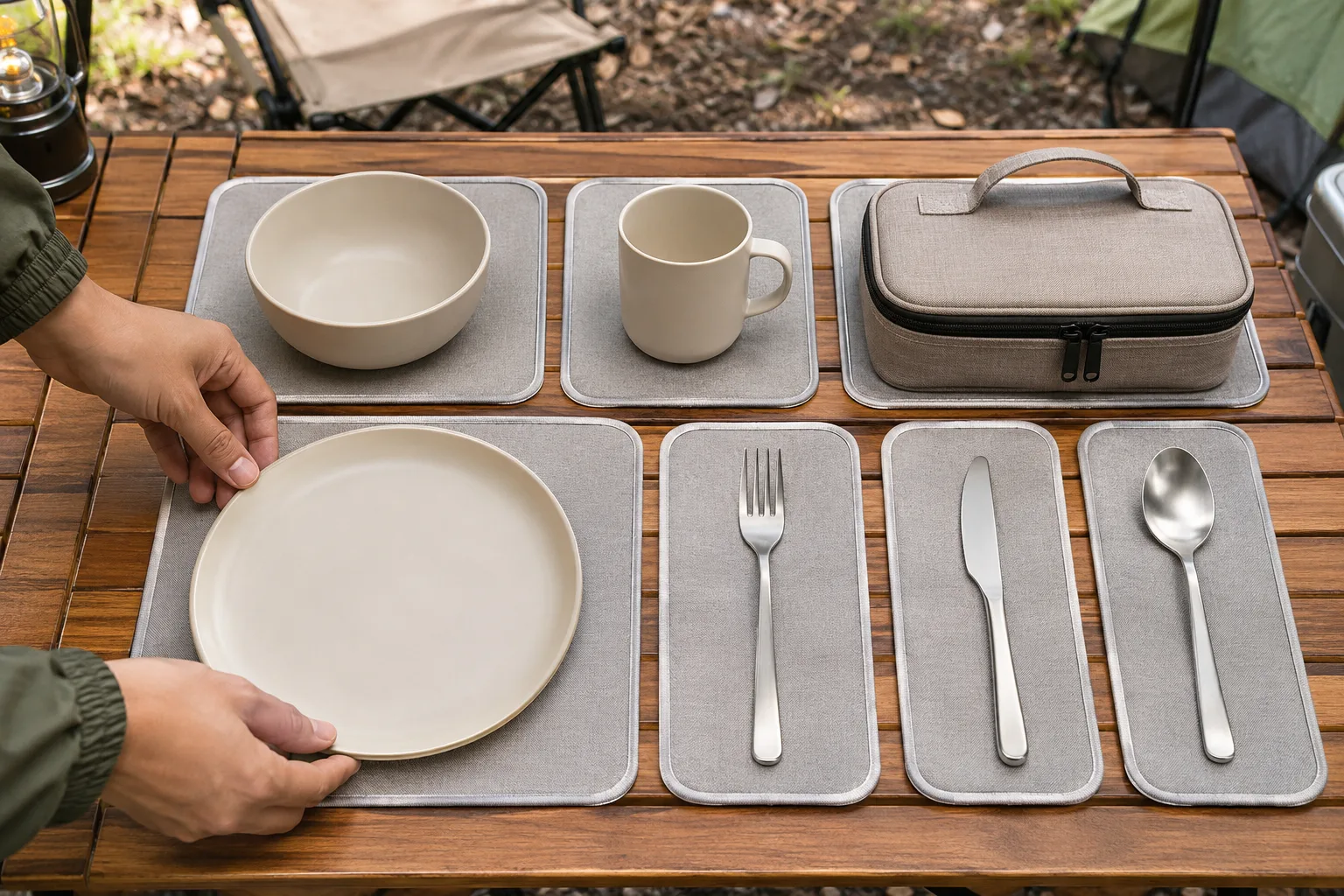
| RFQ field | Buyer entry | Evidence requested |
|---|---|---|
| Program and scope | Issue, rental, retail or staff use; locations; intended users | Supplier scope statement |
| Component bill | Codes, quantities, plate/bowl/cup/cutlery/case roles | Marked drawing and controlled sample |
| Use context | Meals, fill condition, carry distance and opening surface | Requirement review with exceptions |
| Cleaning cycle | Who washes, dries, inspects and repacks; equipment restrictions | Component-level care proposal subject to approval |
| Replacement | Loss, damage and substitution workflow | Component codes and revision control |
| Brand and pack | Colors, logo, artwork, barcode, bag and carton | Artwork approval record and pack mock-up |
| Destination | Market, importer, language and applicable evidence brief | Evidence index; not a blanket certification claim |
| Commercial basis | Forecast range, sample quantity and quotation assumptions | Conditional quotation with exclusions |
| Approval | Named owners, pass/fail rules and unresolved risks | Signed sample and document record |
Useful internal references include the camping set kitting verification guide, moisture-control guide and master carton marking checklist.
How Should Operators Describe Washing, Drying and Repacking?
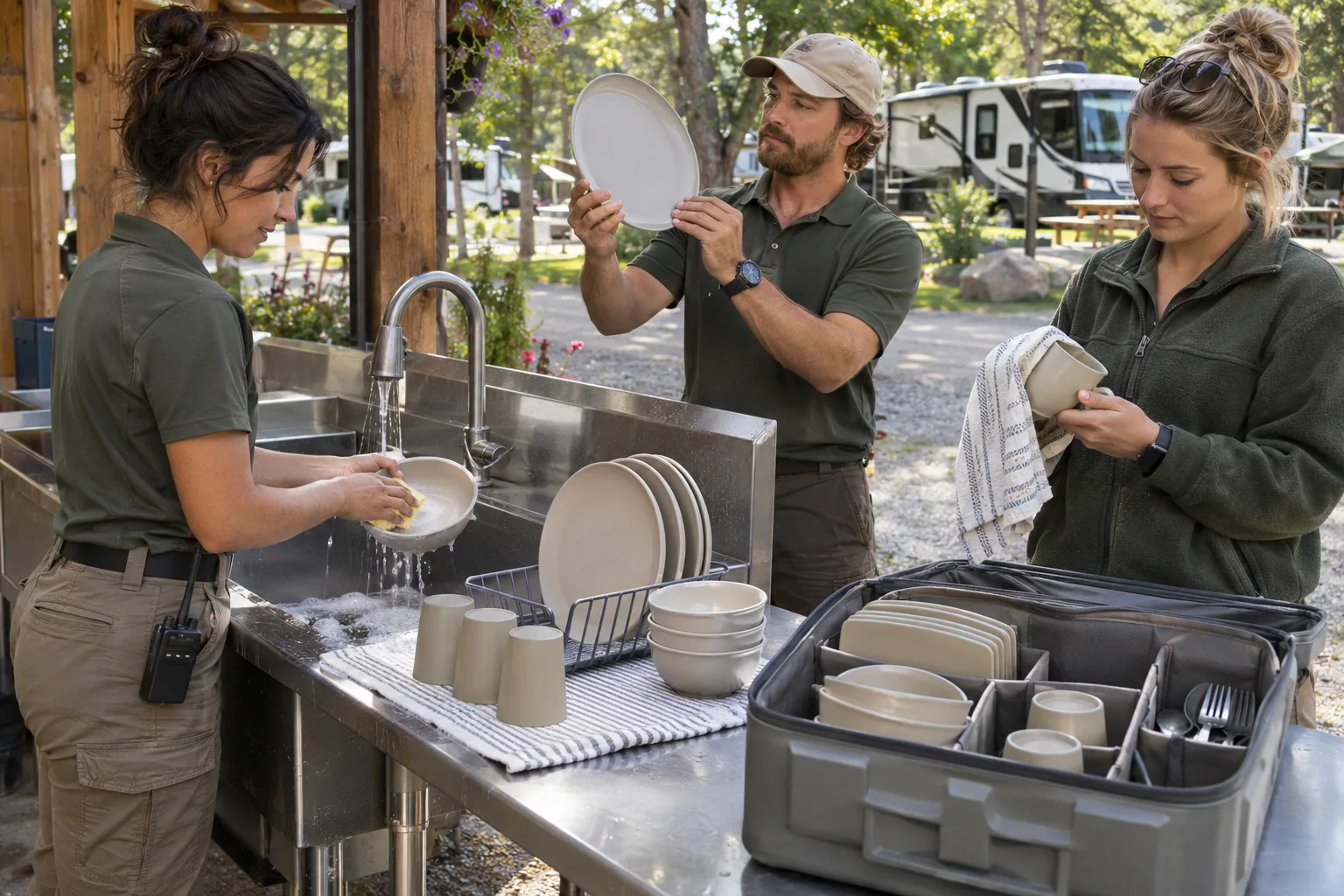
A campground tableware RFQ must state the real operating sequence without assuming performance. Record water temperature only if the operator knows it, identify any equipment or chemical restrictions, and define who checks cleanliness, dryness and component completeness. A supplier can then identify questions for material, geometry, care and packaging review. Dinnerware is not cookware, so the RFQ should not imply direct-flame or cooking use.
Program, component bill, use conditions, wash/dry/repack sequence, destination and forecast range.
Questions, exclusions, project-specific options, sample plan and document availability.
Drawing revision, sample code, result, exception, owner and next decision.
What Should the Campground Tableware RFQ Approval Record Contain?
Approve the requirement sheet and evidence together. A photograph is not a dimensional record, a drawing is not a use trial and a market statistic is not a purchase forecast. For accessibility obligations, consult applicable professional and legal guidance; the U.S. Access Board’s clear-space guidance can help frame facility questions but does not certify tableware.

| Approval record | Minimum entry | Decision owner |
|---|---|---|
| Requirement baseline | Program, BOM, drawing and pack revision | Operator product owner |
| Sample identity | Code, date, component list and deviations | Buyer and supplier |
| Review result | Pass, fail, conditional approval and unresolved risks | Named buyer approver |
| Commercial handoff | Forecast range, destination and quotation assumptions | Procurement lead |
Campground Tableware RFQ FAQ
Should the RFQ specify a material before the use brief?
Only when the buyer has an approved material requirement. Otherwise define intended use and evidence needs first, then review material options without inventing compatibility.
Can occupancy data become an order forecast?
No. Occupancy context may support planning, but the operator must provide its own allocation, replacement, inventory and forecast assumptions.
Should replacement pieces use the same revision?
The buyer should define an approved substitution and revision-control process. Compatibility to be confirmed by project sample and drawing.
What should be sent for an RFQ review?
Send the completed requirement sheet, component bill, drawings or references, program rules, destination, branding, packaging and forecast range.
Naike Dinner can review a buyer-supplied campground tableware RFQ for completeness and project questions. This is not confirmation of material, compliance, MOQ, price, capacity, compatibility or lead time.
Send an RFQ Requirement SheetRequest a Sample ReviewRequest a Project RFQ