
How can mixed outdoor tableware SKUs be loaded without blocking receiving? Build the unload order before the load plan: identify each receiving-priority SKU, reserve a reachable container zone, assign a staging lane and scan point, then load later-needed cartons deeper. Release the plan only after carton dimensions, quantities, pallet needs, handling limits and warehouse capacity are buyer-confirmed.
This mixed SKU tableware container loading guide is a decision worksheet, not a claim that one loading order fits every shipment. The buyer, forwarder, packer and receiving warehouse must approve the same SKU list, carton data, container type, unloading method and exception rule.

What Must Be Known Before Mixed SKU Tableware Container Loading?
A mixed SKU tableware container loading record should connect every carton group to one receiving priority, staging lane and evidence owner.
Start with controlled carton-level inputs. A product family name is insufficient because two outdoor tableware SKUs may use different carton footprints, masses, handling constraints or receiving priorities. Link the container plan to the approved master carton mark record, the pallet pattern worksheet and any agreed carton orientation controls.
| Buyer input | Why receiving needs it | Evidence before release |
|---|---|---|
| SKU code and carton count | Separates expected quantities and closes scan discrepancies | Controlled packing list version |
| Carton L × W × H and gross mass | Tests reach, staging footprint and manual/mechanical handling | Approved carton specification or measured sample |
| Receiving priority | Prevents urgent cartons being trapped behind later stock | Buyer-assigned priority class |
| Staging lane and pallet rule | Prevents one SKU from occupying every available lane | Warehouse-confirmed lane capacity |
| Scan and count point | Defines when custody and quantity are recorded | Receiving SOP reference |
| Fragile, upright or stack limits | Prevents the sequence from overriding pack protection | Carton marks and handling brief |
How Should the Container Unloading Sequence Map Be Built?
Use the mixed SKU tableware container loading sequence as a controlled handoff between the packer, carrier and receiving warehouse.
Map the receiving process backward from the first carton required at the dock. Put first-needed, fast-count or cross-dock cartons in reachable door zones only when their mass and restraint allow it. Place stable later-needed cartons deeper. Keep a single rule for each mixed layer: either separate SKUs physically or document the exact boundary and count.
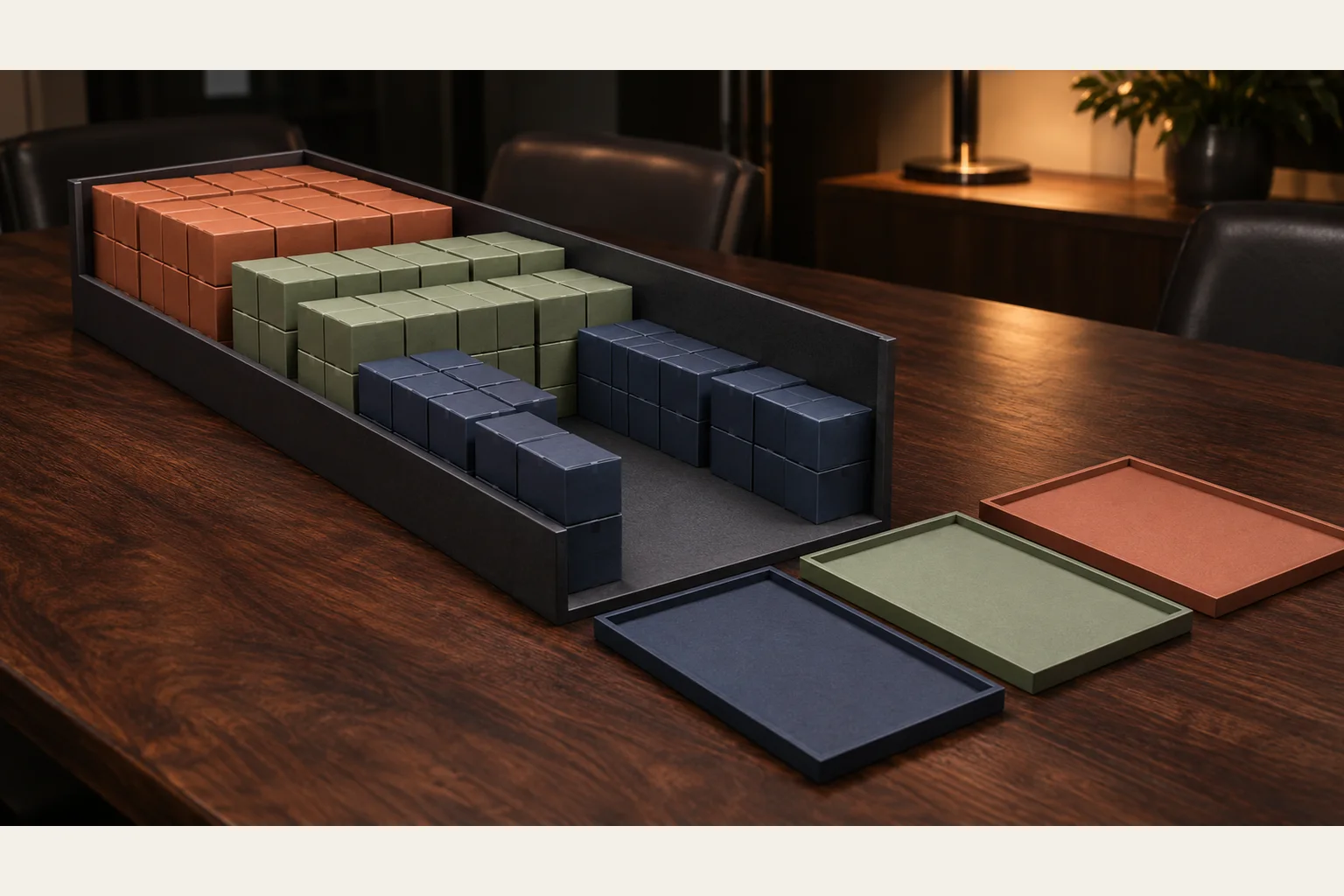
| Sequence | Container zone | Receiving action | Release question |
|---|---|---|---|
| 1 — door priority | Reachable door block | Unload, scan, count and move to priority lane | Can the first block be removed without disturbing restraint for the rest? |
| 2 — normal flow | Middle blocks | Unload by SKU boundary into assigned lanes | Does each lane have enough pallet and turning space? |
| 3 — reserve/late need | Deep blocks | Unload after priority lanes are released | Can handling equipment safely reach the final rows? |
| Exception | Quarantine position | Isolate wet, crushed, mismatched or unscannable cartons | Who authorizes disposition without blocking the dock? |
The IMO CTU Code page provides international guidance on packing and handling cargo transport units. GS1 General Specifications define identification principles, while the UK HSE workplace transport guidance addresses vehicle and pedestrian risk. None approves a project-specific Naike Dinner load; the buyer must apply relevant law, carrier rules and site controls.
How Much Receiving Space Does Each SKU Need?
For mixed SKU tableware container loading, receiving space is a release input rather than a value to assume after arrival.
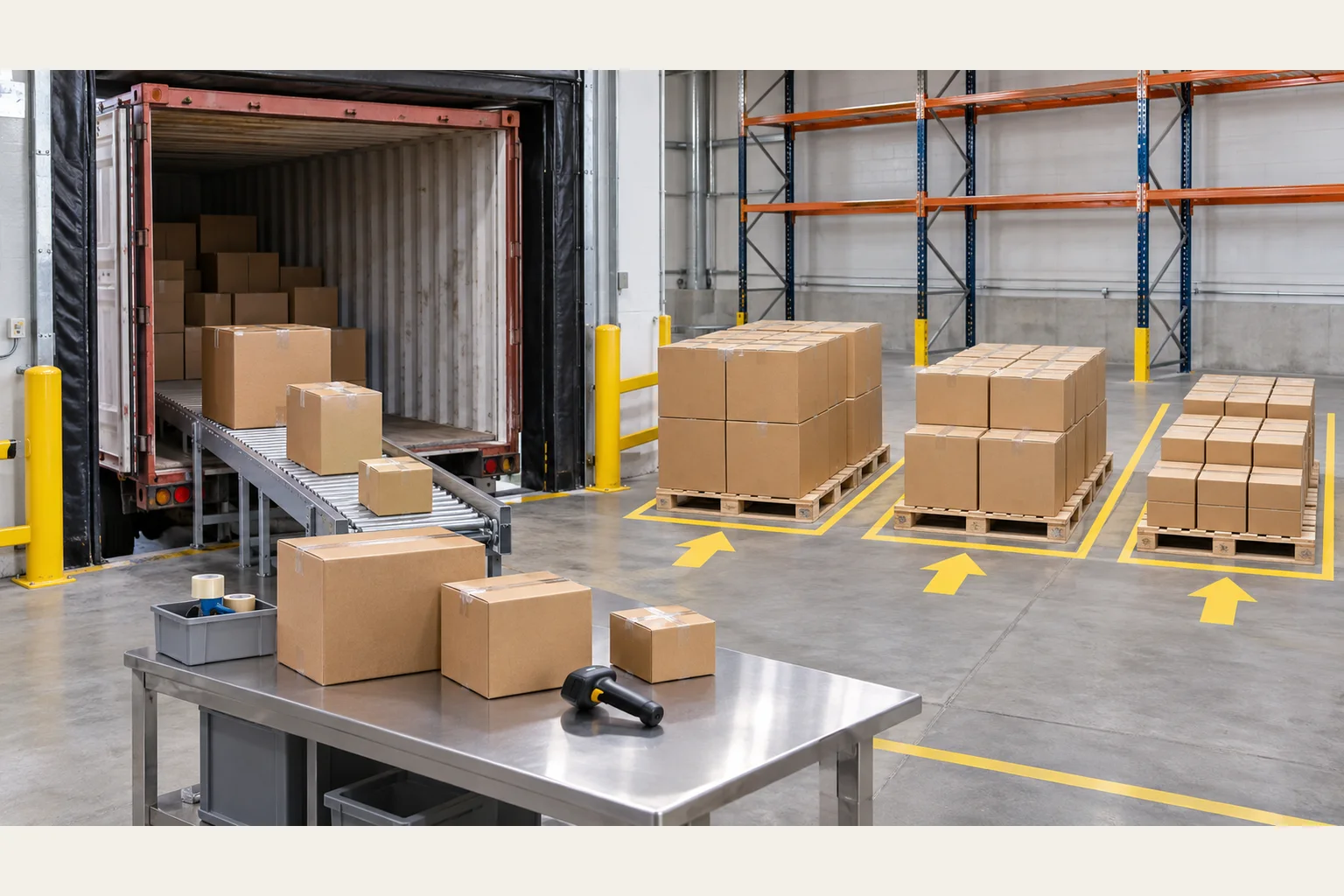
Use a conservative staging calculation before release. For each SKU, divide arriving cartons by cartons per receiving pallet and round up. Multiply the result by the warehouse-approved pallet footprint plus its clearance allowance. Then add the quarantine pallet and an unobstructed travel route; do not count aisles, doors or emergency access as storage.
Worksheet calculation: receiving pallets = ceiling(cartons arriving ÷ cartons per approved receiving pallet). Required staging area = receiving pallets × approved lane footprint. The buyer enters every value; this page supplies no default capacity.
What Should Happen When the Planned Sequence Breaks?
Define exceptions before loading. If the first carton does not match the packing list, stop only the affected SKU boundary, record the carton mark and quantity, and move it to the approved exception position. A damaged carton should not be buried in a normal lane. A receiving change after dispatch should produce a revised sequence record rather than an informal message.
| Exception | Immediate control | Approval record |
|---|---|---|
| Wrong SKU at door | Scan, isolate and compare with packing list | Buyer/forwarder disposition |
| Wet or crushed carton | Quarantine without opening unless authorized | Photos, count and claim instruction |
| Lane capacity exhausted | Pause that SKU boundary; keep travel path clear | Warehouse lane reassignment |
| Unreadable identifier | Do not guess; cross-check carton and shipment records | Relabel authorization and traceability note |
Buyer Checklist
Send
SKU list, carton counts and dimensions, gross masses, marks, container type, receiving priorities and destination rules.
Verify
Staging capacity, scan points, pallet rules, handling route, load restraint, stack limits and quarantine position.
Approve
Load-zone map, unload order, SKU boundaries, exception owner, version/date and final pack-out evidence.

Frequently Asked Questions
Should the first-needed SKU always be loaded last?
Only if its carton strength, restraint position, mass and door-zone handling remain safe. Receiving priority does not override transport protection.
Can different SKUs share one pallet at receiving?
That is a buyer decision. Define separation, labeling, scan and count rules before loading; otherwise mixed pallets can shift the blockage downstream.
Does this map replace a container load plan?
No. It adds receiving sequence to the load plan. Weight distribution, restraint, container limits and applicable regulations still require competent approval.
What should a quotation request include?
Send the controlled SKU/carton file, quantities, container and route, receiving priorities, staging constraints, labeling, pack-out and required evidence.
Request a Mixed-SKU Logistics Review
A mixed SKU tableware container loading review starts with buyer-controlled carton, sequence and receiving data.
Send project inputs for a feasibility discussion. Naike Dinner can review the buyer-provided sequence brief alongside the tableware configuration and packaging scope; final logistics, specifications, MOQ, price and lead time remain project-confirmed.
Request an Unload Map ReviewSend Receiving InputsRequest a Project RFQ