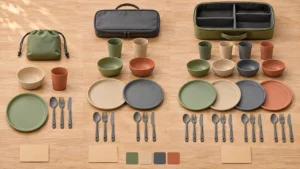
A camping dinnerware evidence file should identify every finished component, its approved revision, intended food-contact conditions, applicable evidence, artwork state and release owner. Build the index at component level, then connect it to the complete set BOM and packed configuration. Never let one report, material name or supplier statement become a blanket claim for unlisted colors, finishes or uses.
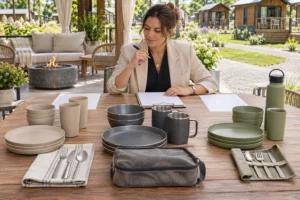
A complete set can contain plates, bowls, cups, cutlery, a divided lunch box, storage inserts and a carry case. Those parts may differ in material, color, decoration, food contact, cleaning route and change history. The buyer therefore needs a camping dinnerware evidence file that answers a practical question: which controlled record supports which finished component under which stated use?
Build the file around finished-component identity
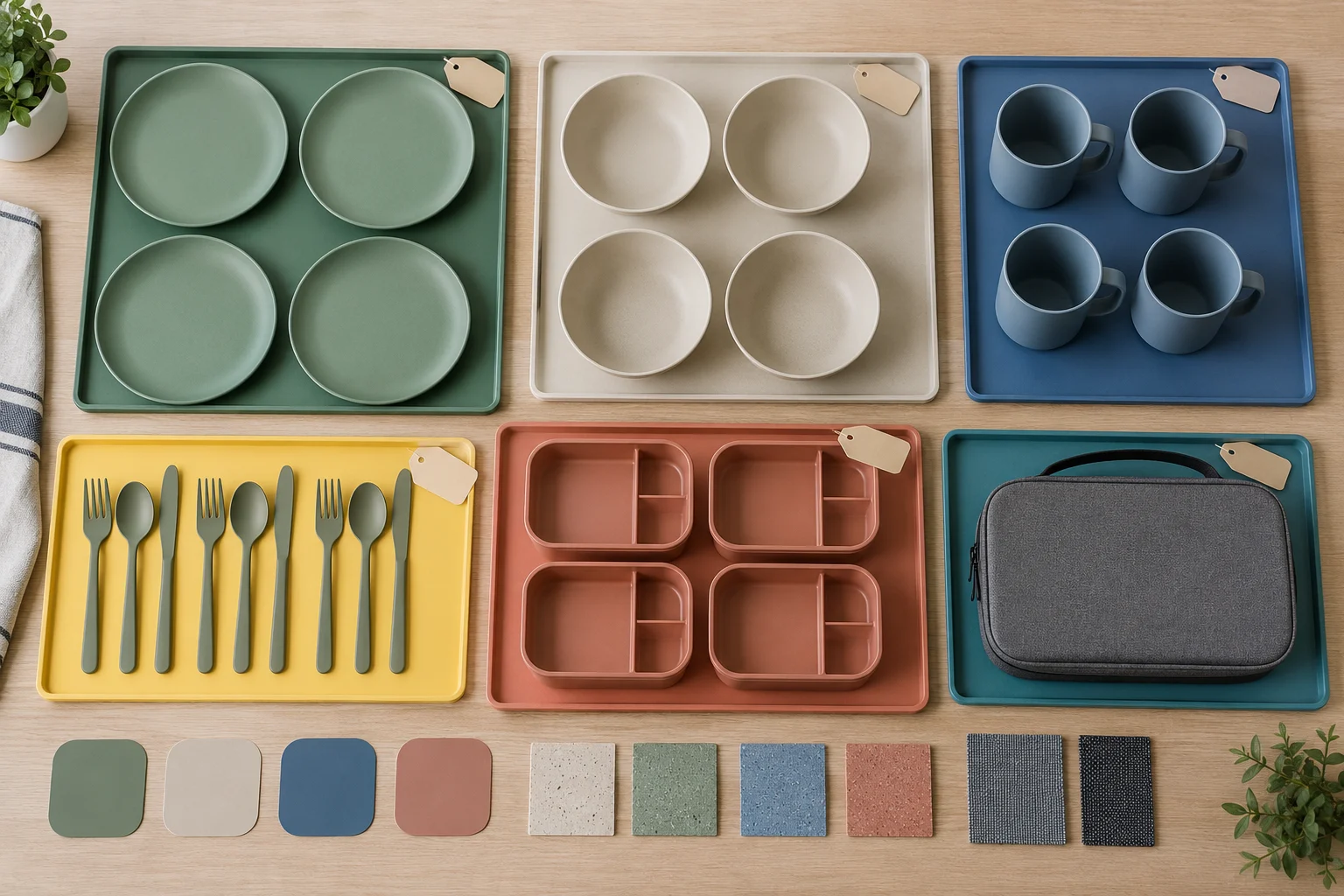
Start the camping dinnerware evidence file with the released BOM and the current packed sample. Give every food-contact component an index line. Record the component code, drawing revision, finished color or finish, approved sample reference, supplier declaration reference, applicable laboratory report reference, intended-use statement, artwork link, open gap and approval owner. If a value is unknown, mark it open rather than copying it from another part.
| Evidence-file record | Buyer checks | Controlled output |
|---|---|---|
| Finished identity | Does the photo, code, geometry, color and finish match the released component? | Component identity sheet tied to drawing and sample |
| Intended use | Which food types, contact time, temperature, repeated use and cleaning route apply? | Component-level use-condition statement |
| Material and formulation | What controlled description and supplier reference apply to this finished part? | Material/formulation reference without unsupported marketing claims |
| Food-contact evidence | Which jurisdiction, method, sample and use condition does the record actually cover? | Report-to-component scope note |
| Decoration and finish | Are pigment, print, coating or adhesive inside the reviewed scope? | Decoration/finish evidence disposition |
| Artwork and instructions | Do component names, counts, colors and care directions match the release? | Approved asset revision list |
| Complete-set linkage | Which BOM and packed configuration contain the part? | Set-level cross-reference, not a blanket set claim |
| Change control | What change triggers review or reapproval? | Dated change decision and affected-record list |
| Final release | Who accepted the evidence gaps, sample and artwork? | Approval record with owners and dates |
Separate regulatory context from product evidence
Authoritative rules define the context, but they do not approve an unspecified SKU. The U.S. FDA food-contact substances framework explains how food-contact substances are evaluated under intended conditions. The EU Framework Regulation (EC) No 1935/2004 sets general requirements for materials intended to contact food. The European Commission food-contact materials overview explains the wider regulatory structure. A camping dinnerware evidence file must still connect the exact finished component and use envelope to the applicable record.
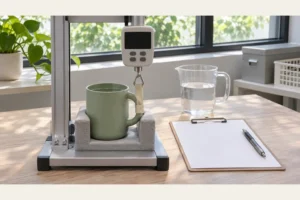
Do not substitute performance checks for food-contact evidence. Dishwasher, staining, odor, impact, rattle, nesting or closure checks can be commercially important, but each has a different purpose. Dinnerware is not cookware, and no file entry should imply direct-heat suitability unless that separate product and claim are specifically supported.
Match reports to the commercial revision
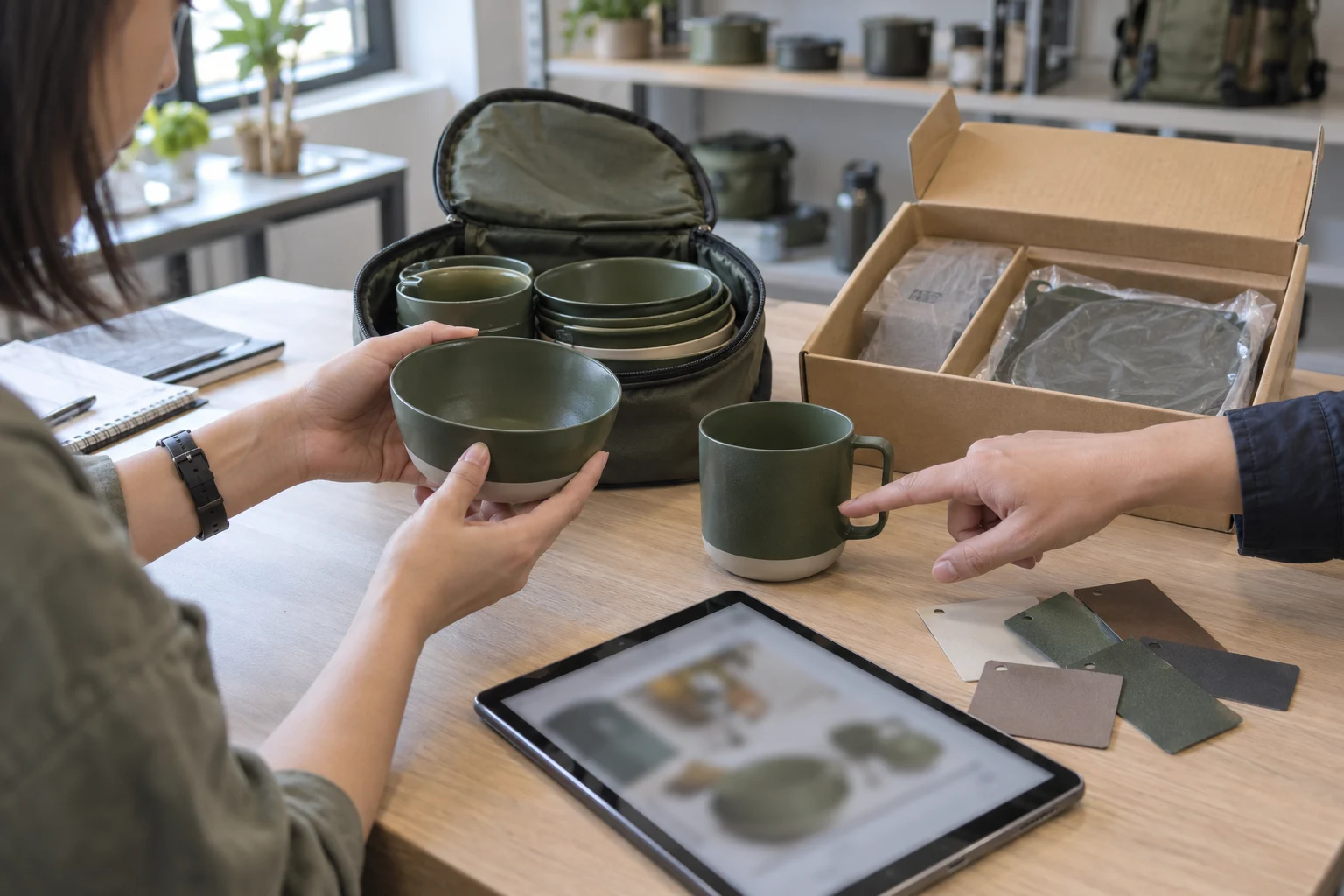
For each report or declaration, record the client, sample description, sample photo, date, method, result, material/color/finish reference and stated use conditions. Then compare those fields with the component proposed for production. A familiar laboratory name or supplier statement is not enough when the tested sample cannot be reconciled to the released revision.
Use the existing food-contact testing framework to define scope, the BOM revision-control guide to maintain identity and the component change-control map to reopen affected records after a change. The evidence file is the index connecting those controls.
Create a set-level index without making a blanket claim
The set cover sheet should list every component row, its status and its evidence-file location. Use status terms such as applicable evidence linked, scope review required, sample mismatch, missing record, artwork open or approved. A set may be commercially releasable only after the buyer decides how every open item is handled; a green status on one plate cannot automatically cover a cup, utensil or decorated lunch box.
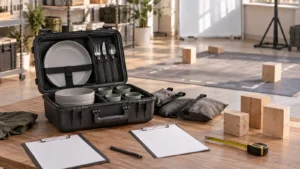
Keep storage items in the file even when they are not intended for food contact. The case, divider, retention strap and packaging influence pack-out, warnings, contamination control and traceability. Their records belong to the complete-set release even if the evidence type differs from a plate or bowl.
Control the handoff and future changes
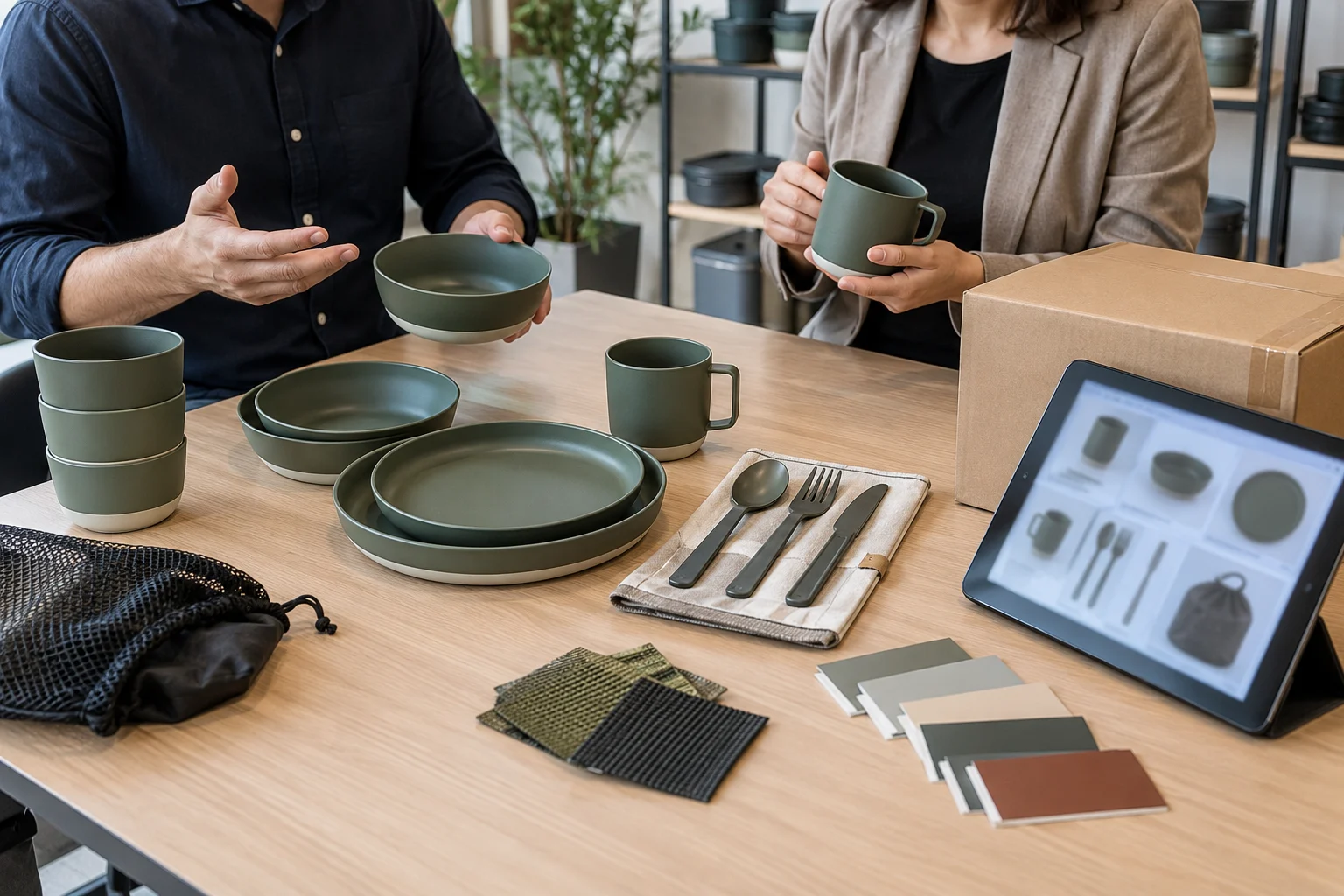
Freeze the camping dinnerware evidence file as a readable index with the approved BOM, drawings, component photos, sample identifiers, artwork revisions and evidence references. Record where controlled source files are held and who may update the index. When a supplier, formulation, pigment, coating, decoration, geometry, food-use condition or cleaning claim changes, reopen the affected rows and document why earlier records remain applicable or require replacement.
Buyer Checklist
| Buyer provides | Supplier returns | Approval evidence |
|---|---|---|
| Released BOM, drawings, finished colors and complete-set sample list | Component identity and controlled material references | Matched component photos, codes and sample IDs |
| Destination markets, food types, time, temperature and cleaning routes | Applicable declarations, reports and identified gaps | Scope comparison for every finished component |
| Artwork, packaging, care claims and revision rules | Asset list and change-impact response | Dated approvals and open-item decisions |
| Required evidence-file format and responsible reviewers | Indexed electronic package plus retained sample references | Final release record linked to BOM revision |
Buyer FAQs
Can one report cover every component in a set?
Only when its sample identity, material or formulation, color/finish, use conditions and applicable scope demonstrably include those components. Record the rationale rather than assuming coverage.
Should non-food-contact case parts appear in the file?
Yes. Their evidence and controls differ, but case materials, inserts and packaging affect the complete-set release, handling and change history.
Is a supplier declaration enough?
It is one input. Check issuer, identity, revision, scope, destination requirements and whether the finished commercial component matches what the declaration describes.
How should color variants be handled?
List each finished color or justified family and record whether pigment or formulation differences change the evidence scope. Do not silently inherit a base-color result.
What belongs on the set cover sheet?
Component code, revision, status, evidence location, open gap, owner and approval date. The detailed records remain at component level.
When must the camping dinnerware evidence file be reopened?
Reopen it whenever identity, supplier, formulation, pigment, decoration, finish, geometry, use condition, cleaning claim, market or linked artwork changes.
Request an evidence-file review or send the component matrix and current evidence index. Include the released BOM, drawings, sample references, intended markets, use conditions, artwork and existing declarations or reports so the next review can identify gaps without inventing claims.