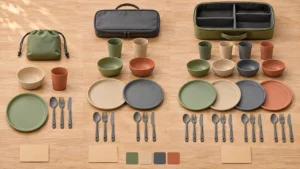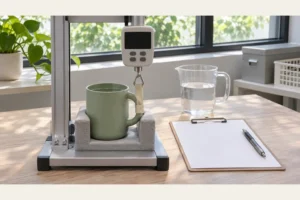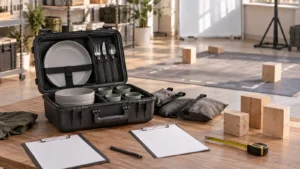
A camping set pilot assembly passes only when a second team can identify, orient, load, restrain and close the approved set using the released documents, without coaching from the original packer. Run at least one blind repack, record every retry and ambiguity, then revise the BOM, drawings or pack instruction before treating the configuration as repeatable.
The test proves transferability, not one expert’s memory
A neat reference set does not prove that another team can reproduce its pack-out. The original packer may remember which bowl rotates first, which cup handle clears a divider, or which lunch box must enter before the plate stack. Those unwritten actions disappear when work moves to a new shift, packing cell, supplier, inspection agency or fulfillment partner.
The buyer therefore needs a transfer test. Give an independent team only the released input packet, the loose components and the empty case. Observe without coaching. The output is not a promotional photograph; it is a blind repack and assembly observation sheet that shows whether the controlled information is sufficient.
Link the trial to the approved golden-sample control index, the drawing comparison log and the retention matrix. A pilot trial cannot repair missing revisions or undefined acceptance limits; it exposes them.
Freeze the input packet before the trial
| Input | Minimum control | Failure the trial can reveal |
|---|---|---|
| Component matrix | Code, description, count and revision | Missing, extra or confused pieces |
| Drawings | Current geometry, orientation and interfaces | Unclear mating or incompatible envelope |
| Pack instruction | Sequence, direction, contact and restraint points | Hidden tribal knowledge |
| Reference sample | Unique identity and stated control scope | Visual reference treated as the whole specification |
| Inspection limits | What is measured, observed or prohibited | Subjective pass decisions |
| Change status | Open deviations and approved exceptions | Old and new configurations mixed |
Do not add handwritten hints during the trial. If the observer must explain a step, record the intervention as a documentation failure. If a component can be installed in two apparently valid orientations, record both paths and identify the downstream effect on closure, removal, cleanliness or presentation.
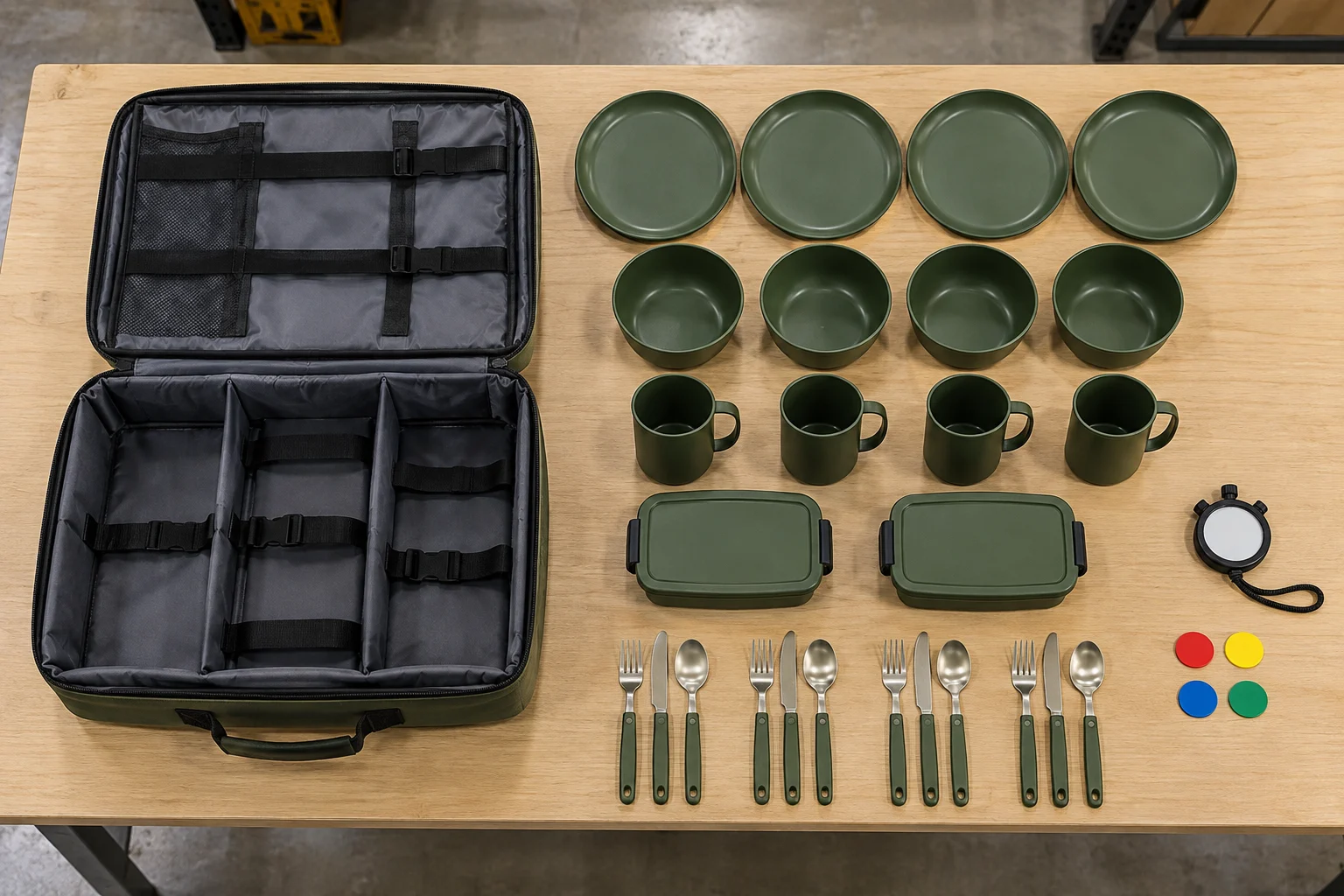
Run the camping set pilot assembly as a blind repack
- Identify the trial. Record program, set revision, sample IDs, document revisions, date, location, operator team and observer.
- Reconcile the loose count. The new team checks every item against the released matrix before packing.
- Start the clock after questions are closed. Timing is useful for comparison, but speed does not override correct assembly.
- Observe without coaching. Record searches, reversals, forced fits, component contact, dropped parts, rereading and requests for clarification.
- Check the loaded state. Confirm restraints, separation of utensil edges, food-contact-face protection, closure path, balance and intended removal order.
- Open and remove the set. A case that closes but requires forced removal or spills components has not demonstrated a usable sequence.
- Compare with the approved reference. Investigate every count, orientation, position or contact difference.
- Repeat after correction. The revised instruction is not verified until another blind trial reproduces the intended result.
This process evaluates dinnerware pack-out, not cookware operation. Plates, bowls, cups, lunch boxes and cutlery must remain separate from claims about direct heat, burners or cooking performance.
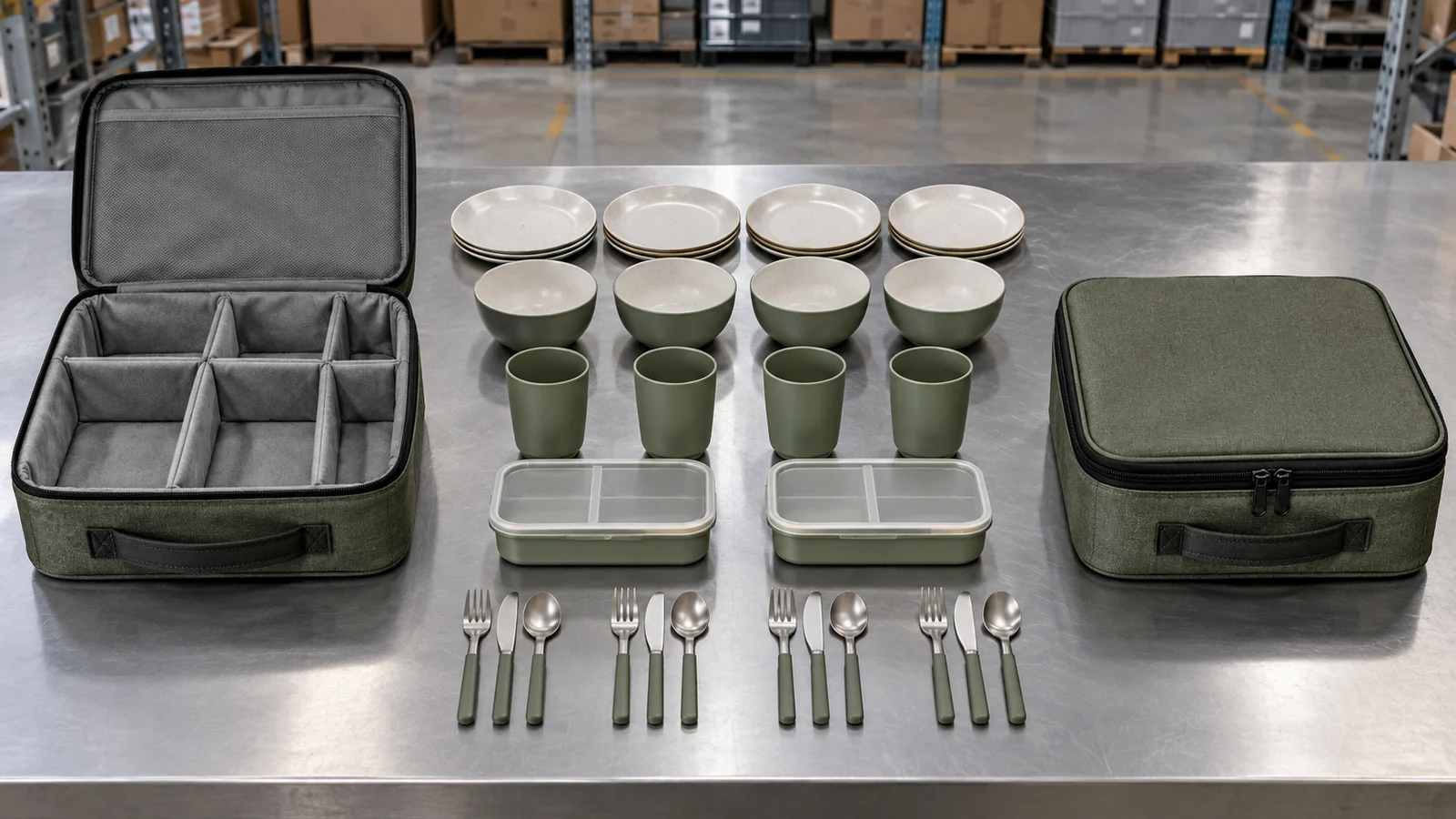
Blind repack and assembly observation sheet
| Field | What to record | Decision use |
|---|---|---|
| Trial identity | Program, revision, team, observer and sample IDs | Trace the result to one configuration |
| Input packet | BOM, drawing and instruction revisions | Prevent obsolete evidence |
| Elapsed time | Start, first closure, final accepted closure | Separate first-pass work from rework |
| Count errors | Missing, extra or substituted components | Correct matrix or picking control |
| Orientation errors | Reversed, rotated or misplaced parts | Add view, datum or poka-yoke |
| Forced fit | Part, step, force direction and consequence | Block release until resolved |
| Retries | Removed pieces, repack attempts and reason | Reveal unstable sequence |
| Surface contact | Utensil edge, hardware or dirty-face contact | Protect food-contact and appearance surfaces |
| Closure and balance | Latch/zipper path, bulge, restraint and carry state | Confirm loaded-case control |
| Questions | Exact words and document gap | Create a revision action |
| Disposition | Pass, conditional repeat or blocked | Control release |
Measured observations need controlled methods. NIST guidance on metrological traceability explains why a measured result must connect to documented standards and calibration chains; it does not certify this set. When intended food contact is in scope, use primary context from the U.S. FDA food-contact substances overview and the EU Framework Regulation (EC) No 1935/2004. A packing trial is not compliance evidence.
Set acceptance rules before watching the team
| Observation | Typical disposition | Required action |
|---|---|---|
| Correct first-pass count, orientation, closure and removal | Candidate pass | Confirm records and sign the trial |
| Minor search but no wrong action | Conditional repeat | Clarify instruction and rerun blind |
| Any forced fit or damaged surface | Blocked | Review geometry, tolerance, divider or sequence |
| Coaching required | Blocked | Add missing written control |
| Multiple valid pack paths | Engineering decision | Approve one path or prove both |
| Case closes but removal is unstable | Blocked | Revise removal order or restraint |
Time limits should come from the buyer’s operation and verified process, not an invented universal benchmark. The safest rule is first-pass correctness: no missing piece, no forced interface, no unsafe exposed edge, no unexplained surface contact and no undocumented intervention. Record actual trial times for comparison only after correctness is stable.
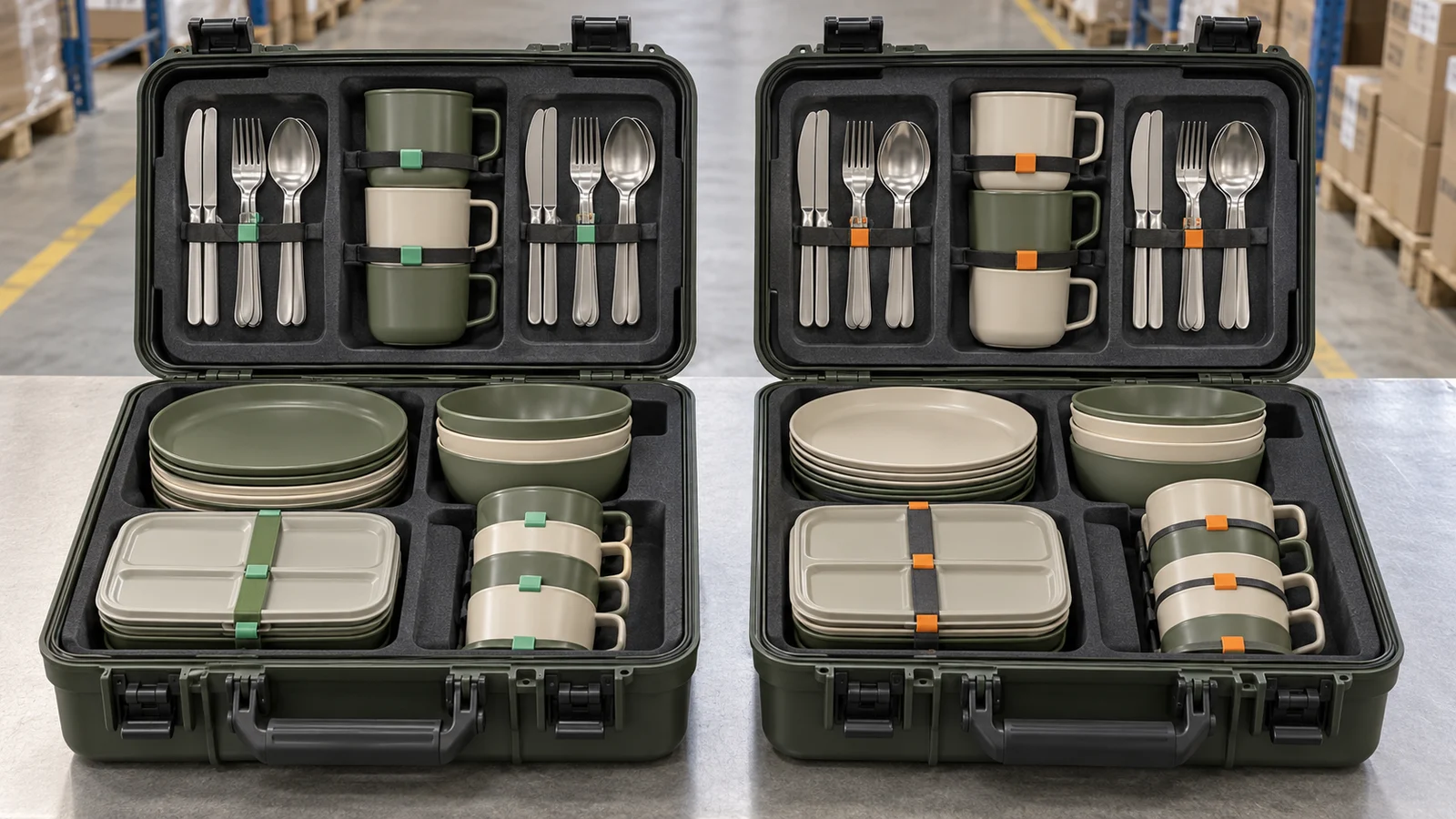
Commercial risks the trial should expose
An unclear pack-out can create picking errors, damaged decoration, contaminated contact faces, case bulging, inconsistent retail presentation and inspection disputes. It also makes quotations difficult to compare because suppliers may assume different labor, inserts, restraints or packing sequences. Attach the released sequence and observation sheet to the quotation package so all parties price and review the same configuration.
Do not convert a successful pilot into unsupported claims about capacity, line speed, drop performance, cleaning durability or regulatory approval. Those questions need their own scoped evidence. A pilot assembly answers a narrower but valuable question: can an independent team reproduce this set from the controlled information?
Pilot Assembly Buyer Checklist
| Check | Buyer question | Required output |
|---|---|---|
| Baseline | Is one revision frozen? | Signed input index |
| Independence | Did the team lack prior coaching? | Operator declaration |
| Completeness | Were count and identity reconciled? | Count record |
| Sequence | Were all retries and reversals recorded? | Observation sheet |
| Interfaces | Was any part forced or contacted? | Issue log by component |
| Loaded state | Did closure, restraint and balance pass? | Loaded-case disposition |
| Removal | Could users remove items predictably? | Removal observation |
| Release | Were corrections verified by a fresh repeat? | Approved repeat record |
Buyer FAQs
How many people should perform the blind repack?
Use the number and roles expected in the intended operation. At least one team should be independent of the original packer; add a second team when transfer risk is high.
Should the team see the golden sample?
Only if the released work method says it is a controlled input. Record whether the physical reference, photographs or drawings were available.
Does the fastest pack win?
No. Correct count, orientation, protection, closure and removal come first. Compare time only among correct repetitions.
What counts as coaching?
Any unrecorded hint about sequence, orientation, force, divider position or closure. Log the intervention and revise the controlled instruction.
Can a single successful trial release production?
Not by itself. The buyer must connect the result to drawings, specifications, samples, evidence and the agreed release process.
When must the pilot be repeated?
Repeat after changes to component geometry, count, case, divider, restraint, packaging, instruction or another attribute that affects assembly or removal.
Request a pilot assembly review
Send the controlled component matrix, drawings, current pack instruction, sample IDs, case envelope, open deviations and intended packing roles. Naike Dinner can identify the blind-repack records needed before release.
Send your pilot assembly brief or use the inquiry form beside this article. Contact Naike Dinner for a written review.