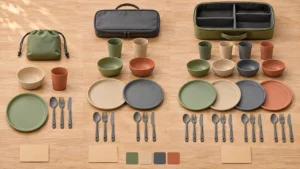
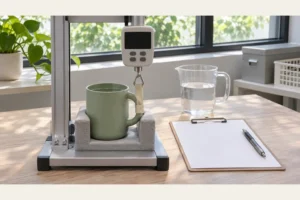
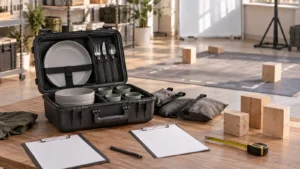
Choose a fixed divider when repeatable portion geometry, simple part counting and resistance to loose components matter most. Choose a removable divider when open-volume flexibility, access to contact edges and replaceable inserts matter more. Approve either design only after checking food migration paths, wash access, drying, retention, rattle, lid clearance and the complete packed-use sequence.
Start with the meal and service workflow
A camping lunch box divider design should not be selected from appearance alone. First define what the container must separate, whether users sometimes need one open compartment, how the container is washed and dried, and whether a loose insert can be lost in the channel. Then decide whether stable geometry or configurable volume is the higher commercial priority.
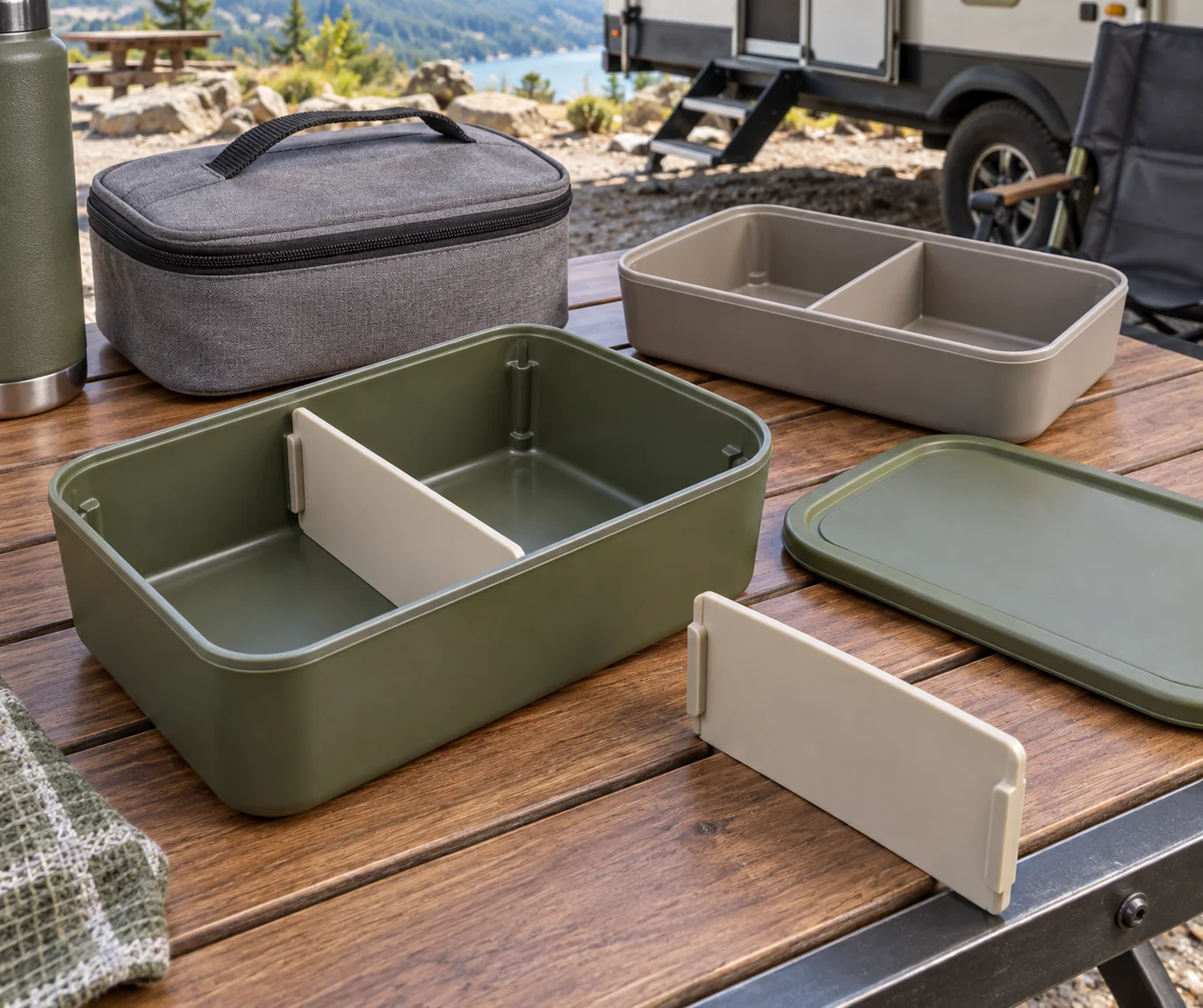
A fixed divider is formed or permanently joined to the container body. It keeps the compartment count with the base and reduces separate-part handling. A removable divider is a controlled insert that locates in grooves, sockets or another retention feature. It can open the full container volume, but its interface adds cleaning, fit, retention and replacement questions.
Keep the evidence boundary clear. Divider geometry does not prove leak resistance between compartments, liquid-tight closure, microwave suitability, dishwasher suitability, material identity or regulatory compliance. Those conclusions require the final construction, defined use conditions and applicable evidence. The container remains dinnerware or food-storage equipment; it is not cookware and should not inherit direct-heat claims.
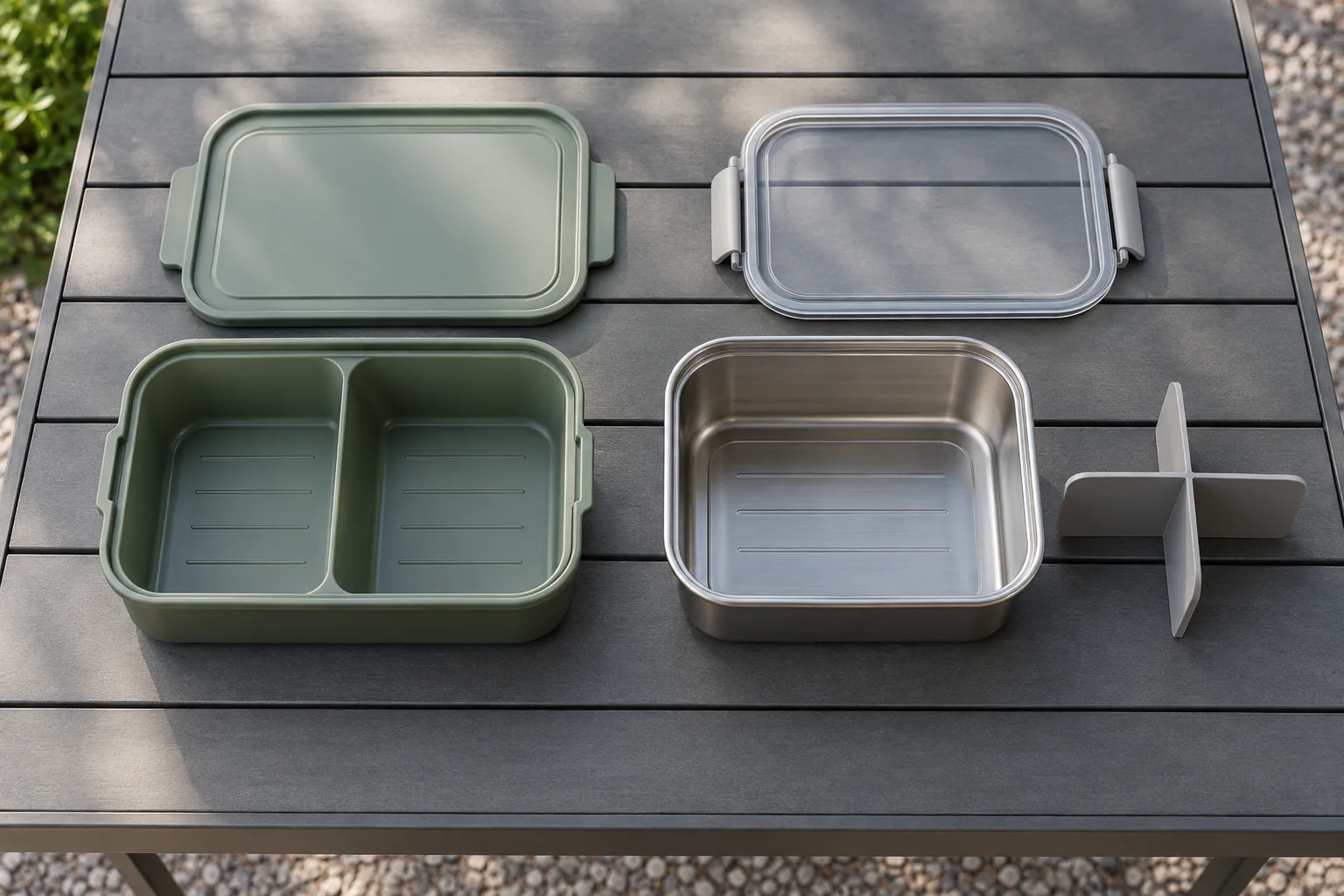
Camping lunch box divider design matrix
| Decision factor | Fixed divider | Removable divider |
|---|---|---|
| Compartment consistency | Geometry stays with the base; easier to count as one item | Configuration changes when the insert is removed or replaced |
| Open-volume option | Usually unavailable without a different base | Possible when the base works safely without the insert |
| Cleaning access | Inspect molded junctions, radii and deep corners | Inspect base grooves plus every side and edge of the insert |
| Drying | No loose part, but junctions may retain water | Parts can dry separately if the workflow keeps them apart |
| Retention | No insert-release event; divider stiffness remains relevant | Groove engagement and release force must be defined |
| Loss and replacement | Divider cannot be replaced independently | Insert needs identification, availability and revision control |
| Food transfer | Wall height and lid clearance control cross-compartment movement | Wall height, base gap and interface movement all matter |
| Packed noise | Fewer loose interfaces, subject to container restraint | Insert may rattle if tolerance and restraint are not controlled |
| Tooling/change impact | Changing the divider can affect the complete base geometry | An insert revision may be narrower, but base grooves still control fit |
| Approval evidence | Base drawing, corner review, wash/dry trial and packed use | Base and insert drawings, interface stack-up, retention and replacement record |
The matrix is a decision aid, not a universal winner. A retail lunch set that must arrive with the same two portions every time may benefit from a fixed divider. A family or rental program that alternates sandwiches, fruit and shared dishes may value an insert, provided the part can be controlled and cleaned. Record the chosen configuration in the component matrix and link it to the correct drawing revision.
Cleaning and drying are interface questions
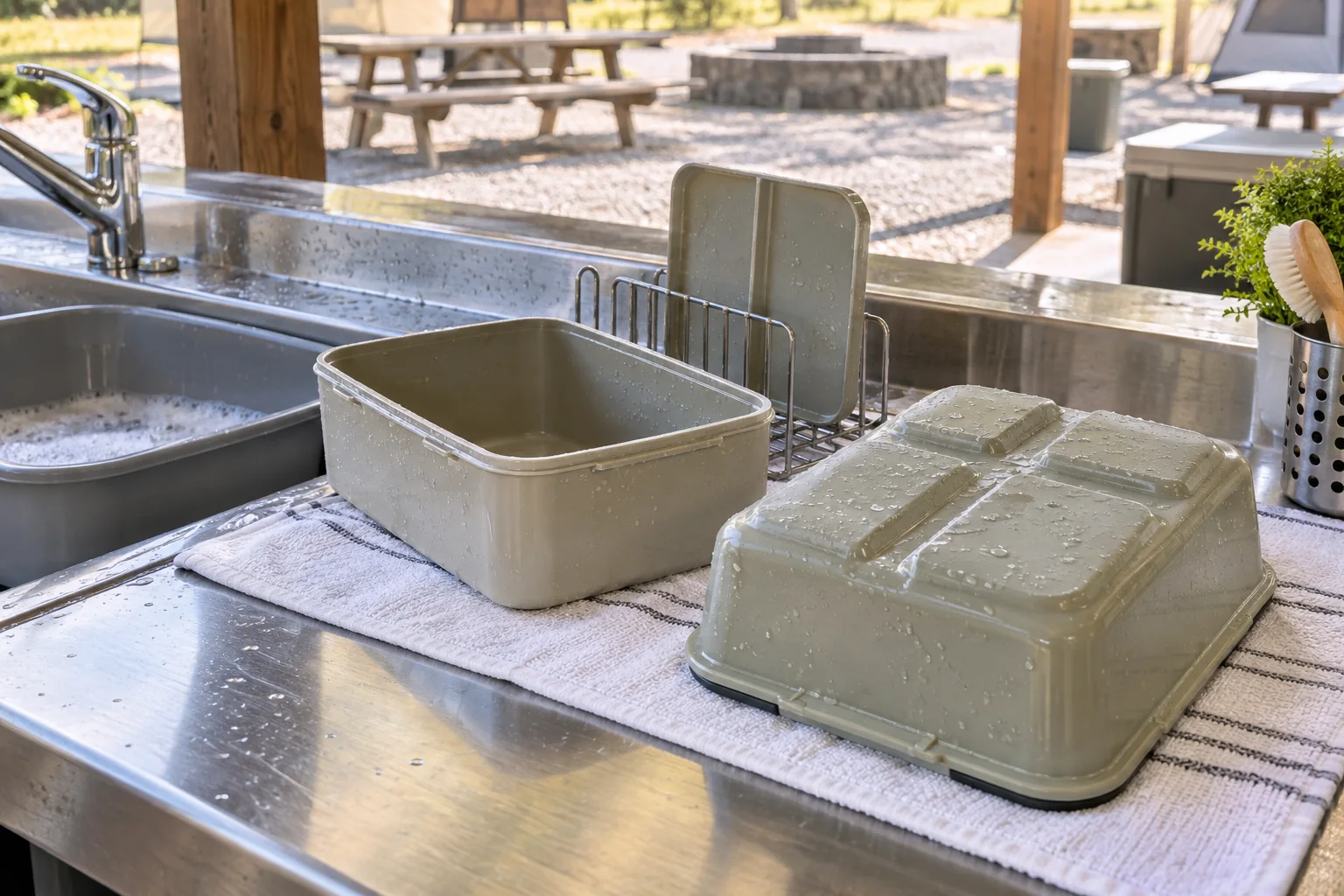
For a fixed design, examine the divider-to-base transition, corner radii, wall height and any undercut. A narrow junction can be difficult to inspect even when the main compartment looks clean. For a removable design, the insert exposes more surfaces but creates a groove or socket in the base. The buyer should specify how the insert is removed, where it is placed during washing and whether every surface can be inspected and dried.
Do not assume that a removable part automatically cleans better. A thin cross insert with sharp internal corners or a deep retention groove can create its own soil and moisture risks. Conversely, a fixed wall with generous radii and open access may support a simpler workflow. Review the actual sample and the written cleaning instructions together.
The FDA Food Code offers authoritative sanitation context, while the FDA food-contact substances overview frames food-contact responsibility. Neither source approves a specific container or divider. Use them to shape evidence questions, not as substitute certificates.
Retention must be strong enough but still serviceable
A removable divider needs a controlled seated position. The review should identify the locating surfaces, insertion direction, permitted movement and release action. Too little engagement can let the insert move during carrying or serving. Too much engagement can encourage unsafe prying, damage or incomplete removal for cleaning. The correct range depends on the final geometry, material behavior, use temperature and sample revision.
Check retention in the intended states: dry, after the defined wash, at the permitted food-use condition and after the container has returned to its stated review condition. If force or dimensions are measured, document the method and reference chain. NIST traceability guidance explains why a result must connect through a documented comparison chain.
Run a complete sample trial
| Trial step | Buyer action | Record to retain |
|---|---|---|
| 1. Freeze identity | Record container, divider, lid and case revisions | Component matrix and sample labels |
| 2. Inspect dry geometry | Check corners, grooves, wall height, gaps and removal access | Drawing-linked open-issue list |
| 3. Load representative foods | Use project-defined food forms without making universal claims | Load condition and observed transfer paths |
| 4. Close and carry | Apply the intended lid and complete case restraint | Divider movement, rattle and lid clearance |
| 5. Serve | Open, remove or leave the divider using the intended sequence | Access, grip and unintended release |
| 6. Wash and dry | Follow the proposed instruction and inspect all interfaces | Residue, water retention and drying observation |
| 7. Reassemble | Return every part to the approved configuration | Fit, orientation and missing-part risk |
| 8. Pack the full set | Check lunch box, plates, bowls, cups, cutlery and carry case together | Clearance, restraint and closure record |
Connect this trial to the lunch-box lid decision, the nested-interface register and the pack-out instruction method. A divider can pass on the bench yet fail when the lid, nested dinnerware or carry case changes the available space.
Scenarios, limitations and commercial risk
Retail meal-prep set: prioritize stable compartment geometry, visible cleaning access and simple consumer instructions. Family camping set: consider whether full-volume use is genuinely valuable or whether the loose part will be forgotten. Rental fleet: record insert loss, replacement compatibility and mixed-revision controls. Promotional program: avoid choosing a complex insert only to create a visual difference that adds no user value.
A passing sample applies to the tested revisions and written conditions. Different wall thickness, groove geometry, finish, material, lid compression, temperature, cleaning process or packed load can change the result. Compatibility to be confirmed by project sample and drawing. Keep open questions in the RFQ instead of converting them into assumed specifications.
B2B Buyer Checklist
| Check | Buyer question | Approval evidence |
|---|---|---|
| Use case | Which meals and service steps require separation? | Channel and user brief |
| Geometry | Are wall height, base gaps and lid clearance defined? | Controlled drawings |
| Cleaning | Can every corner, groove and insert edge be reached? | Wash and inspection record |
| Drying | Can all parts dry completely in the written workflow? | Drying observation |
| Retention | Does the insert stay seated yet release as intended? | Revision-matched trial |
| Replacement | How will loose inserts be identified and controlled? | Part code and compatibility record |
| Pack integration | Does the complete set close without loading the divider? | Full pack-out review |
| Claim boundary | Which claims are supported by final evidence? | Evidence index and approved copy |
Buyer FAQs
Does a fixed divider prevent food transfer?
Not automatically. Wall height, food form, lid clearance, movement and orientation all affect transfer. Define the intended claim and test the final assembly.
Is a removable divider always easier to clean?
No. It exposes separate surfaces but adds grooves, edges and a reassembly step. Compare complete workflows on the actual sample.
Can the same insert fit several container sizes?
Only after interface review. Compatibility to be confirmed by project sample and drawing.
Should retention be measured as a force?
Use a quantitative method when the decision requires it; otherwise define a repeatable user action and clear acceptance observations. Record the method either way.
What happens if the insert is lost?
Decide whether the base remains usable, whether a replacement code will exist and how revision compatibility will be communicated.
Does this review prove dishwasher or microwave suitability?
No. Those claims need separate conditions and evidence for the final material and construction.
What belongs in the RFQ?
Send component drawings, meal/use scenarios, divider preference, cleaning workflow, retention concern, lid and case envelopes, markets, material questions, evidence requests and sample plan.
Request a divider and container review
Share the container, lid and divider drawings, intended meals, cleaning sequence, packed-set components, target markets and acceptance questions. Naike Dinner can review the brief against verified capabilities and identify the drawings, samples and written confirmations needed before approval.
Send your camping lunch box divider design brief or use the inquiry form beside this article. Contact Naike Dinner for sample and quotation review.