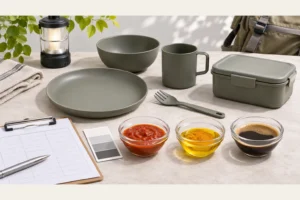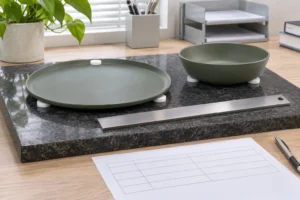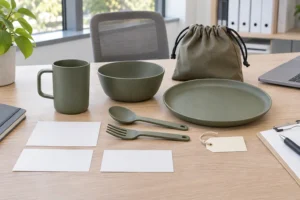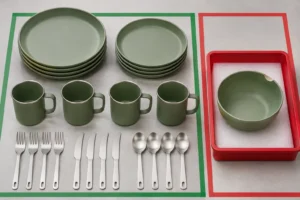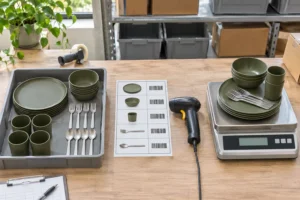
Choose a snap lid when one-piece handling, fast count control and reduced loose-part risk matter most. Choose a separate lid when full cleaning access, independent replacement and flexible serving are more important. A camping lunch box lid design should be approved against opening force, food residue paths, drying, pack retention and the cost of losing or damaging the lid—not by appearance alone.
Start with the service job, not the lid label
“Snap lid” can describe several constructions: a flexible perimeter that presses over the box rim, local tabs that engage body features, or a lid retained by an integrated strap or living connection. “Separate lid” only says that the cover detaches completely. Neither term proves leak resistance, airtightness, dishwasher suitability, freezer suitability or durability.
Freeze the intended meal, filling level, carry orientation, opening environment, cleaning method and replacement model before choosing. A family car-camping set used on a picnic table has a different failure cost from a rental kit counted after every return. The closure must also fit the complete dinnerware pack, not just the lunch box on a clean desk.
This guide concerns dinnerware and portable food-container organization. It does not establish cookware or direct-heat suitability. Final material, temperature, food-contact and performance claims require project-specific evidence.
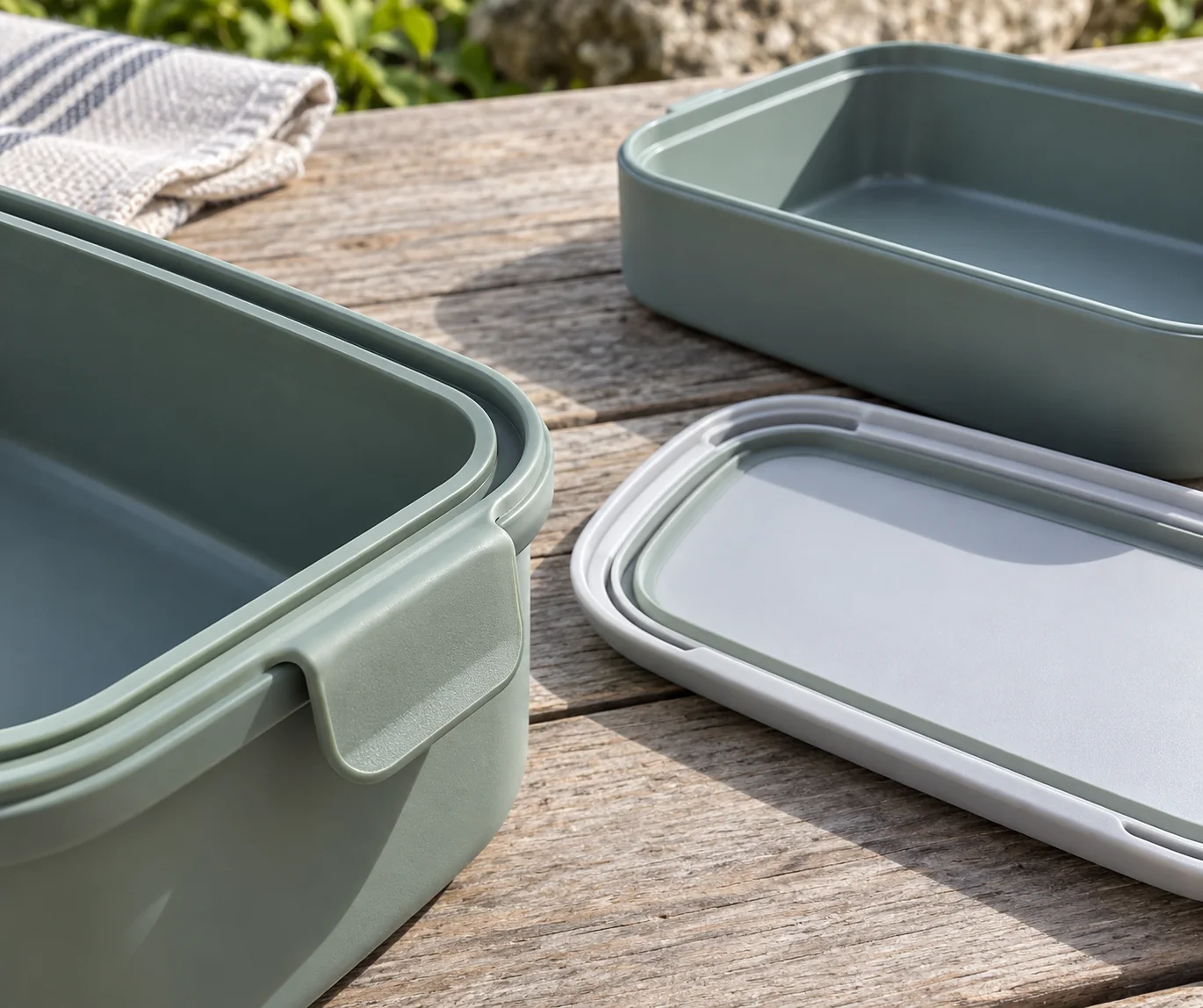
Camping lunch box lid design trade-off table
| Buyer criterion | Snap or retained lid | Separate lid | Approval evidence |
|---|---|---|---|
| Piece control | Usually stays associated with the body; count checks may be simpler | Can be misplaced or mixed between revisions | Full-set count and return workflow |
| Opening at camp | May need defined grip and release sequence | Can provide unrestricted access once removed | Wet/gloved-hand user trial |
| Cleaning access | Retention features may create hidden residue or drying zones | All sides can usually be exposed separately | Cleaning, inspection and dry-out review |
| Replacement | Damage may affect the complete body/lid assembly | Lid can be a separate service item if revisions are controlled | Replacement SKU and compatibility record |
| Packing | May preserve one-piece pack-out but consume hinge/strap space | Can nest or store elsewhere, but needs positive retention | Closed-case pack trial |
| Serving | Retained cover can remain in the work zone | Removed lid may serve as a clean cover or temporary tray only if specified | Defined use observation |
| Interface wear | Repeated flex or tab engagement needs review | Rim engagement and mix-up risk still require review | Project-defined cycle and inspection plan |
The table is a decision frame, not a universal score. Weight the rows according to the channel. Rental operators may prioritize count control and revision segregation; outdoor retailers may prioritize intuitive opening and cleaning instructions; a replacement-parts program may favor a lid that can be stocked independently.
Define the interfaces and failure language
For a snap format, identify every intended locating surface, flexible zone, tab, undercut, stop and grip edge. For a separate format, define the lid-to-rim fit, storage position during use, retention in the carry case and the rule for matching replacement lids to body revisions. Compatibility to be confirmed by project sample and drawing.
Write observable failure language before samples arrive: incomplete engagement, local lift, difficult release, pinched residue, trapped water, warped seating, lid/body mix-up, pack interference or loss during service. Do not substitute vague words such as “good fit” or “secure.” If leakage matters, create a separate orientation, fill, duration and acceptance protocol; no closure name proves leakproof performance.
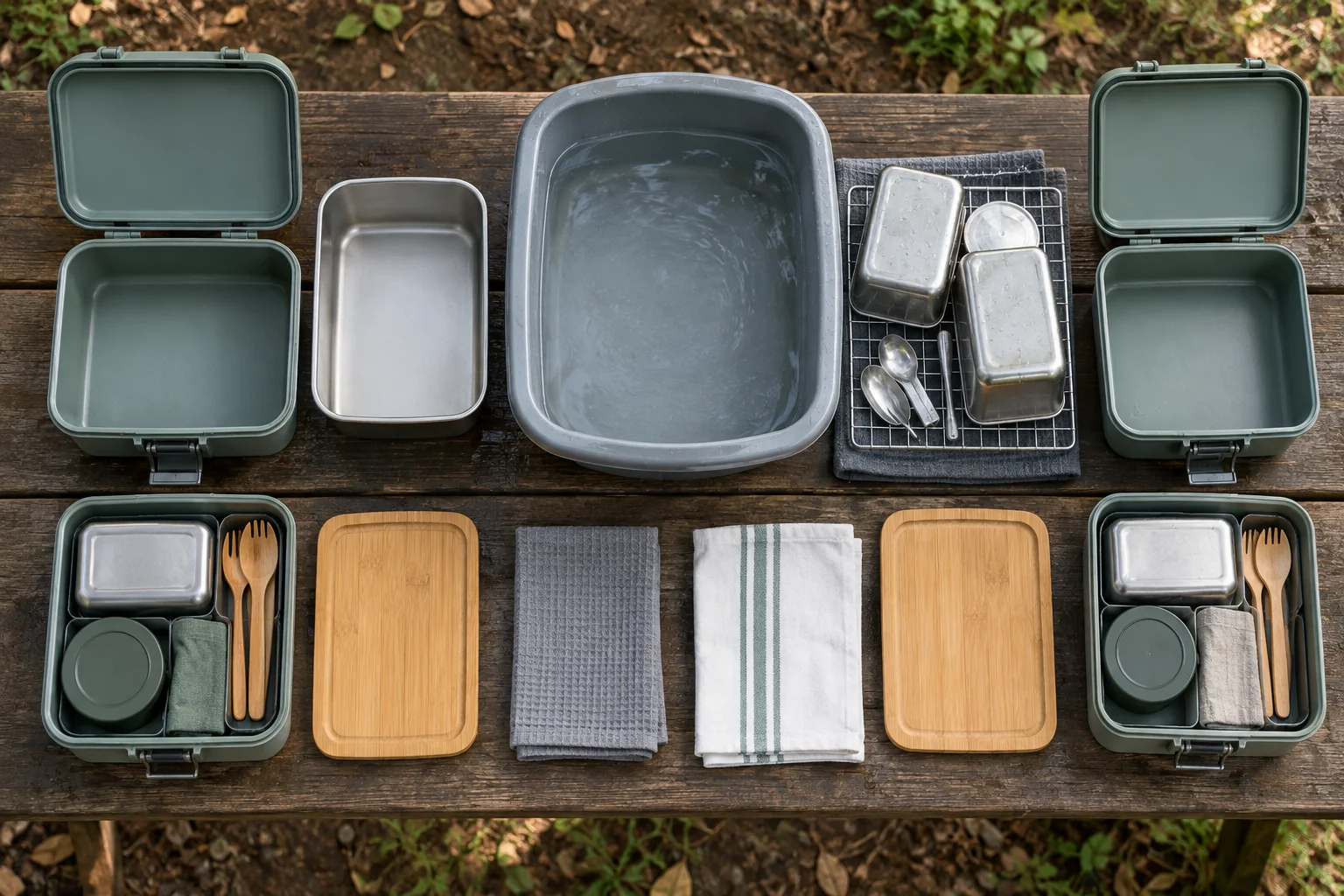
Build a revision-matched approval record
| Stage | Buyer action | Record to retain |
|---|---|---|
| 1. Freeze the brief | Define meals, fill level, orientation, users, cleaning and case layout. | Use-condition sheet |
| 2. Control drawings | List body, lid, seal or retention features by revision. | Revision matrix |
| 3. Map contacts | Mark locating, flexible, sealing-intent and prohibited contacts. | Interface drawing |
| 4. Trial service | Open, serve, close, clean, dry and pack the complete set. | Observation log and sample IDs |
| 5. Review change | Check whether material, finish, geometry or supplier changes affect the interface. | Change-impact decision |
| 6. Approve claims | Separate demonstrated behavior from unsupported sealing or temperature claims. | Signed approval boundary |
Use appropriate measurement discipline if opening force, engagement depth or distortion is measured. The NIST traceability guidance explains traceability concepts, while the NIST/SEMATECH handbook supports sound test planning. For food-contact evidence scope, consult the FDA food-contact substances overview. These sources frame evidence; they do not approve a particular lunch box.
Applications, limits and commercial risk
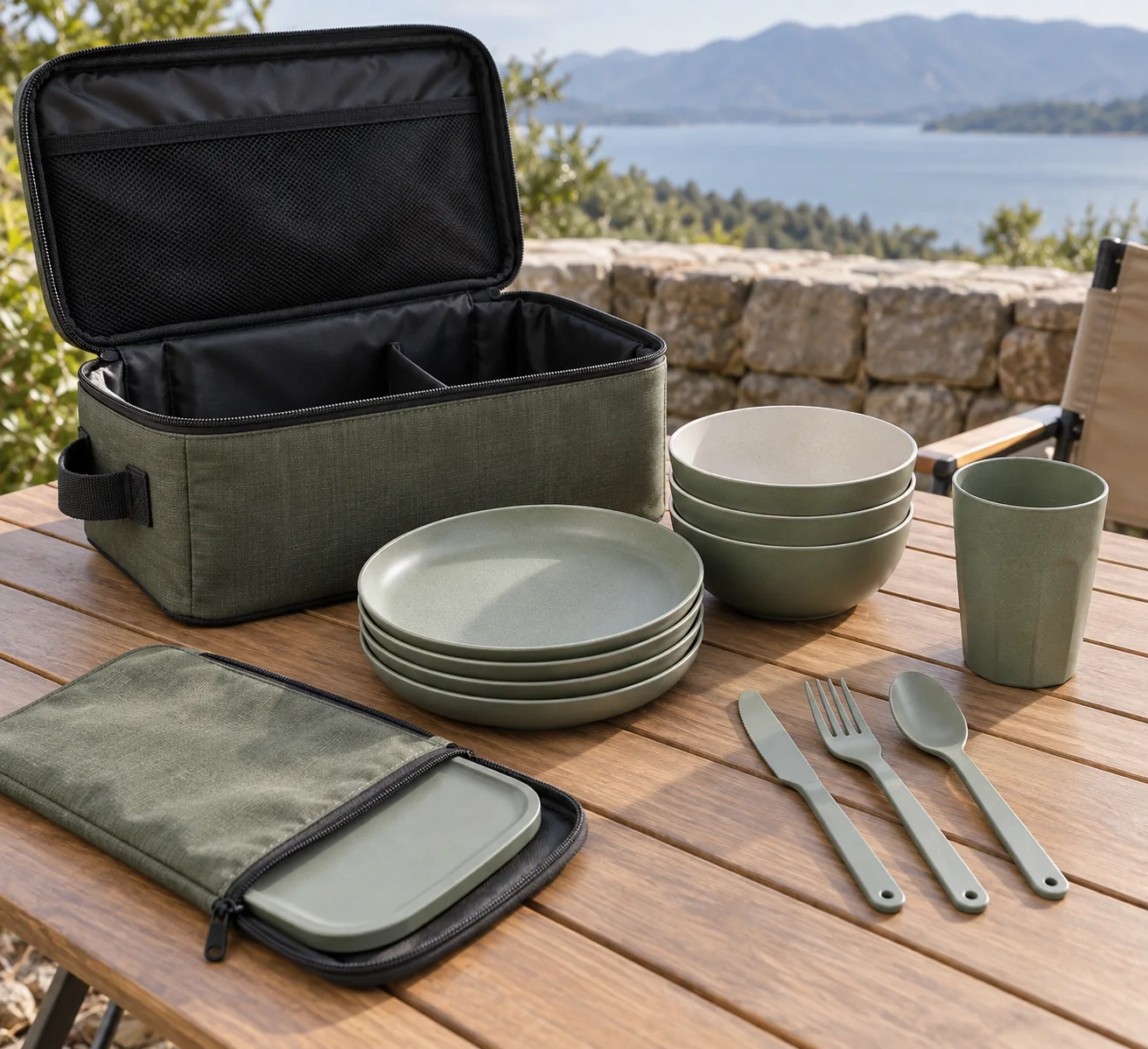
Family retail: prioritize intuitive operation, cleaning access and instruction clarity. Rental fleets: prioritize piece count, replacement compatibility and mixed-revision control. Meal-prep programs: define transport orientation and any leakage evidence separately. Compact camping sets: verify that the lid, box, plates, bowls and utensils share the case without preload or abrasion.
Connect the decision to the case-fit review, pack-out instruction method and replacement-SKU guide. A closure decision is incomplete if the lid has no defined storage or service path.
Main commercial risks include advertising leakproof performance without a defined test, approving only dry first-use samples, treating a replacement lid as universally compatible, and ignoring cleaning zones created by retention features. Record what was tested and what remains to be confirmed.
B2B Buyer Checklist
| Check | Buyer question | Required outcome |
|---|---|---|
| Service priority | Is loss control, cleaning access or replacement the dominant need? | Weighted decision table |
| Revision match | Do body, lid and any retention parts match controlled drawings? | Sample-to-drawing record |
| Opening method | Can intended users find the grip and release path? | Observed user sequence |
| Cleaning/drying | Are all residue and moisture zones inspectable? | Documented dry-out result |
| Pack retention | Where does the lid sit during use and transport? | Approved pack-out position |
| Replacement | How are compatible lids identified and segregated? | SKU/revision rule |
| Claim boundary | Which claims have direct project evidence? | Written approved claims |
Buyer FAQs
Is a snap lid automatically leakproof?
No. Leakage depends on the complete geometry, materials, closure condition, orientation, contents and test method.
Is a separate lid always easier to clean?
It often improves access, but grooves, seals and surface geometry still need inspection and drying review.
Can one replacement lid fit several lunch boxes?
Only if controlled drawings and revision-matched samples demonstrate compatibility.
Should opening force be specified?
Specify a method when it is decision-relevant; include direction, grip, rate, conditioning and acceptance rule.
What should be checked after washing?
Inspect seating, release, distortion, residue, moisture, re-stacking and case fit under the defined condition.
What belongs in the RFQ?
Send component drawings, meals and fill level, transport orientation, cleaning conditions, target markets, pack layout, replacement strategy and evidence expectations.
Request a closure-service review
Share the lunch box and lid drawings, component matrix, opening and cleaning workflow, case envelope, target markets and approval questions. Naike Dinner can review the brief against verified capabilities and identify the samples and written confirmations needed before release.
Send your lid-design brief or use the inquiry form beside this article. Contact Naike Dinner for sample and quotation review.