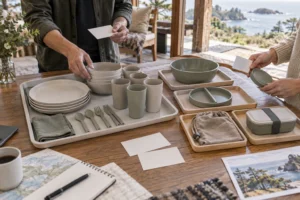
Choose a retail shelf box or e-commerce mailer only after packing the approved dinnerware set in the actual channel configuration. A shelf box prioritizes display, access and merchandising; a mailer prioritizes closed-pack restraint, edge protection and parcel handling. Compare both with one controlled matrix, record failures by channel, and approve only the exact BOM, insert and outer-pack revision tested.
Camping dinnerware box vs mailer decision matrix
The selling channel changes the loads, opening sequence and information hierarchy. Do not approve either format from a rendering. Freeze the component BOM, pack orientation, retail insert or parcel cushioning, closure and intended distribution route first.
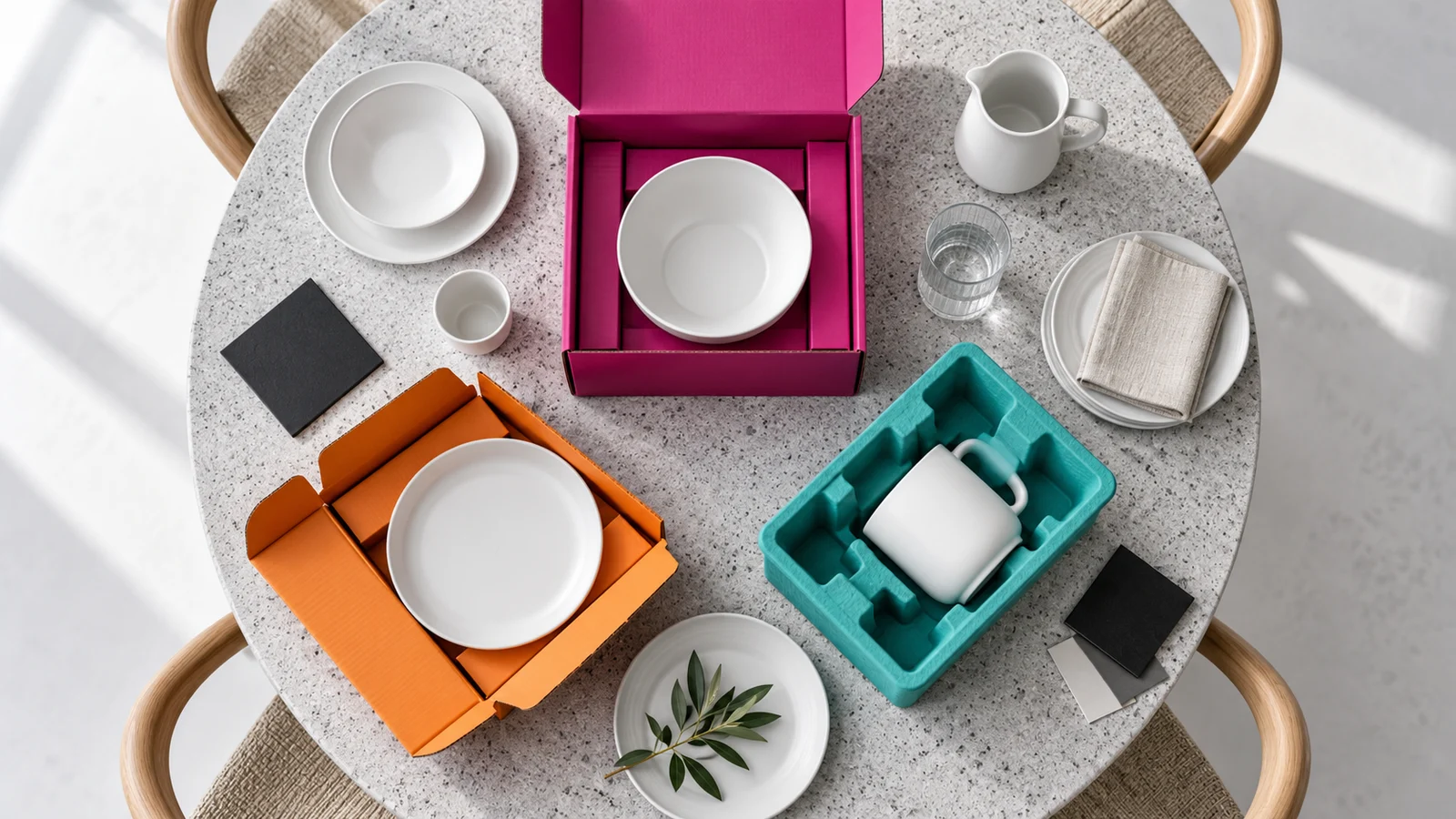
| Decision field | Retail shelf box | E-commerce mailer |
|---|---|---|
| Primary job | Display, product communication, controlled shelf access | Closed parcel protection and delivery presentation |
| Real-pack evidence | Shelf orientation, window/closure integrity, removal path, scuff and count check | Void control, edge/corner restraint, closure, movement, scuff and parcel-route check |
| Likely trade-off | Display area can compete with board and protection | Protection can add volume and reduce product visibility |
| Hold condition | Components migrate, decoration rubs, window distorts or shelf presentation fails | Void remains, closure opens, corners crush or components contact each other |
| Approval scope | Named BOM + insert + box + artwork revision | Named BOM + cushion + mailer + closure revision |
Test the actual channel pack, not a generic box
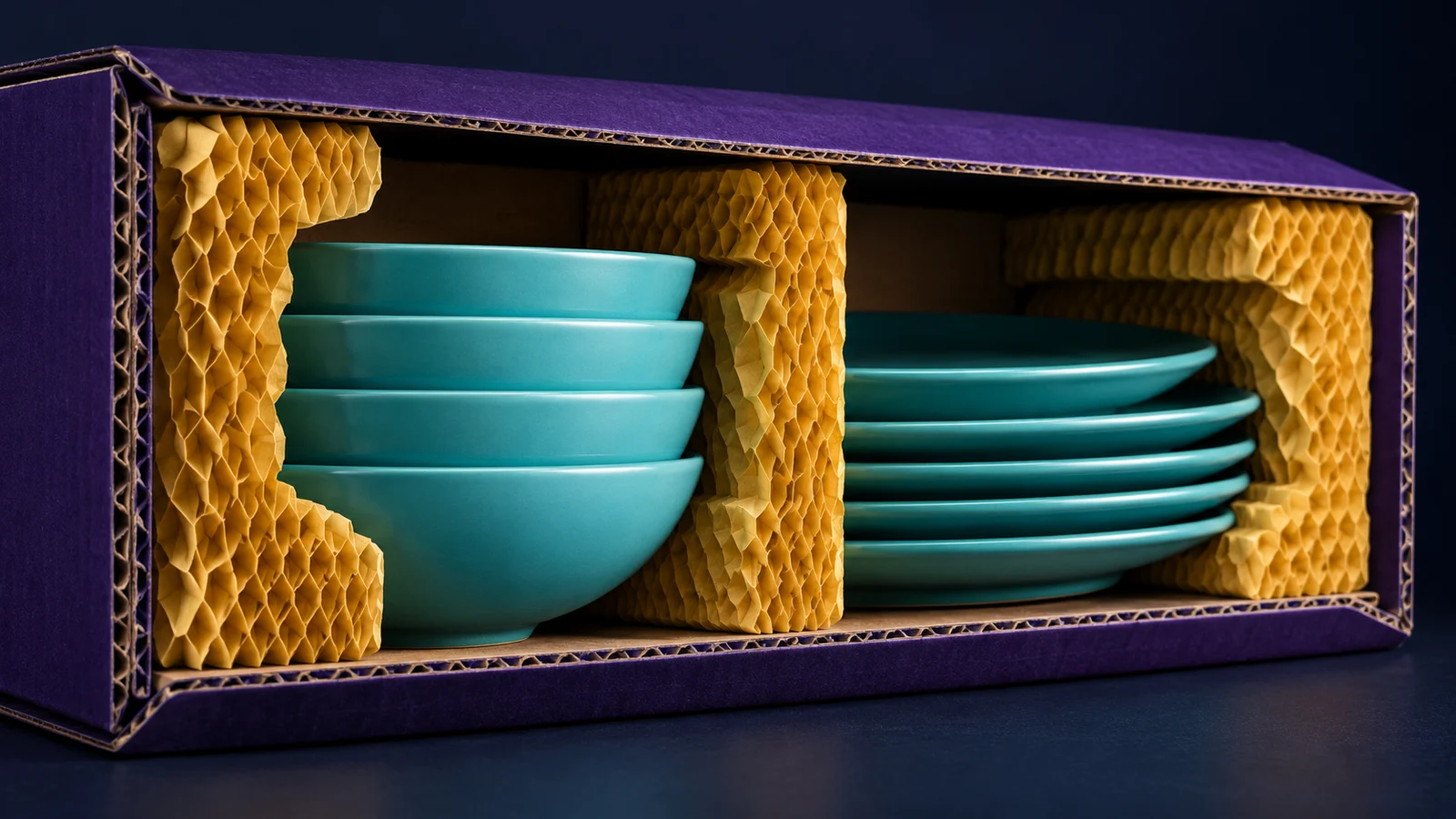
Load the production-intent component mix, including instructions, cutlery sleeve, separators and any lunch container. Record packed mass, external dimensions, component orientation and closure state. Mark every contact point before the agreed handling sequence and inspect the same points afterward.
| Check | Buyer-entered record | Decision |
|---|---|---|
| Void ratio | (Internal pack volume − occupied component/cushion volume) ÷ internal pack volume | Use as a comparison input, not a universal pass limit. |
| Movement | Pre/post position photos and measured displacement at defined zones | Revise restraint if movement creates contact or count risk. |
| Surface condition | Before/after map for rims, decoration, cup walls and utensils | Separate, reorient or document the accepted condition. |
| Opening | Tools, steps, loose parts and first component exposed | Match the channel and intended customer experience. |
| Cube | External L × W × H for each approved pack | Compare only after the real pack closes correctly. |
Run a channel-specific scenario comparison
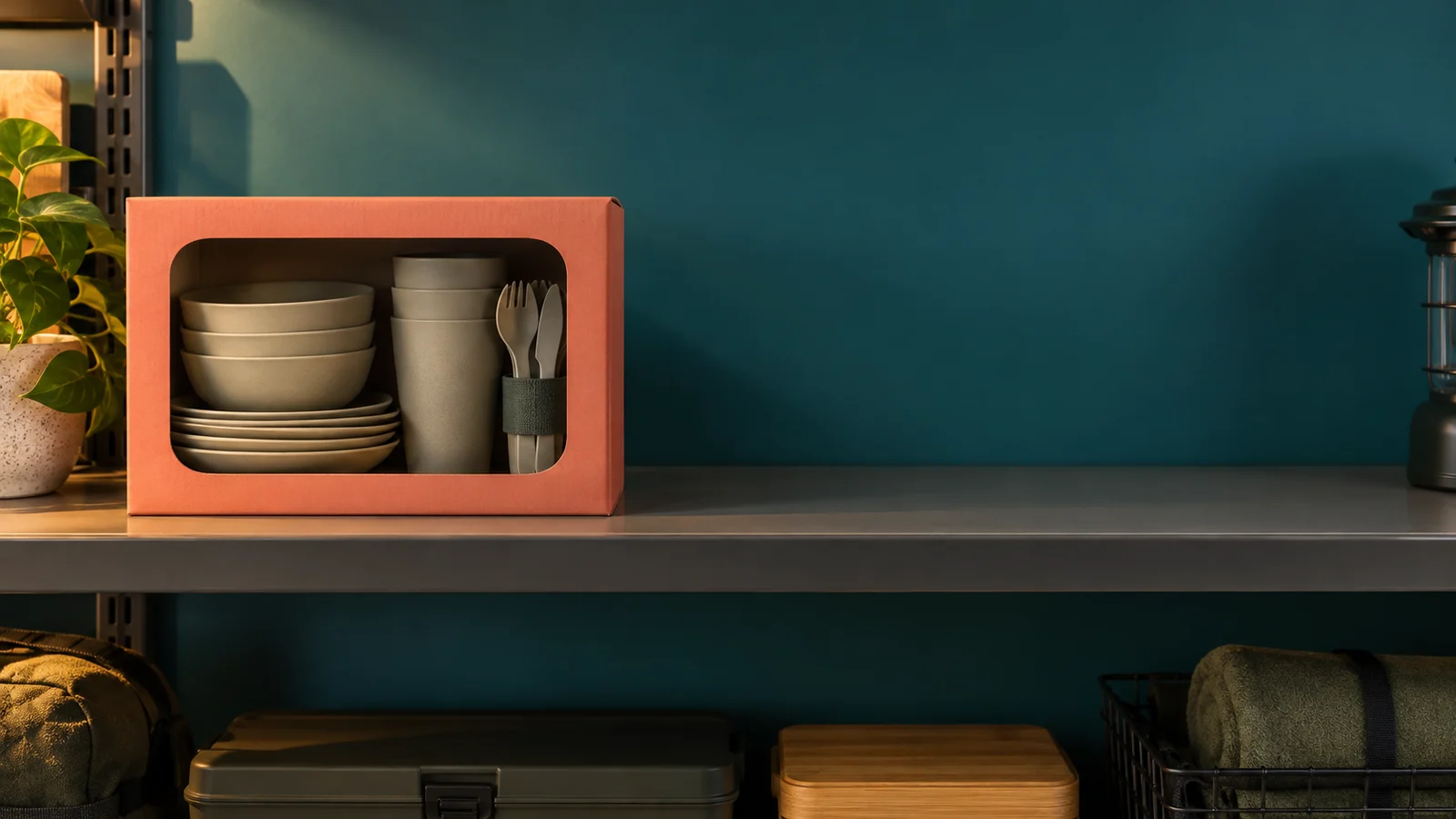
A shelf-ready pack can fail as a parcel, while a parcel mailer can be inefficient or opaque at retail. The scenario record should state the route, handling sequence, observation method and limitations.
| Scenario | Evidence to collect | Alternative if risk remains |
|---|---|---|
| Retail replenishment | Case-to-shelf handling, face visibility, stable footprint, removal and reclosure | Increase board support, revise aperture or use a sleeve over a protective inner pack. |
| Single-unit parcel | Void, corner/edge condition, closure, component movement and post-route appearance | Add a fitted restraint, change orientation or use a double-box route if justified. |
| Omnichannel | Retail presentation plus parcel overpack compatibility | Use one inner retail unit with a channel-specific outer mailer. |
Close one controlled packaging approval record
Record the sample IDs, BOM, drawings, box or mailer specification, insert/cushion revision, artwork, operator, date, procedure, observations, photographs and disposition. Use the ISTA procedure directory to select an appropriate distribution procedure, the US EPA materials-management hierarchy to frame source-reduction choices, and the US FDA food-contact substances overview when packaging contacts food-contact surfaces.
Link the approval to the retail insert drawing method, transport scuff record and loaded carry-case inspection guide. This comparison covers dinnerware packaging; cookware requires separate heat, load and performance evidence.
Buyer checklist
| Request | Verify | Approve or hold |
|---|---|---|
| Controlled BOM, channel route, box/mailer drawings, insert or cushion, artwork and required procedure | Real packed state, dimensions, movement, contact map, closure, opening, photographs and limitations | Approve one named channel pack revision, or hold for protection, display, evidence or traceability gaps. |
Procurement FAQ
Can one box serve retail and parcel delivery?
Possibly, but the combined route needs its own real-pack evaluation; a retail box alone should not be assumed parcel-ready.
Is less packaging always the better choice?
No blanket conclusion is valid. Compare material use with damage, replacement and channel requirements using documented inputs.
Does a mailer need a product window?
Usually not for delivery, but opening experience and identification still need a buyer decision.
When must the test be repeated?
Repeat the relevant review after a controlled change to components, nesting, insert, cushioning, dimensions, closure, artwork or channel route.
What belongs in the RFQ?
Send the BOM, maximum component envelopes, target channel, pack drawings, artwork, route, target markets and required evidence.
Request a channel pack review
Send the controlled BOM, box or mailer drawing, insert/cushion concept and channel route to Naike. Use the contact form for drawings or submit an RFQ brief.
Last reviewed .