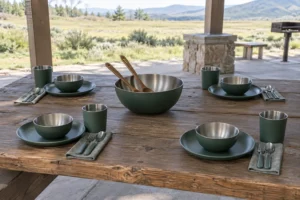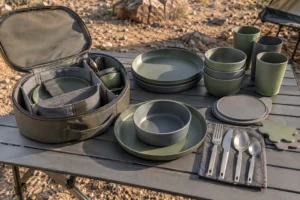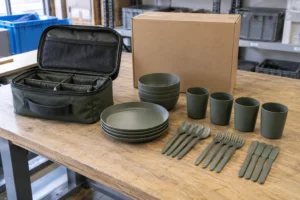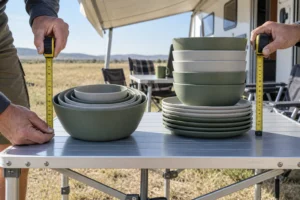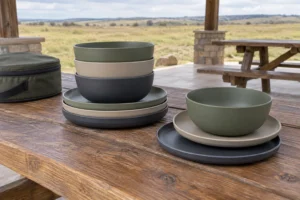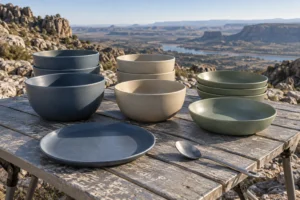
private label outdoor tableware checklist: A private label outdoor tableware checklist keeps product, compliance, packaging and commercial decisions connected from concept to shipment. Brands should not begin with a logo on a catalog item. Define the customer, use case, material, component architecture, evidence, color, tooling, packaging, inspection, quantity and change control as one program.
1–2. Define the customer and channel
Describe the user, trip style, meals, carrying method, cleaning reality and price position. Then record whether the product is for specialty outdoor retail, mass retail, e-commerce, RV, glamping, promotional use or another channel. These choices control durability, pack size, artwork and replacement expectations.
3–4. Build the assortment and material map
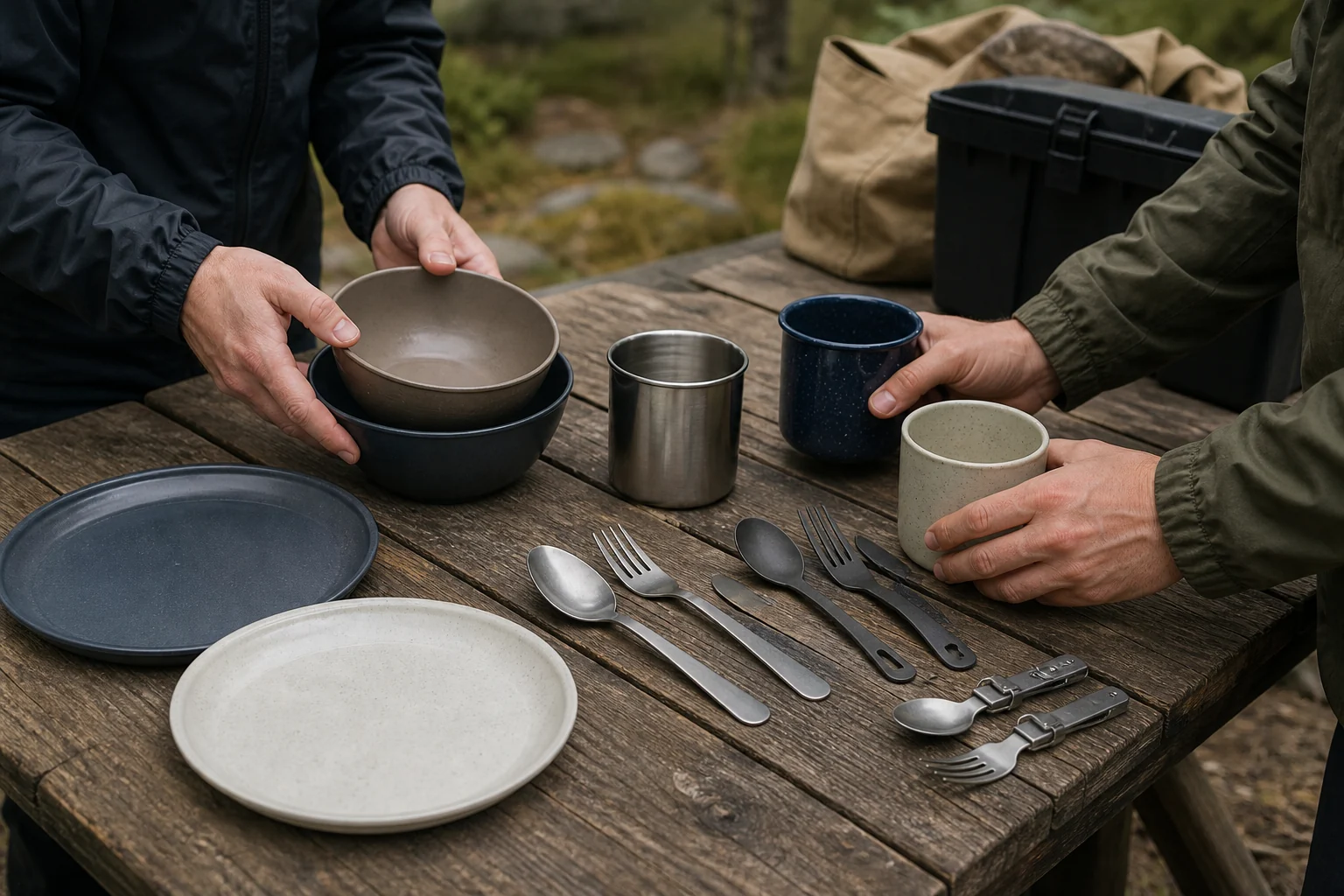
Choose a focused hero set and supporting components rather than launching too many shapes. Assign each SKU a material route based on performance and price: PP for scalable family sets, stainless steel for durable programs, titanium for premium weight-led lines, and wheat-straw composite for documented, market-appropriate applications. Review the complete outdoor tableware range.
5–6. Freeze specifications and tooling ownership
For every component, record dimensions, capacity, weight, tolerance, finish, color and functional interfaces. Decide whether the project uses existing molds, modifications or new tooling; document ownership, storage, maintenance, change approval and what happens when the relationship ends.
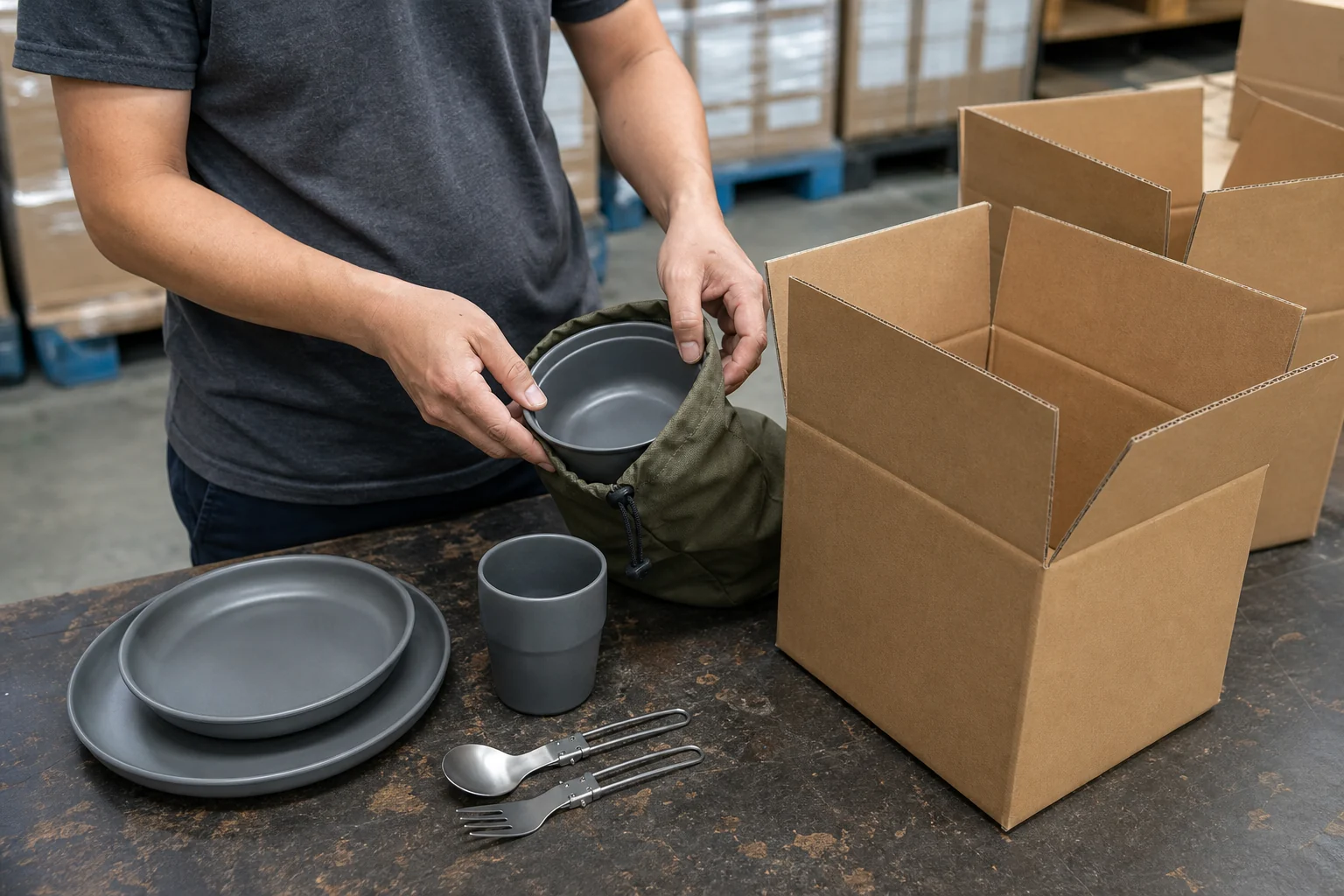
7–8. Approve logo and retail packaging
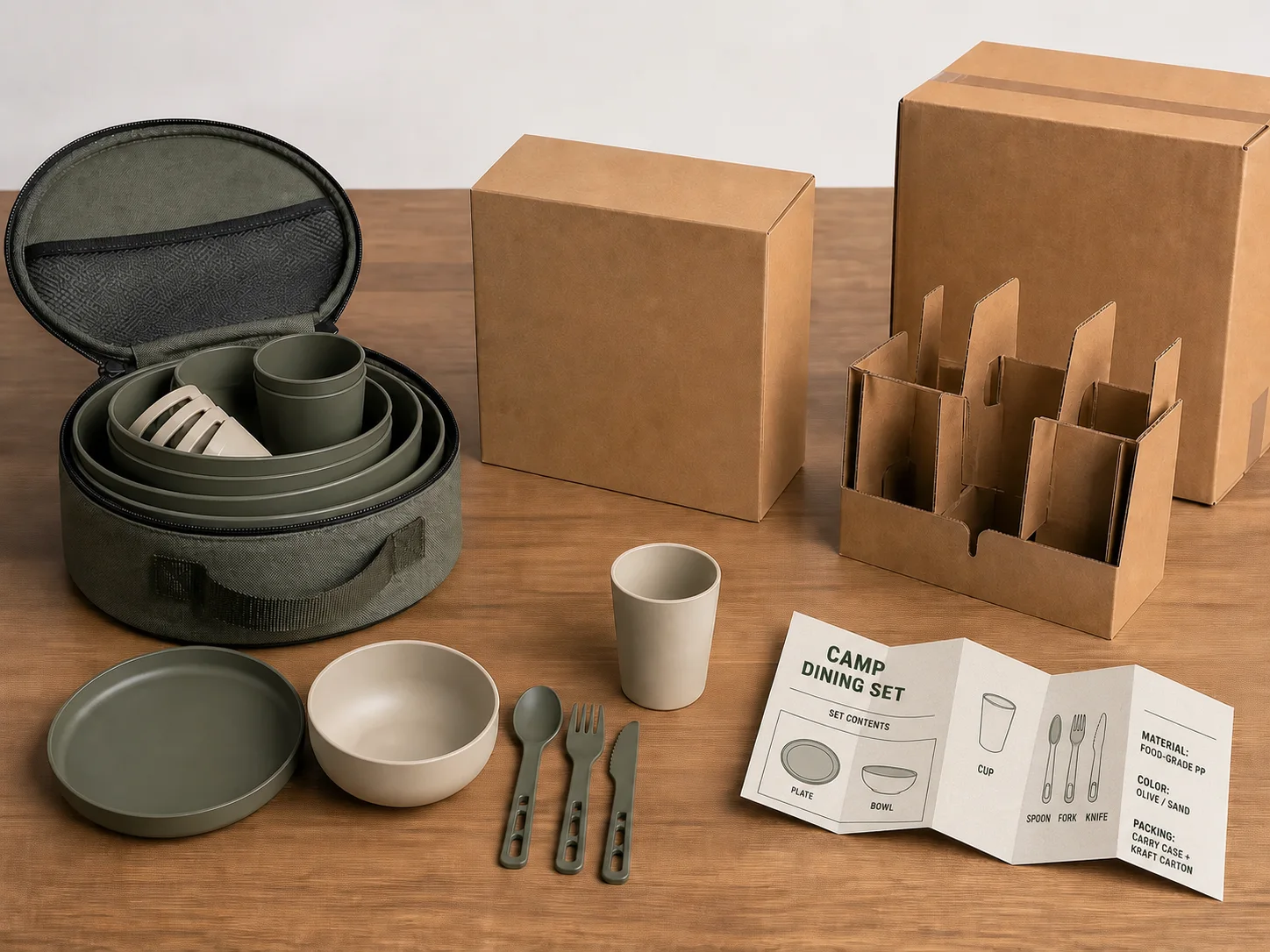
Select decoration by material and use rather than appearance alone. Define logo file, size, location, color and durability acceptance. Packaging must accurately state the material, component count, care and responsible business information. Approve dielines, barcode, languages, claim wording and the physical pack-out.
9–10. Plan evidence and quality control
Map food-contact requirements to the finished SKU, destination and intended conditions. Add performance tests that matter to the program, such as drop, nesting, corrosion, staining or coating adhesion. Define the inspection level, defects, sample reference, measurement tools and release authority before production.
11–12. Align MOQ, schedule and launch records
Final MOQ and production schedule are confirmed in the quotation. Custom molds, colors, packaging and additional testing require a specific schedule. The launch file should contain the approved quotation, specification, bill of materials, artwork, golden sample, evidence pack, inspection record and shipment configuration.
Use one controlled RFQ
Send product interest, material, market, quantity, logo, packaging and target date in one brief through the outdoor tableware inquiry form. A controlled RFQ helps engineering, sourcing, quality and sales answer the same requirement instead of creating conflicting assumptions.
private label outdoor tableware checklist: procurement control table
| Workstream | Approval question | Owner |
|---|---|---|
| Assortment | Does each SKU have a clear role? | Brand and buyer |
| Engineering | Are dimensions, weight and interfaces frozen? | Product and supplier |
| Compliance | Is evidence tied to use and market? | Importer and quality |
| Branding | Are logo and claims supportable? | Marketing and compliance |
| Packaging | Is the complete pack-out approved? | Packaging and operations |
| Production | Are MOQ, schedule and inspection aligned? | Buyer and supplier |
Use this private label outdoor tableware checklist as a working brief, then verify the final specification against the intended market. For EU projects, the European Commission provides an authoritative food-contact materials overview; the final evidence scope must still match the exact finished SKU.
Frequently asked questions
What should be approved before paying for tooling?
Approve the brief, target specification, development route, ownership terms, milestones and acceptance criteria.
Can one checklist cover all four materials?
The program framework can, but technical evidence and manufacturing controls must remain material- and SKU-specific.
What is the minimum starting quantity?
Naike’s public starting point is MOQ 500 units; component, color, packaging and tooling minimums are confirmed in the quotation.
Which records should remain after launch?
Keep specifications, artwork, golden sample, declarations, reports, inspection and change-control records.
Discuss your outdoor tableware program
Send the target product, material, market, quantity, logo, packaging and launch date. We will respond with a project-specific route instead of applying unsupported claims across every SKU.
Request a B2B QuoteView Related CategoryView Related Material