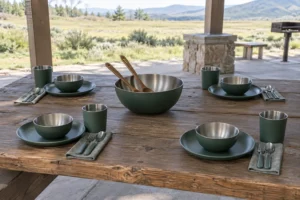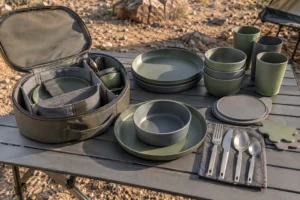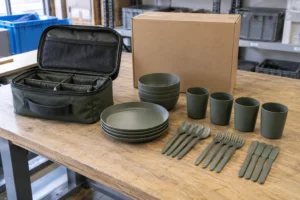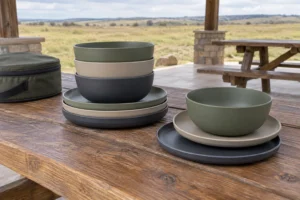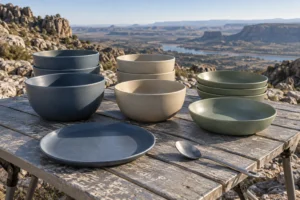
camping tableware packaging guide: A camping tableware packaging guide must connect product protection, nesting, retail communication and logistics. Packaging is not decoration added after product approval. It controls scratches, rattle, missing components, moisture, barcode accuracy, shelf presentation and e-commerce survival. Buyers should approve the packaging as a complete packed SKU.
Define the sales channel and handling route
Retail shelves, club packs, promotional distribution and parcel delivery expose products to different risks. Record the distribution route, carton stacking, expected handling and whether customers need to inspect the product without opening the pack. The channel determines whether a sleeve, color box, window, molded insert, carry bag or hard case is appropriate.
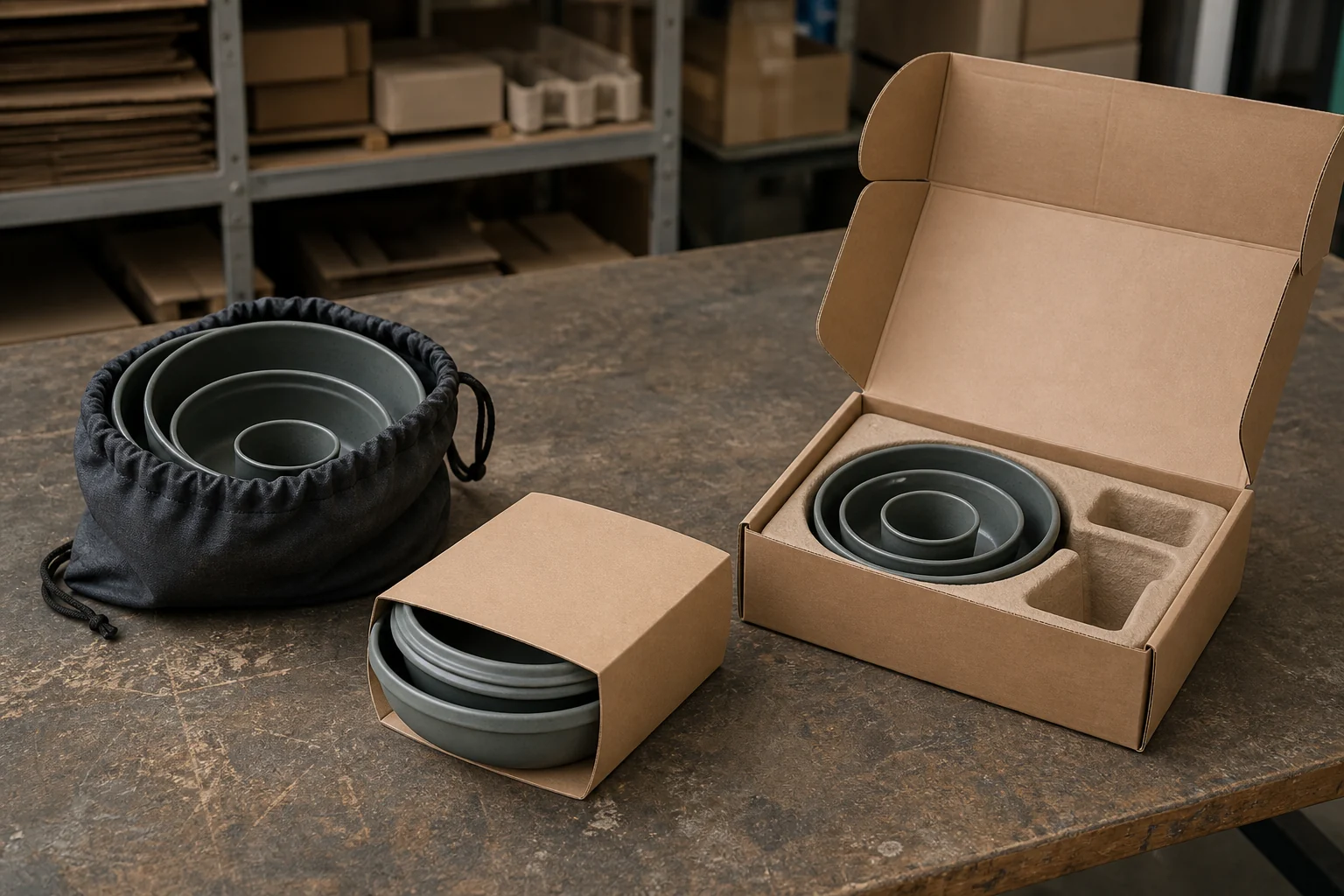
Protect surfaces and control movement
Metal surfaces may need separators to limit rubbing; molded PP parts need support against distortion; fiber-filled products require clean, dry packing. Build protection around actual contact points and verify the fully loaded package by orientation. Excess material is not a substitute for a well-controlled nest.
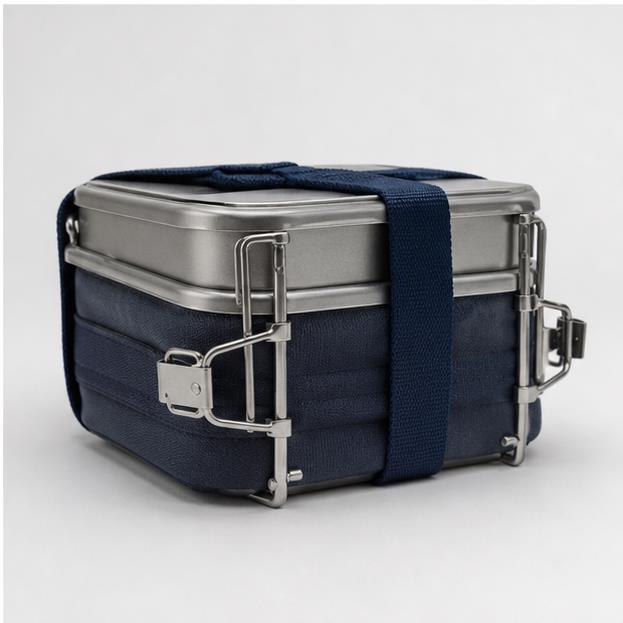
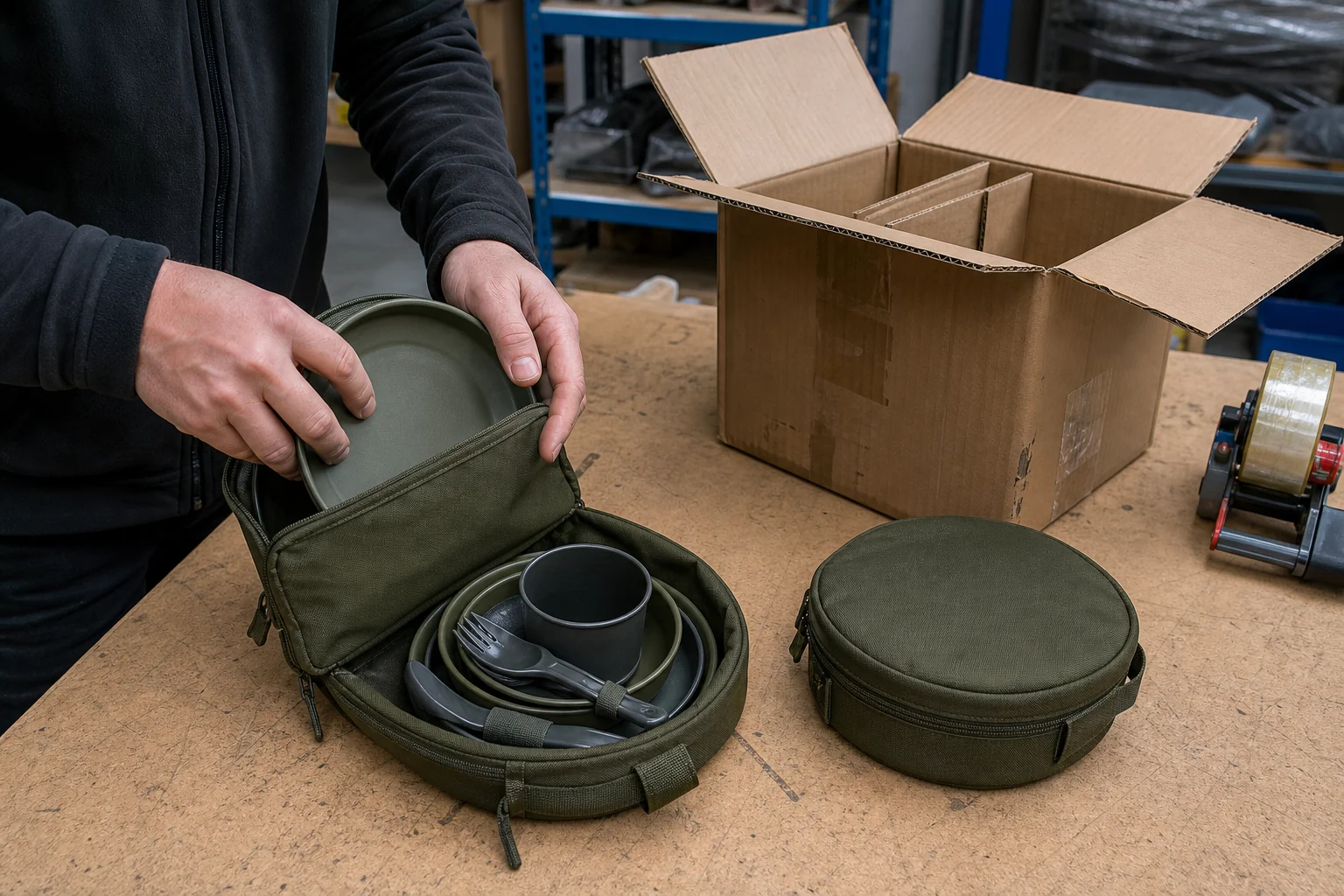
Treat the carry solution as a product component
A lunch bag, pouch or storage box affects piece count, weight, perceived value and outdoor usability. Specify fabric, zipper, handle, ventilation, cleaning instructions and logo method where relevant. Inspect the bag or case under the same approved-sample system as plates and utensils.
Create a controlled artwork checklist
Artwork approval should cover product name, material statement, component count, use and care, warnings, responsible business details, destination language, barcode, recycling marks and claim substantiation. “Eco-friendly,” “biodegradable,” food-contact and appliance-use wording must never be copied across SKUs without verification.
Validate retail and shipping cartons
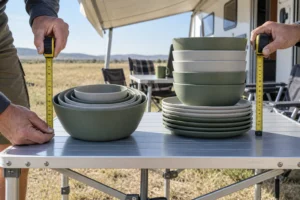
Confirm package dimensions and weight using production-equivalent samples. Define master-carton quantity, board grade, labels, pallet pattern and acceptable carton condition. Run project-appropriate drop, vibration, compression or shipment trials when the route requires them, documenting the method and result.
Lock packaging changes into the purchase order
The final purchase order should reference the approved dieline, artwork revision, pack-out photo, component checklist and carton marks. Eligible standard SKUs start from 500 units; custom projects are quoted individually. Some confirmed standard programs can be produced in as little as 7 days. Final MOQ and production schedule are confirmed in the quotation. Use the custom outdoor tableware service page to plan the complete program.
camping tableware packaging guide: procurement control table
| Packaging layer | Control point | Typical approval record |
|---|---|---|
| Product contact | Scratch, rattle, moisture and deformation | Pack-out sample and photos |
| Retail pack | Structure, artwork, barcode and count | Signed dieline and artwork revision |
| Carry solution | Material, zipper, handle and fit | Golden sample |
| Master carton | Quantity, dimensions and marks | Carton specification |
| Transit route | Drop, vibration or compression as required | Defined test record |
Use this camping tableware packaging guide as a working brief, then verify the final specification against the intended market. For EU projects, the European Commission provides an authoritative food-contact materials overview; the final evidence scope must still match the exact finished SKU.
Frequently asked questions
When should packaging design begin?
After the set architecture is stable, but early enough to influence nesting, dimensions and retail cost.
Is a carry bag part of packaging?
It can be both packaging and a reusable product component, so it needs its own specification and inspection.
Can one carton design cover several materials?
Only if material statements, care instructions, weights and claims remain accurate for every SKU.
What files should a buyer approve?
Approve dielines, artwork revisions, pack-out photos, component lists, carton marks and any required test record.
Discuss your outdoor tableware program
Send the target product, material, market, quantity, logo, packaging and launch date. We will respond with a project-specific route instead of applying unsupported claims across every SKU.
Request a B2B QuoteView Related CategoryView Related Material