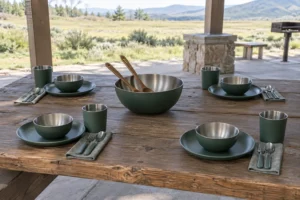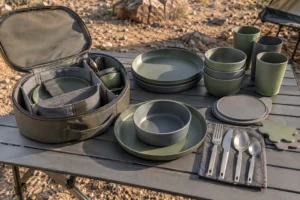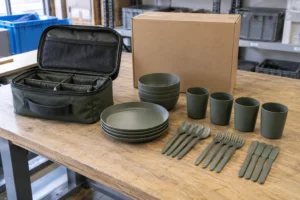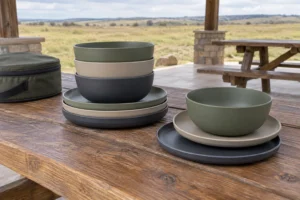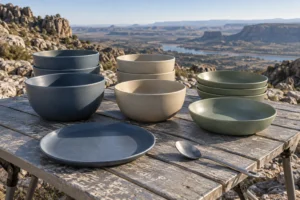
design a 4 person camping dinnerware set: To design a 4 person camping dinnerware set, begin with the meal plan and the four users—not a fixed piece count. Define whether each person needs a plate, bowl, cup and full cutlery set; then decide which serving, storage and cleaning components are shared. The commercial result must also fit a target retail price, shelf space, packed volume and replacement strategy.
Choose the meal architecture first
Breakfast, trail lunches and cooked dinners create different vessel needs. A shallow plate may work for dry foods, while soups and mixed meals need bowls or deep plates. Cups may be eliminated when buyers already carry bottles, or upgraded when hot drinks are central. Write a typical three-meal use case before counting pieces.
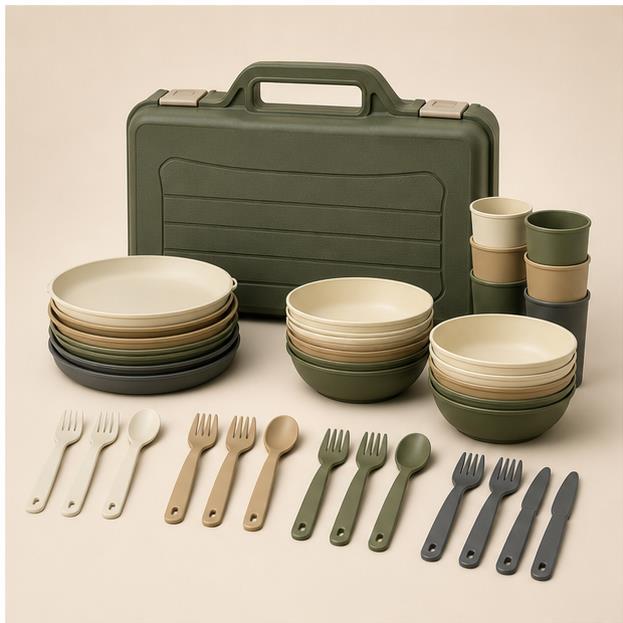
Allocate personal and shared components
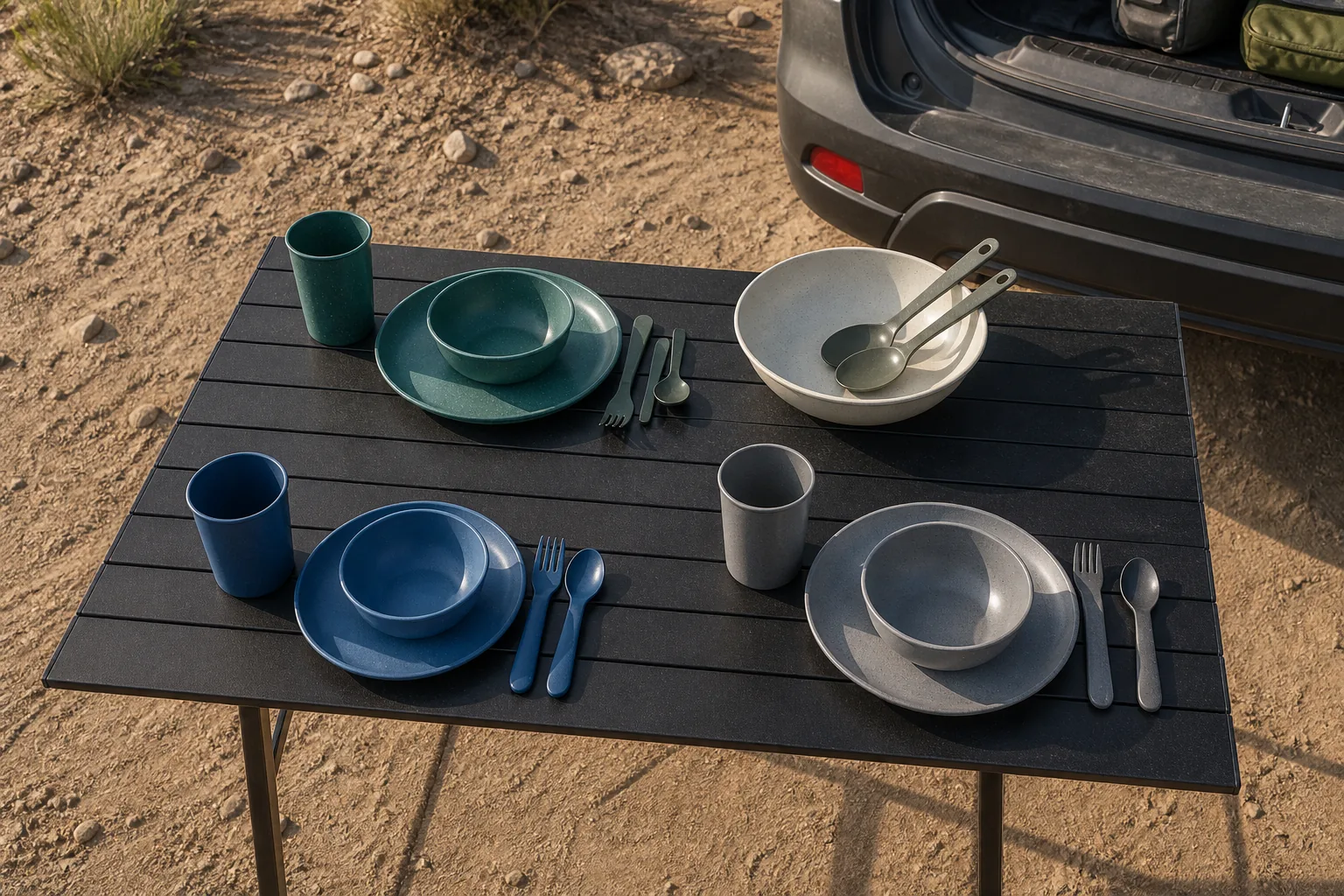
A clear base can be four eating vessels and four utensil sets, with bowls, cups, lids or serving tools added only when the use case earns their volume. Mark every item as personal, shared or optional. This avoids inflated “piece counts” built from accessories that do not improve the meal experience.
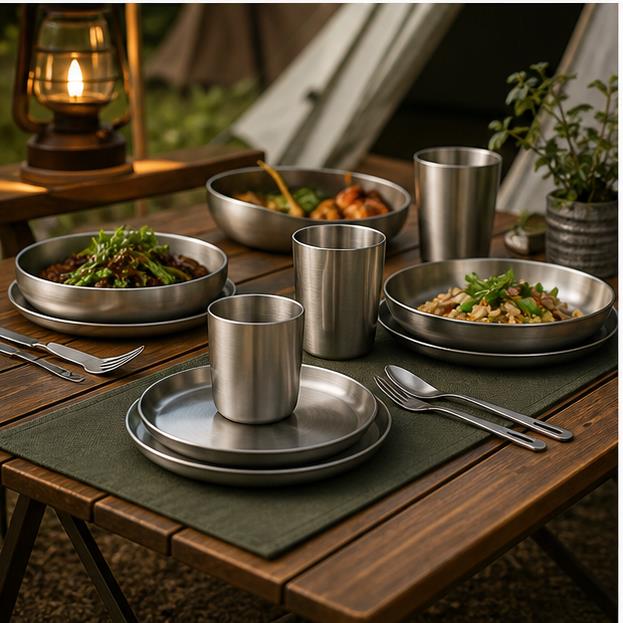
Select material by program position
Food-grade PP can support scalable colors, nesting and replacement pieces. Stainless steel suits durable RV, campsite and glamping programs. Titanium supports premium weight-led assortments. Wheat-straw composite can serve selected markets when the full composition and claim boundaries are disclosed. Compare routes on the outdoor tableware page.
Engineer nesting and carry control
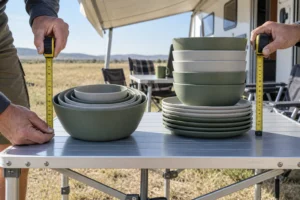
Model the stack diameter, height, handle interference and rattle points. Decide whether the set uses a fabric lunch bag, hard storage box or simple strap. Carry solutions must be tested with the complete four-person pack, not empty vessels. Moisture release, drying and dirty-item separation also affect the design.
Plan replacement and color coding
Family sets often lose or damage individual pieces before the rest of the program reaches end of life. Keep a component code for each part and decide whether replacement packs will be offered. Color can identify users or size, but approved masterbatches and tolerance samples are necessary for repeat orders.
Validate before locking packaging
Confirm fit, stability, rim comfort, utensil use, cleaning, packed movement and intended temperature conditions with representative users. Packaging should be designed after the set architecture is stable. For a custom project, share the component list, target material, quantity, market, logo and packaging through the B2B inquiry form.
design a 4 person camping dinnerware set: procurement control table
| Planning layer | Buyer decision | Approval evidence |
|---|---|---|
| Users | Four adults, children or mixed family | Persona and meal use case |
| Components | Personal versus shared pieces | Controlled bill of materials |
| Material | PP, titanium, stainless or composite | SKU-specific declaration |
| Storage | Bag, box, strap or nesting only | Loaded pack-out sample |
| Retail | Price, shelf space and replacement plan | Approved packaging and SKU map |
Use this design a 4 person camping dinnerware set as a working brief, then verify the final specification against the intended market. For EU projects, the European Commission provides an authoritative food-contact materials overview; the final evidence scope must still match the exact finished SKU.
Frequently asked questions
How many pieces should a four-person set contain?
Only the use case can decide. Count personal eating pieces first, then add justified shared and storage components.
Should cookware be included?
Only when cooking is in scope. Dinnerware and cookware should not be treated as identical categories.
Can users have different colors?
Yes, when the color system, masterbatch and acceptable tolerance are approved.
What MOQ applies?
The public starting point is MOQ 500 units; exact minimums depend on components, materials, decoration and packaging.
Discuss your outdoor tableware program
Send the target product, material, market, quantity, logo, packaging and launch date. We will respond with a project-specific route instead of applying unsupported claims across every SKU.
Request a B2B QuoteView Related CategoryView Related Material