Description
This page presents a configurable product direction for buyer discussion. Images are visual development references—not proof of a stocked, tooled or production-approved article. Final construction, dimensions, material, tests, tooling cost and commercial terms require engineering review and an approved sample.
CUSTOM DESIGN · TOOLING REVIEW · PRIVATE LABEL
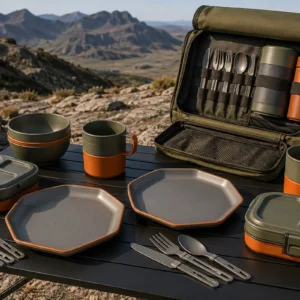
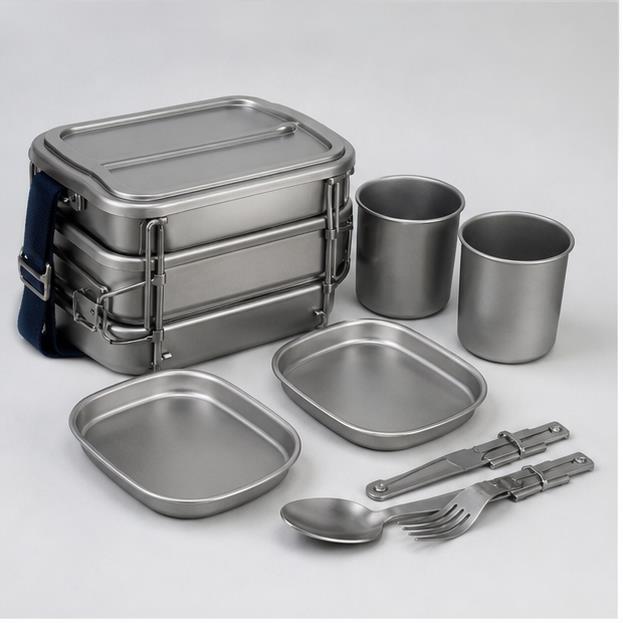
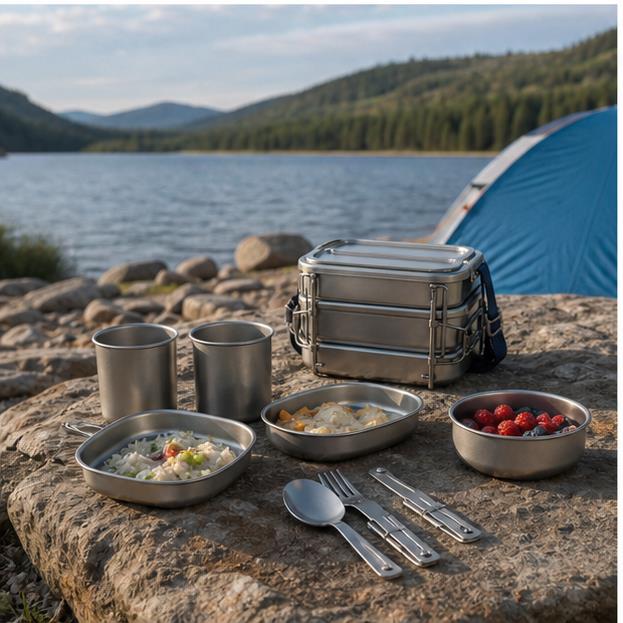
A custom stainless steel mess kit concept for two campers using nesting plates, bowls, cups, folding utensils and a locking carry frame with a compact strap.
Custom Stainless Steel Mess Kit for Outdoor Brand Programs
The concept combines stamped metal components with a reusable mechanical carrier. It is intended for rugged camp, project and outdoor retail programs where pack organization matters as much as individual dinnerware pieces. The locking frame and nesting tolerances are the key development features.
Buyer applications
- Two-person camping and overland kits
- Outdoor project and institutional supply
- Rugged retail mess-kit collections
- Caravan and emergency dining programs
Development priorities
- Locking-frame reliability
- Nesting tolerance and noise control
- Stamped-rim strength
- Strap and packed-kit security
Proposed Product Architecture
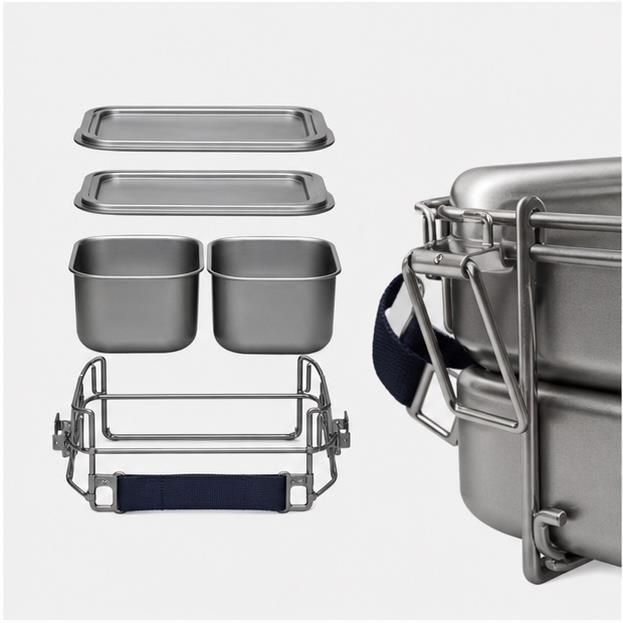
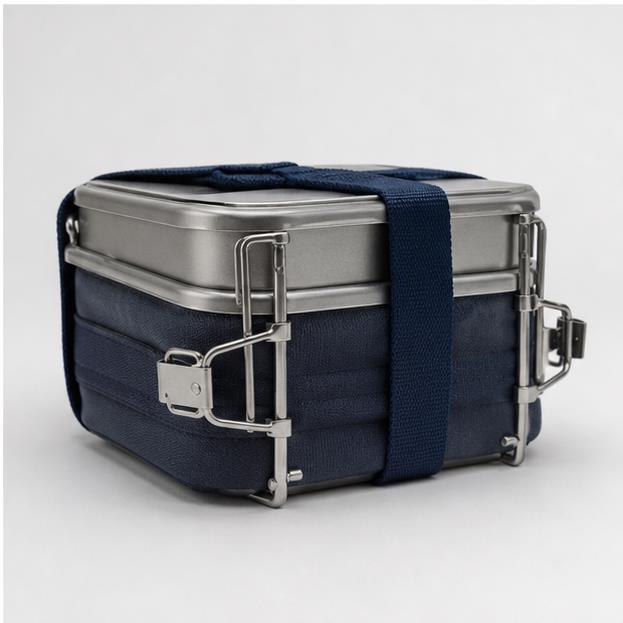
Two plate-lids, two bowls and two cups stack inside a formed metal system held by a locking frame and strap. Prototype work should test load paths, latch access, cleaning and whether the frame can be serviced or replaced.
| Material route | Stainless steel grade to be agreed |
|---|---|
| Target users | Two-person camp program |
| Components | Plate-lids, bowls, cups and folding utensils |
| Carrier | Locking metal frame with textile strap |
| Finish | Bead-blasted visual direction |
| Status | Engineering and sourcing concept |
Material Selection and Evidence
The selected steel grade and thickness must balance forming, stiffness, packed weight and corrosion performance. Folding utensils, fasteners and carrier components may use different grades and should be listed individually in the material bill.
Material declarations, food-contact scope, finish records and corrosion testing should match the exact components. If bead blasting is selected, surface roughness and acceptable variation should be represented by an approved master sample.
Custom Molding and Development Workflow
The product may require separate forming dies for containers and lids, utensil tooling, frame bending fixtures, latch components and gauges. A pilot assembly should validate stack tolerance before all tooling is finalized.
- Buyer brief. Confirm users, destination market, order forecast, target cost, component list, storage method and retail channel.
- Engineering review. Evaluate geometry, nesting, draft angles, wall distribution, forming or tooling route, decoration area and packing efficiency.
- Visual and functional prototype. Approve appearance, grip, stacking, closure and complete-set behavior before production tooling.
- Tool and sample validation. Record critical dimensions, materials, color standards, surface limits and functional acceptance criteria against the approved sample.
- Pilot and mass production. Validate packaging, carton marks, inspection method and document set before scaling the order.
OEM, Logo and Retail Packaging Options
Buyers can adapt component sizes, frame geometry, strap color, surface treatment, laser marking and storage sleeve. The quotation should distinguish custom-formed parts from standard hardware.
Logo feasibility depends on the confirmed surface, component geometry, decoration process and quantity. Packaging may include a carry solution, kraft or color carton, retail sleeve, insert card, barcode area and multilingual instructions. Artwork should avoid unsupported environmental or performance claims.
Quality Validation for Outdoor Use
Recommended checks include material identity, thickness, rim smoothness, latch cycling, carrier alignment, utensil count, nesting noise, strap security and packed-set drop behavior. Corrosion and cleaning requirements need defined exposure conditions.
Each requested claim needs a defined method, sample condition and acceptance limit. A general word such as “durable,” “dishwasher safe,” “leakproof,” “ultralight” or “corrosion resistant” is not treated as validated until the buyer and supplier agree how it will be measured.
MOQ, Tooling, Samples and Lead Time
This concept does not use a universal MOQ. Quotation depends on material, component count, new-tool complexity, decoration, packaging and annual forecast. Prototype, mold, decoration fixture and retail-packaging charges are separated where relevant. Sample timing and production lead time begin only after the corresponding specification, artwork and payment milestone are approved.
Frequently Asked Buyer Questions
Is this exact product already in stock?
No. It is an OEM development concept. The structure can be adapted after engineering, supply and tooling review.
Can we change the color, component count and storage method?
Yes, these are core discussion points. Feasibility, tooling impact, quantity and cost must be confirmed before sampling.
Can compliance reports be supplied?
The required market and test scope must first be defined. Any report used for a claim must match the final material, article, surface treatment and intended food-contact conditions.
How do we begin a quotation?
Send the target market, forecast quantity, required components, preferred material, color, logo, packaging and desired delivery window.
Start a Custom Outdoor Tableware Project
Share your brief with our B2B team. We will separate confirmed requirements from open engineering questions before preparing a commercial quotation.
RELATED SOURCING PATHS
Compare Products and Plan Your Project
Review related product formats, then compare material, set configuration, logo, packaging, testing scope and order quantity with our B2B team.