
PP vs wheat straw composite tableware: PP vs wheat straw composite tableware is not a choice between “plastic” and “plastic-free.” Most molded wheat-straw dinnerware is a composite in which plant fiber is carried by a polymer matrix, commonly PP. A professional comparison therefore starts with the complete formulation, intended food contact, temperature range, cleaning method, outdoor use and target-market evidence. For buyers, the better option is the one whose finished SKU can be specified, tested and repeated consistently.
Start with the real material declaration
Ask the supplier to identify the base resin, plant-fiber type, approximate formulation range, color masterbatch and any functional additives for the quoted SKU. “Wheat straw” alone is not a complete material declaration. A PP article and a wheat-straw composite can share similar molding routes while behaving differently because fiber content affects appearance, odor, moisture response and surface consistency.
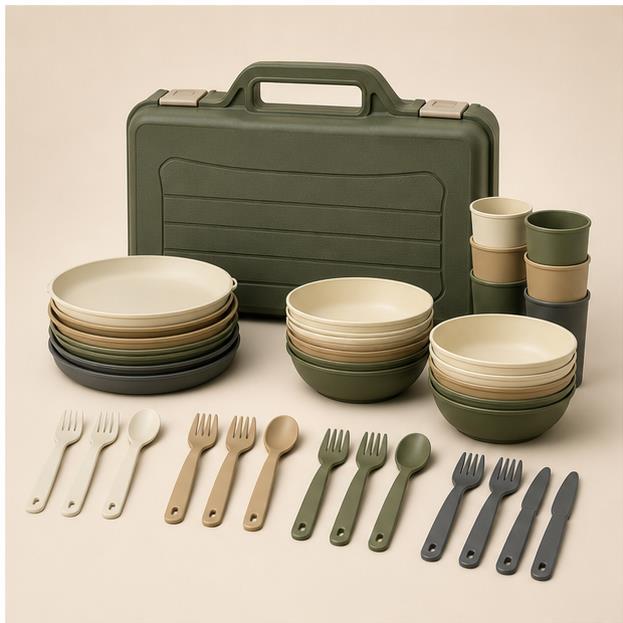
Compare performance for the intended outdoor use
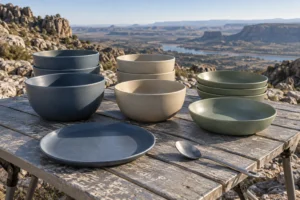
Pure PP is often selected for scalable family sets, repeatable colors, quiet handling, nesting and replacement-piece programs. Wheat-straw composite can provide a natural visual texture for picnic, gift and selected regional programs. Neither route should receive universal claims such as unbreakable, microwave safe or dishwasher safe. Confirm those points by SKU, use condition and evidence.
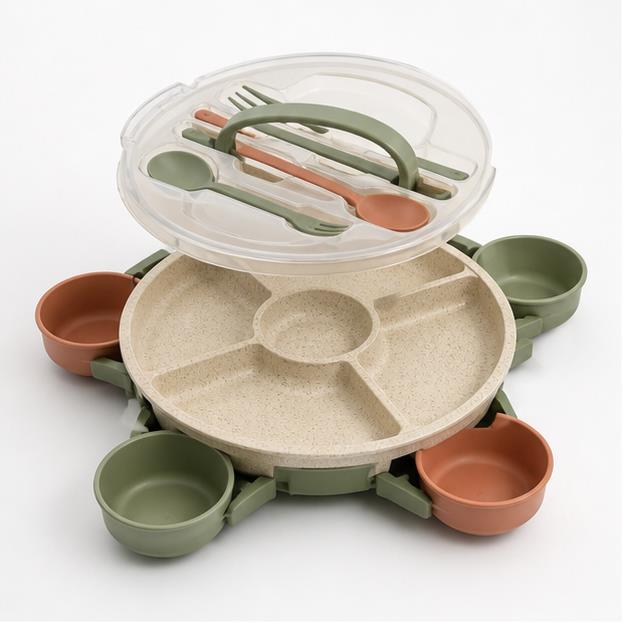
Control color, odor and batch variation
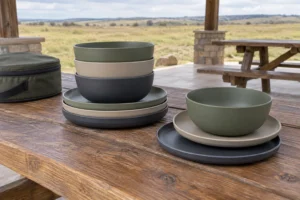
For color-critical private-label programs, approve a physical limit sample under agreed lighting and record the resin and masterbatch route. For fiber-filled parts, also define acceptable speckling, odor and surface variation. Compare samples after conditioning, washing and the temperatures relevant to the buyer’s instructions. This prevents an attractive first sample from becoming an inconsistent production standard.
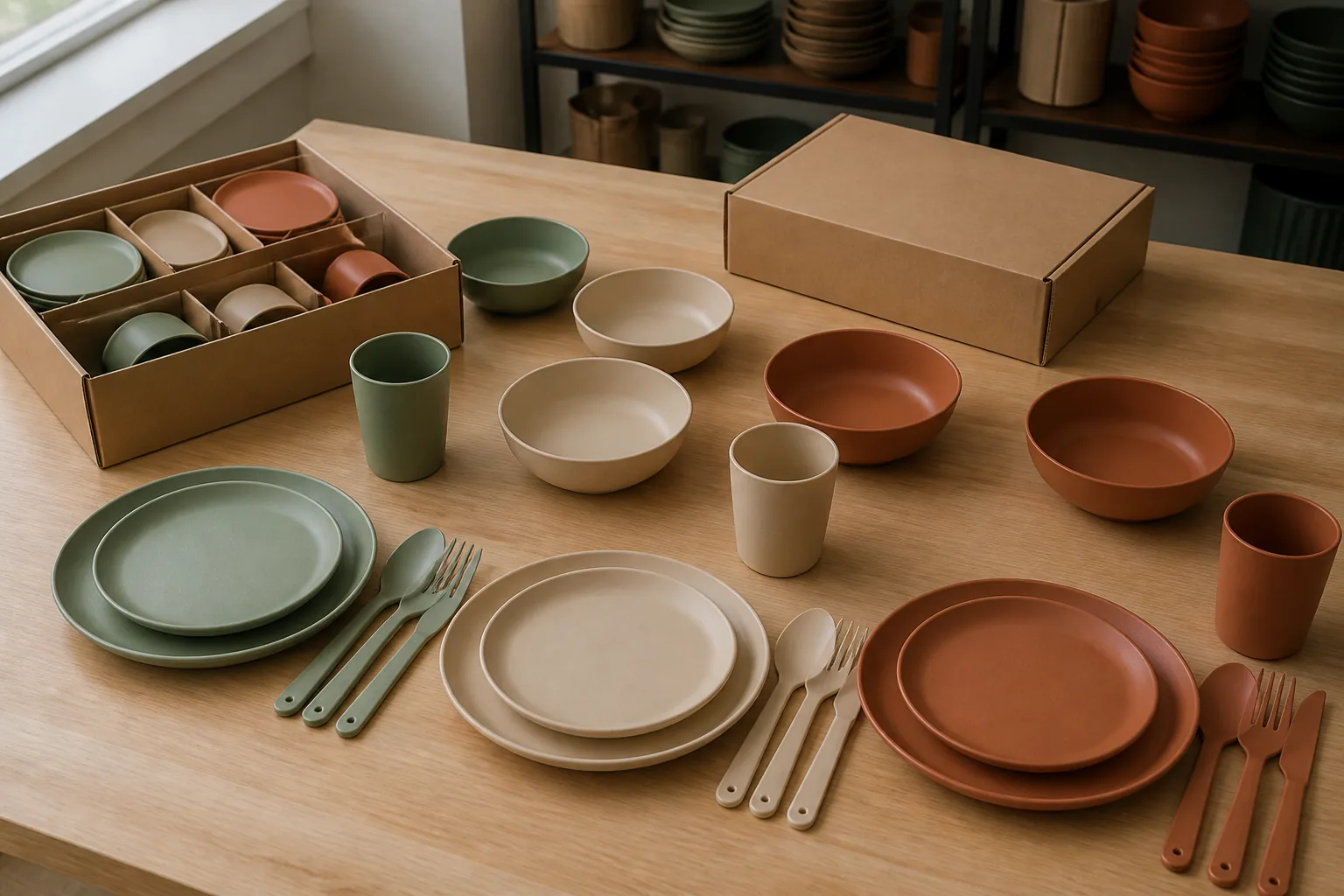
Plan tooling and set architecture
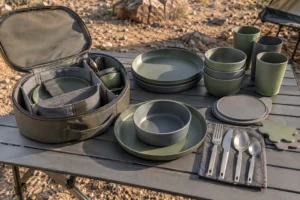
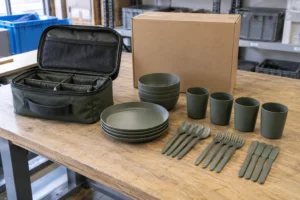
Both material routes can support plates, bowls, cups, utensils and nesting sets, but wall thickness, ribs, gates, clips and hinges must be designed around the selected formulation. Use the camping dinnerware sets page to define person count and components before approving molds. Existing shapes with custom color or logo usually carry less development risk than a completely new structure.
Make environmental wording evidence-led
Do not describe a PP-based wheat-straw composite as plastic-free or automatically biodegradable. State the actual composition and the practical benefit that can be supported, such as reusable design, stackability or reduced resin content when documented. Claims must match the destination market and final packaging. Keep technical files that connect the statement to the exact production formulation.
Build the RFQ around comparable data
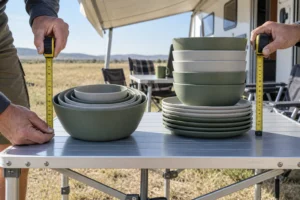
Ask both routes to quote the same component list, dimensions, unit weights, logo process, packaging, quantity and test scope. Eligible standard SKUs start from 500 units; custom projects are quoted individually. Some confirmed standard programs can be produced in as little as 7 days. Final MOQ and production schedule are confirmed in the quotation. A like-for-like RFQ exposes the real cost and risk differences.
PP vs wheat straw composite tableware: procurement control table
| Decision factor | Food-grade PP route | Wheat-straw composite route |
|---|---|---|
| Material record | Resin grade, color and additives recorded | Base resin, plant filler and additives recorded |
| Visual control | Good fit for controlled solid colors | Natural speckling requires an approved range |
| Claims | Use SKU-specific test evidence | Avoid plastic-free or biodegradable claims without proof |
| Best-fit programs | Family camping, retail sets, replacements | Picnic, gift and selected regional programs |
| Key validation | Heat, drop, odor, migration, cleaning | Same checks plus formulation and appearance variation |
Use this PP vs wheat straw composite tableware as a working brief, then verify the final specification against the intended market. For EU projects, the European Commission provides an authoritative food-contact materials overview; the final evidence scope must still match the exact finished SKU.
Frequently asked questions
Is wheat-straw composite tableware plastic-free?
Usually no. Many molded wheat-straw articles use PP or another polymer as the matrix. Confirm the complete SKU formulation.
Which material is cheaper?
Price depends on geometry, weight, formulation, color, order quantity, packaging and testing. Compare the same specification.
Can both materials be customized?
Yes, subject to the molding route, decoration area, color tolerance, tooling and approved sample.
What should an EU buyer request?
Request the exact composition, intended-use statement and market-relevant food-contact evidence for the finished SKU.
Discuss your outdoor tableware program
Send the target product, material, market, quantity, logo, packaging and launch date. We will respond with a project-specific route instead of applying unsupported claims across every SKU.
Request a B2B QuoteView Related CategoryView Related Material
Procurement decision matrix
Where Pure PP and Wheat-Straw Composite Fit
| Decision | Pure PP route | Wheat-straw + PP route |
|---|---|---|
| Scale and color repeatability | Usually the simpler baseline for controlled high-volume programs | Natural filler can require a documented visual tolerance |
| Claims | Describe the resin and verified performance | Disclose the composite formulation; do not imply plastic-free or biodegradable without evidence |
| Buyer approval | Confirm resin, color, dimensions and intended use | Confirm all PP inputs plus filler identity, ratio and market acceptance |
Choose from the verified project brief rather than a broad material slogan. Compare current PP outdoor tableware and wheat-straw composite options.