
food contact testing for outdoor tableware: Food contact testing for outdoor tableware must be defined for the exact finished article and its intended market and use. A supplier name, material label, FDA logo, LFGB phrase or laboratory brand is not a universal certificate. Buyers should connect composition, food type, contact time, temperature, repeated-use conditions, color and surface treatment to the applicable requirement and test record.
Define the finished article and destination
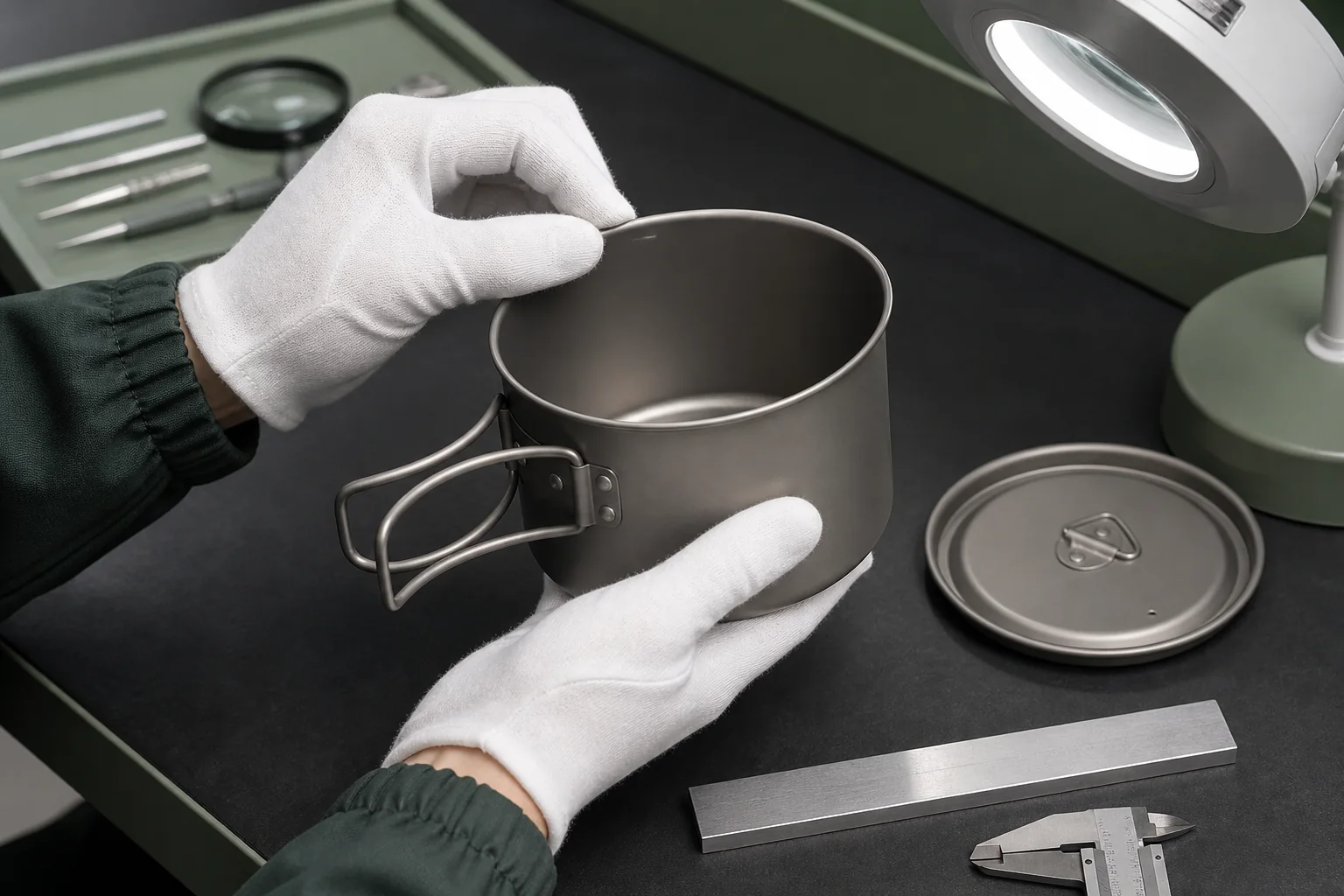
Record the SKU, material grade or formulation, color, coating, decoration, dimensions and manufacturing site. Then identify the destination market and responsible importer. Requirements can differ across jurisdictions, and a material that is acceptable under one set of conditions may need different evidence for another.
Write the intended-use envelope
State whether the article contacts aqueous, acidic, fatty or dry foods; the expected temperature and duration; whether use is repeated; and how it is cleaned. Outdoor use may add hot beverages, oily meals, storage, abrasion and temperature cycling. Avoid testing a mild condition while marketing a broader use.
Build a material-specific evidence plan
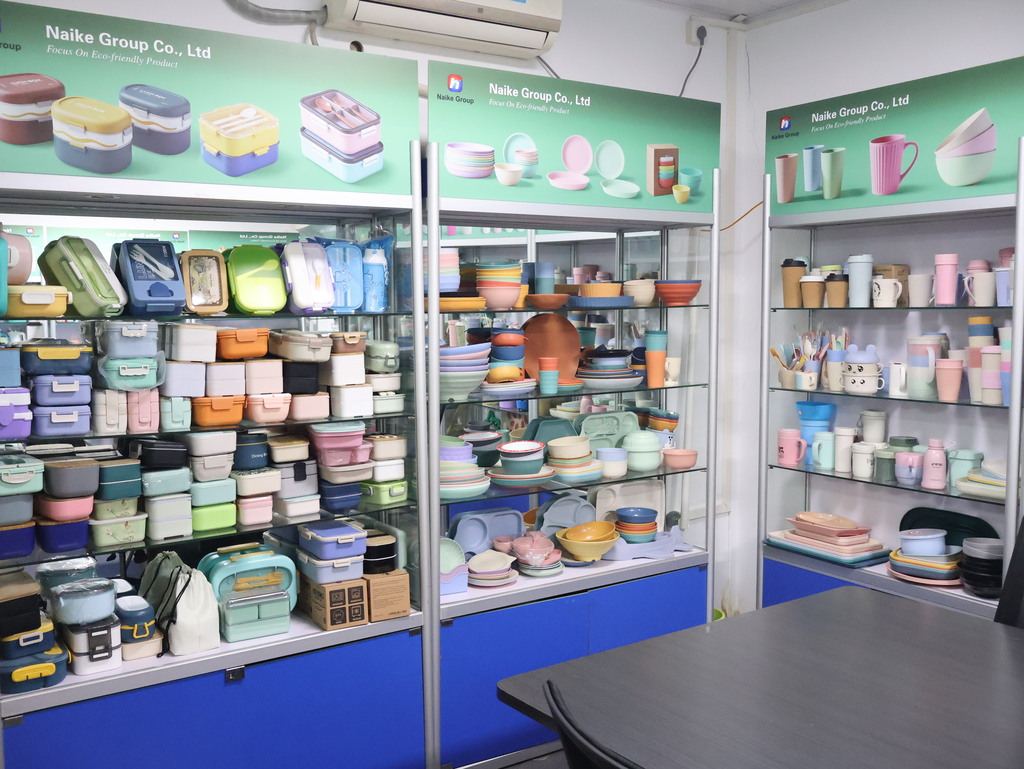
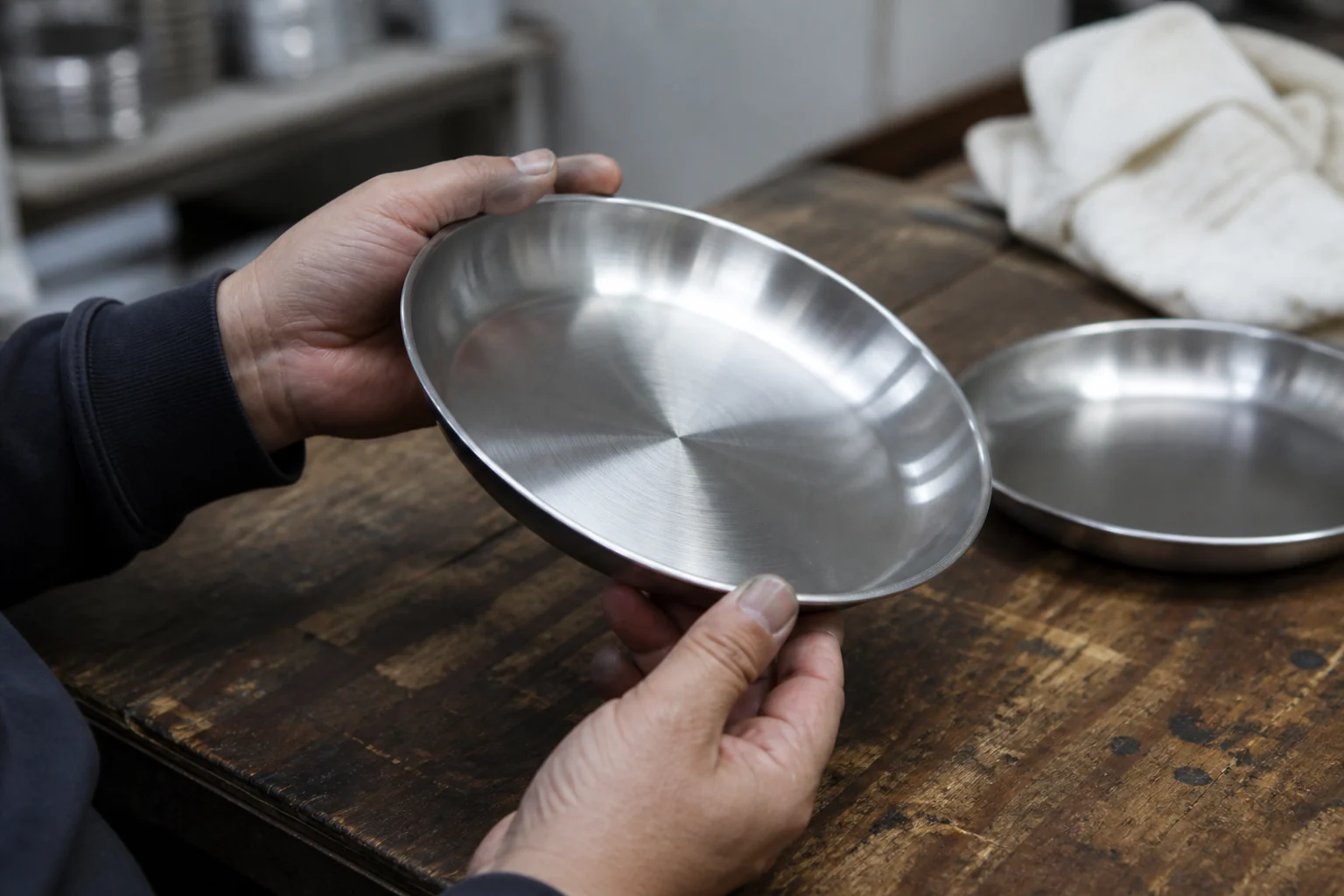
PP and wheat-straw composite programs need complete formulation control, including color and additives. Stainless steel projects should record steel grade and surface treatment. Titanium projects should document the specified grade, construction and finish. Coatings, printing and adhesives require review when they can contact food or transfer substances.
Use competent laboratories and clear reports
The report should identify the client, sample, condition, method, result, date and laboratory. Check whether the tested sample matches the commercial SKU and current formulation. Logos or screenshots detached from the report are not enough. The Testing & Certifications page explains Naike’s document-led workflow.
Add performance tests without confusing them with compliance
Drop, dishwasher, microwave, staining, odor, corrosion, coating adhesion and nesting tests may be commercially important, but they are not interchangeable with food-contact migration or compositional requirements. Define each test’s purpose, method and acceptance criteria separately.
Maintain traceability after approval
Link production lots to material records, color batches, inspection and any applicable test evidence. Reassess when formulation, supplier, colorant, coating, tooling, process or intended use changes. Buyers can request a proposed evidence pack with a quotation through the B2B inquiry page.
food contact testing for outdoor tableware: procurement control table
| Evidence layer | Question to answer | Record |
|---|---|---|
| Identity | What exact SKU was evaluated? | Photos, code, dimensions and composition |
| Use | Which food, time and temperature? | Intended-use statement |
| Requirement | Which market rule or buyer standard? | Defined test scope |
| Result | What method and outcome were reported? | Complete laboratory report |
| Continuity | Does production still match? | Lot and change-control records |
Use this food contact testing for outdoor tableware as a working brief, then verify the final specification against the intended market. For EU projects, the European Commission provides an authoritative food-contact materials overview; the final evidence scope must still match the exact finished SKU.
Frequently asked questions
Is “FDA certified” the correct description?
Usually no. Food-contact status depends on the substance, finished article and conditions of use; use precise evidence-based wording.
Does an SGS report prove every product is compliant?
No. SGS is a service provider; the report scope and tested sample determine what it supports.
Can one color represent every colorway?
Not automatically. Colorants and formulations can affect the evidence plan, so group only with a justified rationale.
Are dishwasher and microwave claims included?
They require separate SKU-specific validation and should not be inferred from food-contact testing alone.
Discuss your outdoor tableware program
Send the target product, material, market, quantity, logo, packaging and launch date. We will respond with a project-specific route instead of applying unsupported claims across every SKU.
Request a B2B QuoteView Related CategoryView Related Material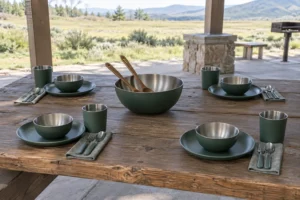
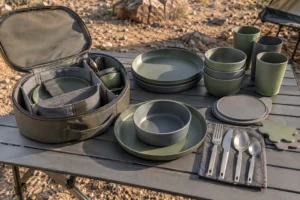
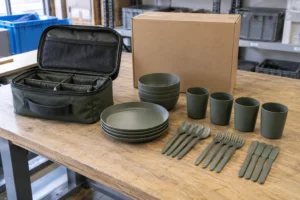
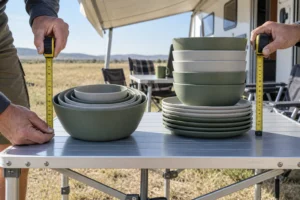
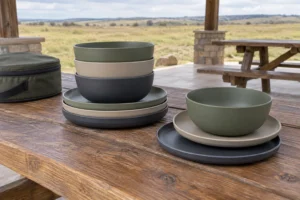
Composite-specific scope
Additional Checks for Wheat-Straw + PP Tableware
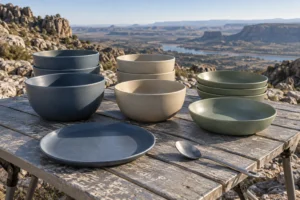
A composite program should document more than the base resin. The buyer file should identify the PP grade, wheat-straw filler, filler percentage or controlled range, masterbatch and other additives. Testing should be assigned to the finished article and its actual conditions of use.
- Confirm whether each color or formulation change alters the required test scope.
- Record intended food type, contact time, temperature, repeated-use and cleaning conditions.
- Add odor, staining, dimensional stability and impact checks where relevant to outdoor use.
- Match reports, photos and retained samples to the final SKU or approved product family.
Material claims must follow the documented formulation. Review the wheat-straw composite material page before requesting a project-specific evidence package.