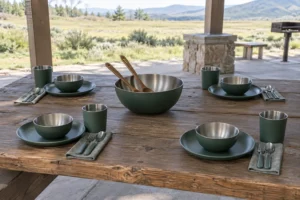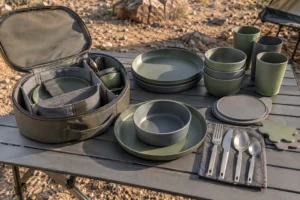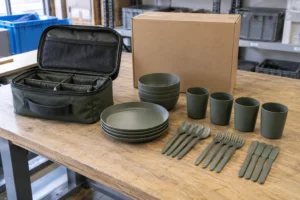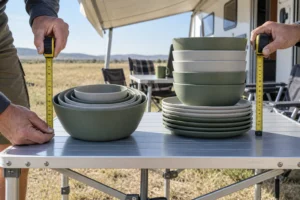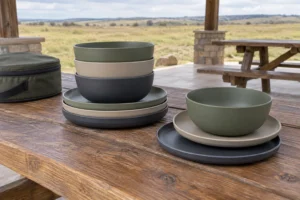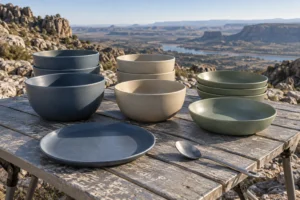
camping dinnerware weight guide: A camping dinnerware weight guide should separate the weight of each component from the packed weight of the complete retail set. A light plate does not guarantee a light program if bowls, cutlery, lids, protective dividers and the carry case are ignored. B2B buyers should define a weight budget, measurement method and tolerance before comparing samples or approving production.
Define the user and carrying condition
Backpacking, family car camping, RV service, glamping and promotional sets have different weight priorities. A backpacking brand may treat grams as a primary specification, while a campground operator may accept more weight for stiffness and repeat-use handling. Record who carries the set, how far, how it is packed and whether cookware is included.
Create a component-level weight budget
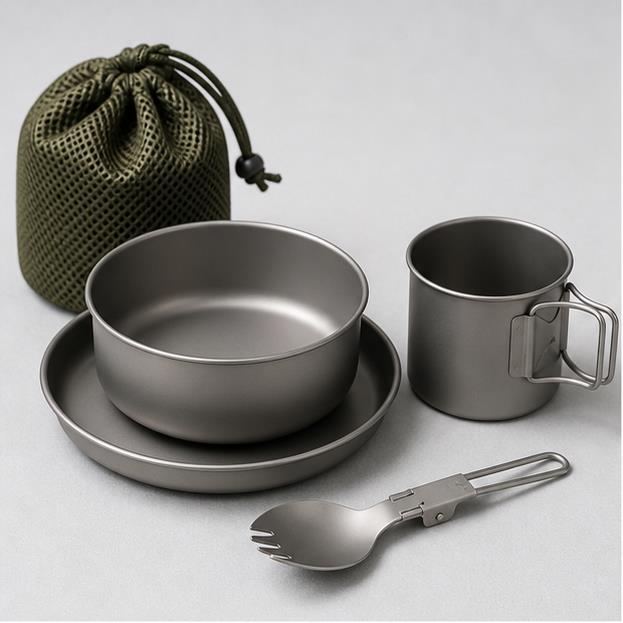
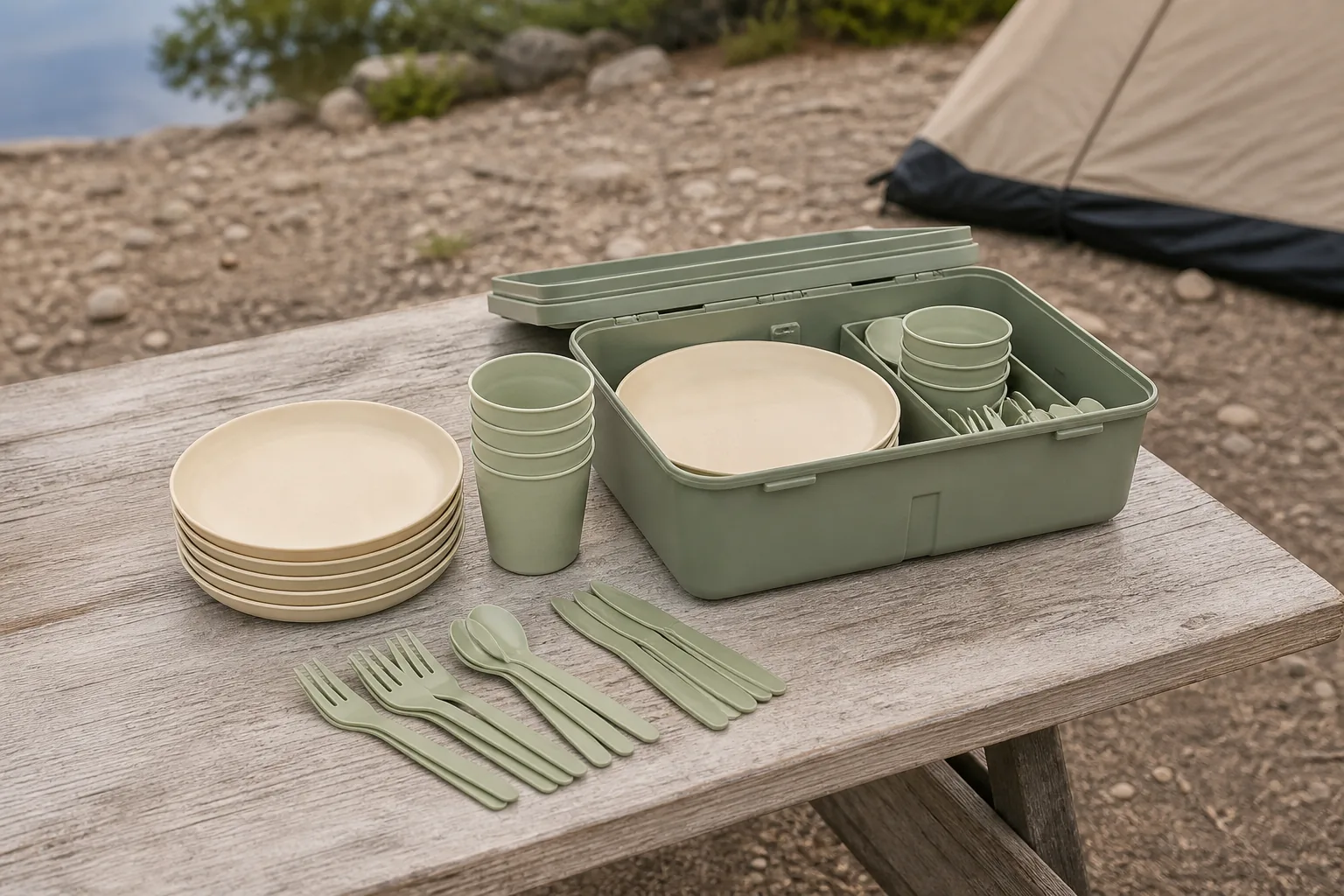
List every plate, bowl, cup, utensil, lid, pouch, divider and label. Assign a target and an allowed tolerance to each line, then calculate the complete packed target. This reveals where engineering effort matters. Reducing a large plate or case may save more than aggressively thinning a small spoon.
Compare materials without oversimplifying
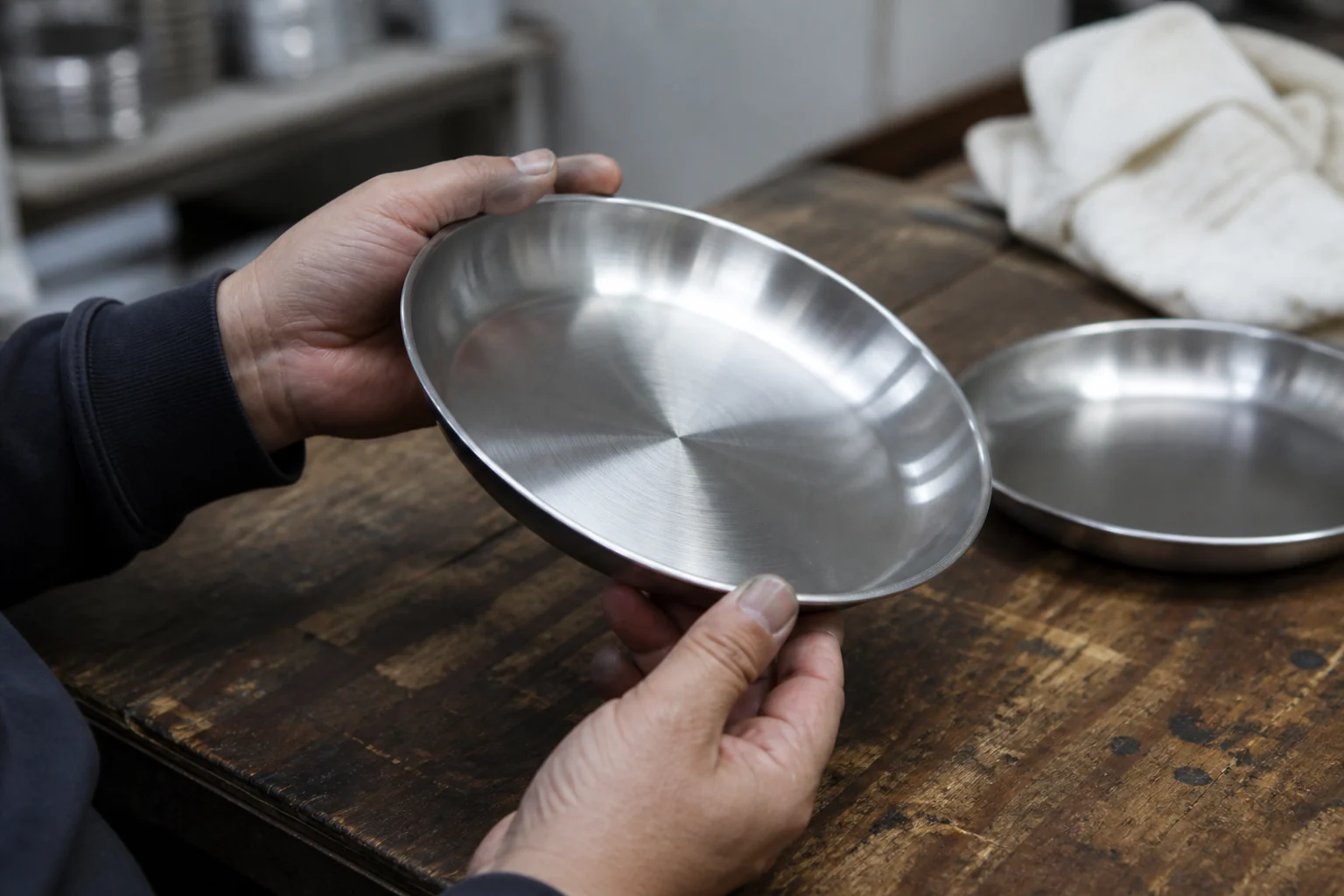
Titanium can support premium ultralight positioning, but grade, geometry, thickness, forming and handle design still control the result. Stainless steel is usually selected for durability and familiar care, while PP can deliver low set weight, color and nesting at scale. Wheat-straw composite should be evaluated from its actual polymer-and-fiber formulation. Visit the outdoor tableware hub for the complete material map.
Specify how weight is measured
Define whether the value is nominal, average or a controlled range; the balance resolution; sample quantity; conditioning; and whether removable parts are included. For sets, weigh both loose components and the final packed configuration. Record the revision of every sample because tooling, thickness and packaging changes can alter the total.
Balance weight against durability and usability
Lower weight can reduce stiffness, rim comfort, thermal handling or resistance to deformation. Test the chosen geometry in realistic loading, washing, nesting and transport conditions. A slightly heavier product that remains comfortable and repeatable can be a better retail decision than the lightest isolated sample.
Lock the result into production documents
The approved specification should state target weight and tolerance by SKU, packed-set weight, measurement method and disposition for out-of-tolerance parts. Naike can review weight targets during sample development. Standard production programs start from MOQ 500 units and from 7 days after specifications and approvals are complete; engineered weight changes require their own timeline.
camping dinnerware weight guide: procurement control table
| Weight record | What to define | Why it matters |
|---|---|---|
| Component weight | Target and tolerance for each SKU | Finds the source of variation |
| Set net weight | All saleable eating components | Supports product comparison |
| Accessory weight | Case, pouch, dividers and lids | Prevents hidden pack-out weight |
| Gross packed weight | Retail pack and shipping protection | Supports logistics planning |
| Measurement method | Scale, sample count and conditioning | Makes supplier data comparable |
Use this camping dinnerware weight guide as a working brief, then verify the final specification against the intended market. For EU projects, the European Commission provides an authoritative food-contact materials overview; the final evidence scope must still match the exact finished SKU.
Frequently asked questions
What is the ideal weight for camping dinnerware?
There is no universal ideal. Set the target from user type, component count, material, durability and carrying distance.
Should packaging be included?
Yes. Record both net dinnerware weight and final packed weight.
Does lighter always mean better?
No. Confirm stiffness, rim comfort, heat handling, durability and nesting after any weight reduction.
How should tolerances be approved?
Agree the target, measurement method, sample quantity and acceptable range before production.
Discuss your outdoor tableware program
Send the target product, material, market, quantity, logo, packaging and launch date. We will respond with a project-specific route instead of applying unsupported claims across every SKU.
Request a B2B QuoteView Related CategoryView Related Material