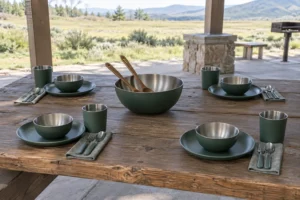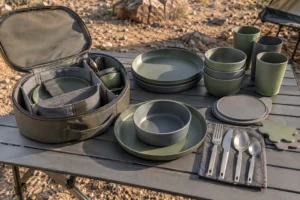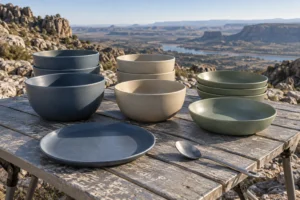
Stainless steel is usually the lower-maintenance choice for repeated camping use because an uncoated, verified alloy surface cannot chip like enamel. Enamel-coated steel can deliver stronger color, heritage styling and easy visual merchandising, but its vitreous coating may chip under impact and exposed steel may corrode. The better plate depends on construction, handling, use conditions, replacement policy and product-specific food-contact evidence.
Stainless steel vs enamel camping plates: the short decision
Both options can work well when the finished article is correctly specified and supported for its intended market. Stainless steel simplifies damage management because there is no glass-like surface layer to chip, while enamel makes color and traditional outdoor styling easy to recognize. Enamel is not a separate base metal: most camping enamelware uses a steel substrate covered by a vitreous coating, so buyers must control both substrate and coating.
The material name alone does not establish food-contact suitability, service life or quality. Buyers should compare the exact alloy or substrate, rim construction, coating system, decoration, use conditions, cleaning method, packing, inspection limits and evidence file. The following table turns those variables into a practical sourcing decision.
| Decision factor | Stainless steel plate | Enamel-coated steel plate | Buyer implication |
|---|---|---|---|
| Surface construction | Specified stainless alloy is normally the exposed food-contact surface | Vitreous enamel covers a steel substrate | Freeze every layer and decoration in the specification |
| Impact response | May dent, bend or scratch; no coating chip | Coating can chip or crack at rim or impact point | Define drop, packing and replacement rules |
| Corrosion concern | Depends on alloy, finish, salts, cleaners and wet storage | Intact enamel protects the substrate; exposed steel at damage may rust | Inspect surfaces and dry before nesting |
| Appearance | Metallic, technical and relatively neutral | Broad colors, speckles, contrast rims and heritage character | Enamel suits color-led retail stories but needs decoration control |
| Mass and rigidity | Depend on alloy, gauge, diameter and forming | Depend on steel gauge, coating and geometry | Compare finished samples, not generic material claims |
| Cleaning | Smooth construction can be straightforward; avoid incompatible chemicals | Intact smooth enamel can clean easily; inspect chips, cracks and rim traps | Validate the actual wash method and detergent |
| Evidence | Finished-article evidence matched to alloy, finish and use | Finished-article evidence matched to substrate, enamel, decoration and use | Do not transfer reports between colors, factories or constructions without rationale |
Data and evidence: what each material actually is
Stainless steel is an alloy family, not one universal grade
Stainless steel relies on alloy composition and a passive surface film for corrosion resistance. Different grades, finishes, thicknesses and fabrication histories behave differently in chloride exposure, cleaning and deformation. A quotation that says only “stainless steel” leaves too much uncertainty for repeat purchasing and report matching.
Ask for the declared grade tied to the product drawing and production lot, then confirm the finished plate rather than relying on a raw-sheet certificate alone. The official ASTM G48 corrosion test page describes laboratory procedures for evaluating pitting and crevice-corrosion resistance of stainless steels and related alloys. Its scope can inform material comparison, but a G48 result is not a food-contact certificate and does not prove that a finished camping plate meets every market or use claim.
Finish matters alongside grade. Deep drawing, polishing, blasting, welding, edge rolling and chemical treatment can change surface condition and cleanability. Buyers should therefore connect alloy identity, manufacturing route, finish specification and representative finished-article evidence rather than treating a grade number as a complete safety answer.
Enamelware combines a steel body with a fired glass-like coating
Vitreous enamel is an inorganic coating fused to a metal substrate at high temperature. It can create a hard, smooth, colorful surface, but the coating and steel respond differently to impact and deformation. A plate that bends sharply can crack or detach enamel even when the coating looked perfect on the first sample.
Coating formulation, firing conditions, coverage, edge design, decoration and color are controlled product variables. The EDQM food-contact materials annual report describes Council of Europe work on metals and alloys and official-control work involving release from enamelware. That activity is useful evidence that enamel articles require scoped release assessment; it is not a certificate for any untested SKU.
Buyers should distinguish vitreous enamel from paint, powder coating, ceramic-look decoration and organic non-stick systems. Appearance is not a reliable identifier. Request a construction declaration and process description, and make sure reports, approved samples, package wording and purchase orders use the same material terminology.
Food-contact evidence must match the finished plate
The EU Framework Regulation (EC) No 1935/2004 sets general principles for food-contact materials: under normal or foreseeable use, constituents should not transfer to food in quantities that endanger health, cause unacceptable change in food composition or deteriorate sensory characteristics. It also addresses traceability, which becomes critical if an approved alloy, enamel formulation or factory changes.
There is no honest shortcut from “steel,” “enamel” or “food grade” to compliance. The evidence plan should identify destination, food types, temperature, contact time, repeated-use pattern and the exact finished construction. For enamelware, that means the substrate, ground coat, cover coat, pigments, decorations and exposed edges; for stainless steel, it means grade, finish, seams, attachments and decorations.
For North American food-service and institutional buyers, the FDA Food Code 2022 provides practical equipment and utensil principles including durability, corrosion resistance, adequate thickness, smoothness, cleanability and resistance to pitting, scratching, distortion and decomposition under normal use. It is a model code rather than an FDA approval certificate for a camping plate, but its design logic is useful when specifying reusable fleet or program equipment.
A complete report must show enough identity to connect the tested sample to the ordered article. Review model, dimensions, color, surface area, laboratory, method, contact conditions, result, photos and report status. If a buyer selects a new decoration or alternative enamel color, the responsible compliance party should document whether the existing evidence remains representative.
Impact, chips, dents and scratches
Stainless steel damage is usually deformation or surface wear
A thin stainless plate can dent, warp or develop a sharp rim if dropped or crushed. Scratches can alter appearance and, if deep, can make cleaning more difficult. These are not reasons to describe stainless steel as fragile; they are reasons to control gauge, geometry, rim construction and workmanship.
Specify acceptable flatness, base stability, rim continuity, burr limits, finish direction and visual variation. Approval samples should be production-intent items rather than hand-polished showpieces. A realistic trial should include stacking, transport vibration, washing and eating with the intended utensils.
Enamel damage adds a coating/substrate interface
Enamel may chip at the rim, edge, foot or impact point. A tiny isolated chip is different from widespread flaking, cracking or a sharp exposed edge, yet buyers need a written rule rather than improvised judgment. Define whether any food-contact chip is unacceptable, how cosmetic exterior chips are handled, and when an item must be removed from service.
The underlying steel can corrode where coating is missing, especially after wet storage or repeated contact with salt and cleaning chemicals. Rust staining does not prove the entire enamel article is unsafe, but it signals exposed substrate and a maintenance decision. Brands should avoid universal claims such as “chip proof,” “unbreakable” or “rust proof” unless the exact claim has strong product-specific support.
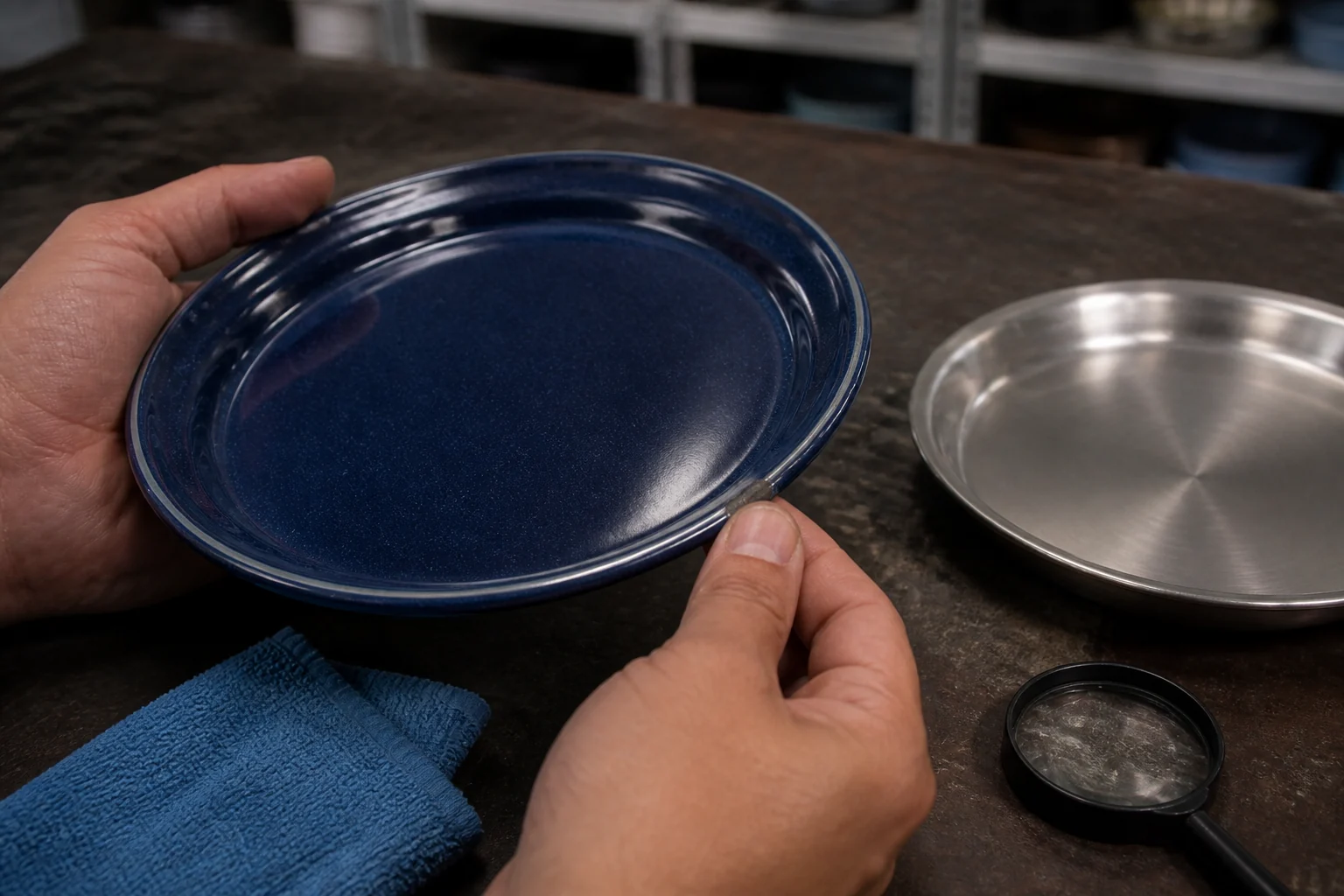
Do not use generated lifestyle images as performance evidence. The inspection image above is illustrative: it shows a plausible buyer check, not a laboratory result or customer case. Acceptance criteria must come from the approved specification, risk assessment and verified tests.
Corrosion behavior depends on use, cleaning and storage
Stainless steel can resist corrosion well, but resistance is conditional. Chlorides, acidic residues, harsh cleaners, crevices, damaged passive surfaces and prolonged wet nesting can contribute to staining or localized attack. The relevant question is whether the declared alloy and finish are suitable for the brand’s foods, cleaning chemistry and service environment.
Enamel presents a different system. An intact continuous coating separates food and moisture from the steel body, while chips, pinholes, poorly covered edges or cracks can expose the substrate. Inspection should therefore include rim coverage, decoration quality, pinholes, blistering, cracks, embedded particles, sharp defects and evidence of corrosion.
For both materials, dry plates before packing and avoid trapping damp cloths between nested items. Salt spray near coastal campsites, chlorinated wash water and aggressive detergents may be relevant to some programs. Procurement teams should document these conditions instead of promising identical performance in every climate.
Cleaning and hygiene in real outdoor use
A plate may be chemically suitable yet difficult to use if food collects under a rolled rim or water remains in a recessed foot. Inspect geometry as well as surface material. Smooth transitions, drainable forms and accessible edges help users wash and dry the product with limited campground facilities.
Stainless steel often tolerates ordinary repeated cleaning, but a specific dishwasher claim still needs validation with the actual detergent, cycle and finish. Enamel can also clean readily when intact, though abrasive scouring may dull decoration or expose existing damage. Care instructions should state allowed tools and detergents based on evaluation, not copied from another supplier’s listing.
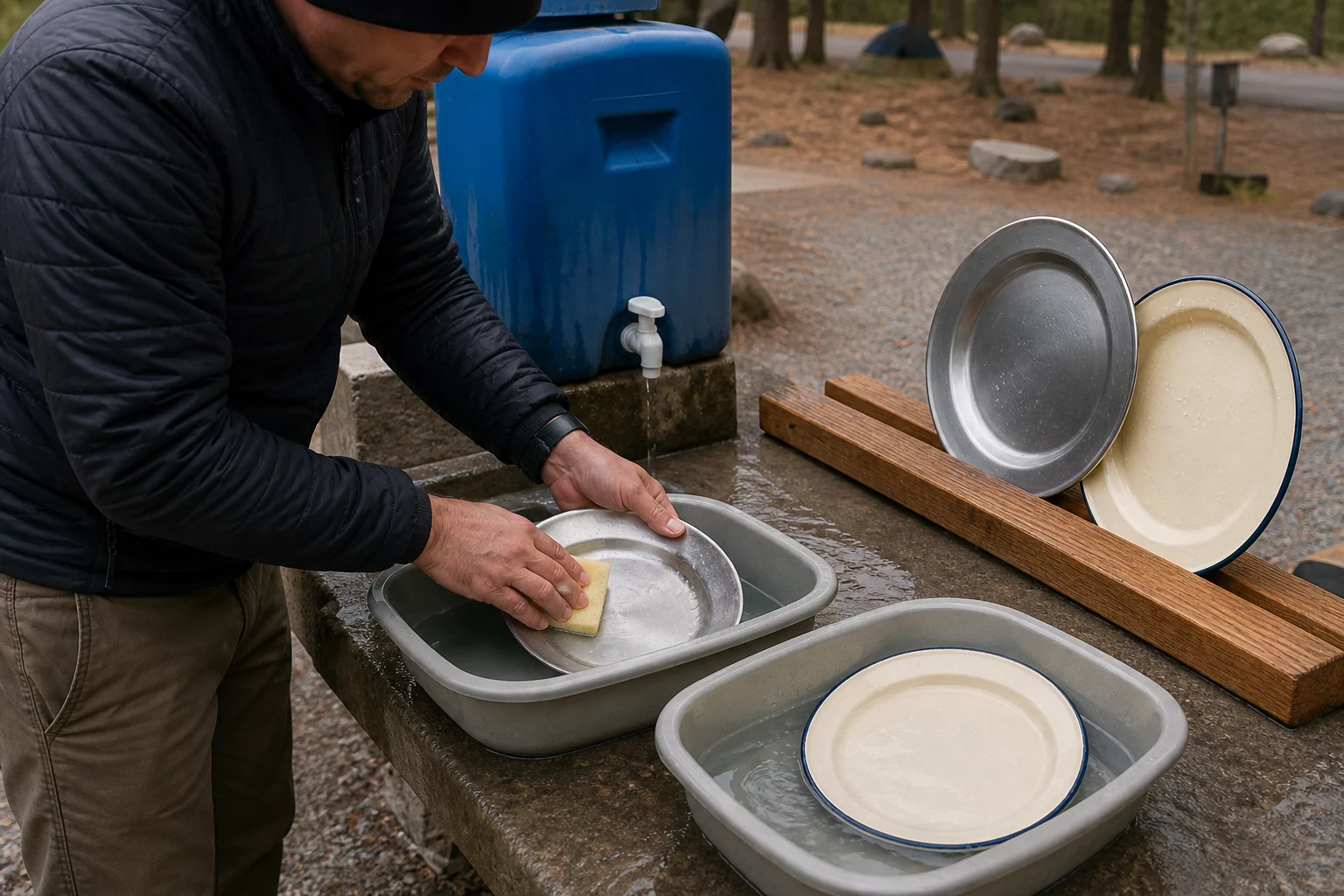
After washing, users should inspect the food-contact surface and rim under good light. Remove items with sharp edges, unstable deformation, active flaking or damage beyond the brand’s approved limit. Rental fleets and group camps benefit from a simple visual guide showing acceptable wear, quarantine conditions and replacement triggers.
The cleaning image shows a plausible campsite wash activity without implying a test result. It does not establish dishwasher safety, sterilization or compliance. Those claims require defined procedures and product-specific evidence.
Which plate fits each outdoor scenario?
Backpacking and weight-sensitive kits
Weight-sensitive buyers should compare finished mass, usable diameter, rim comfort and nesting volume. Neither material wins automatically because steel gauge, shape and coating change the result. Measure production-intent samples on the same functional basis rather than comparing a small enamel plate with a large stainless plate.
Stainless may appeal where low maintenance and field durability matter most. Enamel may be chosen for tactile character and color, but the packing system should reduce hard impacts. For ultralight assortments, other materials may outperform both, as discussed in the broader camping dinnerware material guide.
Family car camping and picnic sets
Families may value stable broad plates, color coding, comfortable rims and easy cleaning more than minimum mass. Enamel can create coordinated color stories and help users identify personal plates. Stainless offers a neutral aesthetic and can simplify mixed-use replacement when a brand retains one consistent geometry.
Consider cutlery noise, sliding on tables, hot-food handling and nested transport. Neither plate should be placed on a flame merely because the campsite has a stove. Foods should be cooked in verified cookware and transferred to dinnerware.
Scout camps, rental fleets and outdoor education
High-turnover programs favor clear inspection, easy cleaning and economical replacement. Stainless steel may reduce coating-related sorting, although dents, burrs and corrosion still require control. Enamel can work where staff are trained to inspect chips and the operator stocks replacements.
Asset marking needs its own review. Laser marking, stamping, printed logos, decals or under-glaze decoration can affect surface, readability and evidence scope. Record how the identifier is applied and ensure it does not create a sharp trap or unsupported compliance claim.
Heritage retail and gift assortments
Enamel is distinctive for color, speckle patterns and traditional outdoor presentation. That storytelling advantage can justify more demanding cosmetic standards and protective packaging. Color consistency, rim contrast, decoration registration and small pinholes should be governed by agreed limit samples.
Stainless can support a technical, minimalist or expedition identity. Surface finish, logo method and reflection consistency become more visible on a simple product. The existing guide to stainless steel plates for camping provides additional questions about grade, rim design, nesting and buyer trials.
Limitations and risks procurement teams should disclose
The largest enamel risk is promising a permanent flawless coating in an impact-heavy environment. Chipping is a foreseeable damage mode, so the brand needs packaging, care guidance, inspection limits and replacement logic. It should never hide the steel substrate or describe a cosmetic coating as a solid ceramic plate.
The largest stainless risk is treating the alloy name as a guarantee against all corrosion or scratching. Grade, surface finish, contaminants, fabrication, cleaners, salts and wet storage matter. Claims such as “rust proof” or “maintenance free” can be misleading when no product-specific evidence defines conditions.
For both options, an attractive sample may not represent volume production. Cosmetic sorting, gauge variation, rim finish, base stability, decoration, contamination control and packing should be checked on production-intent units. A certificate bundle from another SKU does not repair a weak process specification.
This comparison does not verify Naike Dinner capability in either material. Before presenting a branded offer, confirm supplier identity, manufacturing route, product availability, capacity, tooling, MOQ, lead time, change control and evidence. For a wider audit sequence, use the camping tableware manufacturer checklist.
Compare two real plate proposals
Send the destination market, intended users, serving conditions, plate dimensions, proposed stainless grade or enamel construction, colors, decoration, cleaning method, packing and forecast. We can identify specification gaps and verify what capabilities and records would be required before a documented sample or quotation plan.
Request a plate specification reviewA five-gate procurement method
Gate 1: define the use case before choosing the look
State user group, meal types, hot and cold serving, food acidity and salt, contact duration, wash method, transport, stacking and storage. Separate serving dinnerware from cookware in every document. If direct heat is outside scope, put that restriction in the specification, listing and instructions.
Set priorities numerically or by rank: mass, impact tolerance, appearance, color range, replacement rate, cleanability and target cost. A buyer who places heritage color first may rationally choose enamel; a fleet operator who places simple damage management first may rationally choose stainless. The decision should reflect the program, not a universal material winner.
Gate 2: lock construction and drawing
For stainless steel, record grade, sheet or coil source controls, finish, gauge, forming route, rim design, base geometry, decoration and any attachments. For enamel, record substrate, metal gauge, ground and cover coats, color, firing route, decoration, rim coverage and exposed areas. Tie each variable to a controlled drawing and change-notification process.
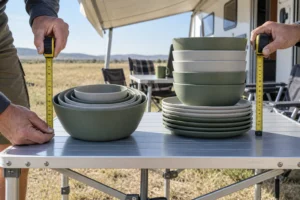
Measure useful diameter, eating area, depth, finished mass, stack height and wobble on a flat surface. Define burr, sharp-edge, chip, crack, pinhole, blister, stain, scratch, dent and color limits. Use photographs and retained approval samples, but never replace measurable requirements with “good quality.”
Gate 3: map evidence to market and conditions
Identify the legal framework and authoritative guidance for every destination. Then ask a competent laboratory or compliance professional to build the test plan around the exact finished article and intended foods, temperatures and durations. Do not begin with a cheap generic test and expand claims beyond its scope.
Review raw-material declarations, finished-article reports, sample photos, traceability, manufacturing controls and change records as one file. For enamel colors and decorations, document representativeness. For stainless finishes and grades, confirm the tested construction matches the quotation and approved sample.
Gate 4: run scenario-based sample trials
Pack and unpack the plates repeatedly, wash them with the intended tools, serve representative foods, use intended cutlery, nest them damp and dry under controlled observation, and inspect rims and surfaces. These buyer trials reveal usability and workmanship issues but should be labeled accurately; they are not substitutes for accredited compliance testing.
Compare identical functions. Use the same diameter, meal load, packing volume and handling sequence where possible. Record observations such as slipping, noise, heat at the rim, water retention, staining, denting or coating damage without inventing pass/fail values that were never approved.
Gate 5: control production and replacement
Set incoming material verification, coating or surface-process controls, in-process inspection, final sampling, traceability, nonconformance handling and change notification. Define replacement triggers for sharp dents, unstable bases, active corrosion, food-contact chips, cracks or flaking. Train retail or program staff to apply the same rule.
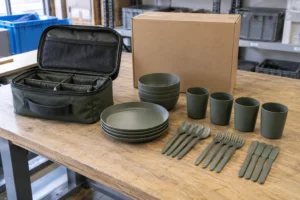
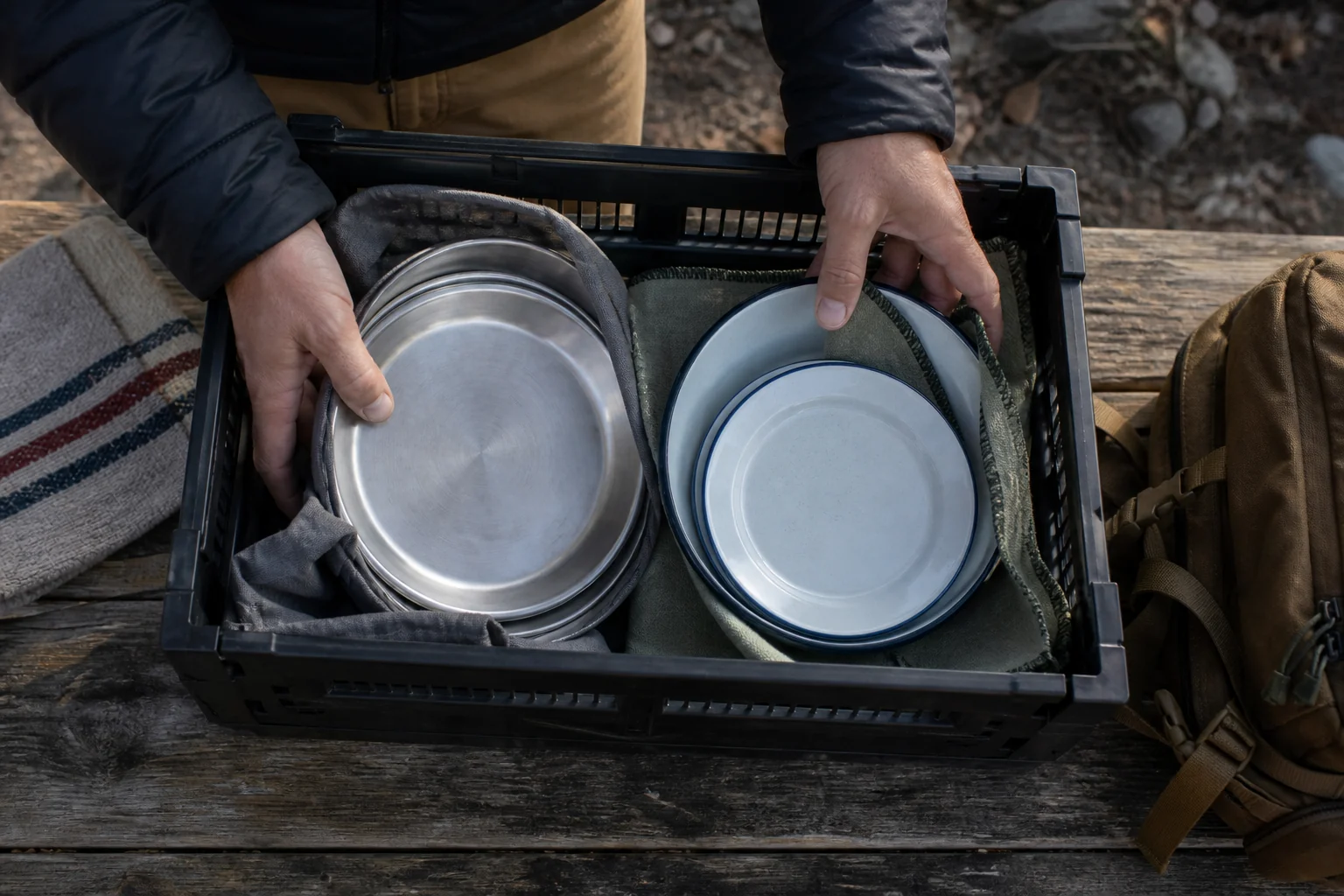
Packaging should prevent plate-to-plate abrasion and hard edge impacts without trapping moisture. Cloth dividers, fitted sleeves or molded separators can be evaluated for the actual distribution route. The packing image below illustrates practical separation; it does not claim a verified drop-test result.
Camping plate B2B buyer checklist
| Check | Question | Why It Matters |
|---|---|---|
| Product boundary | Is the SKU clearly off-heat dinnerware rather than cookware? | Prevents unsupported burner or campfire use. |
| Stainless identity | Which alloy, gauge, finish and forming route are controlled? | Connects corrosion, strength and evidence to production. |
| Enamel construction | Which substrate, coating layers, color and firing route are used? | Defines the multilayer article and change risks. |
| Edge quality | Are rim, burr, chip, crack and sharp-edge limits documented? | Protects handling comfort and cleanability. |
| Use conditions | Which foods, temperatures, durations and cleaning methods are claimed? | Sets the scope of testing and instructions. |
| Finished evidence | Do reports identify the exact model, color, construction and conditions? | Prevents unrelated certificates from supporting the SKU. |
| Scenario trial | Were equal-size production-intent plates packed, washed and used? | Reveals practical differences beyond material slogans. |
| Damage policy | When must a dented, chipped, cracked or corroded plate be replaced? | Supports consistent field decisions. |
| Change control | Must the supplier disclose alloy, coating, color, process or factory changes? | Keeps approvals relevant to later orders. |
| Capability proof | Are capacity, MOQ, lead time, tooling and processes verified for this project? | Avoids turning educational content into an unsupported offer. |
Build a decision-ready request for quotation
Include market, dimensions, annual forecast, material options, finish, colors, decoration, packing, food and cleaning conditions, evidence expectations and replacement criteria. The response should separate verified capability from open questions and price only the construction that can be documented.
Start a documented RFQBuyer FAQs for stainless and enamel camping plates
1. Are enamel camping plates more durable than stainless steel?
Not in every sense. Enamel is hard and can resist ordinary surface staining, but the vitreous coating can chip or crack under impact. Stainless steel cannot suffer an enamel chip, though thin plates can dent, warp, scratch or develop sharp damage. Compare production-intent samples under the same packing and handling sequence.
2. Is a chipped enamel plate automatically unsafe?
A chip requires assessment against the brand’s approved damage policy. Location, sharpness, flaking, corrosion, food contact and extent matter. Avoid telling users that every chip is harmless. Remove plates with sharp edges, active flaking, cracking or damage beyond the verified limit and seek competent compliance guidance where needed.
3. Can stainless steel camping plates rust?
Stainless steel is corrosion resistant, not universally corrosion proof. Alloy, finish, chloride exposure, contamination, cleaners, crevices and prolonged wet storage influence behavior. Buyers should specify the grade and finish, test the actual use environment and provide suitable washing and drying instructions.
4. Are enamel plates lighter than stainless steel plates?
The material label cannot answer that reliably. Finished weight depends on diameter, depth, steel gauge, rim, coating thickness and geometry. Compare plates with equivalent eating area and strength requirements, then verify mass and stack volume on production-intent samples.
5. Which option is better for private-label colors?
Enamel often supports distinctive colors, speckles and contrasting rims, making it attractive for heritage retail. Stainless can support laser marks, stamping or selected surface treatments, but its core visual language is more metallic. Every decoration method needs a controlled specification and evidence review for its location and intended use.
6. Can either plate be used over a campfire?
Do not assume so. This comparison covers dinnerware used to serve and eat food. Direct flame can create dangerous temperatures, distort thin metal, damage enamel or decoration and change product performance. Only a separately designed and verified cookware item should carry a compatible heat-source claim.
7. Which documents should an importer request?
Request the controlled drawing, material and process declarations, use specification, destination-specific compliance assessment, representative finished-article reports, traceability plan, inspection criteria, approved limit samples and change-notification procedure. Verify that every document matches the ordered model, construction, color and factory.
8. How should a brand request samples or pricing?
Provide dimensions, serving scenarios, market, forecast, chosen constructions, decoration, packing, cleaning, evidence and damage criteria. Ask the supplier to state what is verified, what needs testing and which commercial variables remain open. Do not expect one universal MOQ, lead time or price across different gauges, enamel colors, tooling and packaging.
Choose the plate platform your program can control
Choose stainless steel when simple surface construction, straightforward damage sorting and a technical appearance best match the program. Choose enamel when color, heritage character and visual merchandising justify tighter impact controls and replacement rules. In both cases, the winning SKU is the one whose construction, evidence, production and instructions remain aligned from sample through repeat order.
Naike Dinner can only discuss a project after real capability and documentation are checked; this article is not a catalogue claim. To compare a specific stainless and enamel proposal, send the use case, drawing, market, volume, finish, color, packing and evidence expectations. Request a sample and specification review before finalizing claims or placing a production order.