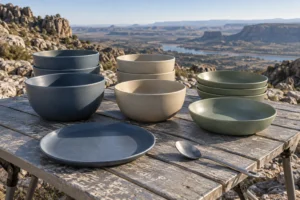
Australian Eco-Friendly Tableware Market: Why Wheat Straw Products Fit Retail & Outdoor Channels
Australia is not just moving away from single-use plastics—it is sprinting. For B2B importers and wholesalers, the “Land Down Under” is currently one of the most profitable and rapidly expanding markets for eco-friendly tableware in Australia. While Europe grabs headlines for legislative bans, it is actually Australia’s unique combination of stringent local regulations, a deeply ingrained outdoor lifestyle, and a consumer base willing to pay “Green Premiums” that makes it a goldmine for suppliers of outdoor wheat straw tableware.
At Naike Dinner, we have seen our Australian export volumes triple over the past three years. This growth is not accidental. It is driven by a structural shift in how Australian retailers—from major chains like Kmart and Big W to boutique camping stores—are sourcing their housewares. They are abandoning traditional melamine and plastics in favor of bio-composites that can withstand the harsh Australian sun and rigorous food safety standards.
This market report will break down exactly why wheat straw is the dominant material for Australian retail and outdoor channels, the specific regulatory hurdles you need to clear, and the packaging and logistics strategies that will maximize your margin in this high-value market.
1. The Retail Landscape: Who is Buying Eco-Tableware in Australia?
The Australian retail sector is consolidated, making it a “Volume or Die” market. To succeed, you must understand the key players and their specific sourcing DNA.
The Big Three Retailers
- Wesfarmers (Kmart/Target): These are the volume drivers. They require aggressive price points (2.00−2.00−5.00 per set Retail) and absolute reliability in BSCI-compliant supply chains.
- Woolworths (Big W): They focus heavily on “Home Brand” private labels. They are currently transitioning their kitchenware aisle to feature “Natural Material” sections. For a supplier, getting a private label contract with Woolworths requires a rock-solid Quality Assurance (QA) manual and an ISO 9001 certified factory.
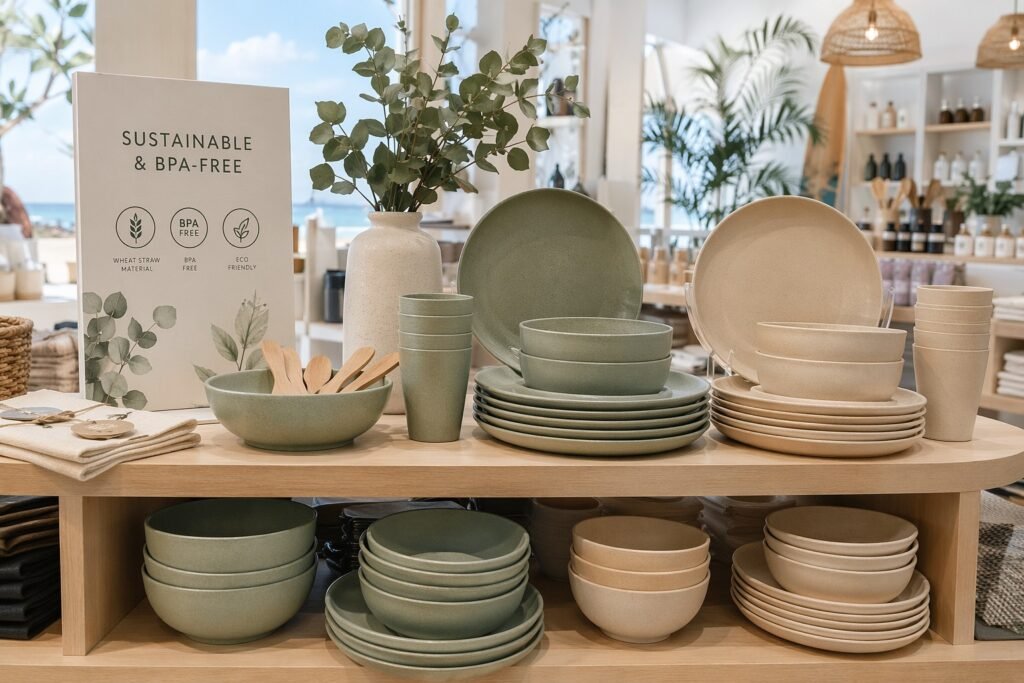
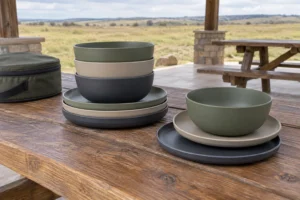
- Specialty Chains (House, Bed Bath N’ Table): These buyers look for aesthetics. “Eucalyptus Green,” “Sand,” and “Ochre” palettes that mimic the Australian landscape.
The Independent Boutique Trend
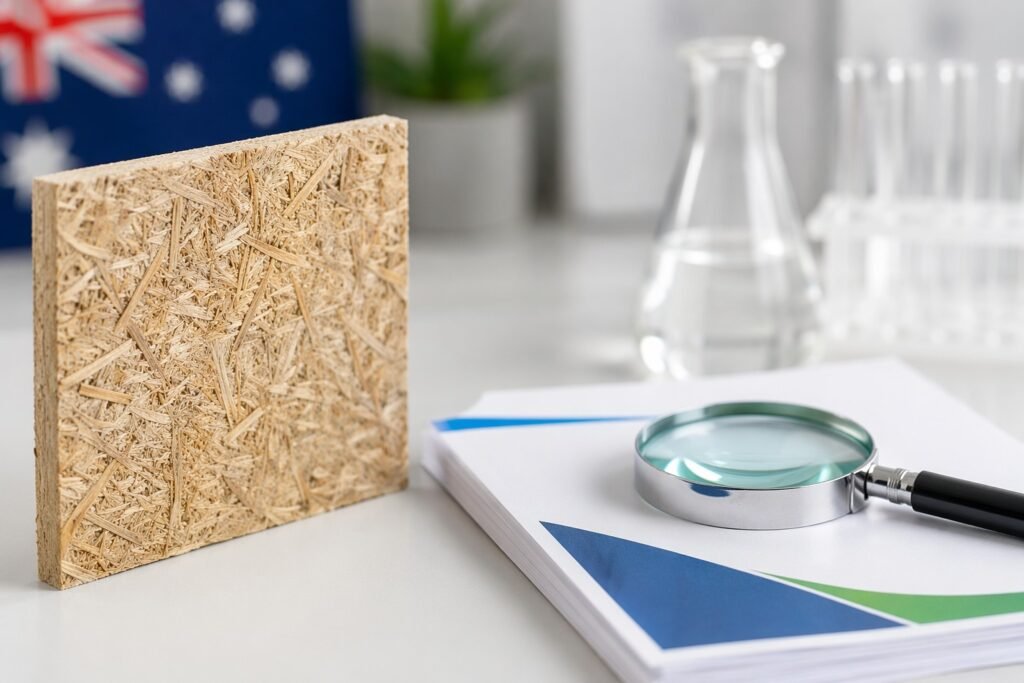
There is a massive surge of “Eco-Boutiques” (Flora & Fauna, Biome) that curate products. For these channels, the story matters as much as the product. They want to know the exact wheat straw fiber ratio and want a “Sourcing Ledger” to prove the agricultural provenance of your materials.
2. Climate & Lifestyle: The Outdoor Market Advantage
What makes outdoor wheat straw tableware uniquely suited to Australia? It comes down to physics and UV resistance.
Australia has the highest rate of skin cancer in the world, which correlates directly with extreme UV radiation. Traditional plastics (PP or PE) become brittle and “chalky” (photo-degradation) after 6-12 months of sun exposure. Wheat straw composite, however, contains natural fibers that act as UV Stabilizers. The lignin in the wheat straw absorbs the harmful UV-B rays, significantly extending the life of the product for camping and caravan use.
The “Portable Luxury” Segment
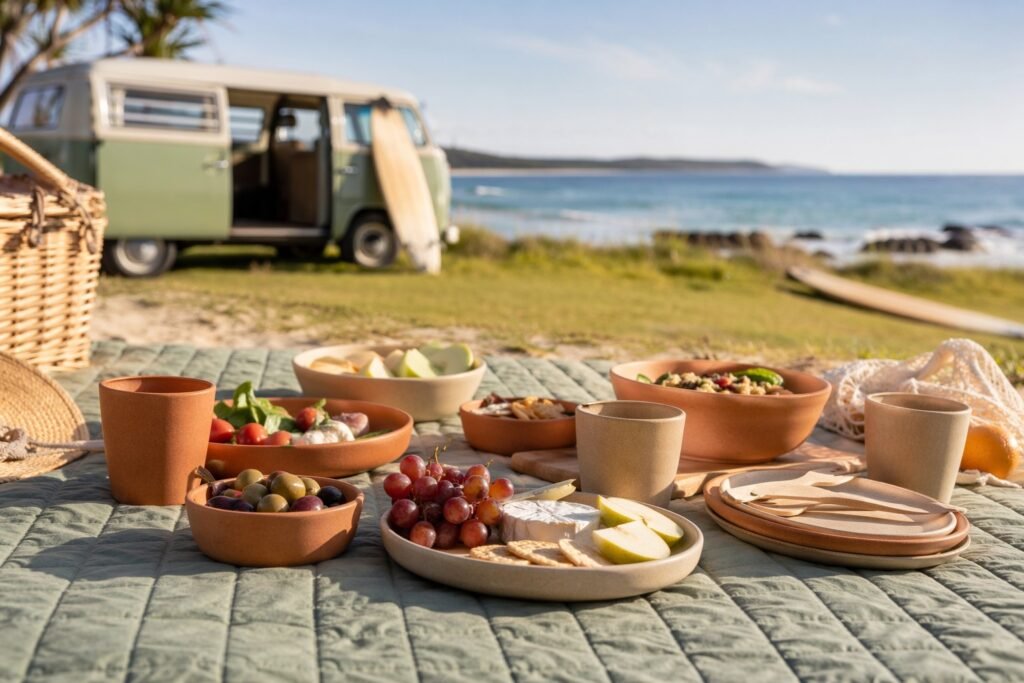
Australian camping culture (or “Caravanning”) is not just about survival in the bush; it is a lifestyle of “Portable Luxury.” Grey nomads and young families want dinnerware that is:
- Lightweight: To reduce fuel consumption and caravan payload.
- Unbreakable: To withstand rough tracks like the Gibb River Road.
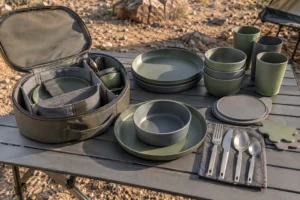
- Stylish: To look good in Instagram posts from Cable Beach. Wheat straw bowls and plates hit this “unbreakable luxury” niche perfectly, functioning as a premium alternative to scratched old melamine sets.
3. Navigating Australian Food Safety Regulations
Australian food contact regulations are often overlooked by novice importers. Unlike the EU’s strict migratory limits framework (LFGB), Australia operates on a “Risk-Based” model. However, that doesn’t mean it’s easy. The governing body is FSANZ (Food Standards Australia New Zealand).
Standard 3.2.2 (Food Safety Practices)
For reusable tableware like wheat straw dinnerware, the key focus is “Cleanability.”
- Requirement: The surface must be non-porous to prevent bacterial growth.
- Factory Solution: At Naike Dinner, we ensure our PP-to-Fiber ratio never exceeds a 65/35 mix. A lower PP ratio (higher fiber) often creates micro-holes that trap food waste, leading to an FSANZ violation.
BPA and Chemical Migration
While Australia hasn’t fully banned BPA in all plastics like the EU, consumer pressure is driving change. Major retailers now demand BPA-Free certifications as standard for new supplier contracts.
- Key Certifiers: SGS Australia or Intertek are the most recognized labs for testing.
- Insider Tip: Ensure your test reports specifically mention “BS EN 1186” (the recognized standard for overall migration) to smooth the customs clearance process. For a full checklist, see our BPA-Free Verification Guide.
4. The Competitive Landscape: Stand Out Down Under
You aren’t the only one targeting Australia. Here is how to beat the competition.
The “Eco-Generics” Trap
Many Chinese factories sell off-the-shelf “Eco-Plates” to Australian discount stores. These generics usually have a high fiber content (50%+) and are marketed solely on “biodegradability.”
- Your Edge: Position your eco-friendly tableware Australia products on Durability & Reusability. While cheap generics crack after a year, your retail-ready product withstands 500+ dishwasher cycles.
The Resin Switch (Melamine to Wheat Straw)
As we discussed in our Material Science Guide, bamboo-melamine products are under heavy scrutiny due to formaldehyde risks. Australian retailers who were burned by the 2024 bamboo recall are actively seeking “Melamine-Free” alternatives. Wheat straw + PP composite is the logical replacement.
5. Wholesale Distribution Strategy
To get your products into Australian homes, you need to map the right logistics and distribution pipeline.
Option A: The “Container-Ready” Pallet Program
For large retailers (Kmart/Big W), you will ship FCL (Full Container Load) to major ports (Sydney, Melbourne, Brisbane).
- Packaging Requirement: Strict “Pallet-Profile” loading. Master cartons must fit exactly on a standard CHEP Australia pallet (1165mm x 1165mm).
- Barcode Protocol: Australia uses EAN-13 barcodes registered with GS1 Australia. Generic UPC codes may not scan in Australian retail systems.
Option B: 3PL “Fulfillment by Amazon” (FBA Australia)
Amazon Australia is growing rapidly. To sell there, your packaging must pass the “SIOC” (Ships in Own Container) drop test. This means the retail box itself must survive the courier network without an outer Amazon box.
- Design Tip: Add structural EPE foam inserts. This adds 0.15totheunitcostbutpreventsthe”HardLine”damagefeesthatAmazoncharges(often0.15totheunitcostbutpreventsthe“HardLine“damagefeesthatAmazoncharges(often2-$5 per unit).
Option C: Direct-to-Hospitality
Australian cafes and restaurants (the “Café Culture”) prefer neutral, matte textures that fit a rustic aesthetic.
- Volume Pattern: The hospitality sector places large, recurring orders. A single café chain like Gloria Jean’s or Grill’d can order 20,000 – 50,000 units of a specific bowl SKU annually.
6. Case Study: The “Caravan Accessory” Surge of 2025
In early 2025, an Australian outdoor retailer noticed a 40% increase in spending on “Caravan Interior Accessories” vs. “Camping Gear.” They correctly identified that retirees (“Grey Nomads”) were upgrading their mobile homes with premium, lightweight replacements for heavy ceramic plates.
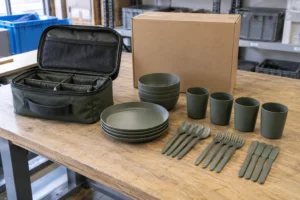
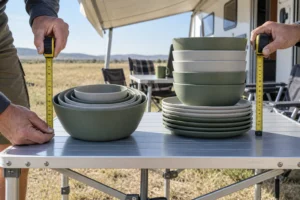
They approached a supplier looking for a custom “Nesting Set”—six bowls, plates, and cups that nested perfectly into a compact 300mm x 300mm storage box. The supplier secured a 3-year contract by engineering a unique draft angle that allowed for ultra-tight nesting, reducing the required storage volume by 30%. This is the kind of engineering detail that wins long-term B2B partnerships. Read more about this in our Custom Mold Development Guide.
7. B2B Buyer Checklist: Gearing Up for Australia
- FSANZ Verification:Does the supplier have a cleaning protocol that ensures a non-porous surface?
- BPA-Free Documentation:Is the SGS/Intertek test report dated within the last 12 months?
- GS1 Barcode:Have you registered your EAN-13 barcodes for the Australian POS systems?
- SIOC Packaging:If selling online, has the packaging passed a 1.5m single-parcel drop test?
- Pallet Optimization:Does the master carton fit a standard CHEP pallet footprint?
- UV Resistance:Has the material been tested under UV-B light for color fastness?
8. The “Made in China” Duty Dynamics
Australia has a Free Trade Agreement (ChAFTA) with China, which means most wheat straw tableware imports are duty-free, provided the Certificate of Origin is correct. This gives you a 5% price advantage over EU or US competitors supplying from non-FTA countries.
Conclusion: Selling to the Sunburnt Country
The Australian market for eco-friendly tableware is defined by its duality: it demands the elegance of a retail homeware store and the rugged durability of military-grade camping gear. Wheat straw composite is one of the few materials that genuinely delivers on both fronts.
By focusing on UV stability, cleanability (FSANZ compliance), and the specific nesting logistics of outdoor retailers, you unlock a market where consumers are environmentally conscious, government regulations are tightening, and the outdoor lifestyle is a central part of the national identity.
At Naike Dinner, we understand that selling to Australia isn’t just about adding a “Kangaroo” to the logo. It’s about physics, food safety, and freight optimization.
Ready to Tap into the Australian Market?
We hold an active portfolio of FSANZ-compliant test reports and offer specialized “Outdoor-Ready” packaging solutions for the harsh Australian climate.
👉 Request our “Australia-Ready” Catalog and Quote List
👉 Download the 2026 Wheat Straw Dinnerware Catalog
👉 Read: LFGB, FDA and BPA-Free — The Ultimate Tableware Safety Guide

CONTACT US

Wheat Straw Lifecycle Claims: Marketing Without Greenwashing
Wheat Straw Lifecycle Claims: Marketing Without Greenwashing In 2026, an eco-friendly tableware brand cannot afford a single inaccurate sustainability claim on its packaging. EU regulators

Compare Tableware Suppliers: B2B Factory Audit Guide
Compare Tableware Suppliers: B2B Factory Audit Guide I have been on both sides of the factory audit table. For 15 years as a manufacturer of

Wheat Straw Plates Wholesale Guide: Dinner, Kids & Restaurant Use Cases
Wheat Straw Plates Wholesale Guide: Dinner Plates, Kids Plates and Restaurant Use Cases If you are sourcing wheat straw plates wholesale, you are not just buying

Retail Packaging for Wheat Straw Dinnerware Sets: Box, Sleeve, Label and Barcode Options
Retail Packaging Wheat Straw Dinnerware Sets: Box, Sleeve, Label and Barcode Options In the B2B tableware industry, the packaging is often more expensive to produce

Dishwasher & Microwave Claims for Wheat Straw Dinnerware: Testing Standards
Dishwasher & Microwave Claims for Wheat Straw Dinnerware: Testing Standards and Buyer Notes If you are a brand owner or a category manager sourcing microwave safe

Pre-Shipment Inspection Checklist for Wheat Straw Dinnerware Buyers
Pre-Shipment Inspection Checklist for Wheat Straw Dinnerware Buyers: Ensuring Quality Before Loading If you are sourcing wheat straw dinnerware from overseas, there is one moment that defines