How to Avoid Low Quality Wheat Straw Products: A Practical Guide for Buyers
Sourcing eco-friendly tableware sounds simple—until quality issues start showing up.
For importers and brand owners, knowing how to avoid low quality wheat straw products is critical to prevent returns, complaints, and compliance risks.
In this guide, we’ll walk you through practical checks, supplier evaluation tips, and testing methods to help you source reliable, food-safe, and durable wheat straw tableware.
How to Avoid Low Quality Wheat Straw Products (Quick Checklist)
Before placing any order, make sure you:
- Verify raw material composition
- Check surface finishing and structure
- Test heat resistance and durability
- Confirm FDA / LFGB certification
- Evaluate supplier manufacturing capability
👉 Let’s go deeper into each step.
1. Check Raw Material Quality First
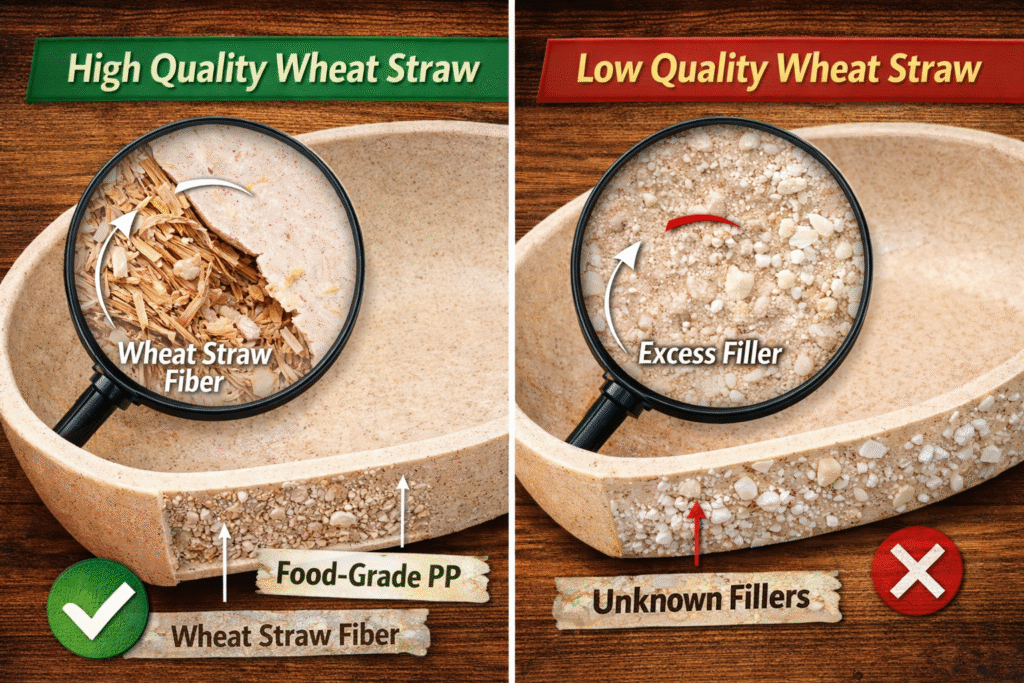
The biggest difference between high-quality and low-quality products lies in the material.
What to look for:
- Proper ratio of wheat straw fiber + food-grade PP
- No recycled or unknown fillers
- BPA-free and non-toxic composition
👉 Low-quality wheat straw products often use excess filler, which leads to brittleness and odor.
2. Inspect Surface Finish and Craftsmanship
Poor finishing is an immediate red flag.
Check for:
- Rough edges
- Uneven surface
- Visible defects or bubbles
👉 These are common signs of low manufacturing standards.
3. Test Heat Resistance and Durability
Wheat straw tableware should handle everyday use conditions.
Basic tests:
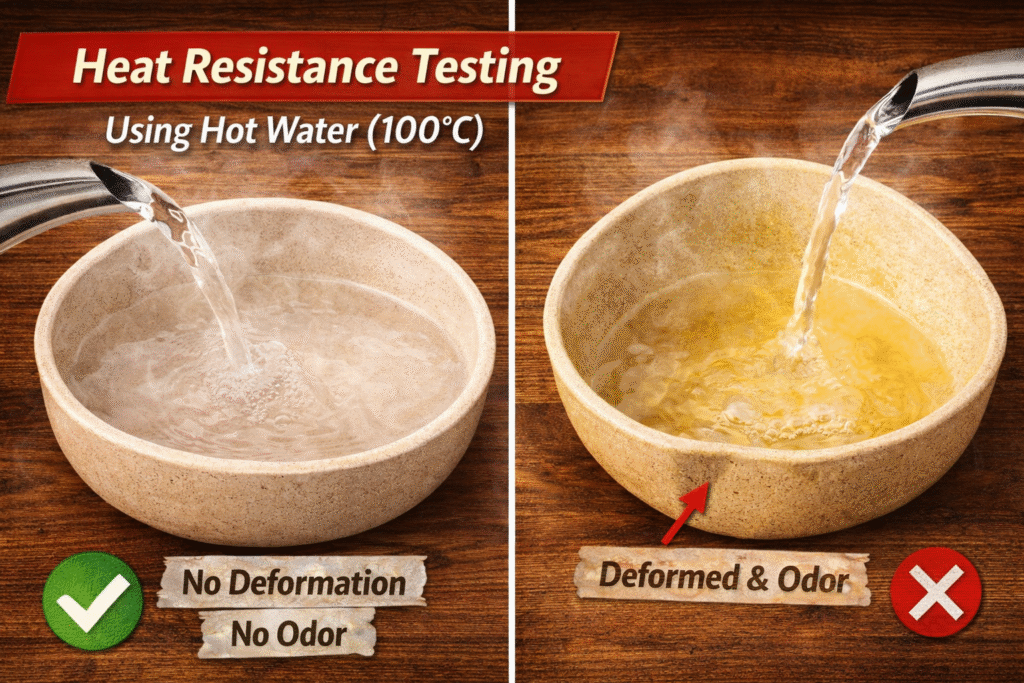
- Pour hot water (80–100°C)
- Check deformation or odor
- Perform a simple drop test
👉 Reliable products usually support -20°C to 120°C range.
4. Verify Certifications (Critical Step)
Never skip this step.
Required certifications:
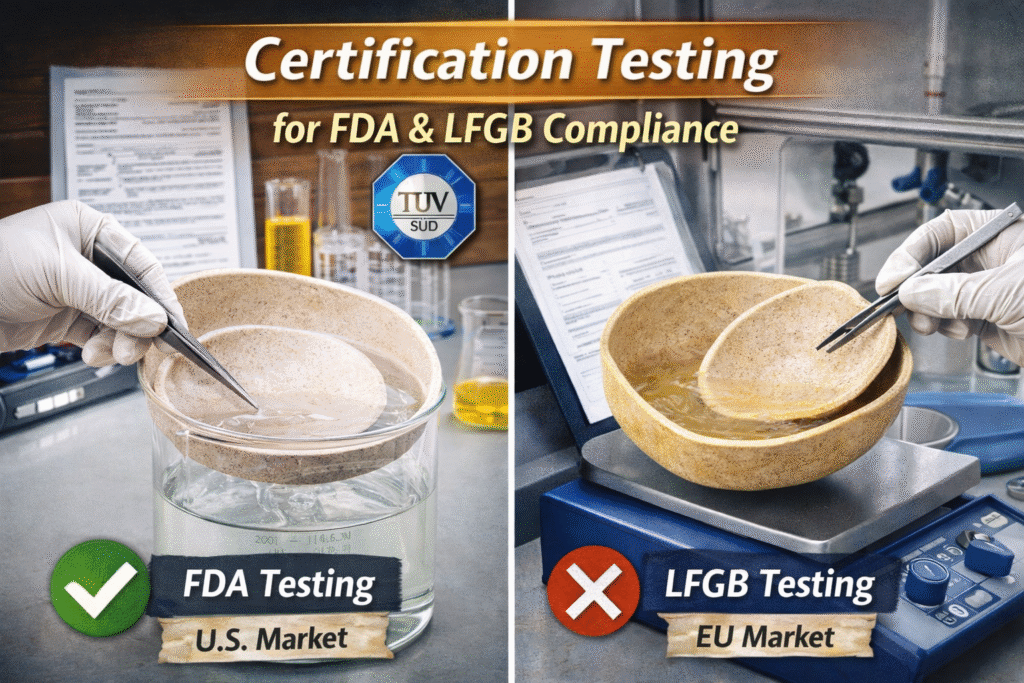
- FDA (U.S. market)
- LFGB (EU market)
👉 You can reference official standards from U.S. Food and Drug Administration and German Food and Feed Code to understand compliance requirements.
What to check:
- Valid testing reports
- Issued by third-party labs (SGS, TÜV, etc.)
- Up-to-date documentation
5. Evaluate Supplier Capability
Choosing the right supplier is as important as checking the product.
Key factors:
- Manufacturing experience
- Production capacity
- Quality control system
- OEM / ODM capability
👉 A professional factory ensures consistent quality across bulk orders.
🔗 How To Avoid Low Quality Wheat Straw Products
To better evaluate suppliers, you can also explore:
- 👉 /wheat-straw-tableware-quality-certification
- 👉 /blog/common-quality-issues-wheat-straw-tableware
- 👉 /blog/how-to-test-food-grade-tableware
These resources help you build a complete sourcing strategy.
🌐 External Reference (Authority)
For deeper understanding of food safety compliance, refer to:
- U.S. Food and Drug Administration guidelines on food-contact materials
- EU food safety standards under European Commission
Common Mistakes Buyers Should Avoid
❌ Choosing the lowest price without testing
❌ Ignoring certification verification
❌ Skipping sample testing
❌ Working with inexperienced suppliers
👉 These mistakes often lead to hidden costs and product failures.
🔗 Recommended Solution for Buyers
Looking for reliable wheat straw tableware supplier?
We offer:
- FDA & LFGB certified products
- Strict quality control system
- Stable bulk production
- OEM & ODM customization
👉 Contact us today for free samples and quotation.
Final Thoughts
Knowing how to avoid low quality wheat straw products can save you time, money, and reputation.
👉 Key takeaway:
- Focus on material quality
- Test before bulk orders
- Verify certifications
- Choose experienced manufacturers
This ensures your products are safe, durable, and market-ready.
FAQ
1. What is the most common quality issue?
Cracking and odor problems due to poor materials.
2. How can I quickly check quality?
Do a hot water test and surface inspection.
3. Are certifications necessary?
Yes, especially for U.S. and EU markets.
4. Can low-quality products affect my business?
Yes, leading to returns and brand damage.

How to Avoid Low Quality Wheat Straw Products
How to Avoid Low Quality Wheat Straw Products: A Practical Guide for Buyers Sourcing eco-friendly tableware sounds simple—until quality issues start showing up.For importers and

How to Test Food Grade Tableware: A Complete Guide for Buyers
How to Test Food Grade Tableware: A Complete Guide for Buyers When sourcing tableware for international markets, one of the most critical factors is ensuring

Microwave Safety of Wheat Straw Dinnerware
Microwave Safety of Wheat Straw Dinnerware: Is It Safe to Use? When choosing eco-friendly tableware, one of the most common questions buyers ask is:👉 Is

Common Quality Issues in Wheat Straw Tableware
Common Quality Issues in Wheat Straw Tableware: 7 Problems Buyers Must Avoid When sourcing eco-friendly products, many buyers focus on price and design—but overlook a

FDA vs LFGB Certification for Tableware
FDA vs LFGB Certification for Tableware: What Buyers Need to Know Understanding FDA vs LFGB certification for tableware is essential for global buyers.When sourcing tableware

Is Wheat Straw Dinnerware Safe
Is Wheat Straw Dinnerware Safe? A Deep Dive into Health Heat and Durability As eco-friendly products become more popular worldwide, many buyers are asking an