Description
SOFT HEXAGONAL CARRY POD CONCEPT
Custom Hex-Nest Camping Dinnerware Set
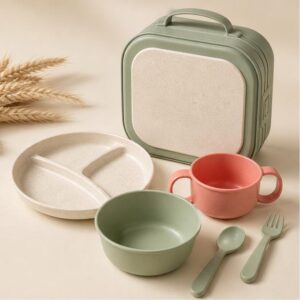
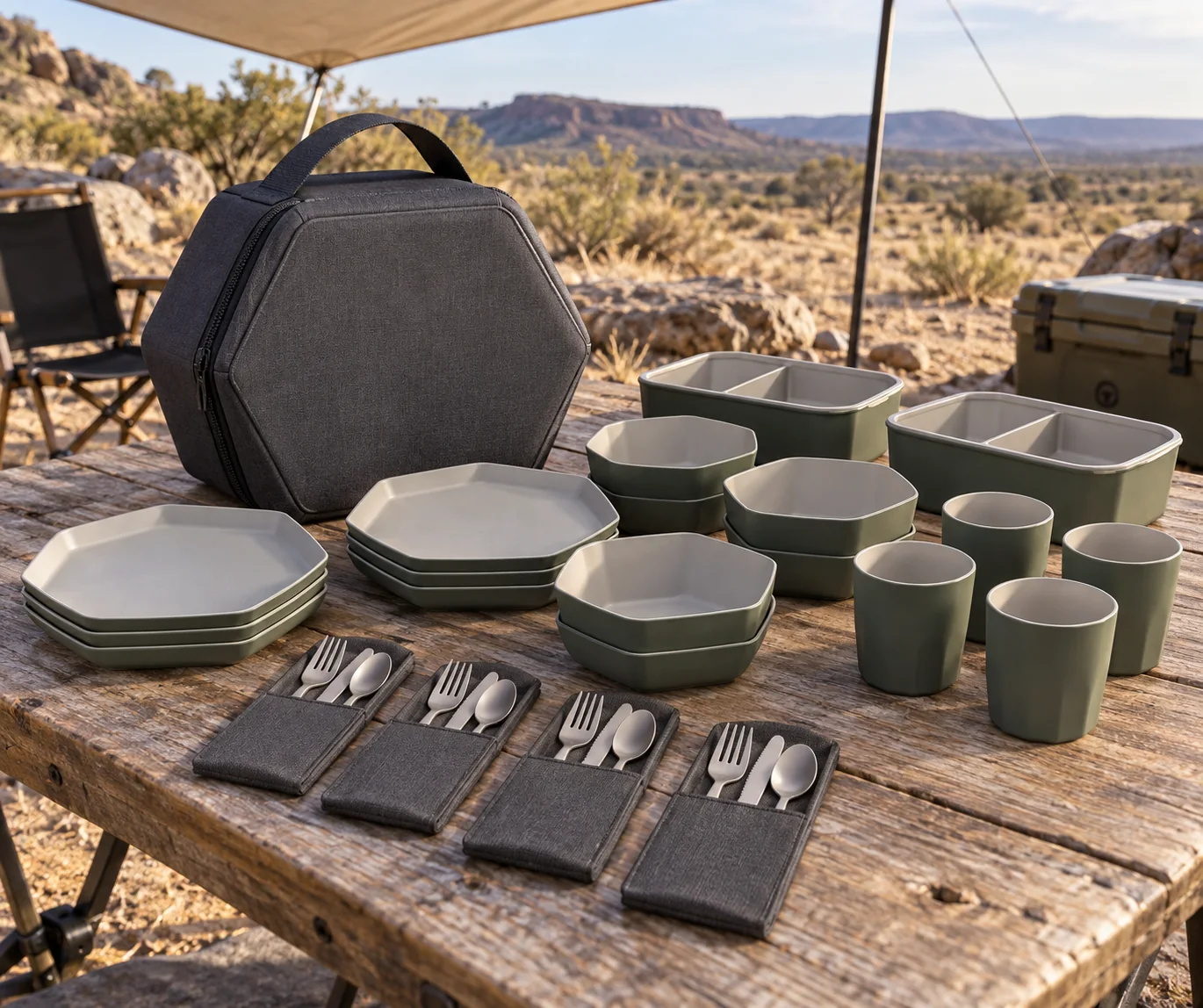
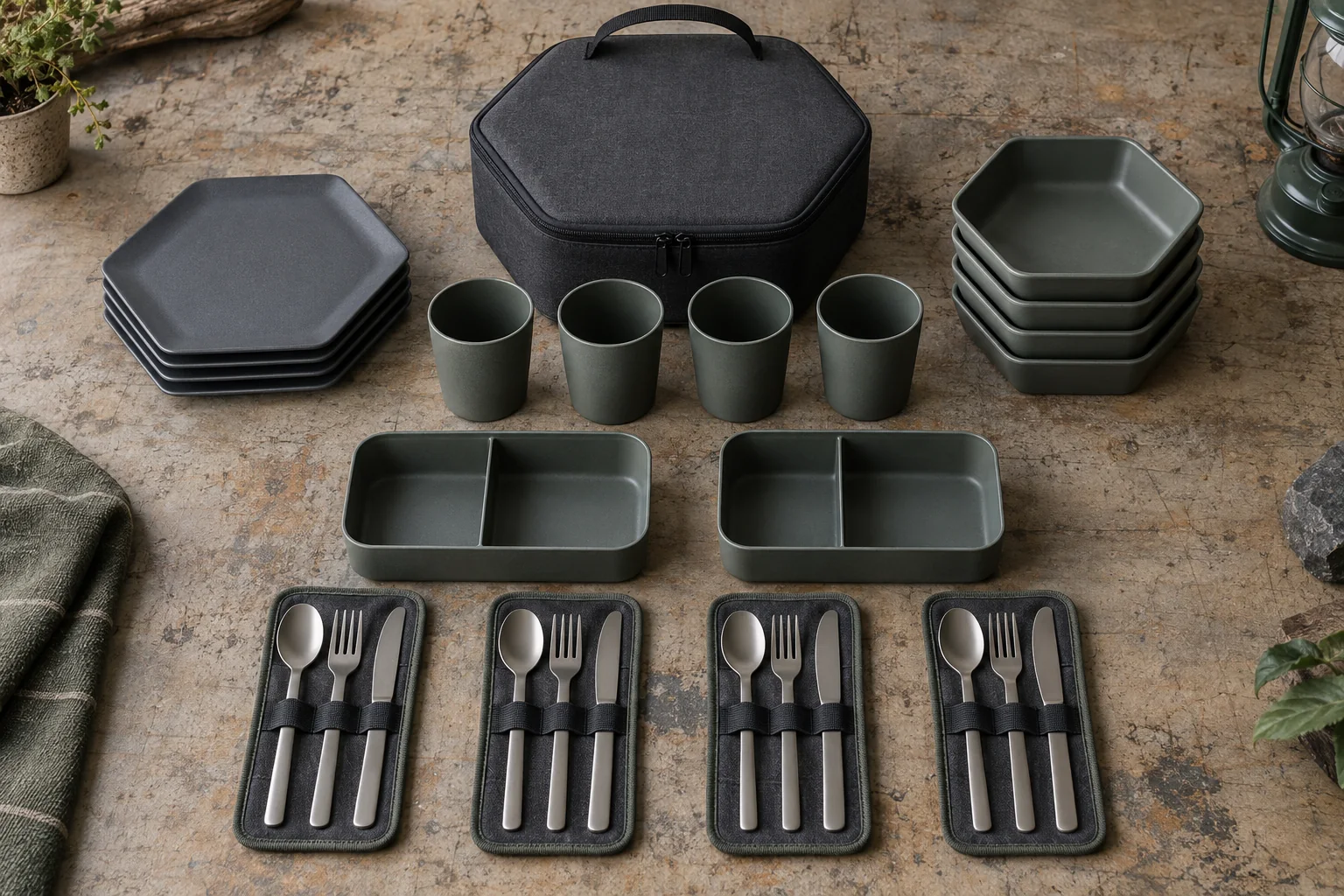
The hex-nest camping dinnerware set explores a shallow, six-sided nesting stack inside a soft zippered carry pod. Coordinated plates and bowls, short cups, divided lunch boxes and protected cutlery sleeves can be reviewed as one buyer-controlled outdoor dining configuration rather than a collection of unrelated components.
Images are configuration and application concepts, not photographs of a confirmed stock SKU. Final material, quantity, dimensions, loaded fit, tooling feasibility, food-contact evidence, logo method and packaging are To be confirmed for the project.
Submit a configuration briefPRODUCT PARAMETER
| Concept architecture | Soft hexagonal zippered carry pod with an assigned central stack and separate side pockets |
|---|---|
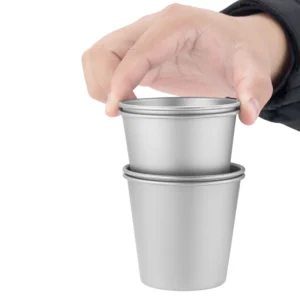
| Reference components | Six-sided plates and bowls, short tapered cups, divided lunch boxes, forks, spoons, blunt table knives and textile sleeves; final count follows the project matrix |
| SKU | To be confirmed for the project |
| Material and contact surfaces | To be confirmed for the project |
| Dimensions, weight and capacity | To be confirmed for the project |
| Color and finish | To be confirmed for the project |
| Logo | Location and method to be confirmed after surface and carrier review |
| Packaging | To be confirmed for the project |
| MOQ, price and lead time | To be confirmed for the project |
| Applicable markets | Europe, North America and Australia are buyer targets, subject to configuration-specific evidence |
REFERENCE CONFIGURATIONS
Use the hex-nest camping dinnerware set as a configuration discussion, not as a fixed piece-count listing. The following roles can be compared against the same carrier envelope.
Individual place settings
Map each plate, bowl, cup and utensil group to a user. Add or remove roles only after the component matrix and packed arrangement are reviewed together.
Lunch-box extension
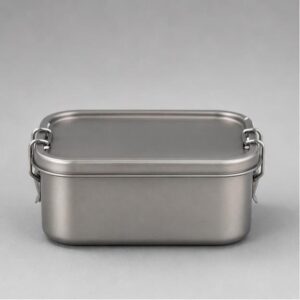
Study divided food containers as an optional module, with closure, orientation and washing questions kept separate from the open dinnerware pieces.
Carrier organization
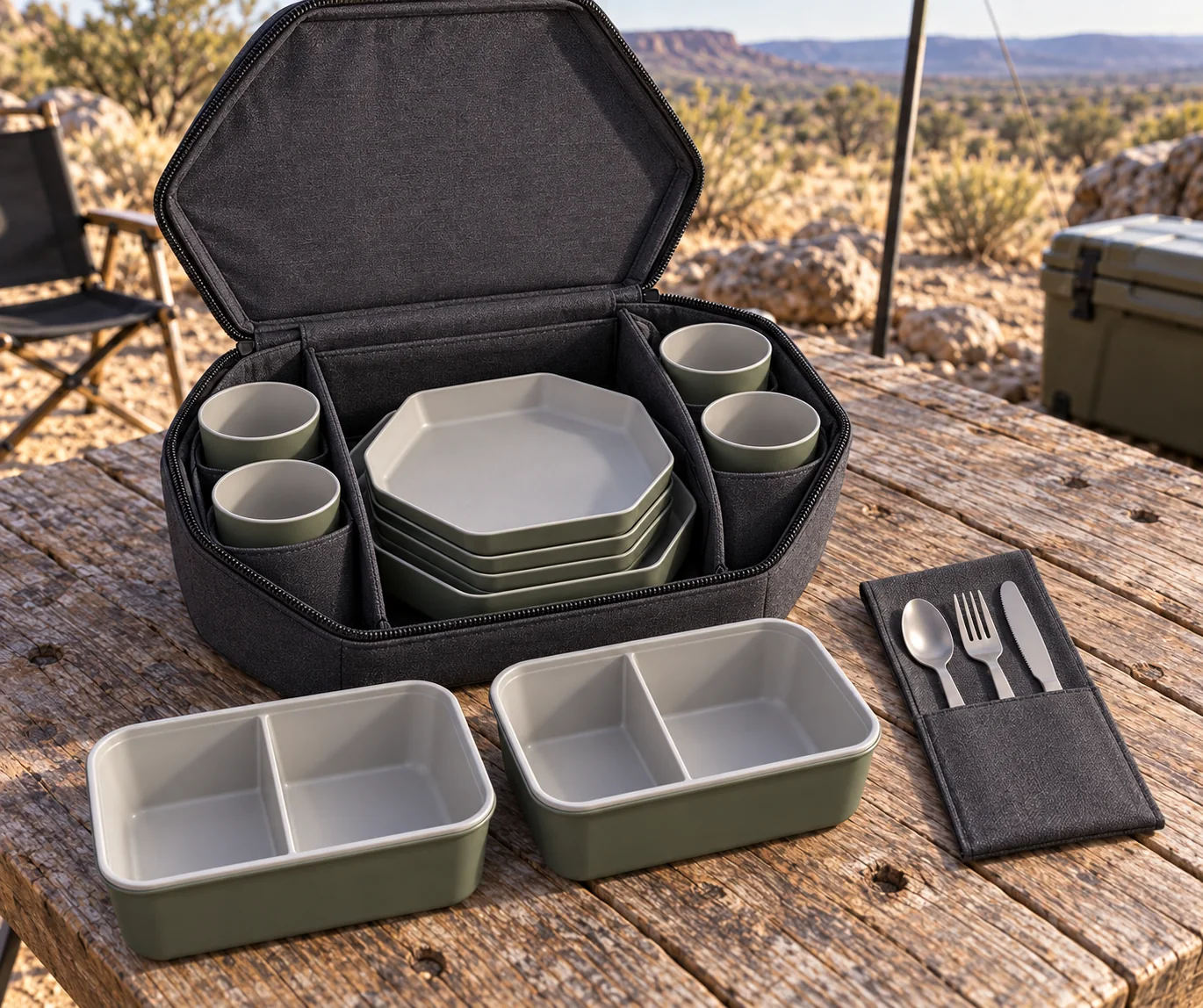
Explore the soft pod as a transport architecture: a central hexagonal stack, cup pockets and independent utensil sleeves. A concept drawing does not establish verified fit.
Compatibility to be confirmed by project sample and drawing. The illustrated arrangement is not a production specification, inventory claim or customer-order record.
Design the stack around the eating roles
The six-sided outline is useful only if the plate and bowl rims can nest without binding, abrasion or an awkward grip. Decide whether plates should sit below the bowls, whether a separator is required and how a user removes one item without destabilizing the rest. Compare the complete loaded pod, not an empty stack photographed on a studio table.
Use the component-list method to count lids, sleeves and shared pieces. The set is materially different from a roll-top frame or a rigid drawer case because the carrier outline and central stack, rather than removable frame tiers, define the packing logic.
Keep food containers and cutlery distinct
A divided lunch container introduces closure and cleaning questions that are not answered by the open plate or bowl design. Review lid alignment, compartment access and the complete transport orientation on a project sample. Cutlery should have a protected, drainable sleeve so metal or rigid edges do not contact a cup rim or mark the plate stack.
Map potential contact and rattle points using the set rattle checklist. The number of pockets, closure detail and internal clearances remain development questions. Compatibility to be confirmed by project sample and drawing.
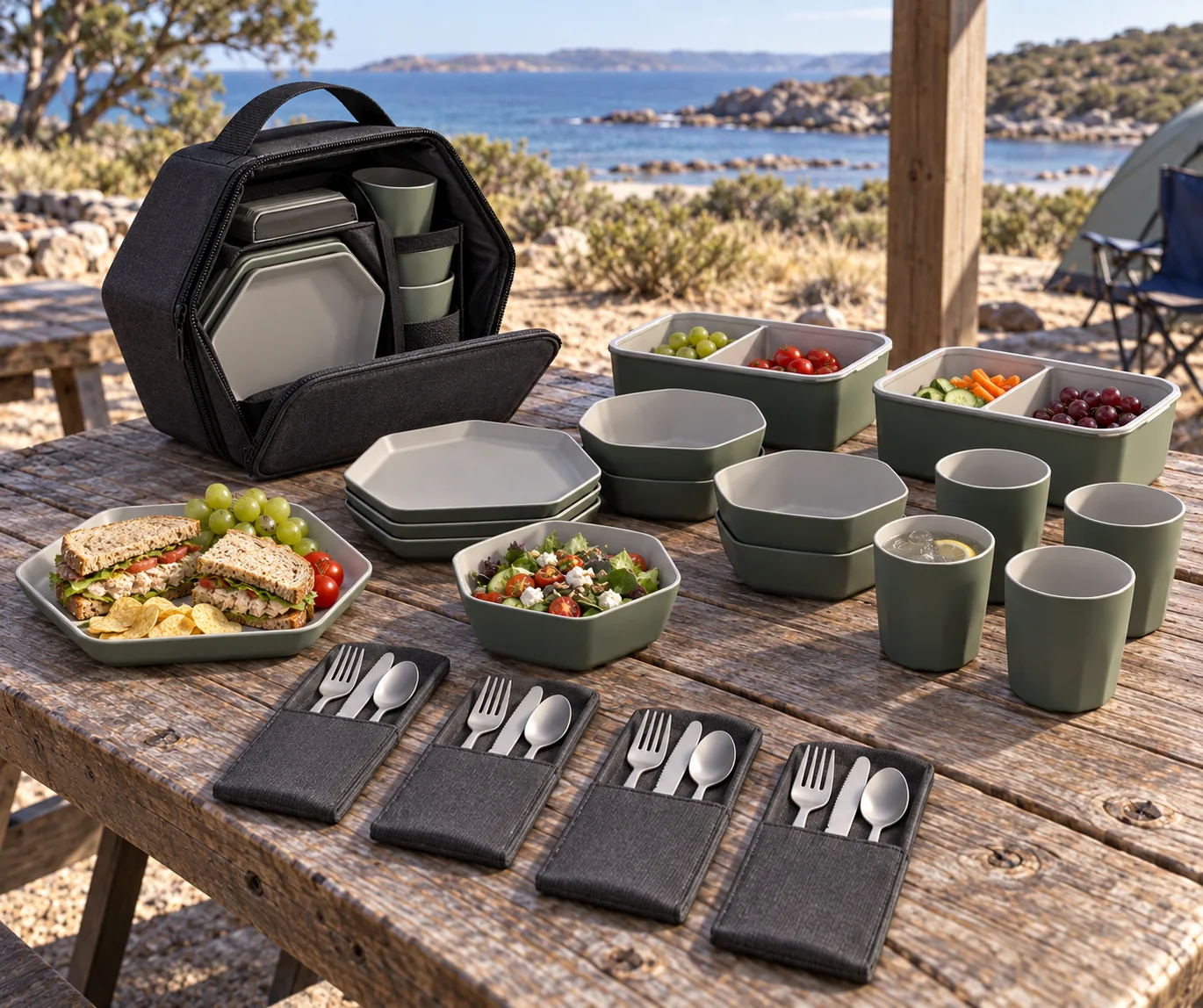
Coastal application concept: the full set, carry pod, lunch boxes and eating components are shown as a configuration study, not as evidence of stock, weather resistance or a completed order.
Buyer-controlled development block
Component drawing
Number every part and assign a food-contact role, user count, replacement strategy and reference sample.
Loaded envelope
Measure the full closed pod with all approved parts, using the pack-volume worksheet.
Closure and access
Observe zip path, handle balance, cup-pocket reach and the removal order of the central stack.
Revision control
Recheck fit and evidence if a rim, handle, lunch-box divider, pod panel or artwork changes.
Materials and compliance boundary
Choose material and decoration only after food type, temperature, contact time, cleaning and destination markets are defined. The European Commission food-contact overview, FDA Food Code and FSANZ food-packaging guidance frame different buyer questions; none approves this illustrated concept.
Request evidence for each finished food-contact component and clearly distinguish carrier fabric from eating surfaces. A dinnerware component is not cookware: no item here is represented as safe for a stove, oven, burner, campfire or direct flame. Do not assign an environmental, heat-resistance or durability claim from appearance alone.
Customization and sample controls
Buyers can request a different user count, plate and bowl profile, cup form, lunch-box division, utensil handle, pod panel, pocket layout, color, logo position or retail package for review. A change to molded geometry or textile construction requires a fresh feasibility and fit discussion; no tooling capability, cost or schedule is promised on this page.
Start sample approval with the empty pod, then add each component family in the intended packing order. Review access, rubbing, cleaning, drying and closed dimensions on the exact revision. Only after function is resolved should artwork and packaging be signed off, with any later change routed back through affected checks.
Compare the carrier against the full buying brief
A shallow hexagonal stack can be attractive in a presentation image, yet the complete packed height is set by the bowl rim, lunch-box depth, cup pockets and closure allowance together. Record the outside envelope with the proposed quantities loaded, the handle upright and the zipper fully closed. Compare that result with the intended vehicle drawer, retail shelf or shipping carton rather than with an empty pod.
Ask a second reviewer to pack the hex-nest camping dinnerware set from a written parts list without watching the first reviewer. If the two packing arrangements differ or one leaves a cup or utensil outside, the pod layout needs a clearer pocket map or revised proportions. Photograph the accepted sequence and assign a revision to it, so the final retail configuration does not drift from the sample review.
The concept's hexagonal outline should not make the set awkward to lift or rest on a table. Check balance with the lunch boxes empty and with the intended meal load, and confirm the zipper path does not scrape a food-contact rim. These are observations to request on a future project sample, not performance claims about the pictured configuration.
Packaging and evidence handoff
Define whether the carry pod is the consumer package or whether it sits inside a separate retail carton. A sleeve, instruction card or protective spacer changes the packed envelope and should appear in the component and packaging lists. Keep SKU, color, carton format, barcode ownership and labeling fields open until the buyer's market and approved configuration are known.
Ask for a document register that maps each finished food-contact piece to its material specification, drawing revision and stated use conditions. Include separate records for the pod fabric, closure hardware and any decoration relevant to their functions. A photo of the set on an outdoor table is useful for assortment communication, but it cannot substitute for a sample, declaration, report or signed drawing.
If the buyer later requests a different lunch-box divider, utensil handle or cup height, repeat the fit, closure, cleaning and evidence review that the change can affect. Confirm the new arrangement with a physical sample before quoting one fixed packed size or promising compatibility. This protects both the buyer's catalog accuracy and the project's change history.
Buyer control checklist
| Control | Question | Review record |
|---|---|---|
| Component matrix | Are all personal and shared roles counted? | Dated list and sample photograph |
| Carrier fit | Does the full set close and reopen in one repeatable sequence? | Loaded pod and envelope measurement |
| Food-contact scope | Which finished parts and surfaces require evidence? | Revision-matched document register |
| Customization | Which changed geometry or artwork needs new approval? | Drawing, color reference and change notice |
Procurement FAQ
Is this a ready-to-ship hex-nest set?
No stock availability is claimed. The images show a concept direction; the final build and commercial terms are To be confirmed for the project.
Can the component count change?
Yes, as a project request. Every change should reopen the pod envelope, pocket allocation, packing list and evidence register.
Are the pictured plates, boxes and cups guaranteed to fit?
No. Compatibility to be confirmed by project sample and drawing.
Can existing components be used inside a new carrier?
Candidate parts can be evaluated, but the rim, base, utensil handle, closure and pocket clearances need a measured sample review.
Can logos be added to the pod and parts?
Potential marking positions depend on material, surface, flex area and intended market. The method must be reviewed before approval.
What should the buyer send for a quotation?
Provide the user count, component matrix, market list, food-use conditions, target closed envelope, colors, artwork, packaging and required documents. Ask for confirmed scope and open development questions separately.
Review a hex-nest configuration
Send the component roles, quantities, food and cleaning conditions, carrier target, market requirements and drawing references for a controlled review. The response should distinguish verified company capability from a new geometry or material combination that requires project feasibility.
Request a set-development review
For a comparison against a roll-top or rigid case, share both configuration briefs with the same component matrix. No MOQ, price, lead time or tooling promise is implied.
RELATED SOURCING PATHS
Compare Products and Plan Your Project
Review related product formats, then compare material, set configuration, logo, packaging, testing scope and order quantity with our B2B team.