Description
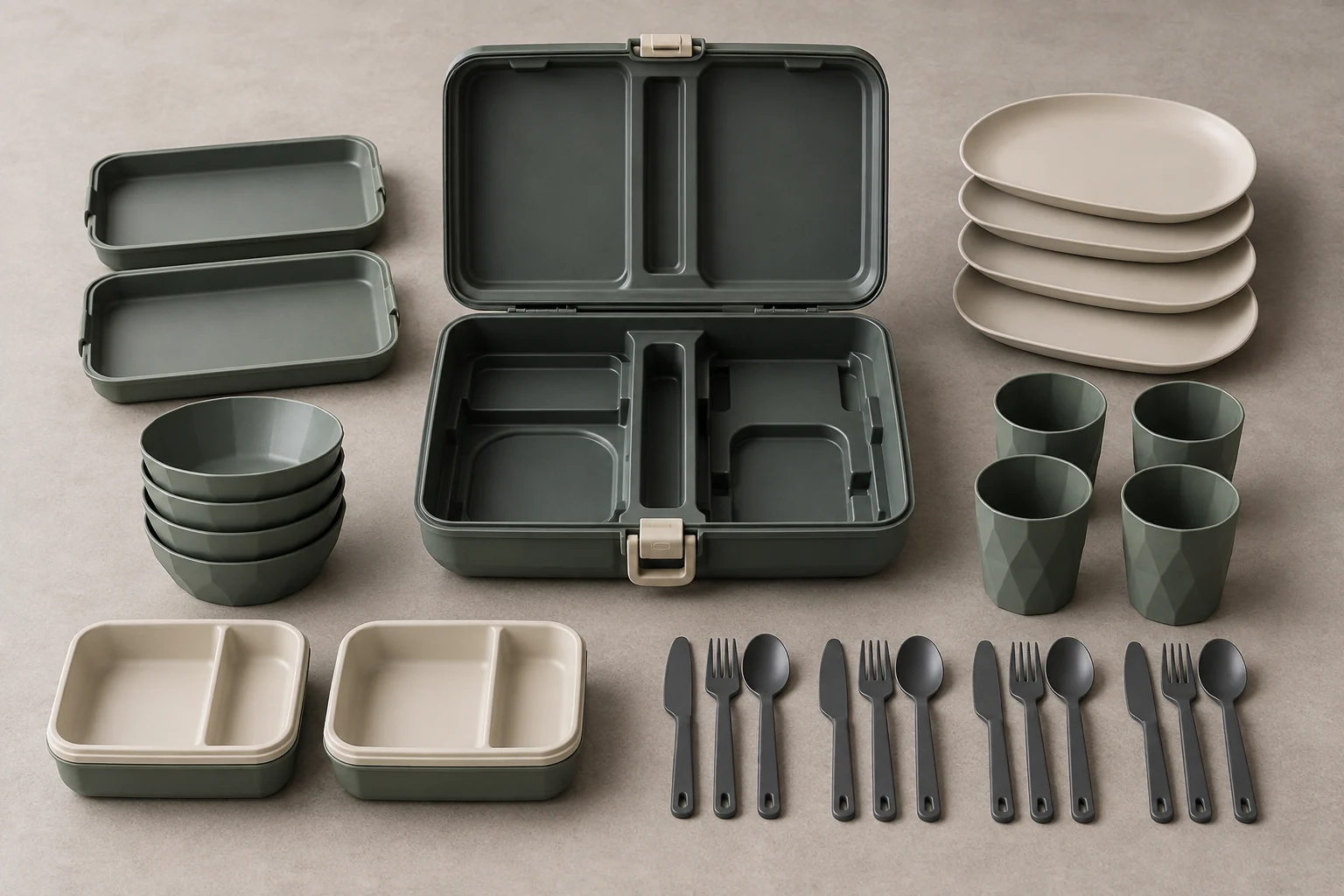
LOW-PROFILE CLAMSHELL CONCEPT
Custom Bridge-Latch Camping Dinnerware Set
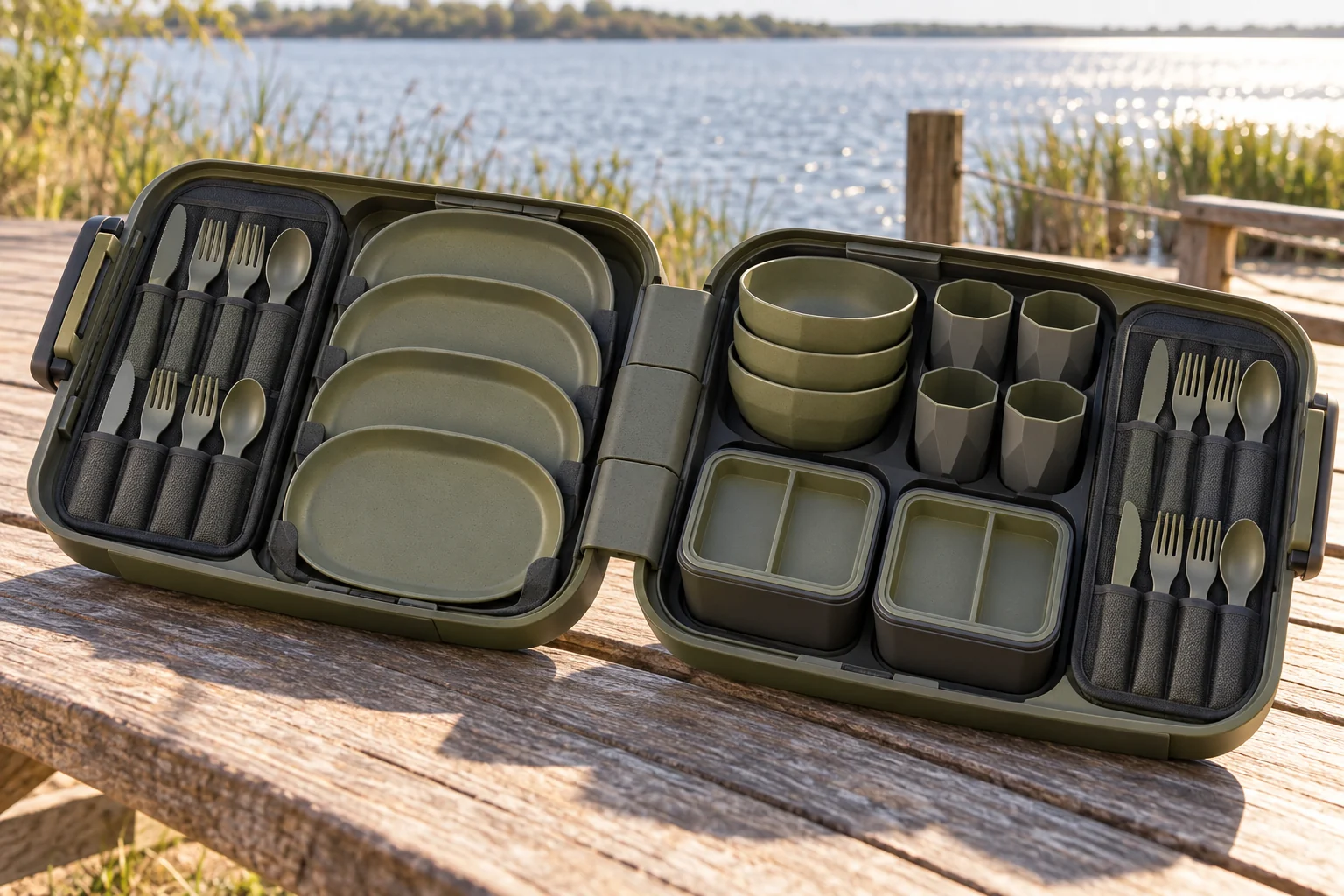
The bridge-latch camping dinnerware set opens from one compact rectangular carrier into a low-profile clamshell case with a broad bridge hinge. A central cavity stores the nested group stack, while the hinged leaves organize each user’s plate, bowl, cup, lunch box and utensils for table distribution.
This is a custom design and application concept rather than a confirmed stock SKU. Final geometry, materials, hinge life, loading, evidence and production feasibility must be reviewed using project drawings and samples.
Submit a development briefPRODUCT PARAMETER
| Concept | Low-profile clamshell carry case with a broad central bridge hinge and dedicated component zones |
|---|---|
| Reference roles | Plates, bowls, cups, divided lunch boxes, forks, knives and spoons; final counts follow the signed component matrix |
| Material | To be confirmed for the project |
| Dimensions and weight | To be confirmed for the project |
| Colour and finish | To be confirmed for the project |
| Logo | Placement and method to be confirmed after surface and folding review |
| Packaging | To be confirmed for the project |
| MOQ, price and lead time | To be confirmed for the project |
| Markets | Europe, North America, Australia and comparable B2B channels, subject to configuration-specific evidence |
REFERENCE CONFIGURATIONS
Four-person component program
Oval plates, shallow bowls and faceted cups form four place settings; two divided lunch boxes can serve personal or shared roles.
Two lunch-box layouts
The two divided boxes can be reviewed as personal meal boxes or shared accessory containers according to the channel brief.
Channel-specific assortment
Component roles can be evaluated for family retail, vehicle camping, rental or outdoor catering. Fit between proposed parts remains open until the buyer approves a project drawing and loaded sample.
For this bridge-latch camping dinnerware set, the imagery explains a possible configuration and use context. It must not be treated as proof of an available SKU, production site, test result or customer delivery.
A low-profile architecture for visible allocation
The bridge-latch camping dinnerware set opens as a low-profile clamshell. A broad central bridge hinge separates the two shells while side sleeves keep utensil groups away from nested tableware. The design prioritizes visible component allocation and flat vehicle-friendly storage.
The architecture differs from published accordion-fan, drawer, wing, caddy, saddle, lift-out and corner-pod concepts. Its defining variables are the broad bridge hinge, low-profile shell, oval component stack, lunch-box location and protected side sleeves. None should be accepted from imagery alone.
Freeze the component matrix first
Specify the user count, every dinnerware role and each shell zone before discussing external dimensions. A case is not automatically a four-person set if shared pieces replace personal components. Sign the role-and-count sheet together with the retail pack copy so the physical assortment and customer promise remain aligned.
The camping dinnerware component guide can help the team identify missing personal and shared roles before the case envelope is frozen. The bridge-latch camping dinnerware set should proceed to drawing review only after quantities and open items are visible.
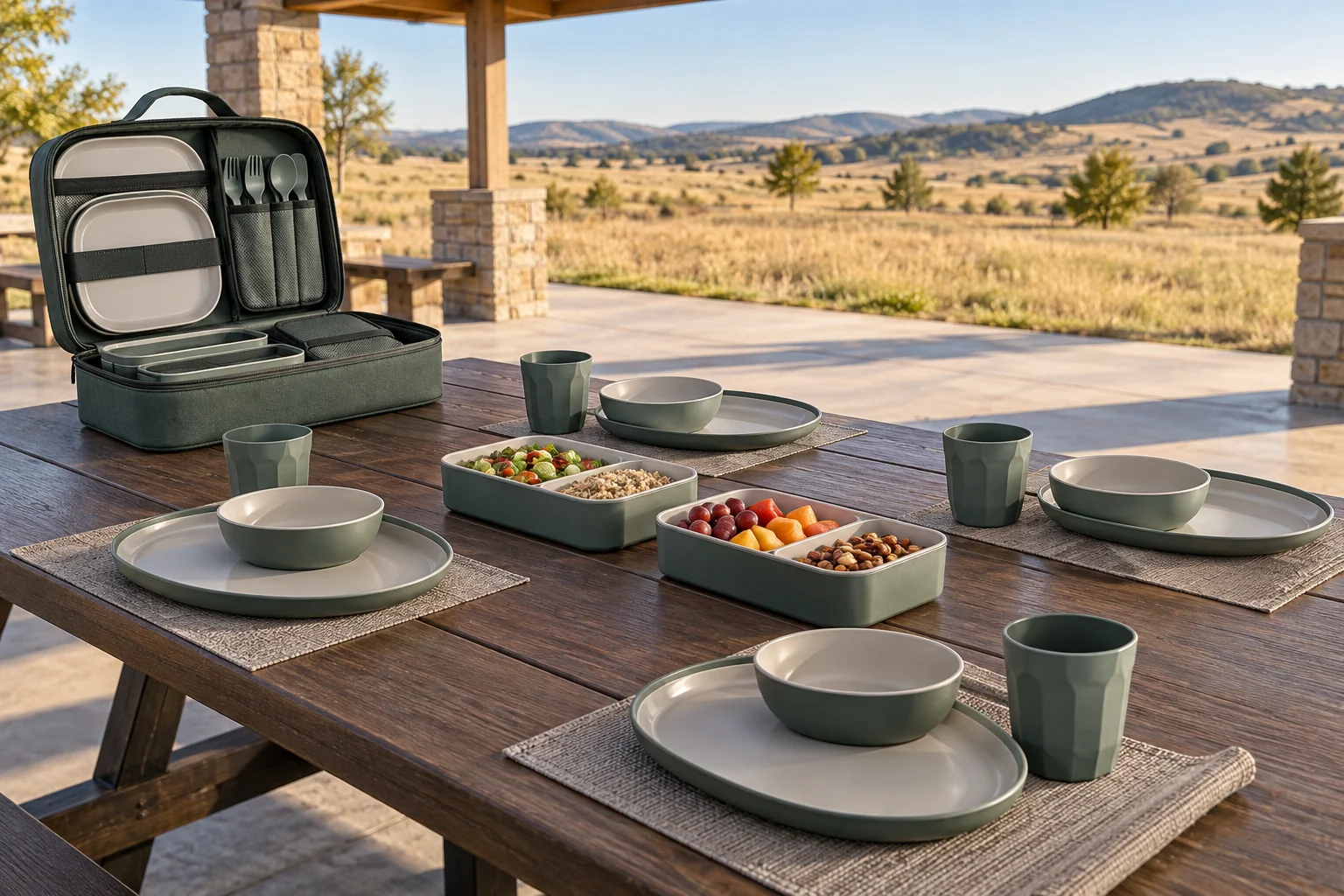
Conceptual use scene: the open clamshell keeps the complete set visible while the bridge hinge and side sleeves organize component zones.
Bridge hinge, latch and sleeve development
The broad bridge hinge must be reviewed for opening angle, shell alignment, pinch access, cleaning and the effect of a fully loaded case. Side sleeves need to restrain the selected fork, knife and spoon handles while remaining accessible for washing, drainage and inspection. Hinge cycle performance and load capacity are not claimed here.
During sampling, open and close the complete loaded system in the intended order. Inspect whether components collide, whether one shell disturbs another and whether the case closes without pressure. Compatibility to be confirmed by project sample and drawing.
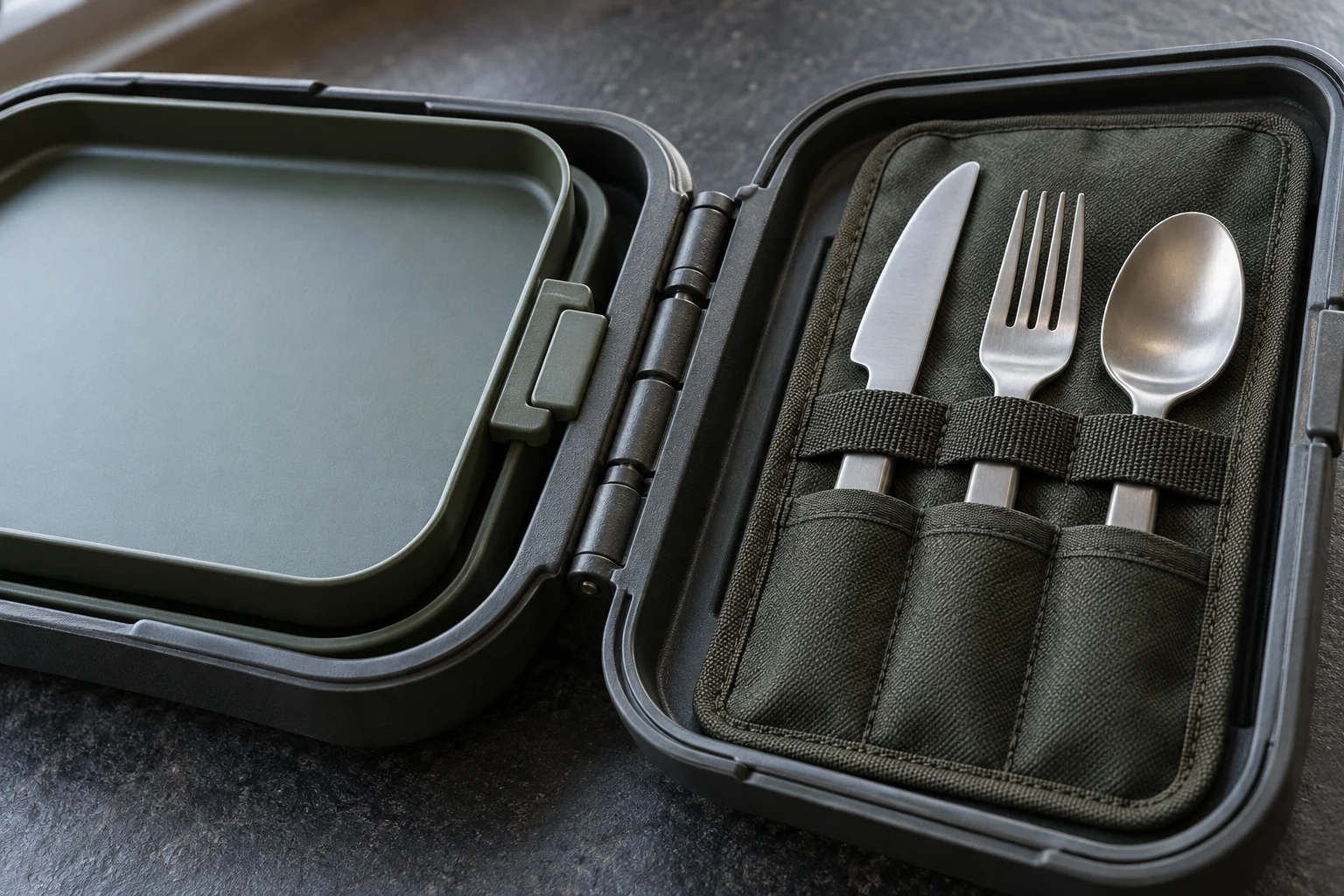
Procurement specification block
Closed envelope
Record the maximum loaded dimensions and compare them through the pack-volume worksheet.
Opening sequence
Number each shell zone in the drawing and work instruction so assembly and repacking follow one auditable order.
Contact control
Use the rattle-risk checklist to map shell, utensil and nested-part contact.
Stack geometry
Review rim, base and extraction using the nesting versus stacking guide.
Buyer control checklist
| Control | Buyer question | Required record |
|---|---|---|
| Matrix | Does every shell zone match the approved component assignment? | Dated BOM and loaded sample |
| Fold order | Can users open and close the set without collision? | Drawing and observed sequence |
| Retention | Do utensils and lunch boxes stay assigned during handling? | Loaded transport review |
| Cleaning | Can hinges, loops and case corners drain and dry? | Cleaning workflow record |
| Change control | Which checks repeat after a component or artwork revision? | Revision notice and approval plan |
Materials and compliance boundary
Material selection must match food type, temperature, cleaning, age group and destination market. Use the European Commission food-contact overview, FDA Food Code and FSANZ packaging guidance only to establish questions for the intended markets. These public references are not approval documents for the illustrated case or components.
For the bridge-latch camping dinnerware set, build the evidence file around the final bill of materials, pigments, decoration, food conditions and cleaning instructions. The concept covers serving and storage only; it carries no claim for use on a stove, burner, fire or other direct heat source.
Customization and tooling review
A bridge-latch camping dinnerware set buyer brief may change component roles, surface direction, artwork, shell zones, case material or retail presentation. Changes affecting the bridge, latch, sleeves or molded geometry require a fresh engineering and tooling review. Commercial terms and timing can only be confirmed against that defined scope.
First approve opening, closure, extraction, cleaning and repacking; then release artwork and decorative details. A new logo patch, thicker coating or changed handle can affect folding clearance. The final bridge-latch camping dinnerware set must be reconciled with its drawings and golden sample.
Sample approval sequence
Start with an empty opening test, then load one shell, then the complete configuration. For the bridge-latch camping dinnerware set, document the loaded outer envelope, removal order, wash-and-dry workflow and every contact location. Assign a revision code to the physical sample and keep unresolved decisions on the same record.
For the bridge-latch camping dinnerware set, release colour, branding and pack graphics after the functional case is accepted. A later plate, cup, box or utensil change must trigger another clearance, evidence and closing review.
Procurement FAQ
Is this bridge-latch camping dinnerware set a stock product?
No stock claim is made. Availability and final construction are To be confirmed for the project.
Can the number of case shells change?
A different count can be assessed, but it changes the case, balance, hinge loads and packing order.
Can existing plates and bowls be used?
Existing components may be reviewed against the shell zones and central-stack envelope. Compatibility to be confirmed by project sample and drawing.
Can colour identify each user group?
A coded palette can be reviewed once material, pigment controls, visual tolerance and market evidence needs are written into the project brief.
What is required for a quotation?
Provide intended users, component quantities, closed-case target, market list, material direction, artwork zones, pack format and document expectations. The written quotation should distinguish confirmed items from open engineering decisions.
Develop a bridge-latch configuration
Share the component matrix, opening sequence objective, carrier envelope, market, artwork and packaging brief. The project review will separate feasible options, open engineering questions and facts requiring a controlled sample; unverified dimensions or performance will not be presented as commitments.
Request a component and drawing review
When comparing the bridge-latch camping dinnerware set with a different carrying architecture, describe the access, nesting or transport problem and submit the complete configuration brief.
RELATED SOURCING PATHS
Compare Products and Plan Your Project
Review related product formats, then compare material, set configuration, logo, packaging, testing scope and order quantity with our B2B team.