(+86)-185-5905-0813 | sales@naikegroup.com | Within 24 hours response from our salesman

How to Custom Wheat Straw Dinnerware Mold: Timelines and Cost Guide

Launching a successful eco-friendly tableware product is no longer just about choosing existing designs from a catalog.

Today, many serious buyers, private label brands, retailers, and importers are looking for something unique — products that truly represent their brand identity and help them stand out in the competitive sustainable kitchenware market.

That’s why custom wheat straw dinnerware mold development is becoming increasingly popular.

From custom-shaped bowls and plates to fully branded reusable lunch box systems, businesses worldwide are investing in OEM and ODM mold development to create exclusive eco-friendly product lines.

But one of the biggest questions buyers ask is:

How long does custom mold development take, and how much does it cost?

In this guide, we’ll walk through the complete process of custom wheat straw dinnerware mold development, including timelines, tooling costs, design considerations, and how to reduce risks during product development.

Most importantly, this article will help you understand how to work with an experienced manufacturing partner to turn your product idea into a scalable commercial product.


Why More Brands Are Investing in Custom Wheat Straw Dinnerware Mold

The eco-friendly kitchenware market has grown rapidly over the past few years.

However, many retailers now face the same problem:

Too many sellers are offering identical products.

For brands that want stronger market positioning, custom mold development provides several major advantages:

  • Exclusive product designs
  • Stronger brand identity
  • Better profit margins
  • Reduced direct competition
  • Greater flexibility for retail packaging
  • Improved customer loyalty

Custom-designed wheat straw dinnerware also allows brands to better target specific markets such as:

  • Children’s tableware
  • Restaurant foodservice
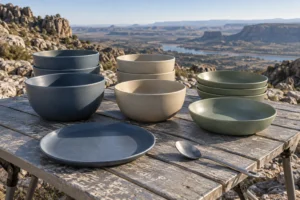
  • Camping & outdoor dining
  • Premium kitchenware
  • Eco-conscious retail collections
  • Promotional gift products
 
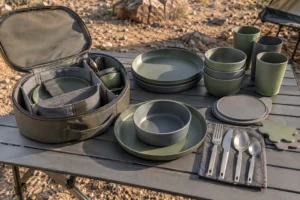
custom wheat straw dinnerware mold

What Is a Wheat Straw Dinnerware Mold?

A mold is the core tooling used during manufacturing to shape the final product.

In wheat straw tableware production, molds are used for products such as:

  • Plates
  • Bowls
  • Cups
  • Cutlery
  • Food containers
  • Lunch boxes
  • Kids dinnerware sets

The mold determines:

  • Product shape
  • Size
  • Surface texture
  • Structural durability
  • Logo positioning
  • Functional details

For brands developing long-term product lines, investing in custom tooling creates a unique competitive advantage that cannot easily be copied by competitors.


The Complete Custom Mold Development Process

Step 1: Product Idea & Design Discussion

The process usually begins with an idea, sketch, or reference sample from the buyer.

At this stage, manufacturers typically discuss:

  • Product dimensions
  • Material requirements
  • Usage scenarios
  • Packaging needs
  • Logo placement
  • Target retail market
  • Estimated order volume

Professional manufacturers can also help optimize the structure to improve:

  • Durability
  • Production efficiency
  • Material cost
  • Shipping efficiency

This early-stage communication is extremely important because it directly affects tooling cost and production success.

👉 If you are planning to build your own sustainable brand, you may also like:
How to Create Your Own Eco-Friendly Tableware Brand


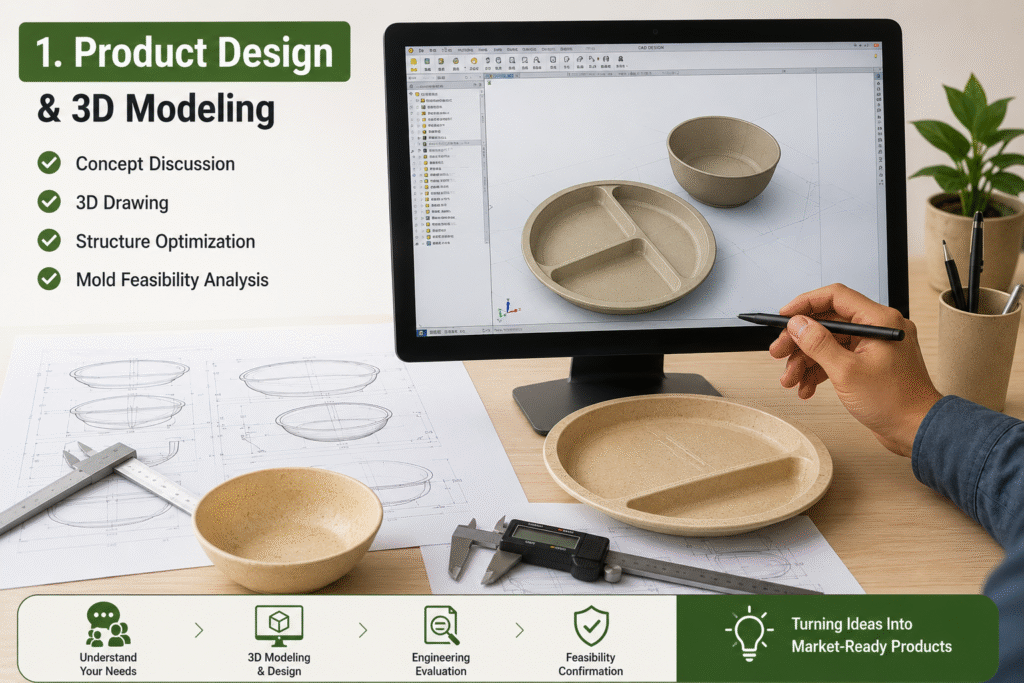
Step 2: 3D Drawing & Product Engineering

After confirming the basic concept, engineers create 3D product drawings and structural designs.

This stage includes:

  • CAD modeling
  • Structural analysis
  • Product thickness optimization
  • Mold opening evaluation
  • Manufacturing feasibility checks

For experienced factories, this stage often helps buyers avoid expensive tooling mistakes later.

Many professional buyers specifically look for manufacturers with strong in-house engineering capabilities because it greatly improves development efficiency.

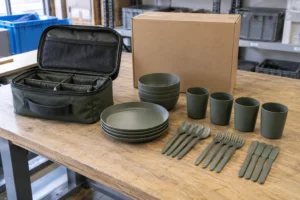
custom wheat straw dinnerware mold

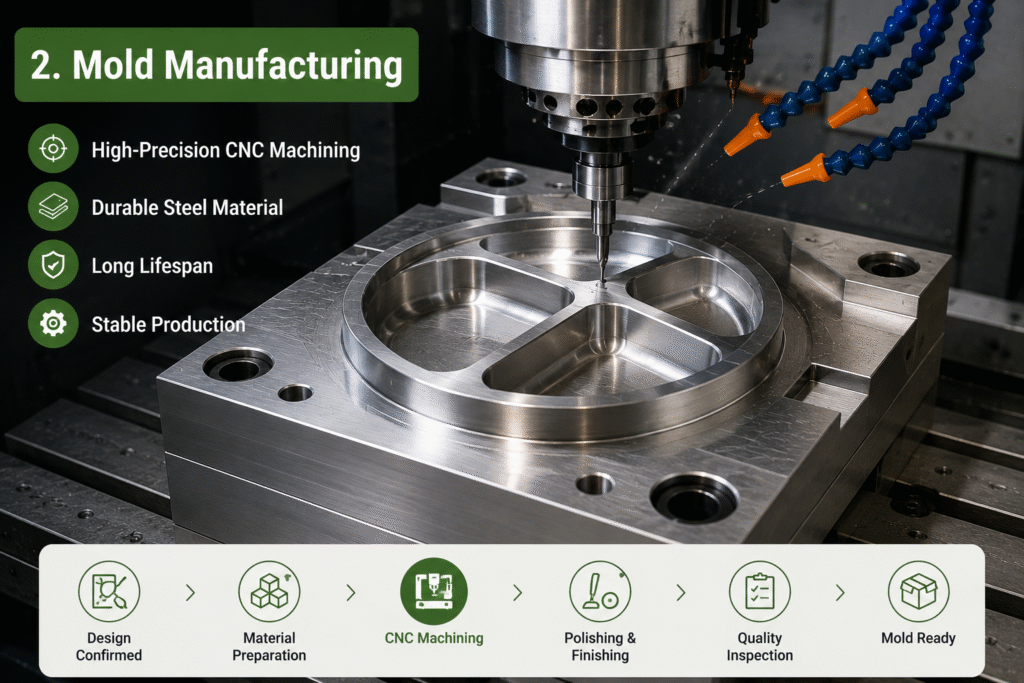
Step 3: Mold Manufacturing

Once the 3D drawings are approved, mold production officially begins.

Depending on product complexity, mold development usually takes:

Mold ComplexityEstimated Timeline
Simple Plate/Bowl15–25 days
Lunch Box/Container25–40 days
Multi-Part Products35–60 days

The mold itself is usually made from high-quality steel or aluminum depending on production requirements.

Experienced factories will optimize molds for:

  • Long production lifespan
  • Faster cycle times
  • Stable product quality
  • Better surface finishing

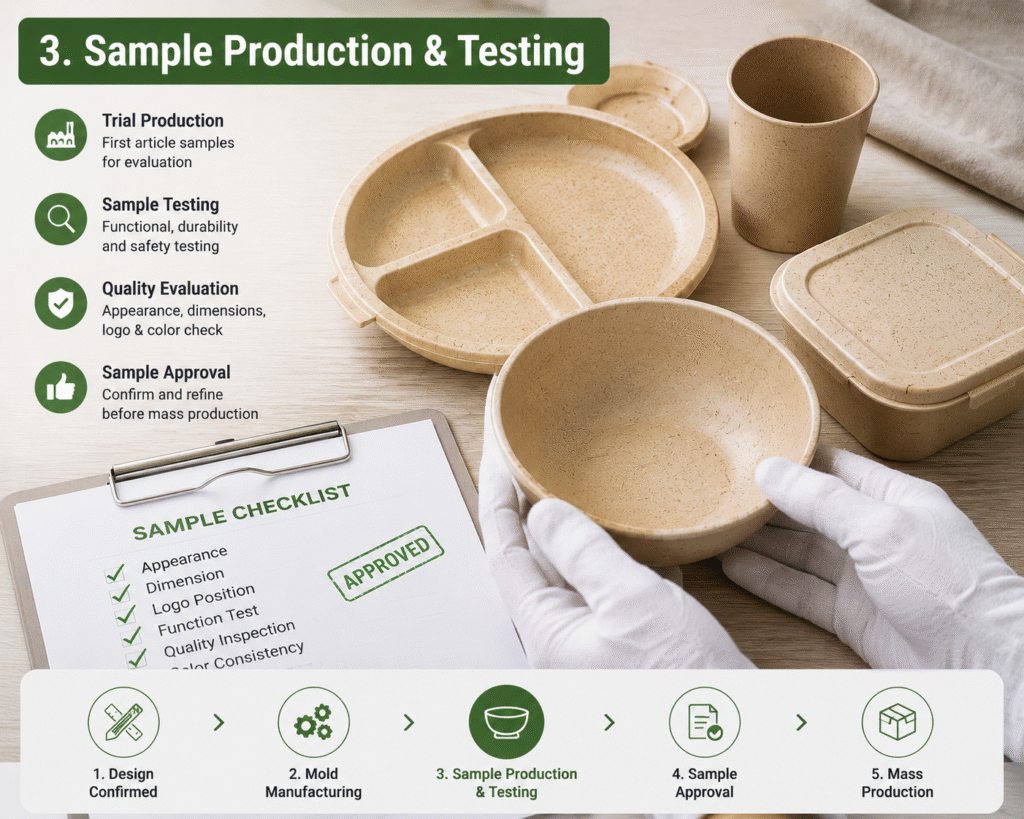
Step 4: Sample Production & Testing

After mold completion, the factory produces the first trial samples.

This stage is critical because buyers can evaluate:

  • Product appearance
  • Color consistency
  • Logo quality
  • Lid fitting
  • Structural strength
  • Packaging compatibility

Most serious buyers request revisions during this stage before mass production begins.

Professional OEM suppliers usually support multiple sample adjustments to ensure the final product meets market expectations.


How Much Does a Custom Wheat Straw Mold Cost?

One of the biggest concerns for buyers is tooling investment.

The actual mold cost depends on several factors:

  • Product size
  • Structural complexity
  • Number of cavities
  • Surface finishing
  • Mold lifespan requirements
  • Product functionality

General Mold Cost Reference

Product TypeEstimated Mold Cost
Simple Plate/BowlUSD 1,500 – 3,500
Cups & CutleryUSD 1,000 – 2,500
Lunch BoxesUSD 3,000 – 8,000
Complex Multi-Part ProductsUSD 8,000+

Although custom tooling requires upfront investment, it creates long-term benefits for brands looking to build exclusive product lines.

For high-volume buyers, the mold cost can often be recovered quickly through stronger product differentiation and improved profit margins.


Why Experienced OEM Factories Matter

Many buyers underestimate how important engineering experience is during mold development.

An experienced wheat straw tableware manufacturer can help reduce:

  • Product failure risk
  • Material waste
  • Production instability
  • Delayed delivery timelines
  • Unexpected tooling modifications

Reliable OEM factories also provide:

  • Product optimization suggestions
  • Material recommendations
  • Packaging support
  • Compliance testing
  • Export experience
  • Quality control systems

For international buyers, this becomes especially important when developing long-term product programs.

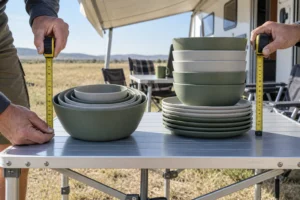
custom wheat straw dinnerware mold

Important Certifications Buyers Should Request

For food-contact products, compliance is critical.

Professional manufacturers should provide certifications such as:

You can learn more about food-contact safety standards from the U.S. Food & Drug Administration (FDA).

Environmental organizations such as the United Nations Environment Programme also continue encouraging sustainable manufacturing and reusable product adoption worldwide.


How to Reduce Risks During Custom Product Development

Here are several practical suggestions for buyers launching custom projects:

Start With One Core Product

Avoid developing too many SKUs at the beginning.

Work With Experienced Engineers

Strong engineering support reduces costly revisions.

Confirm Packaging Early

Packaging dimensions affect shipping cost and carton efficiency.

Test Market Demand Before Large Orders

Start with smaller production runs when entering new markets.

Focus on Long-Term Brand Positioning

Custom molds are most valuable for businesses building long-term product strategies.


Why Custom Wheat Straw Products Have Strong Market Potential

The global demand for sustainable products continues growing rapidly.

Retailers, wholesalers, and Amazon sellers increasingly prefer exclusive eco-friendly products that help differentiate their brands.

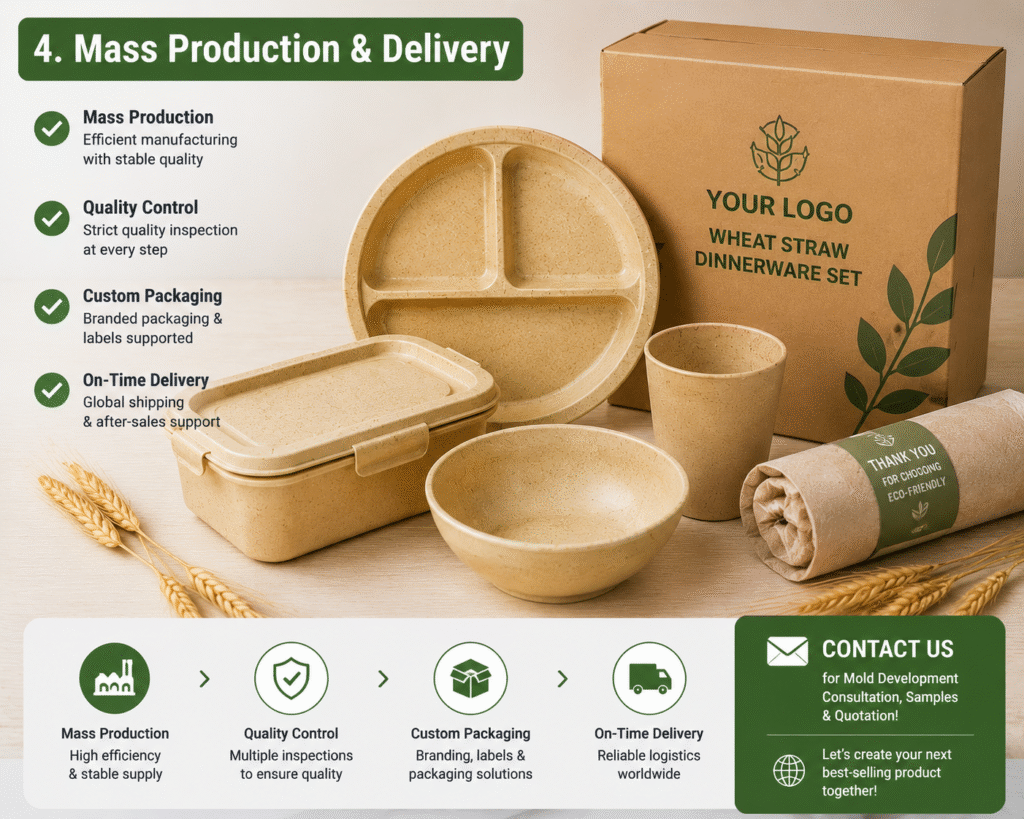
Custom wheat straw dinnerware offers several powerful commercial advantages:

  • Eco-friendly positioning
  • Strong retail appeal
  • Premium product perception
  • Reduced competition
  • Better pricing flexibility
  • Higher brand recognition

As more countries introduce plastic reduction policies, reusable wheat straw products are expected to become an even more important category in global foodservice and kitchenware markets.


Looking for an Experienced OEM Wheat Straw Dinnerware Manufacturer?

If you are planning to develop your own custom wheat straw tableware products, choosing the right manufacturing partner is essential.

We provide:

  • OEM & ODM mold development
  • Professional engineering support
  • 3D product design assistance
  • Custom logo & packaging solutions
  • Low MOQ options
  • Food-grade quality control
  • Stable export production capacity

Whether you are a retailer, importer, Amazon seller, promotional gift company, or private label brand, we can help transform your product ideas into commercially successful eco-friendly products.

👉 Contact Us for Mold Development Consultation, Samples & Quotation

You can also explore our latest eco-friendly product collections here:
👉 View Our Wheat Straw Tableware Collection


Conclusion

Custom wheat straw dinnerware mold development is no longer only for large corporations.

Today, even growing brands and medium-sized retailers are investing in custom eco-friendly products to strengthen market positioning and build long-term competitive advantages.

With the right manufacturing partner, clear product planning, and strong engineering support, custom wheat straw tableware can become a highly profitable and scalable business opportunity.

As sustainable products continue reshaping the global kitchenware industry, brands that invest in unique eco-friendly product development today will be far better positioned for future growth tomorrow.

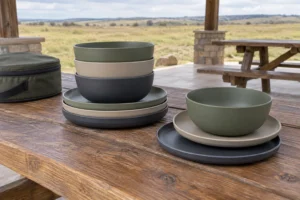
custom wheat straw dinnerware mold

OR LEAVE US A MASSAGE

We will contact you as soon as we see the information

YOU CAN CONTACT US

+8618559050813          sales@naikegroup.com